Clearing and Grubbing Explained: Comprehensive Guide to Site Preparation
Clearing and grubbing is the foundational earthwork phase of construction and land development that involves removing all surface vegetation, trees, stumps, roots, and debris from a designated plot of land. This essential process stabi...
Clearing and grubbing is the foundational earthwork phase of construction and land development that involves removing all surface vegetation, trees, stumps, roots, and debris from a designated plot of land. This essential process stabilizes the topsoil, eliminates organic decay risks beneath future foundations, and establishes a clean grade for heavy machinery and civil engineering projects.
Contents
Understanding the Fundamentals of Clearing and Grubbing
Before a single foundation can be poured, a road paved, or a utility trench dug, a parcel of land must undergo intensive site preparation. Clearing and grubbing represent the first major civil engineering milestone in transforming raw, heavily vegetated, or obstructed land into a buildable pad. Although often spoken of as a single phrase, these terms designate two distinct mechanical phases of land clearing, each requiring specialized heavy equipment, distinct operational procedures, and precise environmental management.
Understanding how clearing differs from grubbing helps developers, contractors, and property owners estimate project timelines, calculate realistic budgeting, and comply with local municipal codes. Failing to execute these phases correctly can lead to catastrophic structural failures years down the road, as decomposing organic matter beneath concrete slabs or asphalt paving creates voids, causing severe settling, cracking, and foundation failure.
What is Land Clearing?
Land clearing refers strictly to the removal of all surface-level vegetation, trees, down timber, brush, thickets, and man-made debris sitting above the ground line. This phase focuses on what can be seen from an aerial or eye-level perspective.
- Scope of Work: Felling standing trees, shearing brush, removing abandoned structures, tearing down old fences, and clearing surface boulders or trash heaps.
- Primary Objective: To open up the site access, expose the raw topography, and prepare the terrain for the more aggressive subsurface extraction phase.
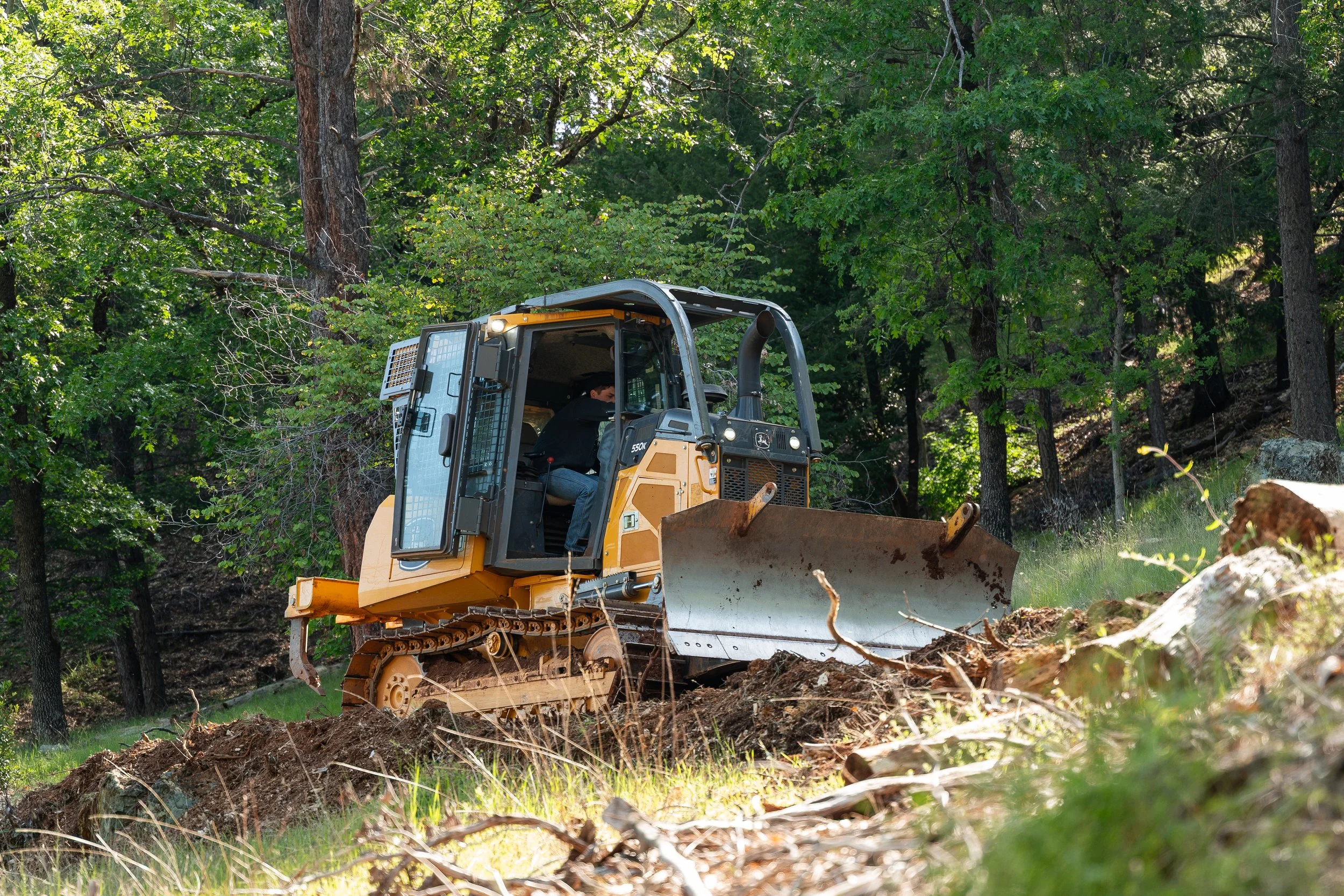
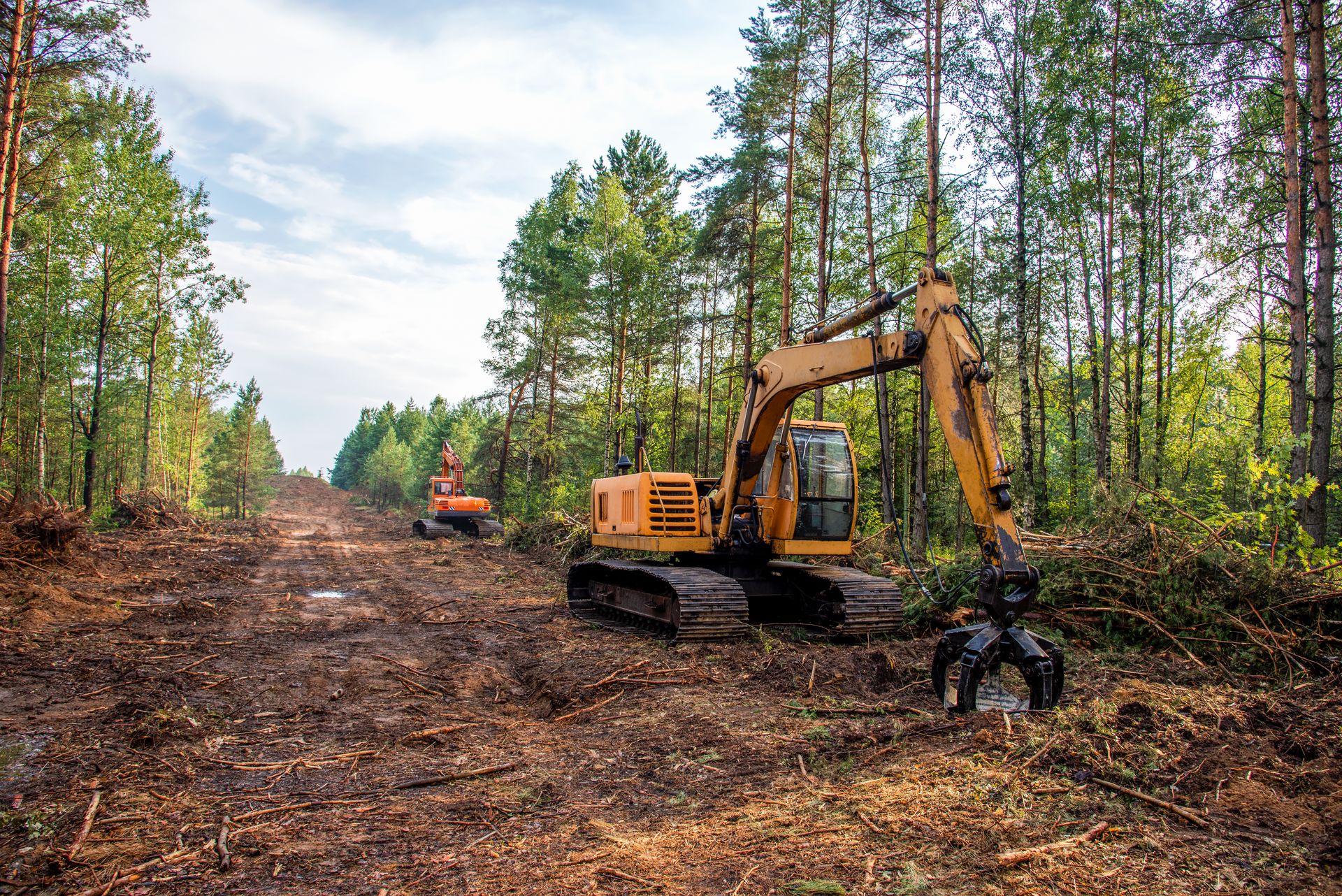
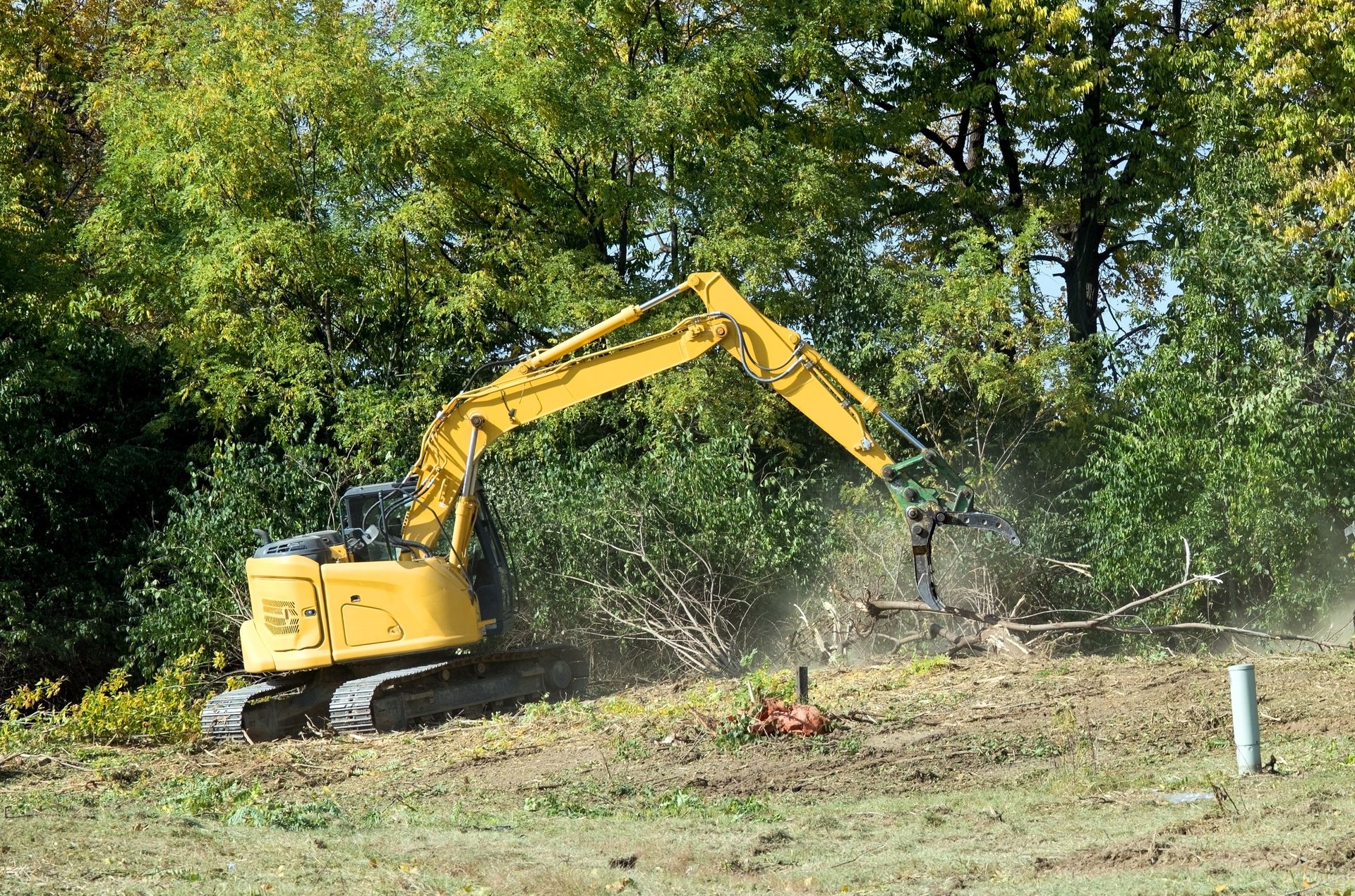
- Equipment Used: Bulldozers equipped with tree shears or root rakes, chain saws, feller bunchers, and excavators fitted with thumb attachments.
What is Grubbing?
Grubbing is the more aggressive subsurface phase that immediately follows or overlaps with surface clearing. It involves extracting all buried organic matter that could compromise structural integrity.
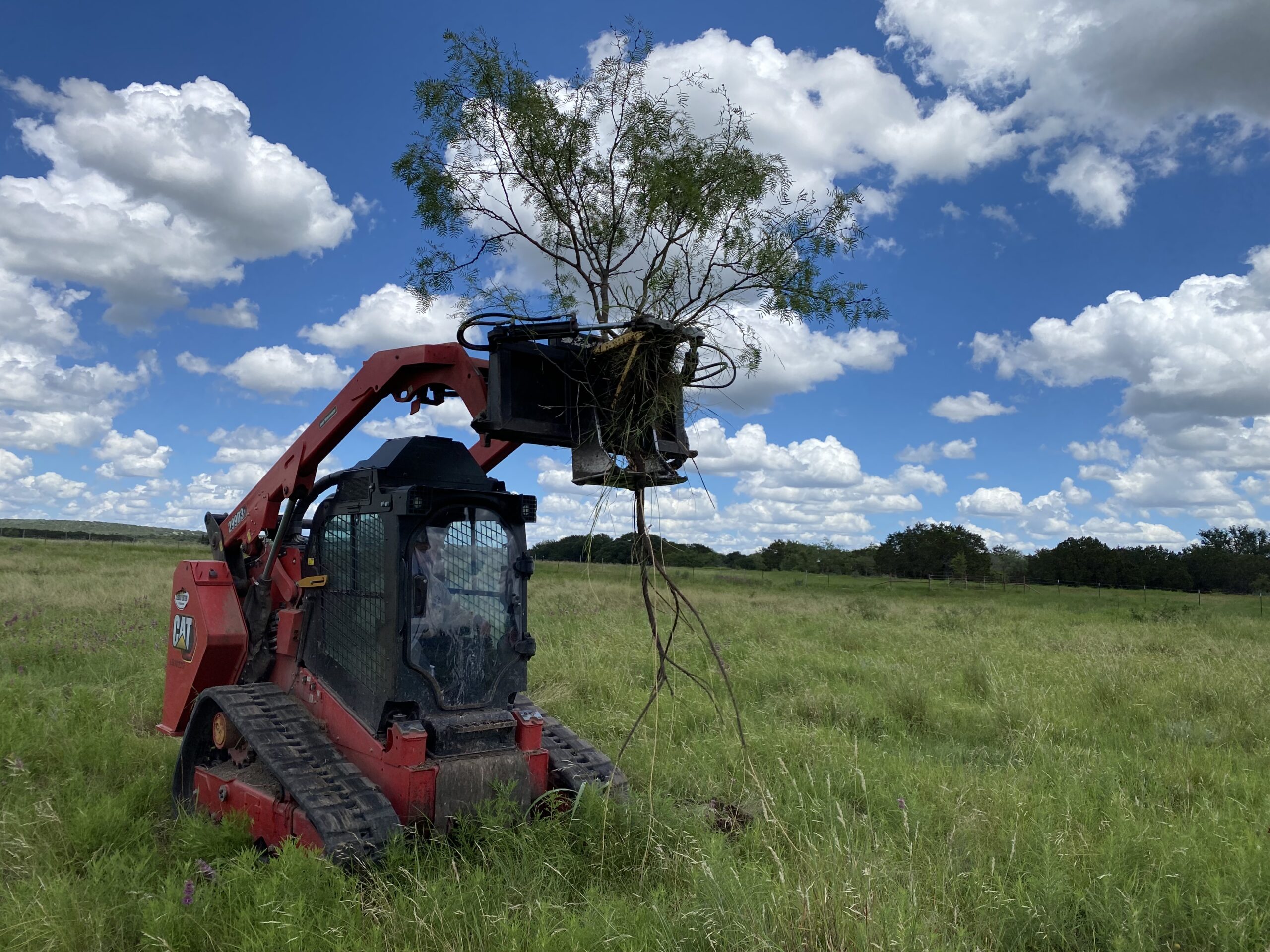
- Scope of Work: Digging out tree stumps, extracting root systems, pulling buried logs, removing large boulders, and stripping topsoil layers dense with root mats.
- Primary Objective: To purge the upper soil strata of organic material that will eventually rot, decompose, and create subterranean voids or settlement pockets.
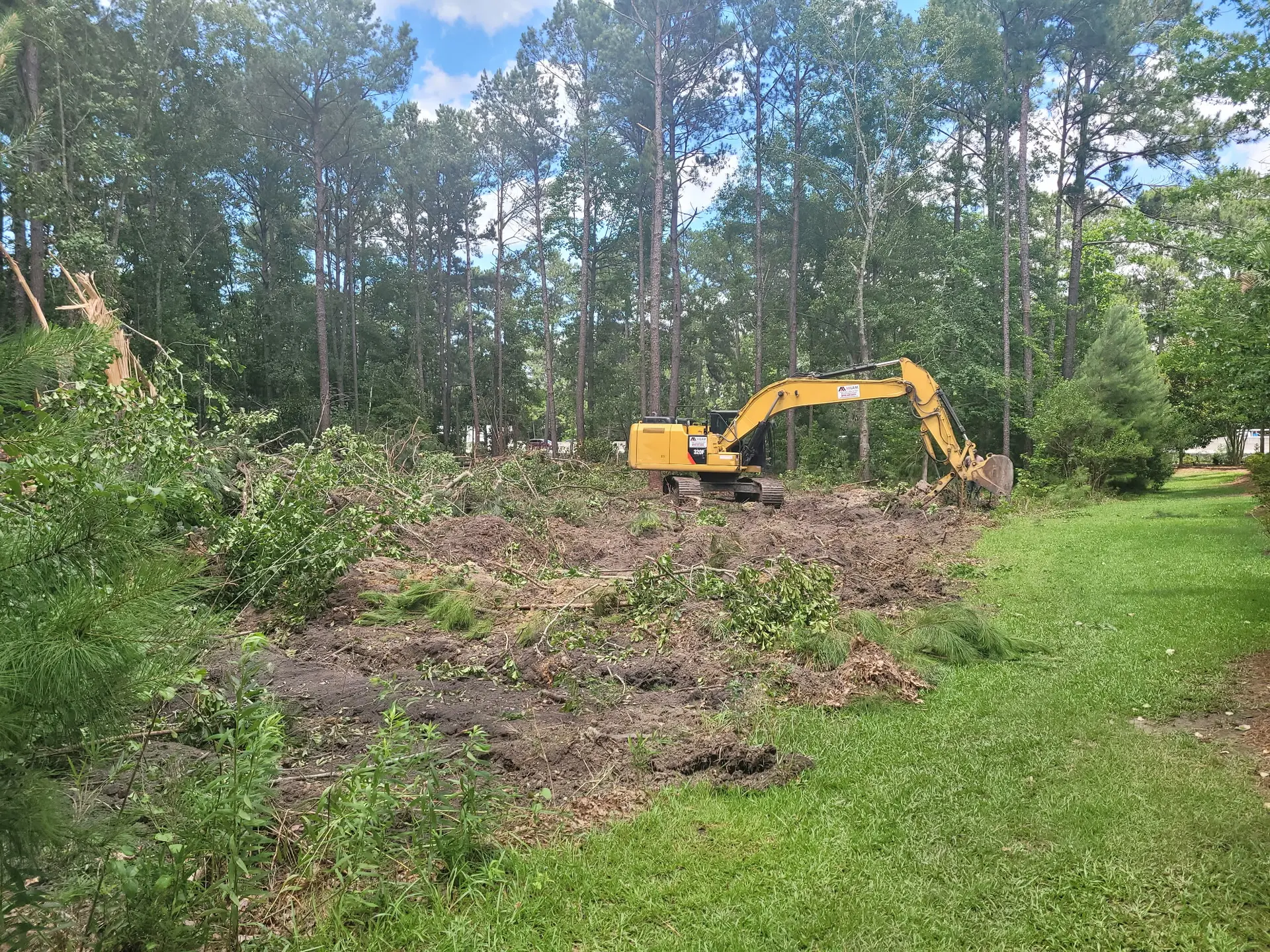
- Equipment Used: Excavators, backhoes, crawler tractors with heavy rippers, and specialized stump grinders.
The Operational Sequence of Site Preparation
Executing a successful clearing and grubbing project requires a disciplined, step-by-step approach. Deviating from standard operational sequences can result in severe soil erosion, equipment damage, or regulatory fines.
- Phase 1: Surveying & Permitting
- Phase 2: Erosion & Sediment Control
- Phase 3: Surface Clearing (Trees & Brush)
- Phase 4: Subsurface Grubbing (Stumps & Roots)
- Phase 5: Debris Disposal & Soil Stabilization
1. Surveying, Marking, and Permitting
Before machinery touches the dirt, land surveyors must establish clear property boundaries, clearing limits, and environmental buffer zones.
- Utility Locating: Contractors must coordinate with local utility notification centers to mark underground water, gas, electric, and telecommunication lines.
- Environmental Permits: Depending on the jurisdiction, clearing protected woodlands, wetlands, or habitats containing endangered species requires specialized environmental permits from local or federal environmental protection agencies.
2. Installing Erosion and Sediment Controls
Disturbing the natural vegetative cover exposes raw soil to wind and water erosion. Before heavy clearing begins, contractors must install best management practices (BMPs) to prevent sediment runoff into nearby water bodies or adjacent properties.
- Measures: Installation of silt fences, construction entrances (stabilized stone pads to prevent mud tracking onto public roads), temporary sediment basins, and diversion swales.
3. Executing Surface Clearing Operations
Once environmental controls are verified, heavy equipment enters the site to remove vertical vegetation.
- Merchantable Timber: High-value timber may be logged and sold to local mills rather than destroyed.
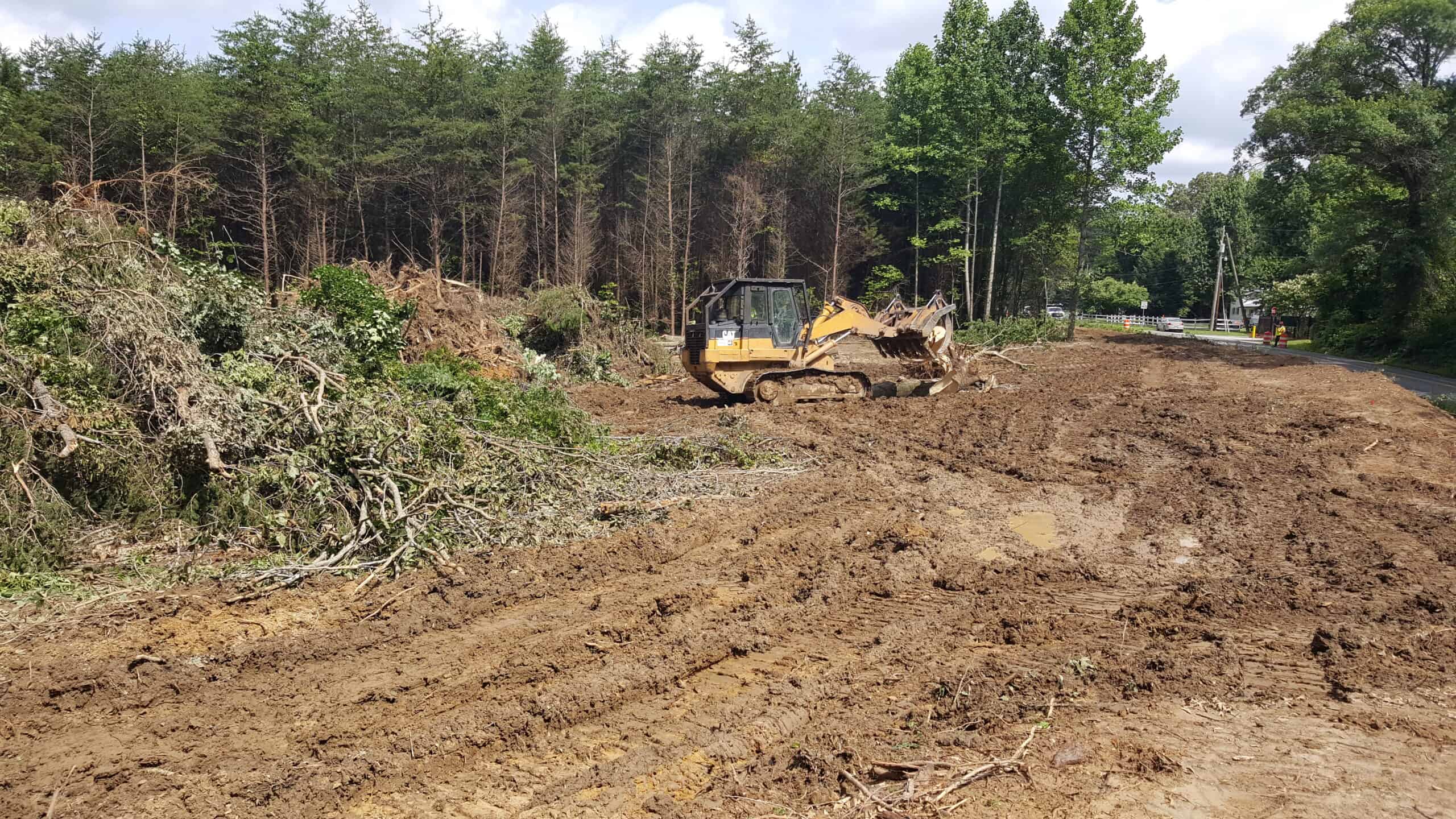
- Brush and Slash: Non-merchantable brush and small trees are typically pushed into large piles using bulldozers equipped with root rakes, which allow clean topsoil to fall through the tines.
4. Performing Subsurface Grubbing
With the surface clear of standing trees and brush, operators switch to excavators and rippers to extract the hidden root network.
- Depth Requirements: Standard commercial and residential specifications require removing all roots larger than a specified diameter (typically 1 to 2 inches) within the top 12 to 24 inches of soil beneath building footprints and roadways.
- Void Management: The holes and trenches left behind by extracted stumps must be backfilled with clean, inorganic fill material and compacted in lifts to prevent future settling.
5. Debris Management and Disposal
The sheer volume of vegetative waste generated during clearing and grubbing requires a deliberate disposal strategy.
- On-Site Burning: Where permitted by local air quality boards and fire marshals, brush piles are burned under controlled conditions.
- Chipping and Mulching: Industrial tub grinders or horizontal grinders process trees and brush into mulch, which is often retained on-site for erosion control or sold.
- Hauling Off-Site: Excess debris not processed on-site is loaded into dump trucks and hauled to licensed landfills or green waste recycling facilities.
Technical Specifications and Engineering Standards
Civil engineering projects—such as highways, commercial parking lots, industrial complexes, and residential subdivisions—adhere to strict technical specifications regarding clearing and grubbing. These standards are typically outlined in state Department of Transportation (DOT) manuals or municipal engineering codes.
Depth and Purity Tolerances
Engineering standards differentiate between areas intended to support heavy loads (pavements, structural foundations) and unpaved landscape buffers.
- Under Structural Footprints: All stumps, roots, and organic matter must be completely removed to a depth of at least 2 to 3 feet below the subgrade.
- Under General Open Spaces: Stumps may occasionally be cut flush with the ground or ground down below grade only if the area will not experience heavy structural loads, though complete removal remains the gold standard for avoiding differential settlement.
Soil Compaction and Moisture Control
Following grubbing, the exposed subgrade must achieve specific compaction percentages (often 90% to 95% of maximum dry density) as determined by standard Proctor tests. If the grubbing process leaves the soil churned up, wet, and saturated, contractors must aerate, scarify, and re-compact the soil before any foundation work can proceed.
Cost Considerations and Estimation Factors
The financial investment required for clearing and grubbing varies drastically based on site-specific physical characteristics. Contractors evaluate several distinct variables when generating project bids.
| Cost Factor | Low Impact (Favorable) | High Impact (Challenging) |
|---|---|---|
| Vegetation Density | Open pasture, light brush, scattered small trees. | Dense old-growth forest, thick underbrush, heavy vines. |
| Topography | Flat terrain, dry soils, easy equipment maneuverability. | Steep slopes, rocky outcrops, swampy or wet terrain. |
| Debris Disposal | On-site burning or chipping permitted; local recycling yards. | Strict burning bans, long hauling distances to distant landfills. |
| Subsurface Obstacles | Clean soil, few hidden boulders, shallow root systems. | Extensive buried boulders, massive root balls, old foundations. |
Average Pricing Dynamics
While exact pricing fluctuates based on regional labor rates and fuel costs, clearing and grubbing is typically priced by the acre or by the hour for smaller lots.
- Light Clearing: Flat, brush-covered acreage requires less heavy equipment time, resulting in lower per-acre costs.
- Heavy Clearing and Grubbing: Heavily wooded, rocky, or sloped parcels require specialized tracked excavators, root rakes, and intensive manual labor, substantially driving up project expenses.
Environmental Regulations and Compliance Risks
Land clearing drastically alters the local ecosystem, making it a heavily regulated activity across most municipal, state, and federal jurisdictions. Ignoring regulatory compliance can result in stop-work orders, heavy fines, and mandatory remediation.
Key Regulatory Areas
- Tree Preservation Ordinances: Many municipalities protect heritage trees, specimen trees, or designated canopy percentages. Developers may need permits to remove certain species or face tree-replacement mitigation requirements.
- Wetlands and Waters of the United States (WOTUS): Clearing land within or adjacent to wetlands, streams, or rivers often triggers reviews by the U.S. Army Corps of Engineers or state environmental agencies under the Clean Water Act.
- Protected Wildlife Habitats: Clearing operations may be restricted seasonally to protect nesting migratory birds, endangered bats, or local wildlife populations.
Common Mistakes to Avoid in Site Preparation
Rushing through or improperly executing clearing and grubbing leads to costly project delays and structural failures. Avoiding these common pitfalls ensures project success:
- Leaving Buried Organic Matter: Simply pushing trees over and burying them on-site ("stump burial") is a major violation of modern engineering standards. As the wood decays, the soil sinks, destroying pavement and building foundations.
- Neglecting Erosion Control Permits: Starting earthwork without approved silt fencing and stormwater pollution prevention plans (SWPPP) can trigger immediate municipal fines and injunctions.
- Failing to Account for Soil Moisture: Operating heavy bulldozers and excavators on saturated soils destroys the soil structure, turning the site into a mud pit that requires expensive stabilization with lime or cement kiln dust.
- Inadequate Utility Verification: Relying on visual checks instead of contacting official utility locating services risks striking high-voltage electric lines, high-pressure gas mains, or municipal water mains.
Frequently Asked Questions
What is the main difference between clearing and grubbing?
Clearing involves the removal of surface vegetation, trees, and debris above ground level, while grubbing focuses on extracting subsurface elements such as tree stumps, root balls, and buried organic matter down to specified engineering depths.
Can tree stumps be left in the ground if they are ground down?
Grinding a stump below the surface is acceptable for landscaped areas or lawns, but stumps and root systems must be completely excavated and removed if they lie beneath building footprints, roads, parking lots, or any area slated for structural loads.
How is vegetative debris disposed of during site preparation?
Debris is managed through on-site chipping into mulch, controlled burning (where legal and permitted), or hauling off-site to licensed green waste recycling facilities and landfills.
Does clearing and grubbing require special permits?
Yes. Depending on the municipality and region, permits may be required for erosion control, grading, removing protected or heritage trees, and working near wetlands or protected environmental zones.
What equipment is primarily used for grubbing?
Grubbing primarily utilizes heavy equipment such as crawler excavators with bucket and thumb attachments, bulldozers equipped with root rakes, and specialized stump removal attachments designed to rip roots from the soil.
Summary and Next Actions
Clearing and grubbing is a vital, highly technical prerequisite for any successful construction or civil engineering project. By thoroughly removing surface vegetation and subterranean root systems, developers protect future structures from differential settlement and long-term structural degradation.
Next Steps for Property Owners:
- Consult with a professional land surveyor to establish accurate boundaries and clearing limits.
- Hire a qualified geotechnical engineer to assess soil conditions and structural depth requirements.
- Secure all necessary local grading, environmental, and tree-removal permits before mobilizing heavy machinery.
Image Gallery