Comprehensive Guide to the Cost of Foundation Repair in Ohio (2026)
In 2026, Ohio homeowners typically pay between $2,500 and $8,500 for foundation repairs, though major structural stabilization using piers can exceed $15,000. Minor crack injections may cost as little as $500, while complete foundation...
In 2026, Ohio homeowners typically pay between $2,500 and $8,500 for foundation repairs, though major structural stabilization using piers can exceed $15,000. Minor crack injections may cost as little as $500, while complete foundation replacement in expansive clay soils often surpasses $40,000 depending on the home’s footprint and local labor rates.
Contents
Understanding the Ohio Foundation Landscape
The cost of foundation repair in Ohio is uniquely dictated by the state's diverse geological profile and its volatile climate. From the heavy lacustrine clays near Lake Erie to the glacial till in Central Ohio and the limestone-rich hills of the south, soil behavior is the primary driver of structural instability. For homeowners, understanding these factors is essential for accurate budgeting and selecting the correct remediation strategy.
The Impact of Ohio Soils on Repair Costs
Most foundation issues in Ohio stem from expansive clay soils. These soils act like a sponge; they swell significantly when saturated with water during wet Ohio springs and shrink drastically during dry summer spells. This constant volume change exerts immense hydrostatic pressure against basement walls, leading to bowing, or causes the soil to pull away, leading to settlement.
Because these soil conditions are persistent, a "quick fix" often fails. In 2026, specialized contractors increasingly use soil stabilization techniques alongside physical repairs, which adds to the initial project cost but provides longer-term security.
Climate and the Freeze-Thaw Cycle
Ohio’s climate contributes significantly to repair complexity. The state experiences frequent freeze-thaw cycles. When water in the soil freezes, it expands, pushing against the foundation. If the foundation footings are not deep enough or if the drainage is poor, this "frost heave" can crack even the thickest concrete. Repairing frost-related damage often requires excavating to the frost line—which is typically 32 to 40 inches in Ohio—adding substantial labor costs to the project.
Breakdown of Foundation Repair Methods and Costs
The specific method required to fix a foundation is the largest variable in the final invoice. Below is a detailed analysis of common repair strategies utilized across Ohio in 2026.
Piering and Underpinning
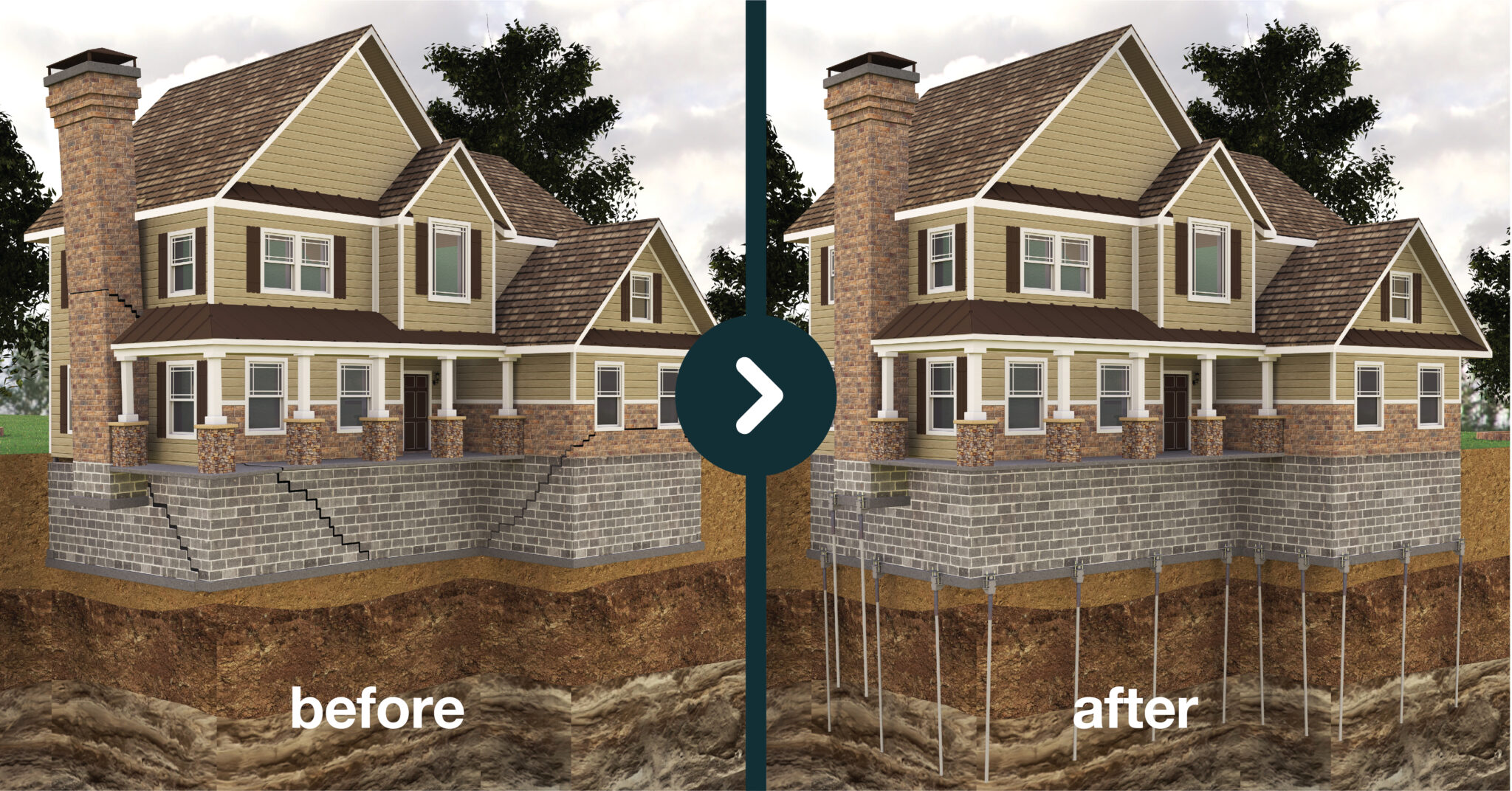
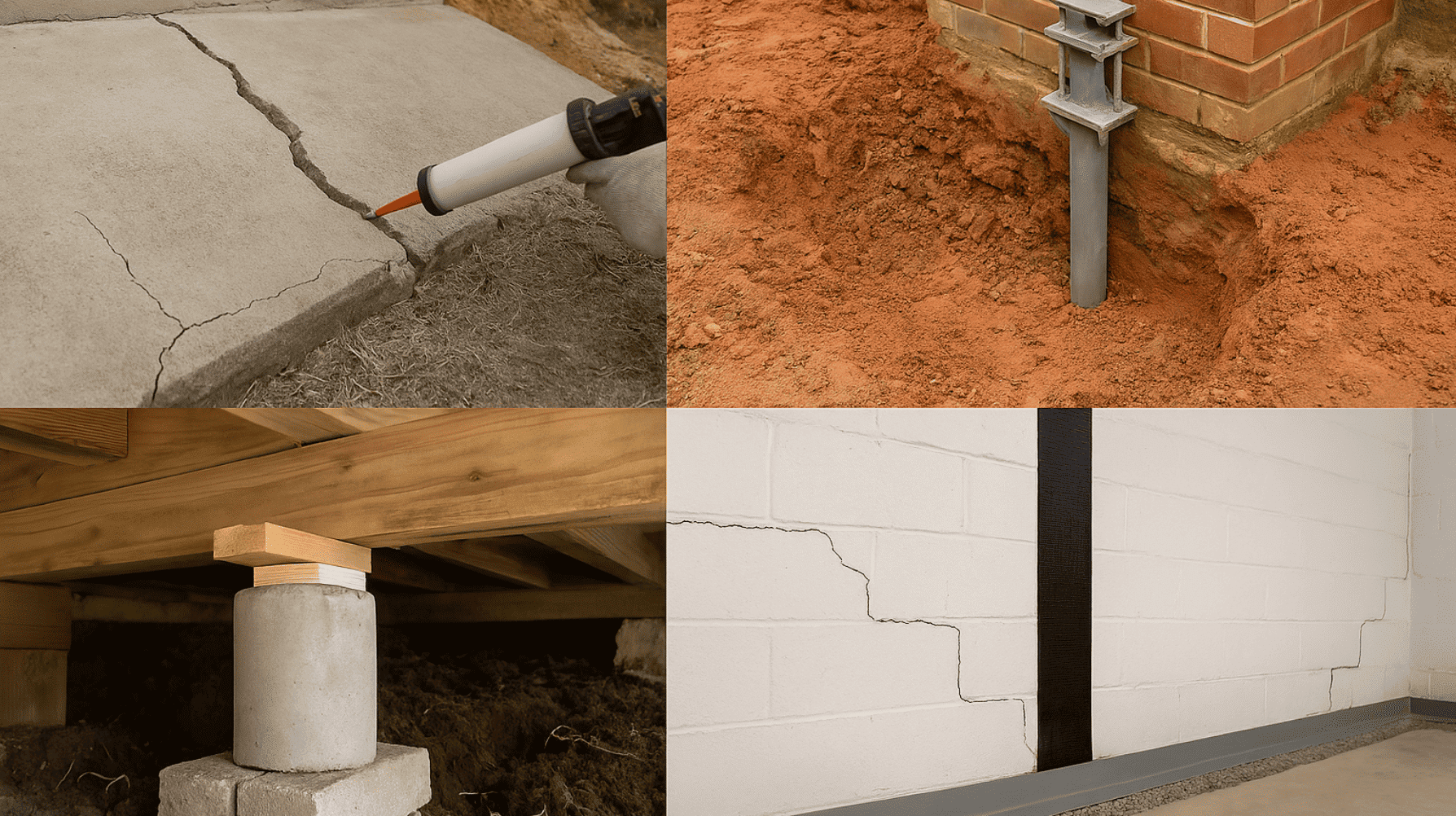
When a home’s foundation begins to sink or settle unevenly, piering is the standard solution. This involves driving steel supports deep into the earth until they reach stable load-bearing soil or bedrock.
- Push Piers: Generally used for heavy residential structures. These utilize the weight of the house to be driven into the ground. In 2026, expect to pay $1,200 to $2,200 per pier.
- Helical Piers: These look like large screws and are "threaded" into the ground. They are ideal for lighter structures or areas with specific soil tension requirements. These typically cost $1,400 to $2,500 per pier.
A typical stabilization project might require 8 to 10 piers, bringing the total cost to between $10,000 and $25,000.
Wall Reinforcement (Bowing Walls)
Basement walls that are "leaning" or "bowing" inward due to hydrostatic pressure are a common sight in Ohio's older housing stock.
- Carbon Fiber Straps: This is the least invasive method. High-tensile strength straps are epoxied to the wall to prevent further movement. It is best for walls bowing less than two inches. Costs range from $500 to $900 per strap.
- Steel I-Beams: For more severe bowing, vertical steel beams are installed against the wall and anchored to the floor and joists. This costs approximately $700 to $1,500 per beam.
- Wall Anchors: These involve an anchor plate buried in the yard connected by a steel rod to a plate inside the basement. They can actually pull the wall back toward its original position over time. Expect to pay $800 to $1,300 per anchor.
Crack Repair and Sealing
Not every crack is a structural emergency. However, in Ohio's wet environment, even small cracks lead to water intrusion and mold.
- Epoxy or Polyurethane Injection: Professional injection of high-grade resins into non-structural cracks typically costs $500 to $1,200 per crack, depending on length and width.
- Interior Drain Tiles: Often paired with crack repair, these systems manage water before it reaches the floor. A full interior perimeter system usually costs $3,000 to $8,000.
2026 Ohio Foundation Repair Cost Comparison Table
| Repair Type | Estimated Cost Range (Per Unit/Project) | Best Used For |
|---|---|---|
| Epoxy Injection | $500 – $1,200 | Minor, non-structural seepage cracks |
| Carbon Fiber Straps | $500 – $900 per strap | Early-stage wall bowing (under 2") |
| Helical Piers | $1,400 – $2,500 per pier | Vertical settlement in light/medium structures |
| Push Piers | $1,200 – $2,200 per pier | Severe settlement in heavy residential homes |
| Steel I-Beams | $700 – $1,500 per beam | Severe wall bowing or shearing |
| Slabjacking | $1,500 – $4,000 | Sunken concrete porches or garage floors |
| Full Replacement | $30,000 – $60,000+ | Total structural failure/crumbling walls |
Regional Cost Variances Within Ohio
Labor and material costs are not uniform across the Buckeye State. Regional economic factors and local building codes influence the final quote.
Columbus and Central Ohio
As the fastest-growing region in the state, Columbus has seen a rise in labor costs. The prevalence of "Alum Creek" clay in certain suburbs means that piering depth often exceeds 20 feet, which can increase the price of steel materials and labor time.
Cleveland and Northeast Ohio
The proximity to Lake Erie creates a high water table and extremely heavy clay. Many older homes in Cleveland, Akron, and Youngstown feature "terra cotta" or stone foundations rather than poured concrete. Repairing these older materials requires specialized masonry skills, often pushing costs 15% higher than modern concrete repairs.
Cincinnati and Southern Ohio
The topography of Southern Ohio introduces the risk of slope failure and landslides. Foundations on hillsides may require specialized "earth retention" systems or deeper helical piers to bypass unstable surface soils. This adds a layer of engineering complexity that can increase project costs by several thousand dollars compared to flat-lot repairs.
Critical "Hidden" Costs to Anticipate
When budgeting for foundation repair in 2026, the quote from the contractor is rarely the total expenditure. Homeowners should account for several secondary costs.
- Structural Engineering Reports: Before hiring a contractor, it is highly recommended to hire an independent structural engineer. They provide an unbiased assessment and a repair plan. In Ohio, this service typically costs $500 to $1,200.
- Building Permits: Most Ohio municipalities, including Cincinnati and Toledo, require a permit for structural work. These fees range from $100 to $400 depending on the project valuation.
- Landscaping and Hardscape Restoration: Major repairs often require excavation. Replacing destroyed bushes, flower beds, or concrete walkways can add $1,000 to $5,000 to your total "back-to-normal" budget.
- Utility Line Rerouting: If piers must be placed where gas or water lines enter the home, utility companies may charge to temporarily move or protect these lines.
How to Verify an Ohio Foundation Contractor
Foundation repair is a significant investment, and the industry is unfortunately prone to aggressive sales tactics. Verification is the best defense against overpaying or receiving substandard work.
- Check the Better Business Bureau (BBB): Look for companies with an A+ rating and, more importantly, a low ratio of complaints to completed jobs.
- Verify Licensing and Insurance: Ohio does not have a single statewide "foundation repair license," but contractors must be registered in the specific city or county where the work is performed. Ensure they carry General Liability and Workers' Compensation insurance.
- Warranty Analysis: Most reputable Ohio firms offer a "Life of the Structure" warranty that is transferable to the next homeowner. Read the fine print to see if it covers only the materials or also the labor and future adjustments.
- Case Studies: Ask for references of homes in your specific neighborhood. Because soil conditions vary so much, success in a neighboring town doesn't always guarantee success in yours.
Frequently Asked Questions
Does Ohio homeowners insurance cover foundation repair?
Generally, no. Most standard homeowners insurance policies in Ohio exclude coverage for "earth movement," which includes settlement and hydrostatic pressure. Coverage is usually only triggered if the foundation damage was caused by a "covered peril," such as a pipe bursting or a vehicle hitting the house. It is worth reviewing your policy for a "Sewer and Drain Backup" rider, which may cover the water damage resulting from foundation cracks.
How long does a typical foundation repair take?
Minor crack repairs or carbon fiber installations can often be completed in a single day. Larger projects involving 10 or more piers or exterior excavation for waterproofing usually take 3 to 5 business days, depending on the weather.
Will foundation repair increase my home's value?
While foundation repair doesn't typically "add" value in the way a kitchen remodel does, it preserves value. A home with known foundation issues is often unmortgageable for buyers, leading to price drops of 10% to 20%. Completing the repair and providing a transferable warranty restores the home to its full market potential.
Can I fix a bowing wall myself?
DIY foundation repair is highly discouraged for structural issues. While you can apply a sealant to a minor surface crack, structural stabilization requires hydraulic equipment and precise engineering calculations. An incorrect DIY attempt can lead to a catastrophic wall collapse, which is far more expensive to fix than a professional reinforcement project.
What is the best time of year for foundation repair in Ohio?
Winter is often the "off-season," and some contractors offer discounts. However, frozen ground can make excavation difficult. Late summer and autumn are often ideal because the soil is drier, making it easier to see the full extent of settlement and allowing for easier excavation and landscaping restoration.
Final Recommendation
If you notice cracks wider than a quarter-inch, doors that stick, or windows that won't open, the first step is to seek a professional opinion. In the Ohio market of 2026, the most cost-effective path is to hire an independent structural engineer for a consultation before speaking with sales-driven repair companies. Spending $600 on an unbiased report can often save you $5,000 in unnecessary repairs. Always obtain at least three quotes and prioritize companies that offer a transferable, lifetime warranty to protect your property's long-term resale value.
Image Gallery