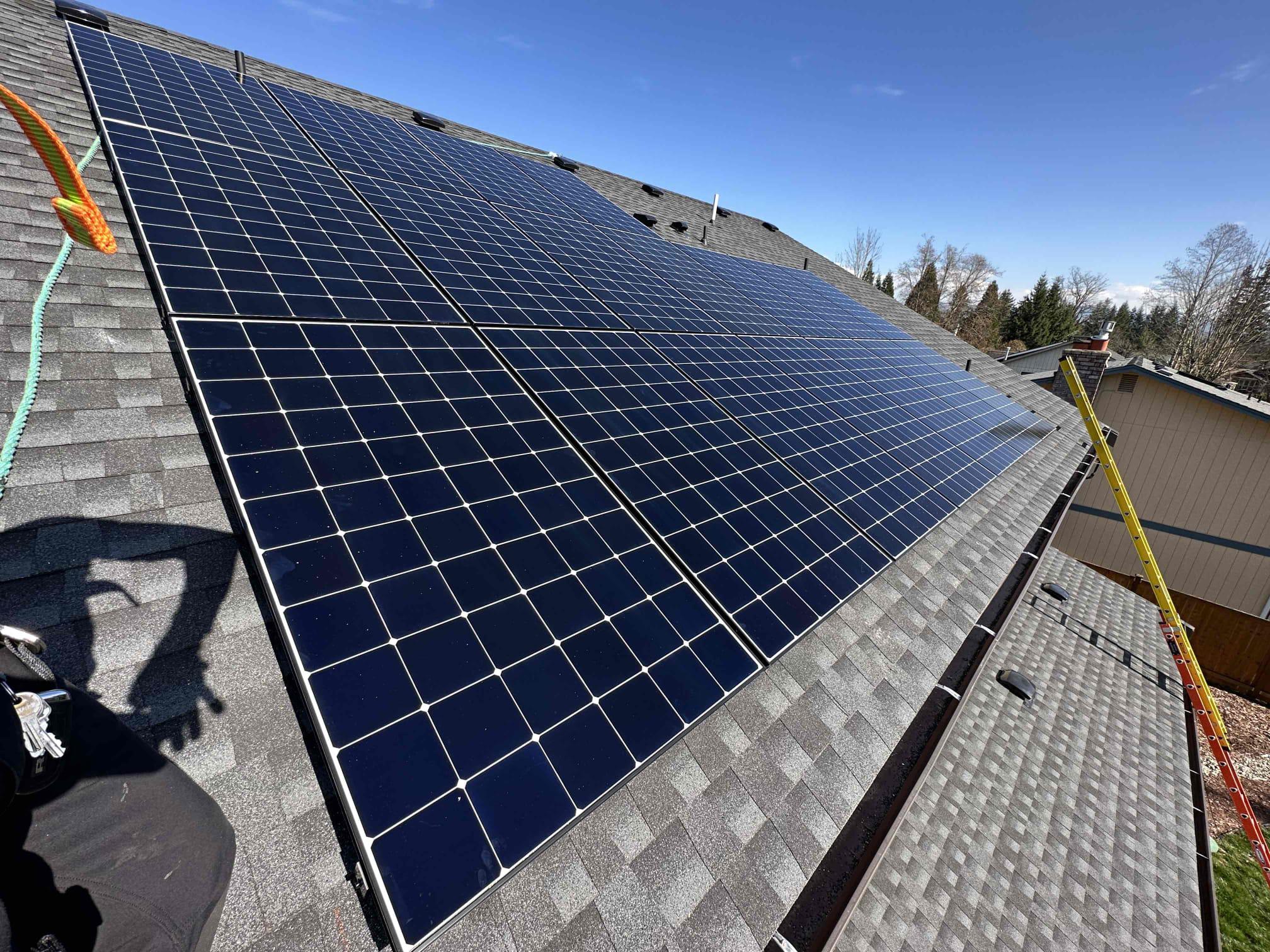
Solar Panel Installation in Washington State: A Comprehensive 2026 Guide
Installing solar panels in Washington State remains a highly effective strategy for reducing long-term energy costs and increasing property value, despite the region's reputation for overcast weather. By leveraging the federal Investme...
Installing solar panels in Washington State remains a highly effective strategy for reducing long-term energy costs and increasing property value, despite the region's reputation for overcast weather. By leveraging the federal Investment Tax Credit (ITC), state-level sales tax exemptions, and robust net metering programs, homeowners can achieve a full return on investment while contributing to the state’s aggressive clean energy goals.
Contents
Understanding Washington’s Solar Potential
A common misconception regarding solar panel installation in Washington State is that the frequent cloud cover makes the technology ineffective. However, solar photovoltaic (PV) systems do not require direct, scorching sunlight to generate electricity; they rely on photons, which penetrate clouds even on gray days. In fact, solar panels operate more efficiently in the cooler temperatures typical of the Pacific Northwest compared to the extreme heat of the desert, as high temperatures can actually degrade panel performance.
Washington’s geographic position provides a unique advantage: significantly longer daylight hours during the summer months. From May through September, solar arrays in Seattle or Spokane can produce a massive surplus of energy, which is then managed through the state's net metering policies. This seasonal surge balances out the lower production levels seen during the shorter, darker days of November and December.
Furthermore, Western Washington’s rain serves a practical purpose by naturally cleaning dust and pollen off the panels, maintaining high transmittance levels without the need for frequent manual scrubbing. For residents in Eastern Washington, where sun exposure is higher and summers are drier, the generation potential rivals many parts of the Atlantic coast.
Financial Incentives and Tax Credits in 2026
The financial landscape for solar in 2026 is defined by a combination of federal stability and state-specific exemptions that significantly lower the "soft costs" of installation.
The Federal Investment Tax Credit (ITC)
The most significant incentive remains the Federal Investment Tax Credit. As of 2026, homeowners can deduct 30% of the total cost of their solar energy system—including equipment, labor, and even battery storage—from their federal income taxes. If the tax liability is lower than the credit amount, the remaining credit can typically be rolled over to the following year. This 30% reduction applies to both primary and secondary residences, provided the homeowner owns the system rather than leasing it.
Washington State Sales Tax Exemption
Washington provides a significant "upfront" discount through the Sales and Use Tax Exemption for Solar Energy Systems. Under current regulations, most residential-scale solar installations are exempt from the state portion of the sales tax. Given that sales tax in many Washington municipalities exceeds 9% or 10%, this exemption saves the average homeowner thousands of dollars at the point of purchase. This incentive is designed to lower the barrier to entry for renewable energy and is a cornerstone of the state’s Department of Commerce energy strategy.
Net Metering: The Economic Engine
Net metering is the policy that makes solar financially viable in Washington. It requires utilities to credit homeowners for the excess electricity their panels send back to the grid. In 2026, Washington law continues to protect 1:1 net metering for systems up to 100 kilowatts (kW).
When your system produces more power than you use (common during summer days), your meter essentially runs backward. You accumulate credits that are used to offset your utility bills during the winter months when your system produces less. These credits typically reset on March 31st of each year, making the spring an ideal time to evaluate your annual energy balance.
The Cost of Solar Installation in Washington
The total cost of a solar installation in Washington State varies based on system size, roof complexity, and the inclusion of battery storage. In 2026, the average residential system size ranges from 7 kW to 10 kW.
| Component | Estimated Cost (8 kW System) | Post-Incentive Cost (30% ITC) |
|---|---|---|
| Solar Panels & Inverters | $9,000 - $12,000 | $6,300 - $8,400 |
| Racking & Hardware | $1,500 - $2,500 | $1,050 - $1,750 |
| Labor & Permitting | $4,000 - $6,000 | $2,800 - $4,200 |
| Total (No Battery) | $14,500 - $20,500 | $10,150 - $14,350 |
| Energy Storage (Optional) | $10,000 - $15,000 | $7,000 - $10,500 |
Factors Influencing Price
- Roof Material and Pitch: Installing on a standard asphalt shingle roof is generally the least expensive. Standing seam metal roofs are also excellent for solar as panels can often be clamped on without roof penetrations. Complex rooflines with multiple gables or steep pitches require more labor and specialized safety equipment, increasing the cost.
- Equipment Quality: High-efficiency panels (e.g., N-type monocrystalline cells) have a higher upfront cost but generate more power in limited space and degrade slower over 25 years.
- Electrical Upgrades: Older homes may require a main service panel upgrade (e.g., moving from 100-amp to 200-amp service) to handle the backfeed from a solar array.
Step-by-Step Installation Process
The path to solar energy involves several technical and administrative phases. Working with a licensed Washington contractor ensures these steps are handled according to state Labor & Industries (L&I) standards.
1. Site Assessment and Design
An installer will evaluate your roof’s orientation (South-facing is ideal, but East/West is viable), shading from nearby Douglas firs or structures, and structural integrity. Using LIDAR data and shading analysis tools, they will create a 3D model to predict annual energy production.
2. Permitting and Interconnection
In Washington, you generally need two types of permits:
- Electrical Permit: Issued by either the local jurisdiction or the Washington Department of Labor & Industries. This ensures the wiring meets the National Electrical Code (NEC).
- Building Permit: Required by the city or county to ensure the roof can support the dead load of the panels and the wind/snow loads specific to the region.
Simultaneously, an Interconnection Agreement must be filed with your utility (e.g., Puget Sound Energy, Seattle City Light, or Avista). This document outlines how your system will safely connect to the grid.
3. Physical Installation
The actual installation usually takes 1 to 3 days. Installers mount the racking system, lay the panels, and install the inverters. If you are using microinverters, they are installed under each individual panel. If using a string inverter, it is typically mounted near your electrical panel.
4. Inspection and Permission to Operate (PTO)
Once the system is installed, a municipal inspector must verify the work. After the electrical sign-off, the utility will often swap your standard meter for a "net meter" (if you don't already have a smart meter) and grant Permission to Operate. Only after PTO can you safely energize your system.
Choosing the Right Solar Equipment for the PNW
Selecting equipment that can withstand Washington's specific climate is vital for long-term performance.
Microinverters vs. String Inverters
In Washington, shading is a significant factor due to the state’s dense tree canopy. Microinverters (like those from Enphase) or DC Power Optimizers (like SolarEdge) are often preferred over traditional string inverters. These technologies allow each panel to operate independently. If one panel is shaded by a tree branch in the afternoon, it will not throttle the production of the rest of the array.
Snow Load Ratings
For homeowners in the Cascades or Eastern Washington, panels must have a high snow load rating. Quality panels are typically tested to withstand 5400 Pascals (Pa) of pressure, which is roughly equivalent to 112 pounds per square foot. This ensures the glass does not crack under heavy, wet Washington snow.
Battery Storage (ESS)
In 2026, many Washingtonians are opting for Energy Storage Systems (ESS) like the Tesla Powerwall or Briggs & Stratton SimpliPhi. While net metering handles the economics of solar, it does not provide power during a grid outage unless you have a battery. As utilities move toward more complex grid management, having a battery allows for "peak shaving," or using your stored solar power when utility rates are at their highest.
Navigating Regulations and "Solar Access"
Washington State has progressive laws regarding a homeowner’s right to install solar. Under RCW 64.38.055, Homeowners Associations (HOAs) are generally prohibited from banning solar panels. While they can place reasonable restrictions on how panels are installed (such as requiring they be flush-mounted or hidden from street view if possible), they cannot effectively prohibit the installation or significantly decrease its efficiency.
Furthermore, the Washington State Energy Code has become increasingly stringent, pushing new constructions toward "solar-ready" designs. This means many newer homes already have the conduit and roof load-bearing capacity built in, which can reduce retrofitting costs significantly.
Maintenance and Longevity
Solar systems are remarkably low-maintenance because they have no moving parts. However, in the Pacific Northwest, there are two specific concerns:
- Moss and Lichen: In very damp, shaded areas, moss can occasionally grow on the edges of the frames. A soft-bristle brush and water are usually sufficient to clear this.
- Inverter Life: While panels are typically warrantied for 25 years, string inverters may need replacement after 12–15 years. Microinverters often carry 25-year warranties that match the panels.
Most modern systems come with mobile monitoring apps that allow you to track production in real-time. If a single panel or inverter fails, the app will alert you, allowing for a targeted warranty claim.
FAQ
Does solar still make sense if my roof faces East or West? Yes. While South-facing roofs are the "gold standard," East and West-facing arrays in Washington typically produce about 80-85% of the energy of a South-facing system. Given the declining cost of panels, simply adding one or two extra modules can often compensate for a less-than-ideal orientation.
How long is the "payback period" for solar in Washington in 2026? The average payback period currently ranges from 7 to 10 years. Factors like your specific utility rates (which have been rising across the state) and your total sunlight exposure will dictate the exact timing. After the payback period, the electricity generated is essentially free for the remainder of the system’s 25+ year lifespan.
What happens to my solar panels if there is a power outage? Standard grid-tied solar systems automatically shut down during a power outage for "anti-islanding" safety. This prevents your system from sending electricity back into the grid and potentially harming utility workers. To have power during an outage, you must install a battery backup system or a specialized inverter with "daylight backup" capabilities.
Can I install solar panels myself in Washington? While "DIY" kits exist, Washington requires an electrical permit for any grid-tied system. Unless you are a licensed electrician, you will likely need a professional to sign off on the work for the utility to grant interconnection. Furthermore, most equipment warranties require professional installation to remain valid.
Are there still state-funded "rebates" in 2026? Washington's primary state-level "production incentive" (paying you per kWh generated) reached its funding cap several years ago. In 2026, the primary state financial benefit is the sales tax exemption, while the primary ongoing benefit is net metering.
Practical Recommendations
Before committing to an installation, obtain at least three quotes from local installers who are familiar with your specific utility’s interconnection rules. Ensure your contract specifies the expected annual kilowatt-hour (kWh) production and includes a workmanship warranty of at least 10 years. Finally, prioritize installers who use "Tier 1" equipment to ensure that the companies backing your 25-year warranties are likely to remain in business for the duration of the system's life.
Image Gallery