Exploring Vintage Princess Cut Diamond Engagement Rings: A Guide to Style, History, and Selection
Vintage princess cut diamond engagement rings combine the geometric precision of a modern square cut with the intricate, romantic detailing of historical jewelry eras. To choose the right ring, you must prioritize a setting that protec...
Vintage princess cut diamond engagement rings combine the geometric precision of a modern square cut with the intricate, romantic detailing of historical jewelry eras. To choose the right ring, you must prioritize a setting that protects the diamond’s vulnerable corners, verify the stone’s light performance through GIA or AGS certification, and decide between a genuine mid-century estate piece or a modern vintage-inspired recreation.
Contents
The Unique Appeal of the Vintage Princess Cut
The princess cut diamond is a "square modified brilliant," a shape that offers a contemporary silhouette while retaining much of the "fire" and "brilliance" found in traditional round diamonds. When paired with vintage styling, these rings bridge the gap between the clean lines of modern architecture and the ornate craftsmanship of the early 20th century.
In 2026, the demand for vintage princess cut rings has surged as couples seek alternatives to the ubiquitous round solitaire. The appeal lies in the contrast: the sharp, aggressive angles of the princess cut are softened by the delicate milgrain, filigree, and hand-engraving typical of vintage-style bands. This juxtaposition creates a piece of jewelry that feels both substantial and ethereal.
Unlike true antique cuts—such as the Old Mine or European cuts, which are over a century old—the princess cut is a relatively modern invention. Therefore, "vintage" in this context usually refers to two specific categories:
- Estate Jewelry: Authentic rings from the late 1970s through the 1990s, when the princess cut first rose to prominence.
- Vintage-Inspired Designs: New rings manufactured in 2026 that utilize modern cutting technology for the diamond but employ historical design motifs like Edwardian lace patterns or Art Deco symmetry in the metalwork.
The Evolution of the Square Brilliant Shape
To understand the vintage princess cut, one must understand its lineage. While the specific "Princess Cut" we recognize today was patented in 1979 by Betzalel Ambar and Israel Itzkowitz, its ancestors date back much further.
In the 1960s, a precursor known as the "Profile" cut was developed in London by Arpad Nagy. It was flatter and less brilliant than today’s versions but introduced the idea of a square-shaped diamond for engagement rings. Later, the "Barion" cut, created by Basil Watermeyer in 1971, introduced complex facet arrangements that paved the way for the high-brilliance square cuts we see now.
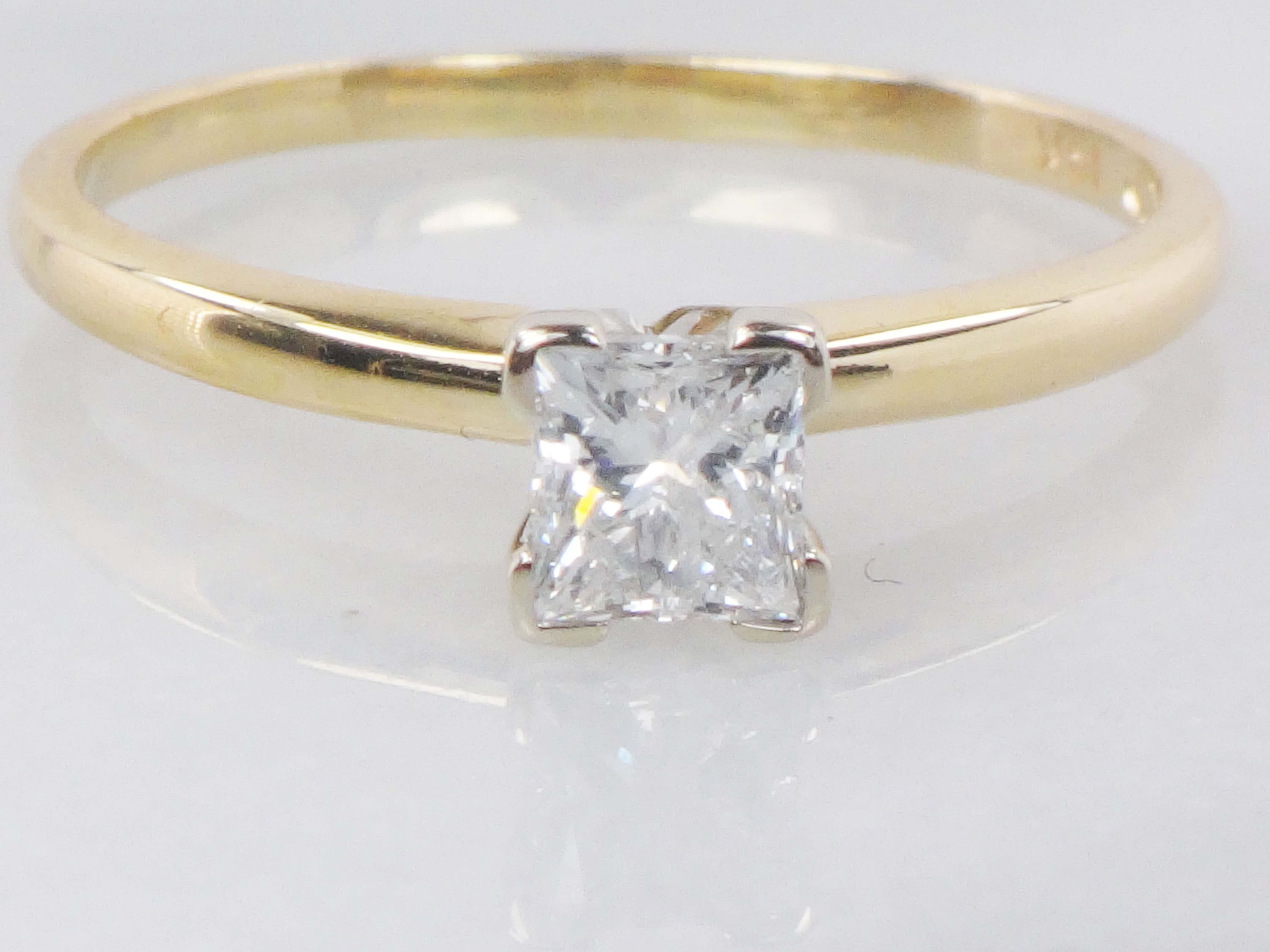
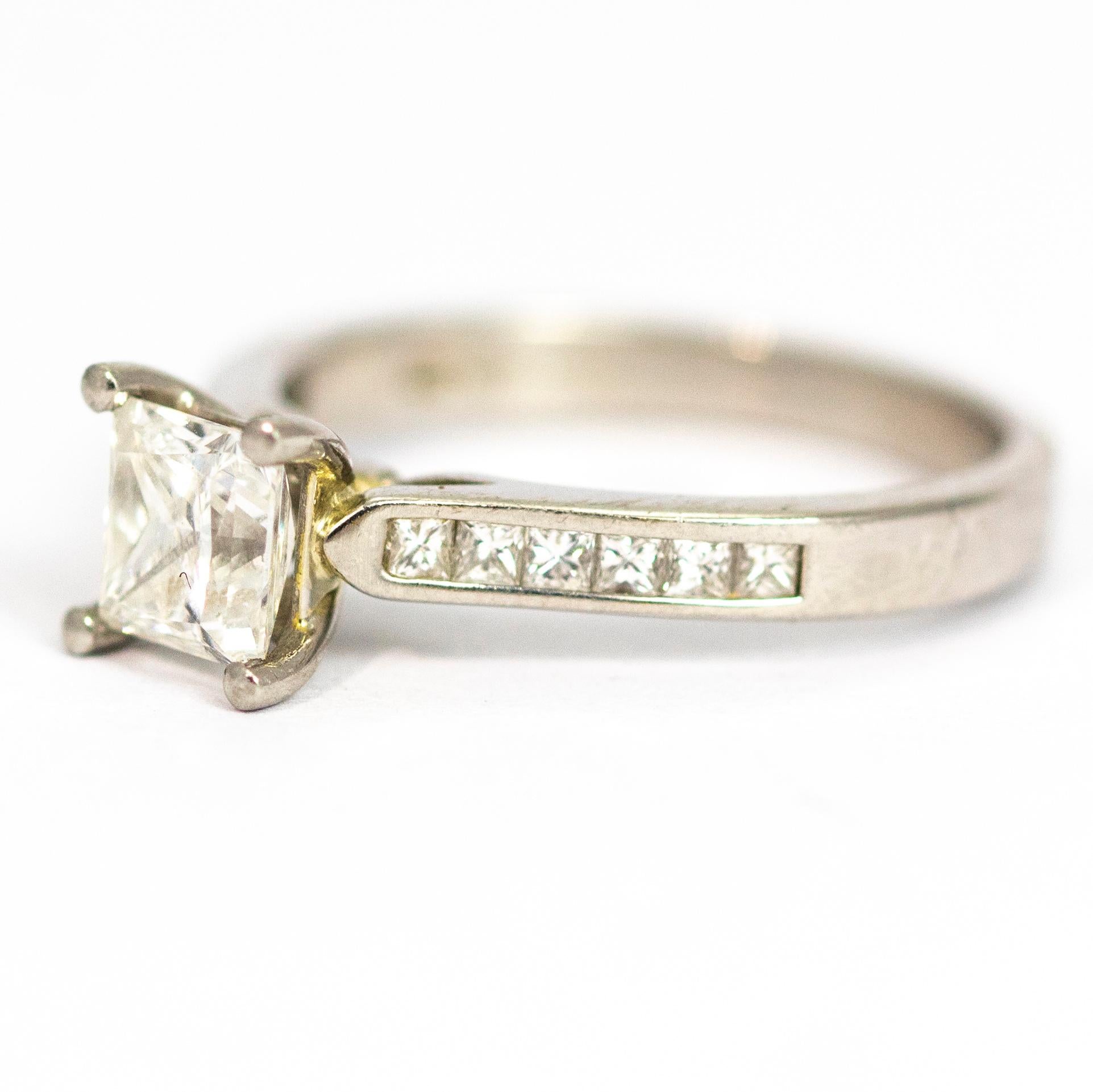
Because the princess cut reached its peak popularity in the 1980s and 1990s, many "true vintage" princess cut rings reflect the aesthetics of those decades—often featuring yellow gold, channel settings, and heavy, polished surfaces. However, contemporary "vintage-style" rings frequently look further back for inspiration, borrowing from the 1920s Art Deco movement. These designs use the square diamond to emphasize the era's obsession with bold geometry and structural integrity.
Identifying Key Vintage Design Elements
A vintage princess cut ring is defined more by its setting than the stone itself. If you are looking for a ring that captures an heirloom aesthetic, look for the following characteristics:
Milgrain and Filigree
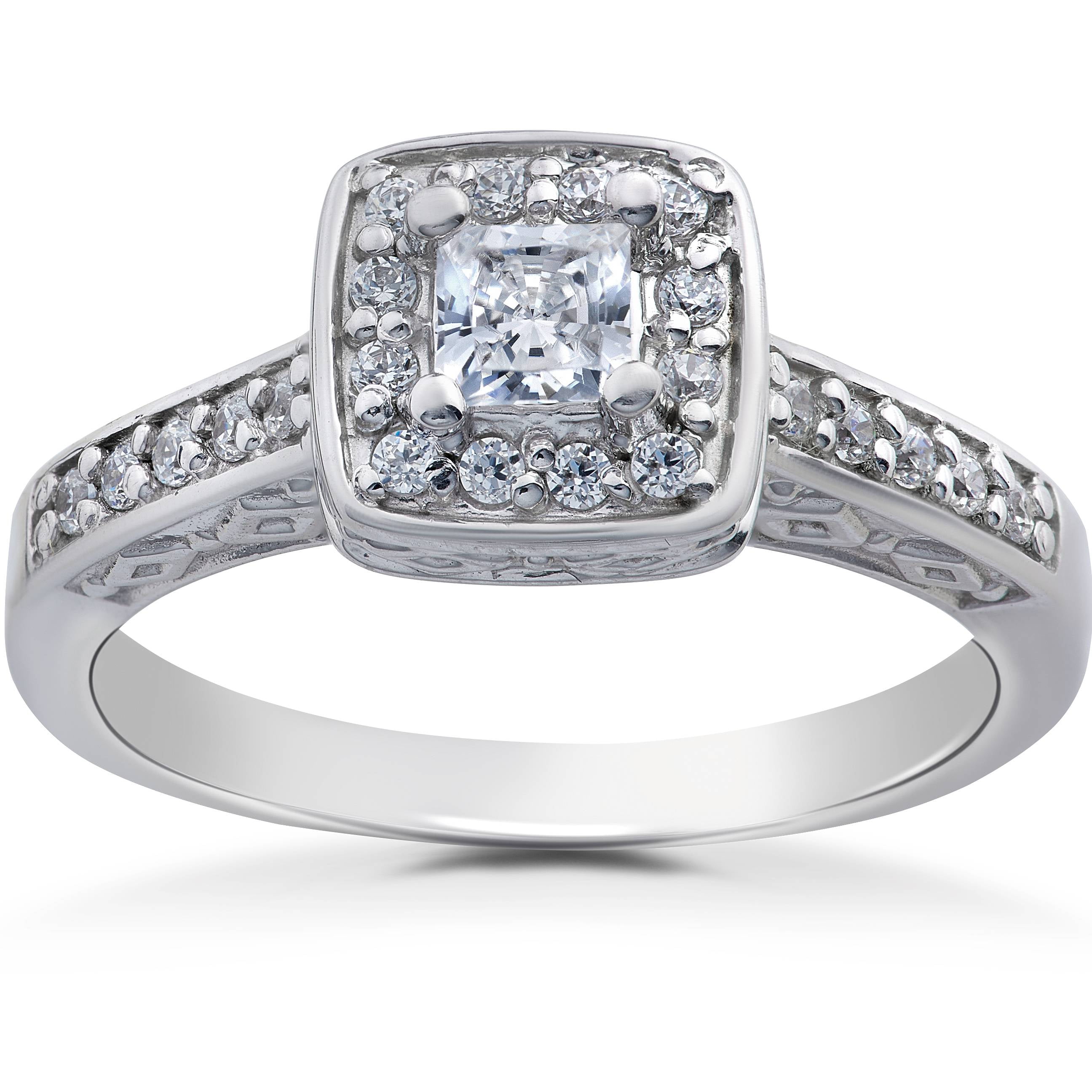
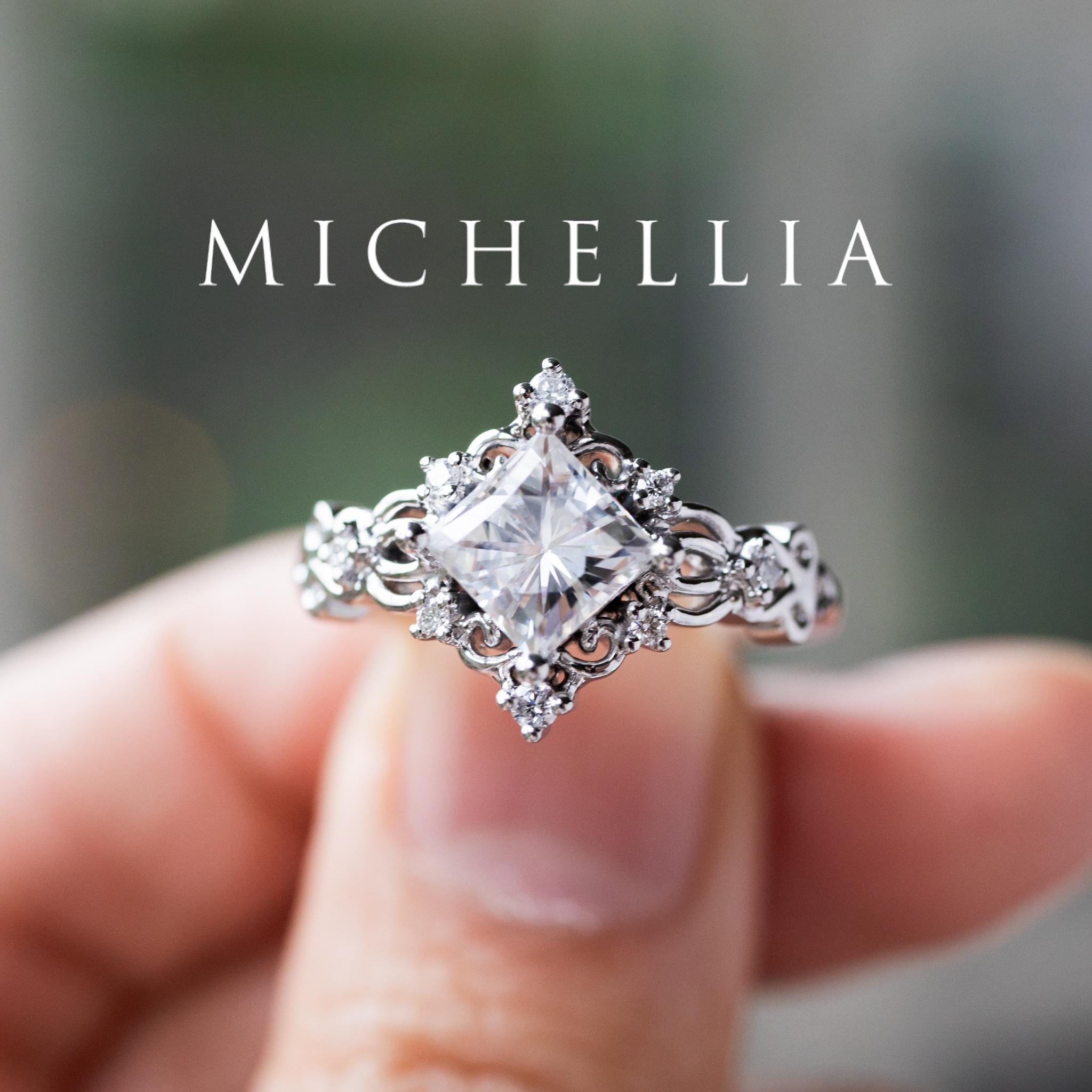
Milgrain (or millgrain) refers to the "thousands of grains" of tiny metal beads used to decorate the edges of a setting. This technique was a staple of Edwardian and Art Deco jewelry, providing a textured, antique finish that breaks up the reflection of the polished metal. Filigree involves the use of delicate metal wires twisted into intricate patterns, such as vines, hearts, or geometric shapes, often appearing in the "gallery" (the side view) of the ring.
Hand-Engraving
In 2026, while many rings are cast using 3D printing, high-end vintage-style rings are still finished with hand-engraving. Patterns like wheat, scrollwork, or floral motifs are carved directly into the shank of the ring. This adds a level of craftsmanship and "soul" to the piece that distinguishes it from mass-produced modern jewelry.
Metal Choices
While platinum was the preferred metal for the intricate work of the early 1900s, many vintage princess cut rings from the late 20th century are found in 14k or 18k yellow gold. For a modern vintage-inspired look, "rose gold" has become a popular choice as its warm hue complements the brilliance of the princess cut while suggesting an aged, romantic feel.
Technical Specifications: The 4Cs in Princess Cuts
When selecting a princess cut diamond for a vintage setting, the technical grading (Cut, Color, Clarity, and Carat) behaves differently than it does with round diamonds.
- Cut: This is the most critical factor. Look for a "Total Depth" between 65% and 75%. A stone that is too deep will look smaller than its carat weight suggests, while one that is too shallow will lose its brilliance.
- Color: Princess cuts tend to show more color than round diamonds, especially in the corners. If you are setting the diamond in platinum or white gold, aim for a Color grade of H or better. If you prefer a yellow gold vintage setting, you can often drop to a J or K grade, as the metal's warmth will mask the diamond's tint.
- Clarity: Because of the "crushed ice" look created by the princess cut's facets, inclusions are often better hidden than in step-cuts like the Emerald cut. An SI1 (Slightly Included) grade is typically the "sweet spot" for value.
- The Chevron Count: On the pavilion (the bottom) of the diamond, you will see V-shaped facets called chevrons. A diamond with two chevrons will produce larger, bolder flashes of light. A diamond with four or more chevrons will have a more "twinkling" or "sparkly" appearance.
Comparing Vintage Styles for Princess Cut Rings
| Style Category | Primary Era Influence | Key Visual Features | Best For |
|---|---|---|---|
| Art Deco | 1920s - 1930s | Symmetrical lines, baguette side stones, step-cut accents. | Those who love bold, architectural looks. |
| Edwardian | 1901 - 1915 | Platinum lace, filigree, floral motifs, milgrain edges. | Romantic, delicate, and feminine aesthetics. |
| Retro/Estate | 1970s - 1990s | Yellow gold, channel settings, heavy bands, polished surfaces. | Collectors of authentic late-20th-century history. |
| Victorian-Style | 1837 - 1901 | Rose gold, halo settings, cluster arrangements. | A maximalist, antique-inspired "royal" look. |
Critical Considerations: Durability and Settings
The most significant technical challenge with the princess cut diamond is the vulnerability of its four corners. These corners come to a sharp point, making them prone to chipping if they strike a hard surface.
In a vintage-style ring, protection is often achieved through V-prong settings. These prongs wrap around the corners in a V-shape, shielding the points from impact. Alternatively, a bezel setting (where a rim of metal surrounds the entire perimeter of the stone) offers the highest level of protection and is a common feature in Art Deco-inspired designs.
When inspecting a vintage-style ring, ensure the prongs are substantial enough to hold the stone securely without overwhelming its silhouette. In genuine estate pieces from the 1980s, check for "prong wear." Over decades, gold prongs can thin out, potentially requiring a jeweler to "re-tip" them to ensure the diamond remains safe.
Maintenance and Care for Intricate Settings
Vintage-style rings require more maintenance than simple solitaires. The nooks and crannies created by filigree and milgrain are magnets for dirt, lotion, and soap residue. To maintain the ring's brilliance in 2026, owners should:
- Professional Cleaning: Visit a jeweler twice a year for an ultrasonic cleaning and a "prong check."
- Home Care: Use a soft-bristled toothbrush and a solution of warm water and mild dish soap to gently scrub the underside of the diamond and the filigree work.
- Safe Storage: Always store the ring in a fabric-lined box. Because diamonds are the hardest natural substance, a princess cut ring can easily scratch other jewelry if left loose in a tray.
Frequently Asked Questions
Is the princess cut considered a "true" antique diamond?
Technically, no. A "true" antique diamond is generally defined as being over 100 years old. Since the princess cut was perfected in the late 1970s, it is considered a "modern" or "vintage" cut (if it is from an older estate collection), but it does not qualify as an antique in the same way an Old Mine cut does.
Do princess cut diamonds look smaller than round diamonds?
Yes, typically. Because princess cuts are cut deeper to maximize brilliance, they often have a smaller "face-up" surface area than a round diamond of the same carat weight. For example, a 1-carat round diamond is approximately 6.5mm in diameter, while a 1-carat princess cut is usually around 5.5mm.
What is the best metal for a vintage princess cut ring?
Platinum is highly recommended for vintage styles because its density allows for extremely fine, durable filigree and milgrain work. However, 18k yellow gold is a period-accurate choice for 1980s estate rings and provides a beautiful contrast to the white brilliance of the diamond.
Are princess cut diamonds more affordable than round diamonds?
Generally, yes. When a rough diamond is cut into a round shape, a significant amount of the stone is wasted (up to 60%). A princess cut follows the natural square shape of an octahedral diamond crystal, resulting in less waste (usually only 20-30%). This efficiency allows manufacturers to price princess cuts roughly 20% to 30% lower than round diamonds of equivalent quality.
Can I put a princess cut diamond into an actual antique setting?
It is difficult. Most authentic antique settings (from the 1800s or early 1900s) were designed for rounder, deeper stones like the Old European cut. Fitting a square princess cut into these settings often requires significant modification by a master goldsmith, which can compromise the integrity of the original piece. It is usually better to buy a "vintage-style" setting designed specifically for a square stone.
Final Recommendation
When purchasing a vintage princess cut diamond engagement ring in 2026, focus on the structural integrity of the corners. Ensure the diamond is held by V-prongs or a full bezel to prevent chipping. If you are buying an estate piece, prioritize stones with a GIA (Gemological Institute of America) report to verify that the diamond's proportions provide the necessary light return for that classic "sparkle." For those seeking the vintage look with a modern conscience, consider a vintage-inspired setting paired with a lab-grown princess cut, which offers the same physical properties and aesthetic beauty at a more accessible price point.
Image Gallery