Do Paleontologists Make a Decent Living? Understanding Salaries, Career Paths, and Financial Realities
Whether paleontologists make a decent living depends largely on their specific employment sector, level of education, and geographic location. While academic positions offer steady middle-class salaries, consulting, petroleum explorati...
Whether paleontologists make a decent living depends largely on their specific employment sector, level of education, and geographic location. While academic positions offer steady middle-class salaries, consulting, petroleum exploration, and government roles often yield significantly higher compensation, though truly wealthy paleontologists are rare.
Contents
The field of paleontology—the scientific study of prehistoric life through fossils—evokes images of adventurous fieldwork, dusty desert excavations, and groundbreaking museum discoveries. Yet, behind the romanticized portrayal in popular culture lies a traditional professional career path governed by standard labor markets, funding fluctuations, and educational prerequisites. Examining whether this specialized scientific profession provides a comfortable financial foundation requires a detailed look at salary distributions, employment sectors, educational investments, and economic realities.
The Financial Reality: Average Salaries and Compensation Ranges
To understand if a paleontologist makes a decent living, examining concrete compensation data is essential. According to data aggregated by the United States Bureau of Labor Statistics (BLS) for geoscientists—a broader category that encompasses paleontologists—the median annual wage sits significantly above the national average for all occupations. However, aggregated federal data can mask the nuanced variations unique to paleontology, where positions are far less abundant than in traditional geology or environmental science.
Most entry-level academic and museum positions start near the lower end of the professional spectrum, often requiring candidates to hold advanced degrees before securing paid employment. Conversely, mid-to-late-career professionals who transition into applied fields, administration, or corporate consulting routinely command salaries that comfortably support a middle- to upper-middle-class lifestyle.
To break down these earnings clearly, the following table outlines the approximate compensation tiers across various employment sectors for professional paleontologists:
| Employment Sector | Entry-Level Salary Range | Mid-Career Salary Range | Senior/Experienced Salary Range |
|---|---|---|---|
| Academia (University/College) | $45,000 – $65,000 | $70,000 – $95,000 | $100,000 – $150,000+ |
| Museums & Research Institutes | $40,000 – $55,000 | $60,000 – $85,000 | $90,000 – $130,000 |
| Government (State/Federal) | $50,000 – $70,000 | $75,000 – $105,000 | $110,000 – $145,000 |
| Energy & Petroleum Industry | $75,000 – $105,000 | $120,000 – $160,000 | $170,000 – $220,000+ |
| Environmental & CRM Consulting | $55,000 – $75,000 | $80,000 – $110,000 | $115,000 – $150,000 |
Educational Prerequisites and the Cost-to-Income Ratio
A critical factor in determining whether a paleontologist makes a decent living is the high barrier to entry. Becoming a professional paleontologist requires a substantial investment of time and money, typically culminating in a Doctor of Philosophy (Ph.D.) degree.
The educational roadmap generally follows a strict sequence:
- Undergraduate Degree (B.S. or B.A.): A four-year degree focusing on geology, biology, or earth sciences, laying the groundwork in evolutionary theory, stratigraphy, and anatomy.
- Graduate Education (M.S. or Ph.D.): Master's and doctoral programs where students specialize in specific taxonomic groups (such as microfossils, vertebrates, or paleobotany) and conduct original field or laboratory research.
- Postdoctoral Fellowships: Temporary research positions lasting one to three years, often necessary to build a publication record before securing a permanent faculty or curator role.
While Ph.D. candidates in the sciences frequently receive tuition waivers and modest stipends as Graduate Teaching or Research Assistants, the opportunity cost of spending five to seven years in graduate school instead of earning a standard full-time salary is substantial. When weighing student loan burdens against starting salaries, early-career paleontologists may initially experience financial strain before achieving wage growth in their late twenties or early thirties.
Employment Sectors: Where Do Paleontologists Work?
Where a paleontologist finds employment dictates their financial trajectory. The discipline is divided into distinct sectors, each with unique economic drivers, funding mechanisms, and lifestyle implications.
Academia and Higher Education
University professors and lecturers balance teaching duties with ongoing fossil research and publication. Tenure-track positions at universities offer job security and predictable salary scales, with full professors at major research institutions earning six figures. However, competition for tenure-track slots is fierce, forcing many qualified PhDs into low-paying, non-tenure adjunct roles with minimal benefits.
Museums and Cultural Institutions
Natural history museums employ paleontologists as curators, collection managers, and educators. These roles blend scientific research with public outreach. Salaries in museums are historically modest compared to private industry, but professionals in these positions often enjoy high job satisfaction, institutional prestige, and deep engagement with the public.
Government Agencies
Federal and state agencies—such as the United States Geological Survey (USGS), Bureau of Land Management (BLM), and state geological surveys—hire paleontologists to manage, protect, and assess fossil resources on public lands. Government employment typically provides competitive compensation, robust health benefits, and reliable pension plans, making it one of the most stable career paths in the field.
Private Industry: Energy and Environmental Consulting
Often overlooked by the general public, applied paleontology plays a crucial role in commercial industries. Micropaleontologists—who study microscopic fossils like foraminifera—are hired by energy corporations to date rock strata and assess subterranean basins during oil, gas, and mineral exploration. Additionally, Cultural Resource Management (CRM) firms hire paleontologists to monitor construction sites and ensure compliance with federal preservation laws when fossils are unearthed during real estate development or infrastructure projects. These applied sectors offer the highest compensation in the discipline.
Factors Influencing Earning Potential
Beyond the chosen employment sector, several variables dictate whether an individual paleontologist achieves financial comfort:
- Geographic Location: Salaries vary widely based on regional cost of living and the local concentration of academic institutions, energy hubs, or government agencies. Paleontologists working in major metropolitan areas or regions with heavy energy extraction activity generally command higher base salaries than those in rural or economically depressed areas.
- Specialization and Technical Skills: Professionals who master high-demand technical skills—such as geometric morphometrics, stable isotope analysis, computed tomography (CT) scanning, or geographic information systems (GIS)—are more marketable and can command higher consultancy fees.
- Grants and External Funding: For academic and museum researchers, personal initiative in securing competitive research grants from organizations like the National Science Foundation (NSF) can supplement income, fund travel, and secure graduate student assistants, thereby advancing their academic rank and earning potential.
Common Misconceptions About a Paleontologist's Life
Pop culture franchises often portray paleontology as an action-packed career filled with continuous blockbuster discoveries, exotic international travel, and comfortable financing. In reality, the day-to-day work of a professional paleontologist is heavily administrative, analytical, and laboratory-bound.
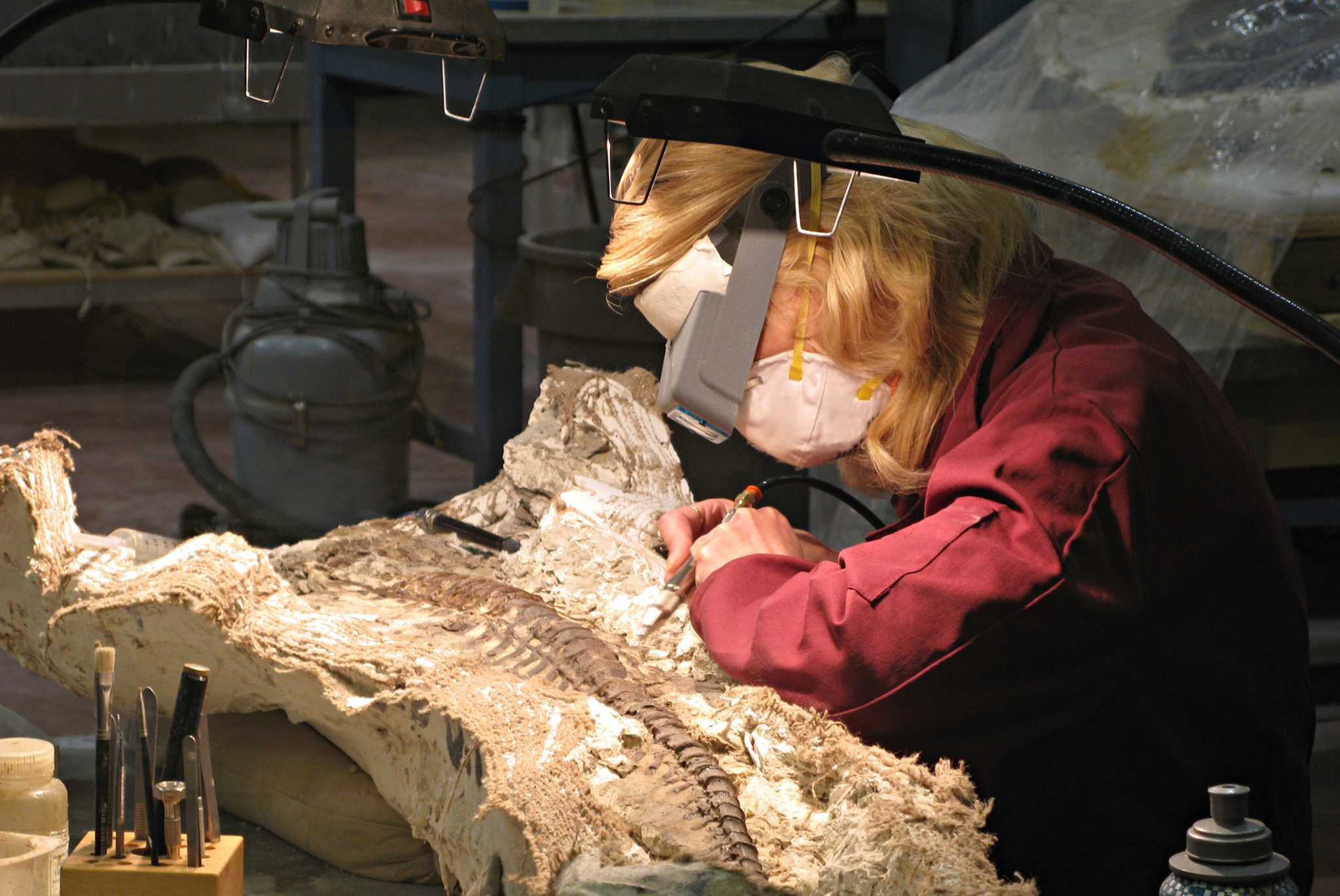
Most working paleontologists spend very little time actively chiseling dramatic dinosaur skeletons out of canyon walls. Instead, a typical week involves writing grant proposals, teaching undergraduate classes, sorting through sediment under microscopes, preparing peer-reviewed manuscripts, and managing museum collection databases. Furthermore, independent fieldwork is physically demanding, seasonal, and often funded through tight, scrutinized budgets rather than endless institutional reserves. Recognizing these realities helps prospective students align their vocational expectations with actual working conditions.
Frequently Asked Questions
Can you get rich as a paleontologist?
No, paleontology is not a wealth-generating profession. While experienced consultants, energy-sector scientists, and senior university professors can earn comfortable upper-middle-class incomes, true wealth accumulation through salary alone is virtually non-existent in this field. Individuals enter paleontology primarily out of a passion for scientific discovery rather than financial gain.
Do paleontologists travel a lot for work?
Fieldwork opportunities vary dramatically by specialization. Vertebrate paleontologists and field geologists may spend several weeks a year excavating in remote regions, whereas micro-paleontologists, paleobotanists, and museum curators often spend most of their time in laboratories, offices, and classrooms, traveling only occasionally for academic conferences.
Is a Ph.D. strictly required to work in paleontology?
While it is technically possible to secure entry-level laboratory technician, museum preparator, or field assistant positions with a bachelor's or master's degree, a Ph.D. is practically mandatory for anyone wishing to lead independent research projects, direct museum collections, or secure tenure-track university professorships.
How competitive is the job market for paleontologists?
The job market is highly competitive. Because paleontology is a niche scientific discipline with a limited number of academic institutions, museums, and government positions, hundreds of qualified Ph.D. graduates frequently compete for a single open faculty or curator position, requiring many to seek alternative paths in education, secondary teaching, or environmental consulting.
What undergraduate major should I choose to become a paleontologist?
Most aspiring paleontologists major in geology, earth sciences, or biology. A dual focus or a major in one paired with a robust minor in the other provides the ideal interdisciplinary foundation required for graduate school admissions.
Next Steps and Professional Guidance
For students and career-switchers considering this path, the best immediate action is to reach out directly to university departments or local natural history museums to conduct informational interviews with practicing scientists. Reviewing course catalogs for strong geology and biology programs, seeking undergraduate research opportunities in fossil preparation or stratigraphy, and exploring applied environmental science internships will provide a realistic, firsthand perspective on whether the daily demands and financial realities of paleontology align with your professional goals.
Image Gallery