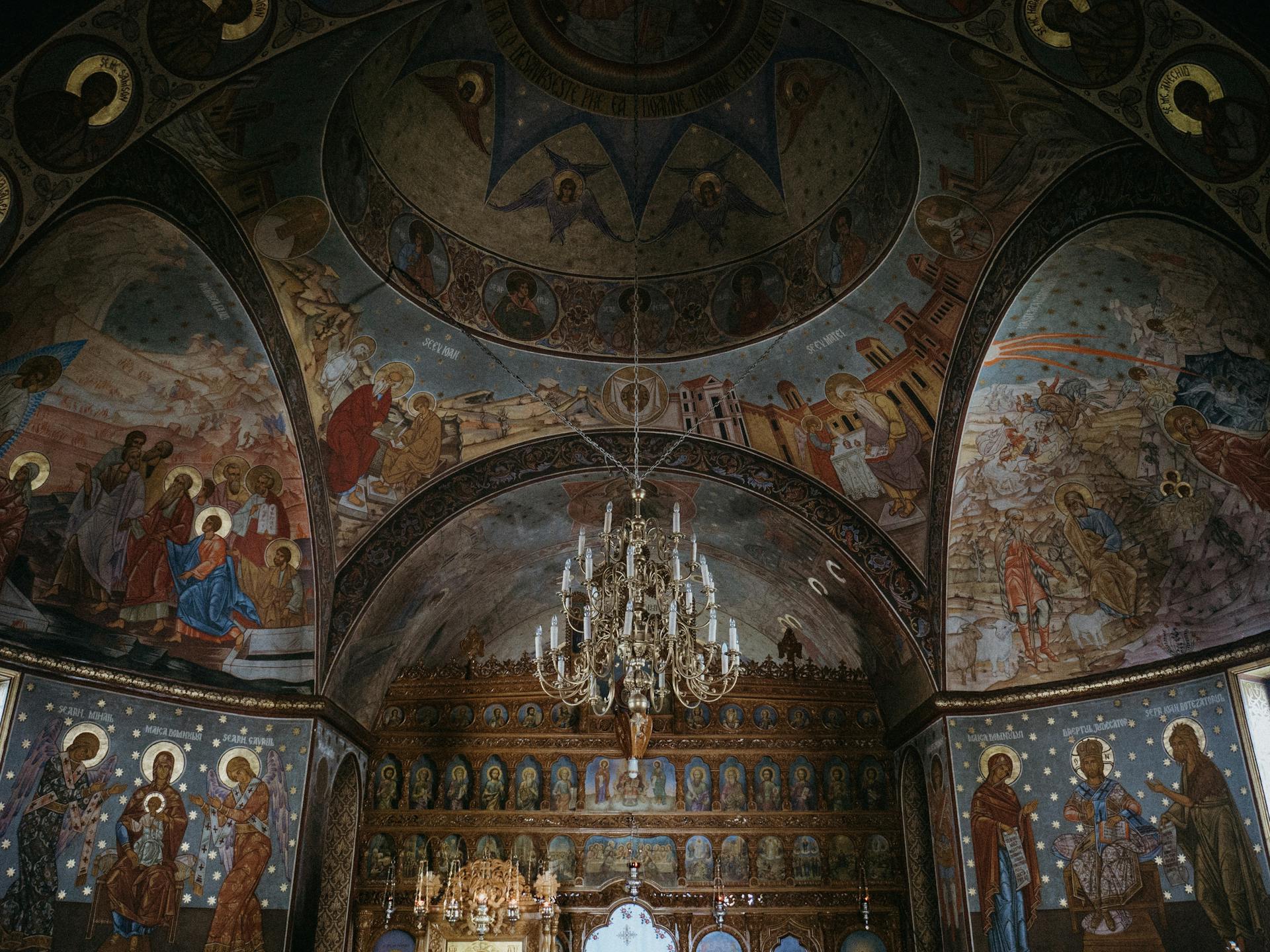
The Orthodox Church of France: History and Structure
The Orthodox Church of France encompasses a rich tapestry of historical development, canonical status, and ecclesial organization that bridges Western Christian heritage with Eastern Orthodox theology. Rooted in early Gallican Christia...
The Orthodox Church of France encompasses a rich tapestry of historical development, canonical status, and ecclesial organization that bridges Western Christian heritage with Eastern Orthodox theology. Rooted in early Gallican Christianity and shaped by 20th-century Russian emigration, its structure reflects a unique synthesis of local autonomy, canonical oversight, and liturgical adaptation within a predominantly secular Western European nation.
Contents
Introduction to Western Rite and Eastern Orthodoxy in France
The presence of Eastern Orthodoxy in France is not merely a transplant of Slavic or Greek traditions onto Western soil; it represents a conscious effort to restore and maintain the ancient Orthodox heritage of pre-schism Western Europe. While the vast majority of Orthodox Christians in France belong to traditional diaspora jurisdictions—such as the Ecumenical Patriarchate, the Metropolis of France, the Moscow Patriarchate, and the Romanian Patriarchate—a distinct movement known as the Orthodox Church of France (Église Orthodoxe de France) has historically sought to cultivate a fully indigenous Western Rite expression of the faith.
Understanding this community requires navigating a complex landscape of canonical jurisdictions, historical revivals, and administrative reorganizations. The narrative involves early 20th-century theological visionaries, waves of political refugees from Eastern Europe, and ongoing efforts to maintain canonical communion with global Orthodox patriarchates while preserving a distinctly French liturgical and cultural identity.
Historical Foundations: From Early Gallican Roots to Modern Revival
The history of Christianity in France stretches back to the first centuries of the common era, long before the Great Schism of 1054 divided the Eastern and Western Churches. The ancient Church of Gaul possessed its own liturgical traditions—known as the Gallican Rite—alongside distinct regional customs and a robust array of local saints venerated before the separation of East and West.
The Pre-Schism Heritage
For contemporary Orthodox Christians in France, the pre-schism era serves as a spiritual foundation. The veneration of saints such as Saint Irenaeus of Lyon, Saint Martin of Tours, Saint Genevieve, and Saint Germain of Auxerre links modern practitioners directly to the soil of France. When modern Orthodox communities seek to establish a local presence, recovering these ancient Western saints and liturgical forms is often central to their mission.
The Russian Emigration and the Genesis of the French-Speaking Mission
The modern institutional framework of Orthodoxy in France began to take shape following the 1917 Russian Revolution. Waves of emigration brought thousands of educated Russians, intellectuals, and clergy to Paris, transforming the French capital into a major center of Orthodox theology, philosophy, and publishing. Institutions like the St. Sergius Orthodox Theological Institute (Institut de Théologie Orthodoxe Saint-Serge), founded in 1925, became intellectual hubs that attracted not only Russian exiles but also inquiring French intellectuals.
During the mid-20th century, figures such as Bishop Jean Kovalevsky, under the guidance of visionary hierarchs like Archbishop John Maximovitch, spearheaded the movement to revive the ancient Western Rite within Orthodoxy. This movement aimed to use translated and restored versions of ancient Latin and Gallican liturgies while adhering strictly to Eastern Orthodox dogma.
| Historical Phase | Key Characteristics | Major Figures / Institutions |
|---|---|---|
| Ancient Era | Undivided Church, Gallican Rite, local saints | Saint Irenaeus, Saint Martin of Tours |
| Russian Emigration | Establishment of diaspora parishes, theological scholarship | St. Sergius Institute, Metropolitan Evlogy |
| Western Rite Revival | Adaptation of ancient Western liturgies for Orthodox use | Bishop Jean Kovalevsky, Kovalevsky Tradition |
| Contemporary Era | Plurality of jurisdictions, administrative restructuring | Metropolis of France, Assembly of Orthodox Bishops |
Canonical Status and Jurisdictional Structure
Unlike countries with a single autocephalous (self-governing) national church, France—like much of Western Europe—operates under a multi-jurisdictional model. This structural reality stems from canonical principles regarding diaspora populations, where multiple bishops of different ethnic or historical backgrounds exercise pastoral care within the same geographical territory.
The Metropolis of France (Ecumenical Patriarchate)
The Greek Orthodox Metropolis of France, operating under the direct omophorion of the Ecumenical Patriarchate of Constantinople, holds a prominent administrative position. Established formally in its current structure in 1963, the Metropolis coordinates numerous Greek-speaking and local French-speaking parishes. The Metropolitan of France also presides over the Assembly of Orthodox Bishops of France, which aims to foster administrative and pastoral cooperation among all canonical Orthodox jurisdictions in the country.
Other Canonical Jurisdictions
In addition to the Ecumenical Patriarchate, several other autocephalous Churches maintain active dioceses, deaneries, and parishes across France:
- Moscow Patriarchate: Maintains parishes and representation, historically tied to deep-rooted Russian emigration communities as well as newer missions.
- Patriarchate of Romania: Experiences significant growth due to modern migration, operating numerous parishes that serve the Romanian diaspora and local converts.
- Patriarchate of Serbia, Bulgaria, and Antioch: All maintain smaller communities or parishes catering to specific ethnic groups and local language speakers.
The Autonomous and Independent Streams
The specific entity historically designated as the Église Orthodoxe de France (EOF), founded by Kovalevsky, has experienced a complex canonical journey. Over the decades, it has navigated periods of full integration into recognized canonical bodies (such as the Moscow Patriarchate and later the Romanian Patriarchate) and periods of administrative independence or reorganization. Maintaining canonical recognition—ensuring Eucharistic communion with the worldwide Orthodox plenitude—remains a central focus for communities balancing local liturgical inculturation with global church order.
Liturgical Practice and Theological Life
The liturgical life of the Orthodox Church in France reflects a fascinating duality: the preservation of deep Eastern Byzantine traditions alongside the active use of Western liturgical forms in specific communities.
Byzantine Rite Parishes
The vast majority of Orthodox faithful in France worship using the Byzantine Rite. Services are conducted in French, Church Slavonic, Greek, Romanian, or Arabic, depending on the demographic makeup of the specific parish. In many urban centers, parishes explicitly adopt French as the primary liturgical language to ensure accessibility for inquirers, catechumens, and younger generations of French-born believers.
Western Rite Parishes
For communities utilizing the Western Rite (sometimes referred to as the Orthodox Western Rite or the Gallican Rite), the liturgy is modeled on ancient Western Eucharistic prayers, such as the ancient Roman Canon or restored Gallican liturgies, adapted to conform precisely to Orthodox dogmatic definitions regarding the procession of the Holy Spirit, the nature of the sacraments, and papal authority. This approach allows Western Europeans to embrace Orthodoxy without abandoning their native liturgical heritage.
The Assembly of Orthodox Bishops of France
To address the challenges of overlapping jurisdictions and to present a unified witness in French society, the Assembly of Orthodox Bishops of France (Assemblée des Évêques Orthodoxes de France - AEOF) was established. The Assembly brings together the hierarchs representing the various canonical jurisdictions present in the country.
While not an autocephalous synod with administrative authority to override individual patriarchates, the AEOF coordinates efforts in several key areas:
- Pastoral Collaboration: Addressing common educational, youth, and chaplaincy needs in hospitals, prisons, and universities.
- Inter-Christian Dialogue: Representing the Orthodox voice in theological dialogues with the Roman Catholic Church and Protestant bodies in France.
- Public Representation: Engaging with the French state on matters related to religious freedom, legal status, and secularism (laïcité).
Legal and Administrative Framework in France
Religious organizations in France operate under specific legal frameworks governed by the Law of 1905 concerning the separation of Church and State (loi de 1905 concernant la séparation des Églises et de l'État), as well as subsequent amendments regarding religious associations (associations cultuelles).
Orthodox parishes and dioceses typically organize themselves as associations cultuelles to manage places of worship, property, and financial administration. Because France maintains a strict constitutional framework of laïcité (secularism), religious groups receive no direct state funding for religious operations, relying entirely on donations, membership contributions, and the dedicated efforts of local faithful. Navigating these legal requirements is a critical administrative task for parish councils and diocesan offices alike.
Frequently Asked Questions
What is the Orthodox Church of France?
The Orthodox Church of France refers broadly to the presence of Eastern Orthodoxy in the country, encompassing traditional diaspora jurisdictions (such as Greek, Russian, and Romanian metropolises) as well as specific historical movements dedicated to establishing a local Western Rite Orthodox presence.
Are Western Rite Orthodox churches in full communion with mainstream Orthodoxy?
Yes, canonical Western Rite communities operate under the omophorion of recognized canonical patriarchates (such as the Moscow or Romanian Patriarchates, or historically other bodies) and maintain full Eucharistic communion with the global Orthodox Church, provided they adhere strictly to Orthodox dogmatic theology.
What language is used in French Orthodox liturgies?
While traditional diaspora parishes often use Greek, Church Slavonic, or Romanian, a significant number of parishes—especially those focused on local outreach—use the French language for the Divine Liturgy, scriptural readings, and pastoral instruction.
How is the Orthodox Church in France organized administratively?
France does not have a single, unified autocephalous national church. Instead, it is organized through various dioceses and metropolises under different canonical patriarchates. Coordination is facilitated by the Assembly of Orthodox Bishops of France (AEOF).
How does French secular law (laïcité) affect Orthodox institutions?
Under the French Law of 1905, religious bodies operate as non-profit religious associations (associations cultuelles). They are legally autonomous, receive no state financial subsidies for worship, and must self-fund their properties, clergy support, and community activities.
Conclusion and Next Actions
The Orthodox Church of France stands as a dynamic bridge between ancient Christian traditions and modern European society. For those seeking to explore or engage with this community, the primary step is to identify local canonical parishes—whether Byzantine or Western Rite—through official diocesan directories such as those provided by the Metropolis of France or the AEOF. Visitors and inquirers are generally encouraged to contact parish priests directly to understand service schedules, language usage, and catechism programs.
Image Gallery