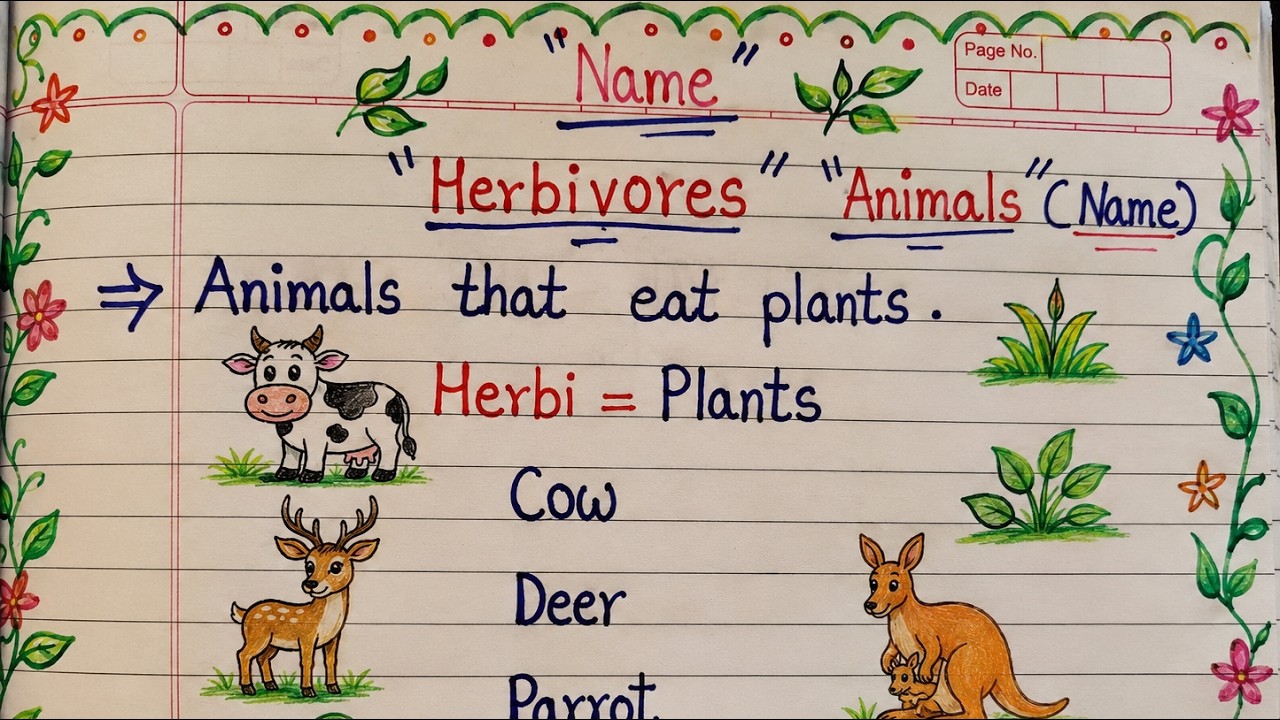
Herbivore Eat Dietary Patterns of Plant Feeding Animals
Herbivore dietary patterns represent complex evolutionary adaptations that allow animals to extract essential nutrients from fibrous plant matter. These animals employ diverse biological strategies, ranging from specialized digestive t...
Herbivore dietary patterns represent complex evolutionary adaptations that allow animals to extract essential nutrients from fibrous plant matter. These animals employ diverse biological strategies, ranging from specialized digestive tracts to symbiotic relationships with microorganisms, to break down cellulose and lignin. By consuming vegetation, herbivores serve as the critical primary consumers that facilitate energy transfer from solar-powered producers to the rest of the food web.
Contents
The Evolutionary Challenge of Plant-Based Diets
The primary difficulty faced by herbivores is that plants consist largely of cell walls composed of cellulose, hemicellulose, and lignin. Unlike proteins or simple sugars, these structural carbohydrates are notoriously difficult for most animals to break down using their own endogenous enzymes. Consequently, herbivores have evolved sophisticated mechanisms to access the intracellular contents of plant cells.
The dietary patterns of plant-feeding animals are broadly categorized by how they process this material. Some species are highly selective, choosing only the most nutrient-dense or easily digestible parts of a plant, such as flowers, fruits, or young shoots. Others are bulk feeders, consuming vast quantities of low-quality forage and relying on massive digestive chambers to extract what they can.
Anatomical Adaptations for Plant Digestion
To manage the high volume of low-energy material required for survival, herbivores have evolved distinct anatomical features. The most prominent of these are specialized teeth. Herbivorous mammals typically possess flattened molars and premolars designed for grinding tough plant fibers. Their incisors are often adapted for cropping vegetation, while many species lack upper incisors entirely, relying on a hard dental pad to grip forage against their lower teeth.
Beyond dentition, the length and complexity of the digestive tract are key indicators of a herbivore's dietary strategy. Because plant cell walls require extended residence times for fermentation, herbivores generally possess much longer guts compared to carnivores of similar body mass. This increased surface area and volume allow for the prolonged chemical and biological processing of cellulose.
Categorizing Herbivore Digestive Strategies
Ecologists generally classify herbivores based on their specific physiological approach to digestion. These strategies dictate the animal’s habitat selection, body size, and daily activity patterns.
Ruminant Digestion (Foregut Fermentation)
Ruminants, such as cattle, deer, and sheep, possess a multi-chambered stomach. The rumen acts as a vast fermentation vat teeming with bacteria, protozoa, and fungi. These microorganisms break down plant material before it reaches the animal's true stomach. A hallmark of this pattern is "rumination"—the act of regurgitating partially digested food (the cud) to re-chew it, which physically breaks down fibers to increase the surface area for microbial attack.
Hindgut Fermentation
Some herbivores, such as horses, rabbits, and elephants, lack a complex stomach but possess an enlarged cecum or colon where fermentation occurs. These animals are often more efficient at processing low-quality food quickly because they do not have the same "bottleneck" constraints as ruminants. However, they may be less efficient at extracting protein from microbes, sometimes compensating by practicing coprophagy, or the re-ingestion of specific fecal matter to recover bypassed nutrients.
Selective Foraging vs. Bulk Feeding
| Strategy | Feeding Behavior | Digestive Speed | Nutrient Quality |
|---|---|---|---|
| Concentrated Selectors | Browsing on leaves/fruit | Rapid passage | High |
| Intermediate Feeders | Mixed grass and browse | Moderate | Medium |
| Bulk/Roughage Feeders | Grazing on fibrous grass | Slow passage | Low |
The Role of Microbial Symbiosis
It is a biological certainty that no mammal possesses the endogenous enzymes necessary to break down cellulose entirely on its own. The dietary success of herbivores is almost entirely dependent on obligate symbiosis with microbial communities. These microbes provide the animal with volatile fatty acids (VFAs), which serve as the primary source of metabolic energy, and supply essential proteins and B-vitamins synthesized during the fermentation process.
In 2026, research into the "microbiome-host" axis continues to demonstrate that the health and efficiency of an herbivore are dictated as much by its internal flora as by its external food availability. Shifts in diet—such as moving from seasonal grasses to woody shrubs—can cause significant changes in the microbial population, necessitating a period of adaptation for the host to maintain efficient energy extraction.
Nutritional Requirements and Foraging Trade-offs
Herbivores must balance their intake of macro-nutrients with the presence of plant secondary metabolites. Many plants have evolved chemical defenses, such as tannins, alkaloids, and silica, to discourage consumption. Animals have consequently evolved various "counter-measures," including high-saliva production to neutralize tannins or specialized liver enzymes to detoxify ingested alkaloids.
Foraging Patterns
Herbivores do not feed randomly. They employ "optimal foraging theory," a model suggesting that animals choose dietary patterns that maximize their net energy intake per unit of time spent foraging. This involves:
- Patch Selection: Identifying areas with the highest density of preferred nutrients.
- Time Allocation: Balancing the time spent grazing with the time required to stay alert for predators.
- Nutritional Complementarity: Mixing different plant species to avoid the toxic threshold of any single defensive compound.
Common Challenges in Plant Feeding
While plants are abundant, they are often nutritionally incomplete. Minerals such as sodium, calcium, and phosphorus are frequently limiting factors in herbivore diets. This leads to specialized behaviors, such as visiting mineral licks or consuming bone or soil to rectify dietary deficiencies.
Another persistent issue is seasonality. In many ecosystems, the quality of plant biomass fluctuates drastically throughout the year. Animals must manage these cycles by accumulating fat stores during periods of abundance or undergoing metabolic shifts to survive on dormant, fibrous vegetation during winter or dry seasons.
Frequently Asked Questions
Why do herbivores have such long digestive tracts compared to other animals? The long digestive tract is necessary to provide the time and space required for microbial fermentation. Because cellulose is difficult to break down, it must reside in the gut for an extended duration to allow bacteria to ferment the fibers into usable energy.
What is the difference between grazing and browsing? Grazing refers to the consumption of grasses and low-lying herbaceous plants, typically performed by animals with broad muzzles. Browsing involves feeding on the leaves, soft shoots, or fruits of woody plants, bushes, and trees, often practiced by animals with narrower, more prehensile muzzles.
Do all herbivores only eat plants? While classified as herbivores, many plant-feeding animals are "opportunistic." They may consume insects or small vertebrates occasionally to supplement their protein or mineral intake, particularly during pregnancy or periods of extreme nutritional stress.
How do herbivores avoid being poisoned by toxic plants? Herbivores utilize sensory cues like taste and smell to detect defensive chemicals. Furthermore, many have evolved specialized metabolic pathways in the liver to break down common plant toxins, and others use "dilution strategies" by eating a diverse array of different plants to prevent the accumulation of any single toxin.
How does climate change impact herbivore dietary patterns in 2026? Climate change alters the phenology—the timing of plant growth—and the nutritional value of forage. As growing seasons shift, herbivores may find that their traditional birthing cycles or migration patterns no longer align with the peak nutritional availability of their food sources, leading to reduced survival rates.
Practical Management and Observation
If you are observing herbivore dietary patterns for research or land management, focus on documenting the selectivity ratio. By comparing what is available in the environment to what is actually being consumed, you can identify the animal's nutritional priorities. Always prioritize the health of the habitat, as overgrazing by high-density populations can fundamentally alter the vegetation structure, preventing plant regeneration and degrading the very resource the herbivores depend upon.
Image Gallery