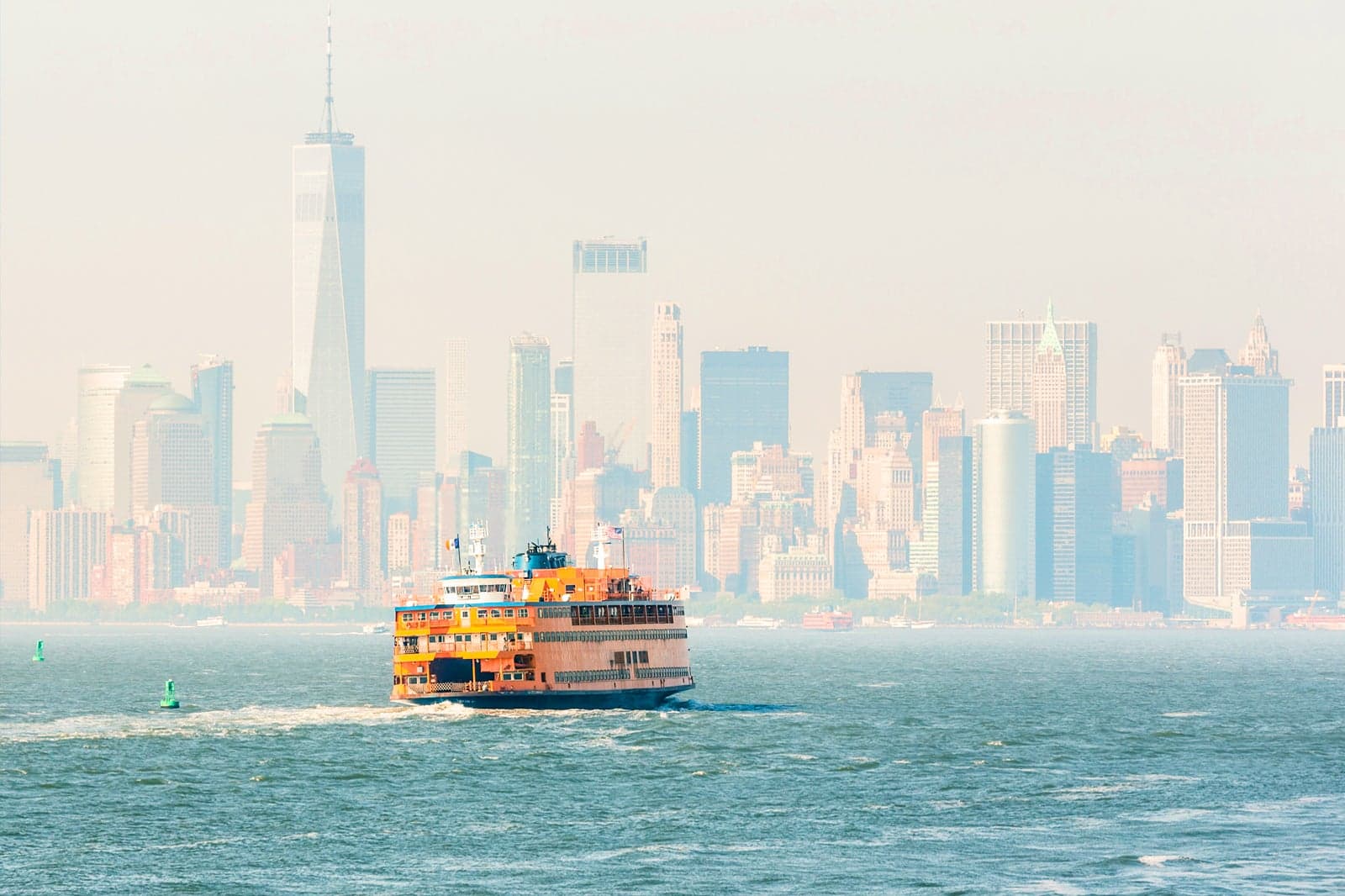
The Staten Island Ferry Route: A Guide to Free and Reliable Travel Across New York Harbor
The Staten Island Ferry provides a critical 5.2-mile transit link between the St. George Ferry Terminal on Staten Island and the Whitehall Terminal in Lower Manhattan. Operating 24 hours a day, 365 days a year, this municipal service i...
The Staten Island Ferry provides a critical 5.2-mile transit link between the St. George Ferry Terminal on Staten Island and the Whitehall Terminal in Lower Manhattan. Operating 24 hours a day, 365 days a year, this municipal service is completely free of charge, delivering reliable passage for over 22 million passengers annually across the heart of New York Harbor.
Contents
The Staten Island Ferry is more than just a transit line; it is an iconic fixture of New York City’s infrastructure. Managed by the New York City Department of Transportation (NYC DOT), the route serves as a "floating extension" of the city's subway and bus network. While its primary mission is to transport commuters between the boroughs, its path directly past the Statue of Liberty and Ellis Island has made it one of the most popular "unintentional" tourist attractions in the world. As of 2026, the ferry remains the only direct, non-vehicular link between Staten Island and Manhattan, maintaining a high standard of reliability and safety despite the logistical challenges of navigating one of the world's busiest harbors.
The Geography of the Route: St. George to Whitehall
The journey across New York Harbor spans approximately 5.2 miles (8.4 kilometers) and takes roughly 25 minutes under standard maritime conditions. The route is strategically designed to bypass the most congested commercial shipping lanes while providing a direct path between the southern tip of Manhattan and the northeastern shore of Staten Island.
The Whitehall Terminal (Manhattan)
Located at 4 South Street, the Whitehall Terminal serves as the northern terminus. Rebuilt and modernized in the early 2000s, the terminal features a state-of-the-art glass facade that provides panoramic views of the harbor even before boarding. It is a major multi-modal hub, providing immediate access to the MTA New York City Subway (R and W lines at Whitehall St-South Ferry station, and the 1 train at South Ferry station) as well as numerous bus routes (M15, M20, M55).
The St. George Terminal (Staten Island)
The St. George Terminal, located at 1 Bay Street, is the transit heart of Staten Island. It underwent significant renovations to accommodate the Empire Outlets shopping complex and the nearby Staten Island University Hospital Community Park (formerly Richmond County Bank Ballpark). This terminal facilitates transfers to the Staten Island Railway (SIR) and nearly every major bus route on the island. The terminal's layout is designed for high-volume pedestrian flow, ensuring that thousands of passengers can disembark and board within minutes.
Operational Reliability and Scheduling in 2026
Reliability is the hallmark of the Staten Island Ferry. In a city where traffic congestion can paralyze bridges and tunnels, the ferry maintains an on-time performance rate that frequently exceeds 90%. Because the vessels operate in a dedicated maritime corridor, they are immune to the vehicular gridlock that plagues the Verrazzano-Narrows Bridge.
Frequency of Service
The ferry operates on a rigorous schedule that adapts to the demands of the workweek. During peak morning and afternoon rush hours (typically 6:00 AM – 9:30 AM and 3:30 PM – 8:00 PM), boats depart every 15 to 20 minutes. During off-peak hours and weekends, the frequency shifts to every 30 minutes. Even in the middle of the night, the service continues with hourly or half-hourly departures, ensuring that Staten Island residents have 24/7 access to Manhattan.
Weather and Harbor Conditions
The NYC DOT maintains a high standard of safety regarding weather. While the ferry operates in rain, snow, and fog, service may be modified during extreme conditions such as hurricane-force winds or severe ice accumulation in the harbor. The heavy displacement of the ferry vessels—some weighing over 3,000 tons—allows them to handle choppy harbor waters with minimal disruption to passenger comfort.
The Modern Fleet: Technical Specifications of Ferry Vessels
As of 2026, the Staten Island Ferry fleet is a mix of older, high-capacity workhorses and modern, environmentally conscious vessels. The introduction of the Ollis-class ships has significantly improved the passenger experience and operational efficiency.
The Ollis-Class (The New Standard)
The Michael H. Ollis class, which entered service in the early 2020s, represents the newest generation of ferries. These 320-foot vessels were designed by Elliott Bay Design Group and built by Eastern Shipbuilding Group. They feature enhanced stability in heavy seas, modern climate control systems, and improved accessibility for passengers with disabilities.
- Capacity: Approximately 4,500 passengers.
- Propulsion: Four EMD 12-710 Tier 4 compliant engines, making them significantly cleaner than previous generations.
The Barberi and Molinari Classes
The Andrew J. Barberi and Samuel I. Newhouse (Barberi-class) are the largest in the fleet, capable of carrying 6,000 passengers. While older, they remain essential for handling the massive volume of the morning commute. The Molinari-class vessels (S.I. Newhouse, Guy V. Molinari, Senator John J. Marchi) were designed to resemble the classic ferries of the mid-20th century but feature modern Voith Schneider propulsion systems for exceptional maneuverability.
| Vessel Class | Typical Capacity | Service Entry | Primary Feature |
|---|---|---|---|
| Ollis Class | 4,500 | 2021–2022 | High efficiency, Tier 4 engines |
| Molinari Class | 4,400 | 2004–2006 | Classic aesthetic, side-loading |
| Barberi Class | 6,000 | 1981–1982 | Maximum capacity for rush hour |
| Kennedy Class | 3,000 | 1965 (Retired/Reserve) | Iconic design, largely replaced |
Passenger Experience and Security Protocols
Traveling on the Staten Island Ferry is a straightforward process, but there are specific regulations and "unwritten rules" that ensure the system functions smoothly.
The "No Round-Trip" Rule
Per federal maritime security regulations, all passengers must disembark at the end of every trip. Passengers wishing to return immediately must exit the boat, enter the terminal, and pass through the boarding gates for the next departure. This policy, enforced by the NYC DOT and the New York City Police Department (NYPD), prevents individuals from remaining on the vessel for multiple loops and assists in security sweeps between runs.
Security and Safety
Security on the ferry is a joint effort involving the NYPD, the U.S. Coast Guard, and private security contractors. Passengers may be subject to random bag screenings at terminal entrances. Onboard, K-9 units are frequently present. In terms of safety, each vessel is equipped with life jackets for every passenger, as well as inflatable life rafts, and the crews undergo regular emergency drill training to handle fire, medical, or water-rescue scenarios.
Amenities and Facilities
Both terminals and all vessels are equipped with restrooms. While some older vessels featured snack bars, the modern focus is on vending options and terminal-based dining. Both the Whitehall and St. George terminals offer a variety of food and beverage vendors, ranging from quick coffee shops to sit-down restaurants.
Navigating the Harbor: Sightseeing and Iconic Views
While commuters focus on the ferry as a utility, visitors often use it as a vantage point for viewing the New York City skyline. The 25-minute trip offers some of the most unobstructed views available of the following landmarks:
- The Statue of Liberty: The ferry passes within a few hundred yards of Liberty Island. For the best views when heading from Manhattan to Staten Island, passengers typically congregate on the starboard (right) side of the boat.
- Ellis Island: As the boat moves south, Ellis Island is visible just north of the Statue of Liberty, providing a sense of the historic entry point for millions of immigrants.
- Governors Island: Located just east of the ferry route, this former military base is now a major public park.
- The Manhattan Skyline: Looking back toward Whitehall, passengers can see the One World Trade Center and the dense cluster of skyscrapers in the Financial District.
- The Verrazzano-Narrows Bridge: Looking toward the south, the massive suspension bridge connecting Staten Island to Brooklyn dominates the horizon.
Connectivity and Integration with NYC Transit
The Staten Island Ferry is a vital link in a larger transit ecosystem. Its "free" status is a result of the 1997 "One City, One Fare" initiative, which eliminated the fare to unify the city's boroughs following the introduction of the MetroCard.
Seamless Transfers
- Staten Island Side: Upon arrival at St. George, passengers can walk directly to the Staten Island Railway platforms or the bus ramps. As of 2026, the OMNY (One Metro New York) contactless payment system is fully integrated across all connecting services, making the transition from the free ferry to the paid rail or bus seamless.
- Manhattan Side: The Whitehall Terminal is located directly above or adjacent to major subway entrances. The proximity to the Financial District also makes it a viable arrival point for thousands of office workers who walk to their destinations.
Bicycles and Micromobility
The ferry is a primary route for cyclists. Bicycles are permitted on the lower level of the vessels and must be walked onto and off the boat. In 2026, with the expansion of bike lanes on Staten Island and the continued popularity of electric bikes, the ferry remains the most convenient way for "micromobility" users to cross the harbor, as the Verrazzano-Narrows Bridge does not currently feature a pedestrian or bike lane.
Frequently Asked Questions
Is the Staten Island Ferry really free for everyone?
Yes, the ferry is 100% free for all passengers, including tourists. There is no ticket required and no need to show ID to board. The service is funded by the City of New York as a public transit necessity.
Can I bring my car on the Staten Island Ferry?
No. Since the security changes following September 11, 2001, vehicles have not been permitted on the Staten Island Ferry. The lower decks that once held cars are now used for passenger seating and bicycle storage. Drivers must use the Verrazzano-Narrows Bridge, the Goethals Bridge, the Outerbridge Crossing, or the Bayonne Bridge.
Does the ferry run on holidays?
Yes, the ferry runs 24 hours a day, 365 days a year, including Christmas, New Year's Day, and Thanksgiving. However, it typically operates on a holiday schedule (which usually follows the weekend/30-minute interval schedule) on these days.
How early should I arrive before a departure?
Because it is a high-capacity service and there are no tickets to buy, arriving 5 to 10 minutes before the scheduled departure is usually sufficient. During peak rush hour, the terminals can become very crowded, but the large capacity of the vessels ensures that almost everyone in the terminal can board a single boat.
Are pets allowed on the ferry?
Only service animals as defined by the Americans with Disabilities Act (ADA) are permitted on the ferry without restrictions. Other pets are allowed only if they are caged or muzzled, though enforcement is generally focused on ensuring the pet does not disturb other passengers.
Practical Recommendation for Travelers
For the most efficient experience, commuters should utilize the NYC DOT's mobile alerts or the official Staten Island Ferry website to check for real-time service disruptions. If you are a tourist, avoid the rush hour periods (7:00 AM – 9:00 AM and 4:30 PM – 6:30 PM) to ensure you have better access to the outdoor decks for photography. Always remember that you must exit the boat at the end of the line; if you plan a round trip for sightseeing, factor in at least 60 to 75 minutes to complete the full loop, including the mandatory disembarkation and re-boarding process.
Image Gallery