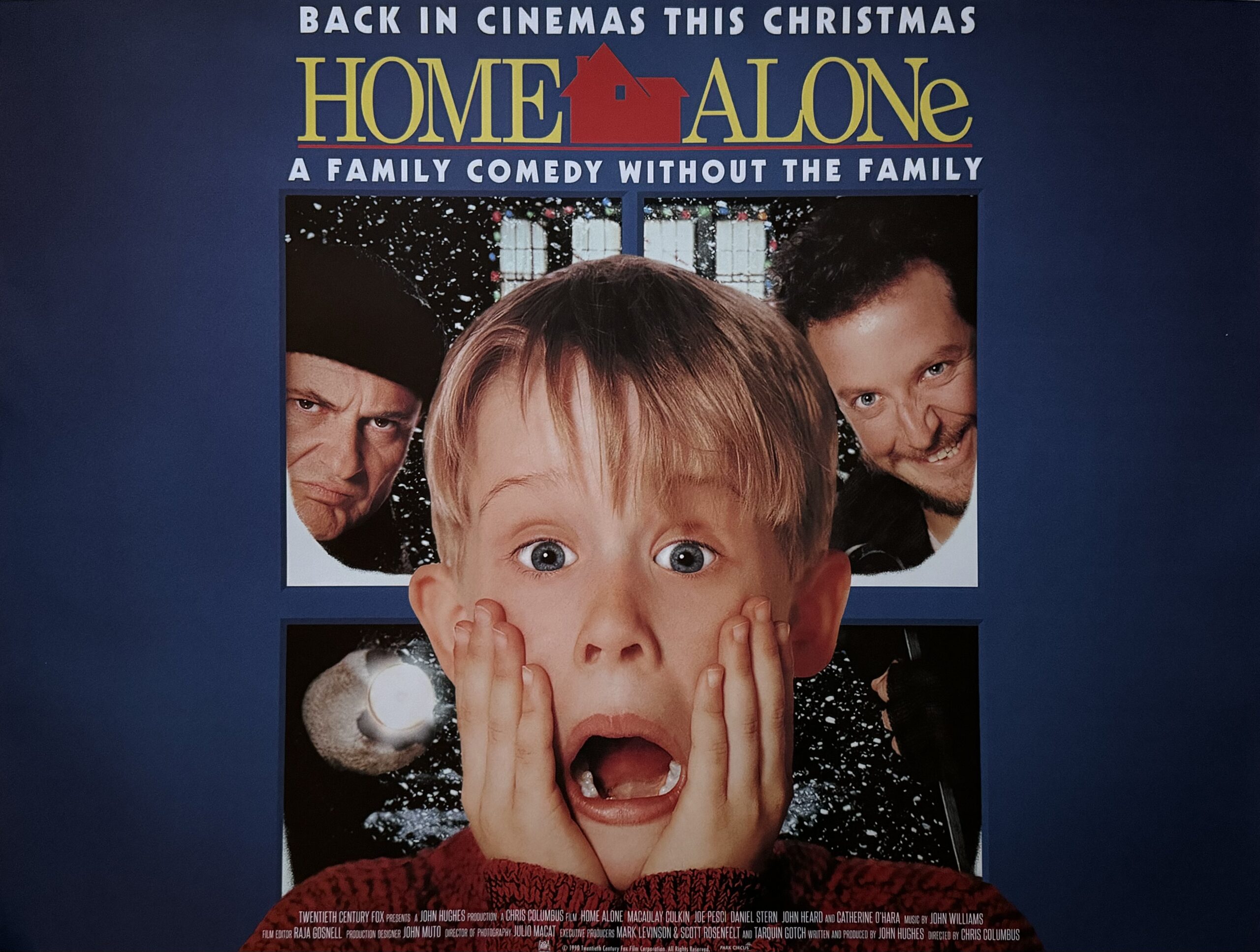
Home Alone Movie Review: The Enduring Magic of a Holiday Classic
Home Alone (1990) remains the quintessential holiday comedy, blending John Hughes’ signature suburban angst with Chris Columbus’s vibrant direction. Led by Macaulay Culkin’s star-making performance, it balances slapstick violence with...
Home Alone (1990) remains the quintessential holiday comedy, blending John Hughes’ signature suburban angst with Chris Columbus’s vibrant direction. Led by Macaulay Culkin’s star-making performance, it balances slapstick violence with genuine heart, securing its place as a perennial cinematic staple for families and film historians alike, even decades after its release.
Contents
Cinematic Context and Production Origins
To understand the impact of Home Alone, one must look back at the cinematic landscape of 1990. Written and produced by John Hughes, the mastermind behind The Breakfast Club and Ferris Bueller’s Day Off, the film represented a shift from Hughes' usual focus on adolescent rebellion to a more universal, family-centric narrative. Directed by Chris Columbus, who would later helm the first two Harry Potter films, Home Alone was initially a risky proposition.
The production faced significant hurdles, including a mid-development studio jump from Warner Bros. to 20th Century Fox after budget disputes. This transition proved to be one of the most lucrative "misses" in studio history. Filmed primarily in the Chicago suburb of Winnetka, Illinois, the movie utilized a real Georgian colonial house that has since become a landmark for film tourism. The choice of location was deliberate; Hughes wanted a setting that felt safe, affluent, and "perfectly Midwestern," which heightened the contrast when that safety was breached by the bumbling "Wet Bandits."
In the context of 2026, looking back 36 years, Home Alone has transitioned from a contemporary hit into a historical artifact of pre-digital life. Its plot relies entirely on the absence of cellular phones, GPS, and high-speed internet—technologies that would have rendered Kevin McCallister’s predicament solvable in minutes. This "technological isolation" now adds a layer of nostalgic charm, forcing the protagonist to rely on his wits rather than a mobile device.
Narrative Analysis: The Boy Who Lived (Alone)
The premise of Home Alone is deceptively simple: eight-year-old Kevin McCallister is accidentally left behind when his large family flies to Paris for Christmas. However, the narrative depth lies in Kevin’s emotional arc. The film begins with Kevin feeling marginalized and invisible within his own family—a common Hughesian theme. His "wish" for his family to disappear is a classic manifestation of childhood frustration, and its apparent fulfillment serves as the story's catalyst.
Kevin McCallister: The Mini-Action Hero
Macaulay Culkin’s performance is nothing short of iconic. Unlike many child actors of the era who played characters as either overly precious or unnaturally wise, Culkin’s Kevin is a believable mix of terror and resourcefulness. His transition from the initial joy of independence—eating junk food and watching inappropriate movies—to the sobering realization of his vulnerability is handled with surprising nuance.
By the third act, Kevin evolves from a scared child into a tactical mastermind. This transformation is pivotal because it empowers the young audience. Kevin doesn't wait for adults to save him; he secures his own perimeter. His preparation of the house, involving a series of Rube Goldberg-esque traps, remains one of the most celebrated sequences in comedy history.
The Wet Bandits: A Study in Vaudevillian Villainy
Harry (Joe Pesci) and Marv (Daniel Stern) are the perfect foils for Kevin. Casting Pesci, fresh off his violent turn in Goodfellas, was a stroke of genius. He brings a genuine sense of menace to Harry, while Stern’s Marv provides the necessary slapstick levity. Their chemistry is rooted in the "Abbott and Costello" tradition, where one is the short-tempered "brains" and the other is the dim-witted accomplice.
The brilliance of their performance lies in their ability to survive cartoonish levels of physical trauma while maintaining a sense of escalating frustration. In a modern 2026 viewing, the violence they endure is often analyzed through the lens of physics and medicine, but within the film’s logic, it serves as a cathartic "David vs. Goliath" struggle.
Technical Execution: Direction, Score, and Set Design
While Home Alone is often categorized as a simple comedy, its technical merits are world-class. Chris Columbus brought a visual warmth to the film that defined the "Christmas aesthetic" for a generation. The color palette is heavily saturated with reds and greens, ensuring that every frame feels festive, even during the more tense sequences.
John Williams’ Masterful Composition
Perhaps the most significant technical contribution to the film's longevity is the score by John Williams. Already a legend for Star Wars and Indiana Jones, Williams provided a score that elevated Home Alone from a slapstick romp to a timeless fable. The central theme, "Somewhere in My Memory," captures the bittersweet essence of the holidays—the longing for home and the warmth of family.
Williams’ music does more than just accompany the action; it dictates the tone. During the "Battle of the House," the score takes on a mischievous, Tchaikovsky-inspired quality, while the scenes involving "Old Man Marley" utilize a more somber, organ-heavy arrangement that eventually resolves into a hopeful chorus. Without Williams’ contribution, the film would lack the emotional gravitas that brings viewers back every December.
Cinematography and Set Layout
The work of cinematographer Julio Macat is equally essential. The film utilizes low-angle shots to mimic a child's perspective, making the McCallister house feel vast and intimidating. The geography of the house is established early on, which is a critical requirement for the final act. Because the audience understands the layout of the kitchen, the basement, and the stairs, the "payoff" of each trap is visually clear and satisfying.
The Legacy of Slapstick: Safety and Realism
One of the most discussed aspects of Home Alone in recent years is the "lethality" of Kevin’s traps. From heated doorknobs to falling irons and swinging paint cans, the injuries sustained by the Wet Bandits would, in reality, be fatal.
However, the film operates on cartoon logic, a deliberate choice by Columbus and Hughes. The sound design—comprised of exaggerated thuds, whistles, and crashes—reinforces this. In 2026, medical professionals and YouTubers often deconstruct these scenes for entertainment, but this scrutiny only serves to highlight the film's cultural permanence. The stunts, performed largely by doubles like Troy Brown and Leon Delaney, are a testament to pre-CGI practical effects. The raw physicality of the falls and impacts provides a visceral satisfaction that modern digital effects struggle to replicate.
Comparative Analysis: The Home Alone Franchise
To appreciate the original Home Alone, one must compare it to its subsequent sequels and reboots. The franchise offers a masterclass in the "law of diminishing returns," as later entries often lacked the specific combination of Hughes' writing, Williams' score, and Culkin’s charisma.
| Feature | Home Alone (1990) | Home Alone 2 (1992) | Home Alone 3 (1997) | Home Sweet Home Alone (2021) |
|---|---|---|---|---|
| Lead Actor | Macaulay Culkin | Macaulay Culkin | Alex D. Linz | Archie Yates |
| Setting | Chicago Suburbs | New York City | Chicago Suburbs | United Kingdom |
| Primary Villains | Harry & Marv | Harry & Marv | International Spies | The Fritzels |
| Director | Chris Columbus | Chris Columbus | Raja Gosnell | Dan Mazer |
| Rotten Tomatoes | 67% (Critics) / 80% (Audience) | 35% (Critics) / 61% (Audience) | 32% (Critics) / 27% (Audience) | 15% (Critics) / 12% (Audience) |
| Legacy Status | Essential Holiday Classic | Beloved but Repetitive | Cult Following | Widely Criticized |
As shown in the table, the 1990 original remains the gold standard. While Home Alone 2: Lost in New York is often defended for its higher production value and iconic New York locations, it is essentially a beat-for-beat remake of the first film. The later entries, particularly the 2021 reboot, failed to capture the "heart" of the original, often making the protagonist too mean-spirited or the villains too sympathetic.
Cultural Impact and Modern Relevance in 2026
In 2026, Home Alone has officially entered the pantheon of "protected" cinema. In 2023, the film was selected for preservation in the National Film Registry by the Library of Congress for being "culturally, historically, or aesthetically significant." This designation ensures that the film will be preserved for future generations, acknowledging its role in defining American holiday traditions.
The film's themes of reconciliation and the importance of community are more relevant than ever. The subplot involving Old Man Marley, Kevin’s misunderstood neighbor, provides the movie's moral backbone. It teaches Kevin (and the audience) that fear is often rooted in a lack of understanding. Their conversation in the church remains the film's most poignant moment, reminding viewers that the holidays are about mending broken relationships.
Furthermore, the "Home Alone House" in Winnetka remains a focal point for fans. In late 2024 and throughout 2025, the property saw record-breaking interest as fans celebrated the film's 35th anniversary. The film’s ability to drive tourism and real estate interest nearly four decades later is a testament to its atmospheric power.
Viewing Guide: Where to Watch and Best Formats
For those looking to revisit this classic in 2026, there are several ways to experience it in the best possible quality:
- 4K Ultra HD Blu-ray: This remains the definitive version for cinephiles. The 4K transfer preserves the film's natural grain while enhancing the vibrant reds and greens of the McCallister home.
- Disney+ Streaming: As part of the Disney acquisition of 20th Century Fox, the entire franchise is available here. The 4K HDR stream is excellent for casual viewing.
- Theatrical Re-releases: Many independent theaters and major chains like AMC or Regal often run limited screenings during November and December. Seeing the "trap sequence" with a live audience remains a highlight of the season.
Frequently Asked Questions
Is Home Alone suitable for young children? Yes, generally. While the film contains "slapstick violence" and some mild language (e.g., "hell," "damn"), it is rated PG. The violence is stylized and lacks gore, making it appropriate for most children aged 6 and up. Parents should note that the "fear of abandonment" is a central theme that might require discussion with very sensitive children.
Why did Joe Pesci and Daniel Stern return for the sequel but not the others? Pesci and Stern were committed to the vision of John Hughes and Chris Columbus. After the second film, Culkin outgrew the role, and the original creative team moved on to other projects. Without the core cast and Hughes' involvement, the later films lost the specific chemistry that made the first two successful.
Was the movie "Angels with Filthy Souls" real? No. The black-and-white gangster film Kevin watches is a parody created specifically for Home Alone. It stars Ralph Foody as the trigger-happy mobster and was filmed as a homage to 1930s noir like Angels with Dirty Faces.
What is the "Home Alone" house worth today? As of 2026, the Winnetka house is valued significantly higher than average Chicago-area real estate, not just for its size but for its cinematic pedigree. Historically, it sold for over $1.5 million in 2012 and has seen its valuation climb steadily with the luxury market.
Final Recommendation
Home Alone is more than just a comedy; it is a masterclass in commercial filmmaking that respects its audience's intelligence. Whether you are watching it for the first time or the fiftieth, the film's combination of John Williams’ soaring melodies, the cozy production design, and Macaulay Culkin’s transcendent performance makes it an essential piece of holiday media. For the best experience, watch the 1990 original on a cold December evening with a large cheese pizza—just for you.
Image Gallery