5 Reasons to Choose the Kansas 529 Plan for Your Educational Savings
The Kansas 529 plan, formally known as the Learning Quest 529 Education Savings Program, serves as a tax-advantaged investment vehicle designed to help families save for qualified higher education and K-12 expenses. Choosing this speci...
The Kansas 529 plan, formally known as the Learning Quest 529 Education Savings Program, serves as a tax-advantaged investment vehicle designed to help families save for qualified higher education and K-12 expenses. Choosing this specific plan offers unique state-based tax incentives, a diverse selection of investment portfolios, and flexibility in how funds can be applied toward future education costs.
Contents
1. Kansas State Income Tax Benefits
For residents of Kansas, the most immediate incentive for choosing the state’s 529 plan is the specific tax treatment of contributions. Kansas taxpayers who contribute to a Learning Quest 529 account are eligible for a state income tax deduction. As of 2026, married couples filing jointly may deduct up to $6,000 per beneficiary, per year, while single filers may deduct up to $3,000 per beneficiary, per year.
This deduction effectively lowers your taxable income, providing an immediate return on your investment in the form of tax savings. Because these contributions are made with after-tax dollars, the state deduction serves as a direct incentive to encourage long-term saving habits. It is important to note that these deductions apply to contributions made to the Kansas-sponsored plan; contributions made to out-of-state plans do not qualify for this specific state tax benefit.
2. Diverse Investment Portfolio Options
The Kansas 529 plan is managed by American Century Investment Management, Inc. and offers a broad spectrum of investment choices tailored to different risk tolerances and time horizons. The plan provides two primary paths for investors:
- Age-Based Portfolios: These portfolios automatically adjust their asset allocation as the beneficiary approaches college age. The strategy begins with a more aggressive stance (higher equity exposure) to seek growth and shifts toward more conservative holdings (fixed income and cash equivalents) as the need for the funds draws nearer. This "hands-off" approach is ideal for many families.
- Static Portfolios: These options allow account owners to select specific investment allocations that remain constant over time. This is preferred by investors who want more control over their portfolio’s risk profile or those who wish to maintain a specific strategy regardless of the beneficiary's age.
These portfolios include options ranging from aggressive growth equity funds to stable value and money market funds, allowing the account owner to balance the potential for market growth against the need for capital preservation.
3. Federal Tax Advantages
Beyond the state-level benefits, the Kansas 529 plan adheres to federal tax rules that make it one of the most efficient ways to save for education. The primary advantage is that investment earnings grow tax-deferred. You do not pay federal income tax on the interest, dividends, or capital gains that accumulate within the account.
Furthermore, withdrawals from the account are federal income tax-free, provided the money is used for "qualified higher education expenses." Under current federal guidelines, these include tuition, fees, books, supplies, and equipment required for enrollment or attendance at an eligible educational institution. Additionally, up to $10,000 per year per beneficiary can be used for tuition expenses at public, private, or religious K-12 schools, and a portion of funds can be used for registered apprenticeship programs and qualified education loan repayments.
4. Low Costs and Program Stability
The Learning Quest 529 plan is recognized for its cost-effectiveness, which is a critical factor for long-term compounding. High administrative and management fees can significantly erode the principal over a 15- to 18-year investment horizon. By maintaining low expense ratios across its various portfolios, the Kansas plan ensures that a higher percentage of investment returns remains in the account to benefit the student.
The plan also benefits from its institutional structure. As a state-sponsored program, it is overseen by the Kansas State Treasurer’s office. This oversight ensures the plan remains in compliance with Internal Revenue Code Section 529 and provides a level of operational transparency that is audited and reported to the public.
5. Flexibility and Portability
While the plan is a Kansas-based vehicle, it is not tied to Kansas institutions. Funds saved in a Learning Quest account can be used at any eligible educational institution in the United States and many abroad. This includes universities, community colleges, vocational schools, and technical schools that participate in federal student aid programs.
Furthermore, the account structure provides significant flexibility regarding beneficiaries. If the original beneficiary decides not to pursue higher education, or if there is money left over after they finish, the account owner can change the beneficiary to another qualifying family member without incurring taxes or penalties. This portability makes the Kansas 529 plan an adaptable asset in long-term financial planning.
Comparing Key Features of the Kansas 529 Plan
| Feature | Description |
|---|---|
| State Tax Deduction | Up to $6,000 (married/joint) or $3,000 (single) per beneficiary |
| Federal Tax Treatment | Tax-deferred growth; tax-free withdrawals for qualified expenses |
| Management | American Century Investment Management, Inc. |
| Qualified Expenses | Higher education, K-12 tuition, apprenticeship, and student loans |
| Minimum Investment | $0 to open an account (varies by contribution method) |
Frequently Asked Questions
Can I use Kansas 529 funds for schools outside of Kansas? Yes. The funds in a Learning Quest 529 account are portable and can be used at any eligible post-secondary institution in the U.S. or abroad, provided the school participates in federal student aid programs.
What happens if my child does not attend college? You have several options. You can change the beneficiary to another eligible family member, including siblings or even yourself. If you withdraw the funds for non-qualified purposes, you will generally be subject to federal income tax and a 10% penalty on the earnings portion of the withdrawal, though the principal is returned to you tax-free.
Is there a minimum amount required to open an account? The Kansas 529 plan is designed to be accessible. There is no minimum initial contribution required to open an account, allowing families to start small and contribute at their own pace through payroll deduction or direct deposit.
Are there limits to how much I can contribute? While there is no annual federal limit on 529 contributions, there is a total account balance limit per beneficiary. As of 2026, the aggregate maximum balance for all Kansas accounts for a single beneficiary is set by the state to comply with federal limits to prevent overfunding.
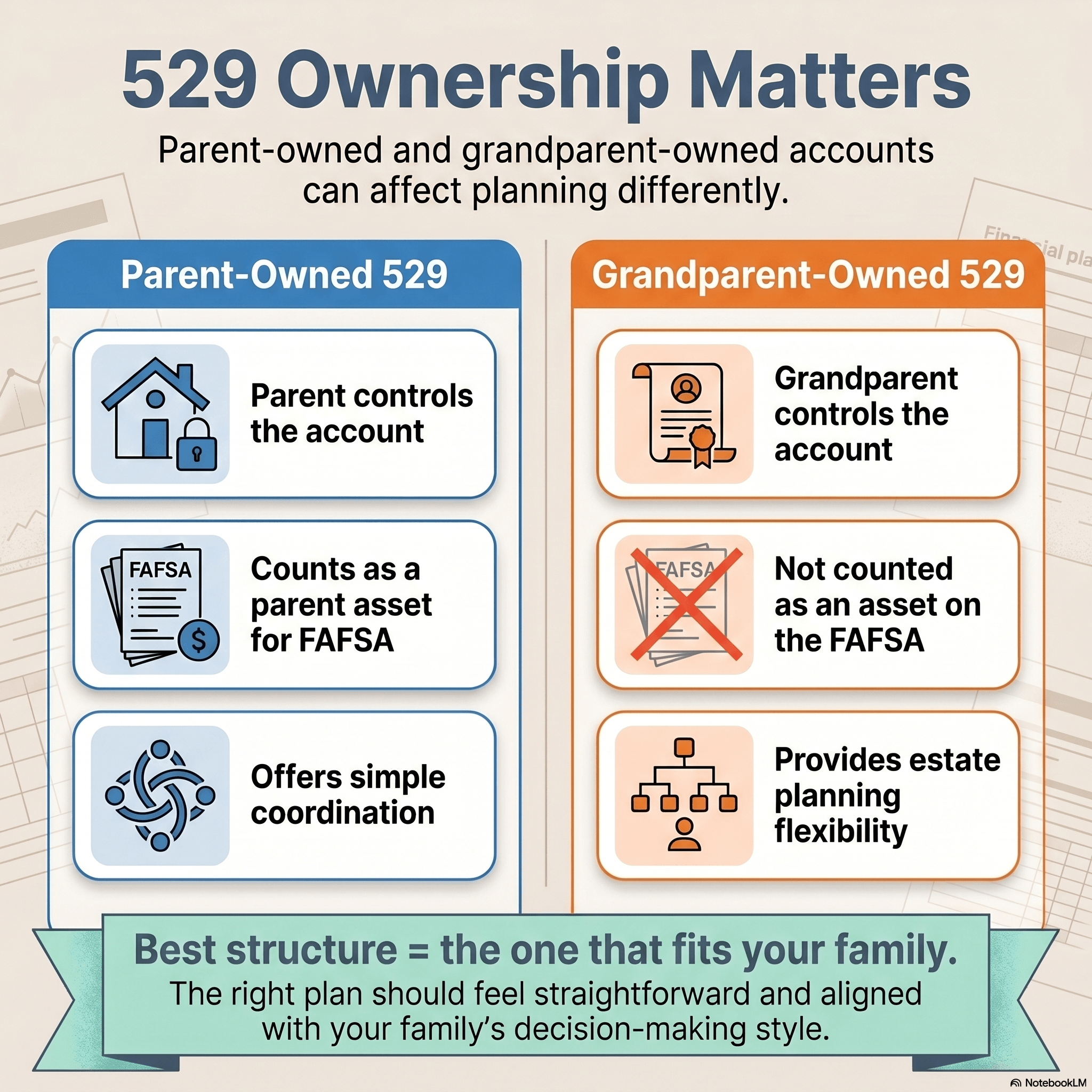
Does the Kansas 529 plan offer any financial aid considerations? When determining eligibility for federal financial aid, 529 accounts owned by a parent are treated as parental assets, which typically have a much smaller impact on financial aid eligibility compared to student-owned assets.
Recommendation
If you are a Kansas resident, the Learning Quest 529 plan is a top-tier choice due to the immediate state tax deduction. Even for non-residents, the plan's low expense ratios and robust investment options from American Century make it a competitive vehicle for education savings. To get started, visit the official Learning Quest website to review the current "Program Description," which contains detailed information on investment risks, fees, and operational procedures. Always consult with a tax professional regarding your personal financial situation before making major investment decisions.
Image Gallery