Understanding the WOC Rank in the Army and Modern Logistics
The Warrant Officer Candidate (WOC) rank represents the transitional status of an enlisted soldier or civilian applicant undergoing selection and specialized training to become an Army Warrant Officer. Within modern military logistics,...
The Warrant Officer Candidate (WOC) rank represents the transitional status of an enlisted soldier or civilian applicant undergoing selection and specialized training to become an Army Warrant Officer. Within modern military logistics, candidates enter the WOC pipeline to transform tactical technical expertise into strategic sustainment capability, ultimately serving as systems administrators, supply advisors, and operational integration experts.
Contents
Modern multi-domain military operations require supply chains that are resilient, data-driven, and highly adaptive. Logistics warrant officers operate at the intersection of leadership and specialized technology, managing everything from automated maintenance workflows to global distribution pipelines. Understanding the WOC status provides critical clarity on how the U.S. Army screens, develops, and appoints its technical leaders to sustain combat power across distributed environments.
Defining the Warrant Officer Candidate (WOC) Status
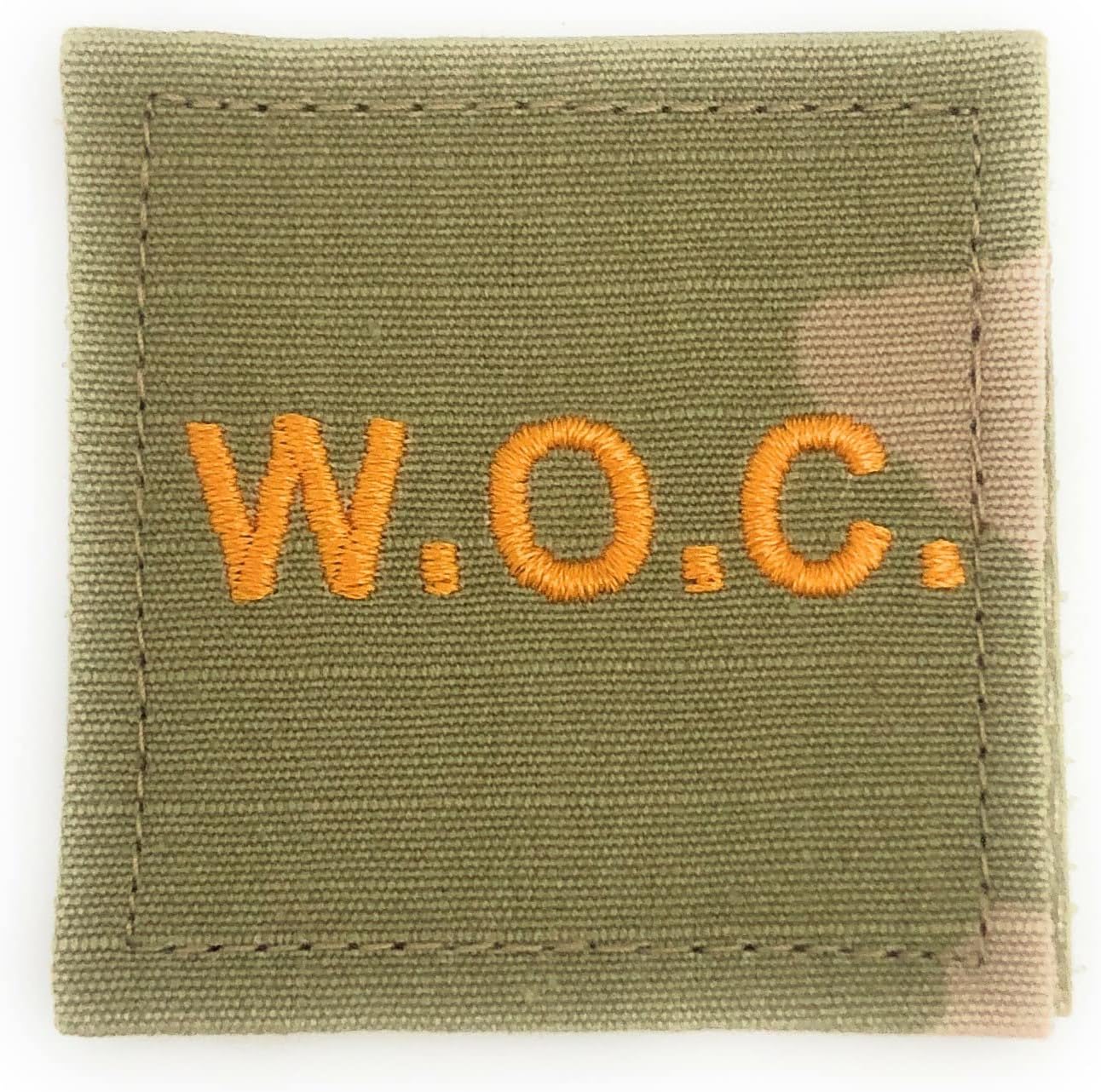
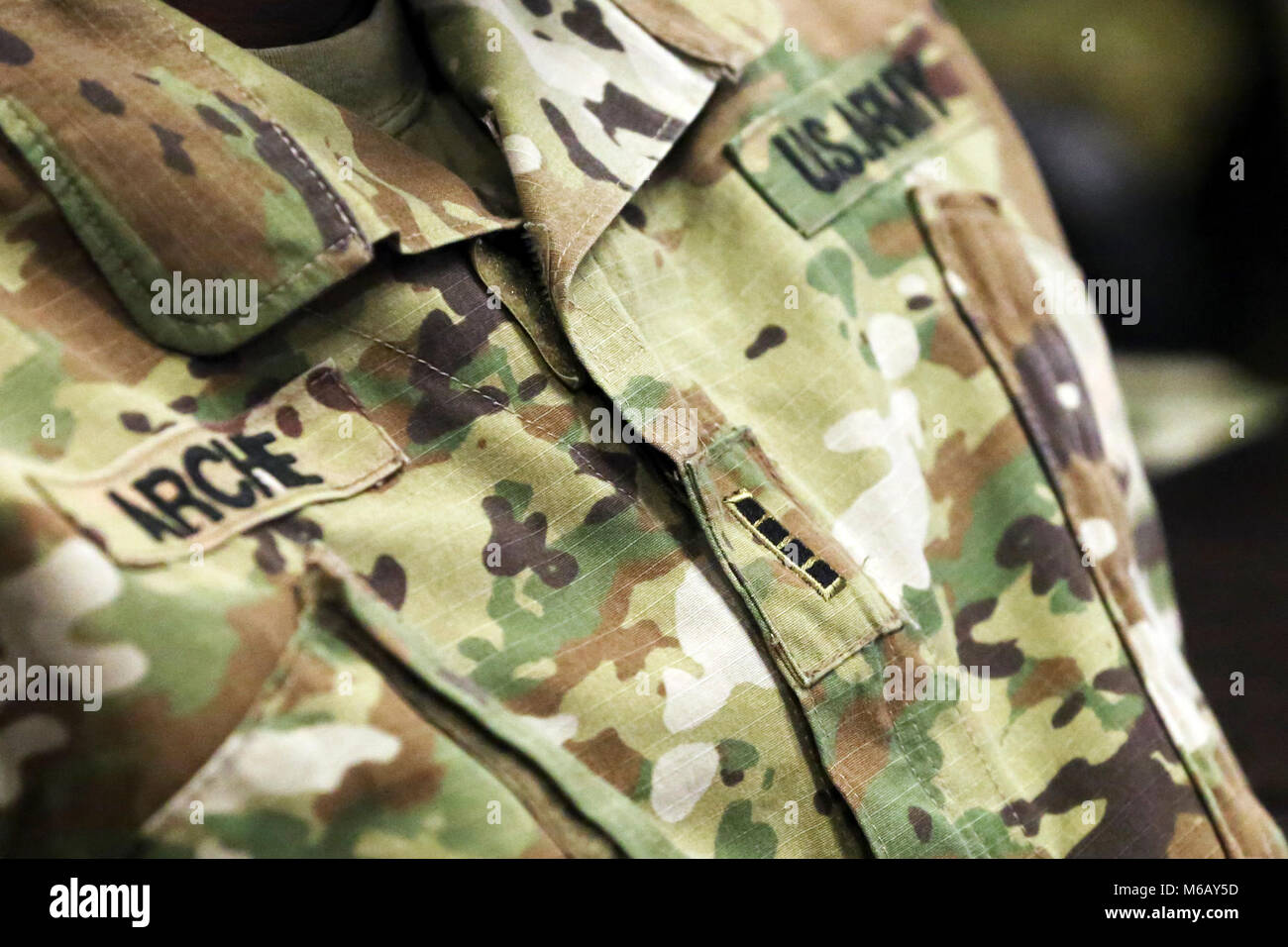
The status of Warrant Officer Candidate is not a permanent rank, but an administrative and temporary pay grade designation (often denoted as WOC or pay grade E-5 through E-7 equivalent based on prior enlisted service, or administrative rank W-1 upon appointment). Service members selected for the Warrant Officer program wear the distinctive candidate insignia—a metallic, hollow "WOC" bar or specific cloth rank patch depending on uniform requirements—throughout the duration of their initial qualification training.
WOCs are individuals vetted for exceptional baseline proficiency in their enlisted Military Occupational Specialties (MOS) or qualified civilian domains who have demonstrated the potential to serve as single-track technical managers. Unlike commissioned officers from the Reserve Officers' Training Corps (ROTC), officer candidate schools, or the service academies—who progress as generalist organizational leaders—warrant officers remain rooted in specific functional operational trades throughout their entire careers. The WOC rank signifies a service member's transition out of the non-commissioned officer (NCO) corps into an officer cohort characterized by technical authority, advising commanders directly on mission-critical materiel, transport, and maintenance systems.
The WOC Pipeline: Selection to Appointment
Transitioning from an applicant to an appointed Warrant Officer One (WO1) involves a rigorous, multi-tiered selection and education process governed by strict administrative and physical standards.
- Enlisted/Civilian Tech Experience
- Warrant Officer Selection Board (DA Board)
- WOC Administrative Status Assigned
- Warrant Officer Candidate School (WOCS)
- Warrant Officer Basic Course (WOBC)
- Appointment as Warrant Officer One (WO1)
Eligibility and Administrative Requirements
Enlisted candidates pursuing a technical logistics appointment must generally hold the rank of Sergeant (E-5) or higher, demonstrate 4 to 8 years of documented experience in a feeder MOS, and present competitive evaluations (such as NCO Evaluation Reports). Applicants submit a comprehensive dossier to the U.S. Army Recruiting Command (USAREC) Warrant Officer Selection Board. Key portfolio components include:
- Documented mastery of an associated feeder specialty (e.g., automated logistical specialist, unit supply specialist, or wheeled vehicle mechanic).
- Letters of recommendation from senior warrant officers (CW3 to CW5) verifying technical competence.
- Official passing scores on physical fitness assessments and current medical flight or general duty clearances.
- Formal civilian educational achievements, usually requiring a minimum of high school completion with preferred accredited postsecondary coursework in supply chain management, data systems, or engineering.
Warrant Officer Candidate School (WOCS)
Once selected, candidates attend WOCS, administered primarily by the Warrant Officer Career College (USAWOCC) at Fort Novosel (formerly Fort Rucker), Alabama, or through aligned National Guard Regional Training Institutes (RTIs).
During WOCS, candidates operate under high physical, mental, and ethical stress designed to develop foundational leadership, decision-making, and military planning skills. The curriculum tests communication, operational ethics, and staff procedures, stripping away routine enlisted workflows to cultivate officers capable of providing unvarnished, authoritative counsel to field-grade and general officers.
The Warrant Officer Basic Course (WOBC)
Graduation from WOCS confers conditional eligibility for appointment, but candidates must complete their technical branch-specific qualification through the Warrant Officer Basic Course (WOBC) prior to or in conjunction with their formal commissioning. For logistics professionals, WOBC is conducted through the Quartermaster, Ordnance, or Transportation Schools under the U.S. Army Combined Arms Support Command (CASCOM) at Fort Gregg-Adams (formerly Fort Lee), Virginia. WOBC trains the new officer on enterprise software suites, advanced diagnostics, global fleet management, and operational level distribution doctrine.
The Critical Role of Technical Officers in Modern Military Logistics
Modern sustainment relies on precision data, real-time asset visibility, and complex multi-modal transportation networks. The strategic conversion from candidate to field-ready logistics warrant officer is essential for maintaining tactical readiness.
Enterprise Systems Management and GCSS-Army
At the core of Army logistics is the Global Combat Support System-Army (GCSS-Army), an enterprise resource planning (ERP) system based on commercial SAP architecture. While enlisted soldiers enter transactional data and commissioned officers make command resource decisions based on dashboard metrics, warrant officers configure, audit, and troubleshoot the system architecture.
A logistics warrant officer analyzes enterprise supply ledgers, resolves cross-functional inventory variances, oversees the authorized stockage list (ASL), and designs predictive maintenance workflows. Candidates spend significant training hours mastering these data structures to prevent equipment deadliness caused by supply chain bottlenecks.
Predictive Sustainment and Distributed Operations
Modern battlefields challenge supply chains through dispersed logistics nodes and denied communications environments. Technical logistics officers translate raw telemetry, automated usage data, and fleet diagnostic records into actionable forecasts. By anticipating parts failures, fuel burn rates, and ammunition expenditures before operations commence, they allow combat units to conduct sustained distributed operations without tethering themselves to vulnerable, centralized supply depots.
Maintenance Execution and Quality Control
Ordnance warrant officers supervise complex intermediate maintenance activities, managing diagnostic test equipment, calibration systems, and repair timelines. Their deep mechanical backgrounds enable them to identify structural trends, counterfeit hardware, or systematic part failures that standard maintenance management systems might overlook.
Core Logistics Warrant Officer Specialties
Candidates track into specific branches based on their historical feeder specialties. Logistics warrants primarily belong to the Quartermaster, Ordnance, and Transportation Corps.
| Specialty Code (MOS) | Branch | Primary Logistics Focus | Typical Feeder Specialties |
|---|---|---|---|
| 920A (Property Accounting Tech) | Quartermaster | Enterprise financial inventory, auditability, property compliance, Command Supply Discipline Program (CSDP) | 92Y (Unit Supply Specialist) |
| 920B (Supply Systems Tech) | Quartermaster | ASL optimization, warehouse management systems, bulk distribution, theater supply pipelines | 92A (Automated Logistical Specialist) |
| 915A (Automotive Maintenance Warrant) | Ordnance | Fleet combat-readiness, fleet telemetry, recovery operations, intermediate maintenance shops | 91B, 91S, 91X (Mechanical Maintenance) |
| 882A (Mobility Officer) | Transportation | Multi-modal movement execution (sea, air, rail), movement tracking, deployment operations | 88N (Transportation Management) |
| 890A (Ammunition Warrant) | Ordnance | Munitions safety, tactical explosives storage, precision-guided missile logistics | 89B (Ammunition Specialist) |
Technical Warrant Officers vs. Commissioned Logistics Officers
Distinguishing between the roles of commissioned logistics officers and warrant officers is essential to understanding military organizational management. Both are officers holding presidential or secretarial appointments, but their daily duties and responsibilities diverge significantly.
- COMMISSIONED OFFICERS (LG / TC / OD / QM)
- Broad command authority over personnel and units
- Focus on operations, policy, and resource allocation
- Rotates broad roles (Staff -> Company Command)
- Advises & Collaborates
- WARRANT OFFICERS (e.g., 920A, 920B, 915A)
- Functional system operators and deep specialists
- Retains specific technical lane for entire career
- Translates enterprise ERP data to ground mechanics
Commissioned logistics officers (such as lieutenants, captains, and majors within the Logistics Branch) are generalists trained to command units, formulate overall operational plans, allocate broad budget allocations, and balance long-range strategy. They frequently rotate between varied leadership, organizational staff, and policy positions throughout their careers.
In contrast, warrant officers maintain a single functional specialization throughout their service. They do not typically command tactical formations; instead, they serve as the technical authority within a command staff or operational facility. While a commissioned Battalion S-4 (Logistics Officer) coordinates the operational logistics concept for a pending deployment, the 920A Property Accounting Technician manages the transactional records and regulatory accountability of every asset assigned to that unit, and the 882A Mobility Officer builds the detailed air, rail, and sea distribution plans.
Navigating WOC Logistics Career Progression
The transition out of the WOC rank marks the beginning of a linear career progression defined by tiered responsibility and professional military education (PME).
- Warrant Officer One (WO1): Appointed via Secretarial Warrant. Focuses on tactical-level execution, direct oversight of unit-level maintenance shops, supply operations, or local property books.
- Chief Warrant Officer Two (CW2): Commissioned by the President. Operates at brigade or battalion echelons, managing enterprise-level transactions, auditing operations, and training junior mechanics or clerks.
- Chief Warrant Officer Three (CW3): Intermediate-level expert. Typically serves at division or corps levels, advising commanders on complex supply network policies, integrated fleet readiness, and asset positioning.
- Chief Warrant Officer Four (CW4): Senior technical advisor. Leads enterprise optimization, modernization testbeds, and branch doctrine reviews across large sustainment commands.
- Chief Warrant Officer Five (CW5): Master-level technical advisor. Operates at theater commands, the Pentagon, and enterprise centers, shaping strategic logistics policies, advising general officers, and directing the development of emerging automated technologies.
Key Challenges Facing Candidates and New Logistics Technical Officers
Prospective candidates and newly appointed officers must navigate several distinct friction points inherent to modern logistics structures.
- Transitioning from Peer to Officer: Candidates must shift their professional mindset from that of a senior enlisted NCO to an officer. This adjustment requires moving away from direct crew management to advising commanders, establishing compliance architectures, and mentoring non-commissioned officers without undermining the established chain of command.
- Managing Enterprise IT Friction: Enterprise logistics suites require technical precision. Warrant officers are responsible for diagnosing complex transaction errors, failed financial interfaces, and hardware communication disruptions between field networks and central enterprise servers.
- Adapting to Contested Supply Lines: Modern logistics doctrine requires sustaining forces under distributed conditions where supply corridors are vulnerable to disruption. Candidates must learn to operate manual operational failsafes, plan dispersed logistics nodes, and safeguard inventory data during extended operational communications blackouts.
Frequently Asked Questions
What rank does a soldier hold while attending Warrant Officer Candidate School?
A soldier selected for the program is designated as a Warrant Officer Candidate (WOC) administratively and wears the WOC insignia. For basic pay purposes, enlisted soldiers continue to draw their current pay grade or the pay grade authorized by their military branch regulations during candidate school (typically equivalent to at least E-5). Upon graduation and branch course requirements, they are appointed to Warrant Officer One (WO1) and receive WO1 pay.
How does the WOC rank differ from an Officer Candidate (OCS)?
Both statuses are transitional designations for soldiers training to earn an officer appointment. However, Officer Candidate School (OCS) trains generalist Commissioned Officers who will hold direct unit command and broad tactical leadership roles. WOCS trains experienced technical specialists who will serve as career-long functional experts, system administrators, and specialized technical advisors within a single career track.
Can civilians apply directly to become an Army Logistics Warrant Officer?
No. Unlike the aviation warrant officer pipeline (which allows direct civilian applications through the "Street-to-Seat" flight training program), technical logistics warrant officer specialties require documented operational experience in corresponding feeder military occupations. Applicants must possess proven, evaluated technical records in enlisted logistics, supply, ammunition, or mechanical maintenance specialties before applying to the selection board.
What is the primary role of a 920A Property Accounting Technician?
A 920A Warrant Officer is responsible for establishing, auditing, and maintaining the Command Supply Discipline Program (CSDP) and financial property accountability for an organization. They serve as the primary advisor to unit commanders regarding regulatory compliance, financial liability investigations, and the asset balance ledgers within the Global Combat Support System-Army (GCSS-Army).
Why are Warrant Officers called "Chief"?
The title "Chief" is a traditional term of address used for warrant officers who hold the ranks of Chief Warrant Officer Two (CW2) through Chief Warrant Officer Five (CW5). These officers hold formal presidential commissions. A Warrant Officer One (WO1) is appointed by warrant from the Secretary of the Army and is addressed formally as "Mister" or "Ms./Miss," though operational environments colloquially refer to all warrant officers as "Chief" once they integrate into their units.
Preparing for the Technical Logistics Pipeline
Enlisted logistics personnel planning to submit a Warrant Officer Candidate packet should systematically audit their professional portfolios. Soldiers should target duty assignments that require hands-on administrative responsibility within GCSS-Army, pursue civilian supply chain certifications, and seek mentorship directly from senior warrant officers within their specialty. Regularly reviewing the current administrative milestones published by the U.S. Army Recruiting Command (USAREC) Warrant Officer Division ensures all packet requirements, prerequisite feeder checklists, and leadership endorsements meet the branch selection standards.
Image Gallery