Is Dissolution of Marriage the Same as Divorce? Key Differences Explained
While both legal processes result in the termination of a marriage, they differ primarily in procedure and agreement. In many jurisdictions, "dissolution" refers to a non-adversarial process where spouses agree on all terms before fili...
While both legal processes result in the termination of a marriage, they differ primarily in procedure and agreement. In many jurisdictions, "dissolution" refers to a non-adversarial process where spouses agree on all terms before filing, whereas "divorce" often begins as a contested legal action requiring court intervention to resolve disputes regarding assets or custody.
Contents
The legal landscape of 2026 continues to reflect a significant shift toward mediation and collaborative law. However, for many individuals facing the end of a domestic partnership, the terminology remains a point of confusion. Understanding whether you are seeking a "dissolution of marriage" or a "divorce" is not merely a matter of semantics; it dictates the timeline, the total cost of legal representation, and the level of conflict involved in the proceedings.
To determine which path is appropriate, one must look at the specific statutes of their state, as some regions use these terms interchangeably, while others maintain them as two distinct legal avenues.
The Jurisdictional Split: Why Definitions Matter
The answer to whether dissolution and divorce are the same depends almost entirely on where the parties reside. In the United States, family law is governed at the state level, leading to a patchwork of definitions that can be misleading without professional guidance.
States Where the Terms are Interchangeable
In several states, including California and Florida, "dissolution of marriage" is the official legal term for what the general public calls a divorce. In these jurisdictions, the word "divorce" may not even appear in the statutory language used to terminate the legal bond. If you live in California, for example, any legal filing to end a marriage is technically a Petition for Dissolution of Marriage, regardless of whether the couple agrees on the terms or is engaged in a high-conflict battle over property.
States Where the Terms Represent Different Paths
Conversely, in states such as Ohio or Alaska, a "dissolution" and a "divorce" are two separate legal procedures. In these jurisdictions, a dissolution is a "no-fault" termination where the husband and wife have already signed a legally binding separation agreement covering every aspect of their split—including child support, alimony, and debt division—before they ever set foot in a courtroom. A divorce, in this context, is an adversarial lawsuit filed by one spouse against the other, often used when the parties cannot agree or when one party has "grounds" for the split, such as adultery or extreme cruelty.
The Role of "No-Fault" Legislation in 2026
As of 2026, every state in the U.S. offers some form of no-fault ending to a marriage. The rise of no-fault laws has blurred the lines between the two terms because both processes now frequently rely on the "irretrievable breakdown" of the marriage rather than proving wrongdoing. However, even in a no-fault environment, the procedural differences between a pre-agreed dissolution and a litigated divorce remain stark.
The Procedural Path: Agreement vs. Litigation
The most significant practical difference between a dissolution and a divorce lies in how the case moves through the judicial system. This procedural path affects everything from how papers are served to how long a person must wait for a final decree.
Filing and Service of Process
In a traditional divorce, the process begins when one spouse (the plaintiff or petitioner) files a complaint against the other (the defendant or respondent). This document is then "served" to the other spouse, often by a process server or sheriff. This formal notification triggers a timeline for the respondent to file an answer.
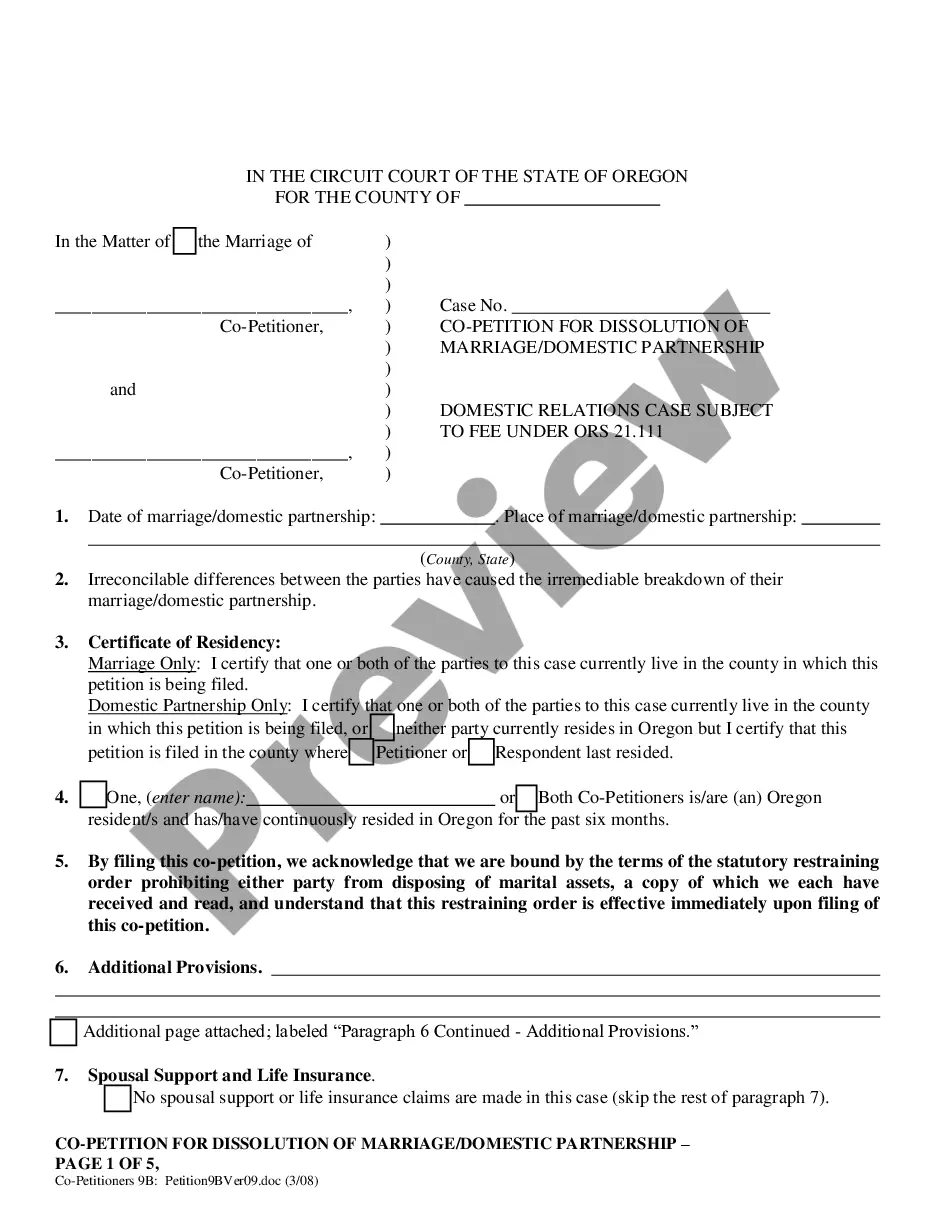
In a dissolution (where it is a separate path), both spouses typically file a joint petition. Since both parties are already in agreement and are acting as co-petitioners, there is no need for formal service of process. This eliminates the initial "shock" and adversarial tone that often accompanies the start of a divorce case.
Discovery and Evidence
One of the most arduous phases of a contested divorce is "discovery." This is the formal process of exchanging information, where attorneys demand tax returns, bank statements, and even depositions (recorded testimony). Discovery is designed to ensure that no assets are hidden.
In a dissolution, the parties generally engage in informal discovery. Because they are working collaboratively, they voluntarily exchange financial documents. This relies on a high level of trust; if one spouse suspects the other of hiding offshore accounts or cryptocurrency, a dissolution is rarely the appropriate choice, as it lacks the aggressive investigative tools provided by a contested divorce.
The Final Hearing
For a dissolution, the court hearing is usually a brief, administrative formality. A judge reviews the pre-signed agreement to ensure it complies with state law—particularly regarding the "best interests of the child" in cases involving minors—and then issues the decree. In a divorce, if the parties cannot settle, the final stage is a trial where a judge hears testimony, reviews evidence, and makes a final, binding decision on the couple's behalf.
Financial Implications and Cost Comparisons
Ending a marriage is a significant financial event. The choice between dissolution and divorce is often the primary factor in determining the total expenditure. By 2026, the average cost of a contested divorce in the U.S. continues to hover between $15,000 and $30,000 per person, while a simplified dissolution can often be completed for under $5,000 in total.
| Feature | Traditional Divorce (Contested) | Dissolution of Marriage (Agreed) |
|---|---|---|
| Initial Filing | Filed by one spouse against the other | Often a joint filing by both spouses |
| Fault Grounds | May be fault-based or no-fault | Almost exclusively no-fault |
| Legal Fees | High (hourly billing for litigation) | Lower (often flat-fee or limited scope) |
| Timeline | 6 months to 2 years+ | 30 to 90 days (state dependent) |
| Discovery | Formal, mandatory, and adversarial | Informal and voluntary |
| Court Appearances | Multiple (motions, hearings, trial) | Usually one final brief hearing |
| Public Record | Extensive filings may be public | Separation agreement is often private |
The cost savings in a dissolution stem from the reduction in billable hours. Attorneys do not have to draft motions, attend multiple status conferences, or prepare for trial. Instead, their role shifts to that of a consultant or a drafter of the separation agreement.
Strategic Considerations: Which Should You Choose?
Deciding between these two paths requires a realistic assessment of the relationship and the complexity of the marital estate.
When Dissolution is the Better Option
A dissolution is ideal for couples who remain communicative and transparent. If both parties agree on the division of the 401(k), the equity in the home, and the parenting schedule, a dissolution offers a "fast track" to a new life. It is also the preferred method for those who value privacy, as the details of their disagreements are not hashed out in open court.
When Divorce is Necessary
A traditional divorce filing is necessary in several scenarios:
- Domestic Violence: If there is a power imbalance or a history of abuse, the protections of the court and formal legal representation are essential.
- Lack of Transparency: If one spouse controls all the finances and refuses to share information, the discovery process of a divorce is required to ensure a fair split.
- Fundamental Disagreement: If one spouse refuses to end the marriage or if there is no middle ground on child custody, the intervention of a judge is the only way to move forward.
Potential Pitfalls and Common Mistakes
Even in a seemingly simple dissolution, errors can have long-term consequences. A common mistake is failing to account for the tax implications of asset transfers. For instance, in 2026, the valuation of certain digital assets or the division of tax-deferred retirement accounts must be handled with specific language (such as a Qualified Domestic Relations Order, or QDRO) to avoid immediate tax penalties.
Another mistake is the "DIY" approach. While many courts offer "dissolution packets," these forms are generic. They may not adequately protect a spouse's right to future social security benefits or address the nuances of a "step-up" in basis for inherited property. Even in a friendly dissolution, having at least one attorney review the final agreement is a critical safeguard.
Summary of Legal Status in 2026
The trend toward "Collaborative Dissolution" has peaked in 2026, with more states introducing streamlined online portals for couples with no children and limited assets. However, the underlying legal principle remains: a dissolution requires a meeting of the minds, whereas a divorce is the mechanism used when the minds cannot meet.
Before filing, individuals should consult the official website of their state’s judicial branch or a licensed family law attorney to confirm the local nomenclature. Misfiling a divorce when a dissolution was intended can lead to unnecessary delays and the unintended triggering of adversarial legal deadlines.
Frequently Asked Questions
1. Can a dissolution be converted into a divorce? Yes. In many jurisdictions, if a couple starts the dissolution process but finds they can no longer agree on a specific term (like the sale of a house), the case can be converted into a traditional divorce. This usually involves filing a motion to "convert" and paying the difference in filing fees, at which point the case moves onto the contested docket.
2. Is a dissolution of marriage faster than a divorce? Almost always. Because the "heavy lifting" of negotiation is done before the case is filed, most states have a simplified waiting period for dissolutions. While a contested divorce can take 12 to 18 months, a dissolution might be finalized in as little as 30 to 90 days, depending on the mandatory "cooling off" period required by the state.
3. Do I need to prove "fault" in a 2026 divorce? In most states, no. While some states still allow you to file on grounds like adultery or abandonment (which may impact alimony or property division), every state now offers a no-fault option. In a dissolution, fault is virtually never a factor, as the process is predicated on mutual consent.
4. Does a dissolution of marriage affect my legal rights differently than a divorce? No. The final result of both a dissolution and a divorce is exactly the same: a legal decree that ends the marriage. Both documents carry the same weight regarding child custody, support obligations, and the legal right to remarry. The difference is only in the "how," not the "what."
5. Can I get a dissolution if my spouse doesn't want one? Generally, no. A dissolution (where it is a separate path from divorce) requires both spouses to sign the petition and the agreement. If one spouse refuses to cooperate or sign the paperwork, the party wishing to end the marriage must file for a traditional divorce and serve the other party with a summons.
Practical Recommendation
If you and your spouse are on speaking terms, your first step should be to compile a comprehensive list of all assets and debts. Seek a consultation with a mediator or a collaborative law attorney to see if a Dissolution of Marriage is feasible. This approach preserves your financial resources and reduces the emotional toll on any children involved. If transparency is an issue, however, do not hesitate to file for a Divorce to ensure your rights are protected through formal discovery.
Image Gallery