Lori Greiner's Shark Tank Earnings: How Much Has the "Queen of QVC" Really Made?
As of 2026, Lori Greiner’s total earnings and equity value derived from Shark Tank are estimated to exceed $180 million. While her per-episode salary is approximately $50,000, the vast majority of her wealth stems from "home run" inves...
As of 2026, Lori Greiner’s total earnings and equity value derived from Shark Tank are estimated to exceed $180 million. While her per-episode salary is approximately $50,000, the vast majority of her wealth stems from "home run" investments like Scrub Daddy, which has surpassed $1.2 billion in retail sales, and the strategic scaling of consumer products through her massive retail and QVC network.
Contents
The Anatomy of Lori Greiner’s Shark Tank Wealth
To understand how much Lori Greiner has made from Shark Tank, one must look beyond a simple paycheck. Greiner’s financial success on the show is a tripartite structure consisting of her television talent fees, her equity in high-growth startups, and the synergistic "Lori Greiner" brand effect that fuels her outside business ventures.
Since joining the cast in Season 3, Greiner has established herself as one of the most prolific and successful investors in the show's history. Unlike some of her fellow Sharks who may focus on tech or software-as-a-service (SaaS), Greiner specializes in tangible consumer goods—products that can be demonstrated, packaged, and sold on a mass scale. This specific focus has allowed her to generate a higher "hit rate" than many of her peers, turning small investments into massive cash-flow engines.
1. Television Salary and Talent Fees
While the primary purpose of Shark Tank for the investors is to find equity opportunities, the Sharks are also television personalities. As of 2026, industry reports suggest that the "main" Sharks earn roughly $50,000 to $100,000 per episode. With a standard season consisting of 22 to 24 episodes, Greiner earns an estimated $1.1 million to $2.4 million per year just for appearing on the show.
Over her 14-year tenure on the program, her cumulative talent fees likely exceed $25 million. This income provides the liquid capital necessary to fund the dozens of deals she makes on-air each season, effectively making her Shark Tank appearances self-funding.
2. The Portfolio Powerhouses: Scrub Daddy and Beyond
The true wealth generation for Lori Greiner comes from her equity stakes. In the venture capital world, a "unicorn" is a company valued at over $1 billion. In the Shark Tank world, Greiner’s investment in Scrub Daddy is the undisputed champion.
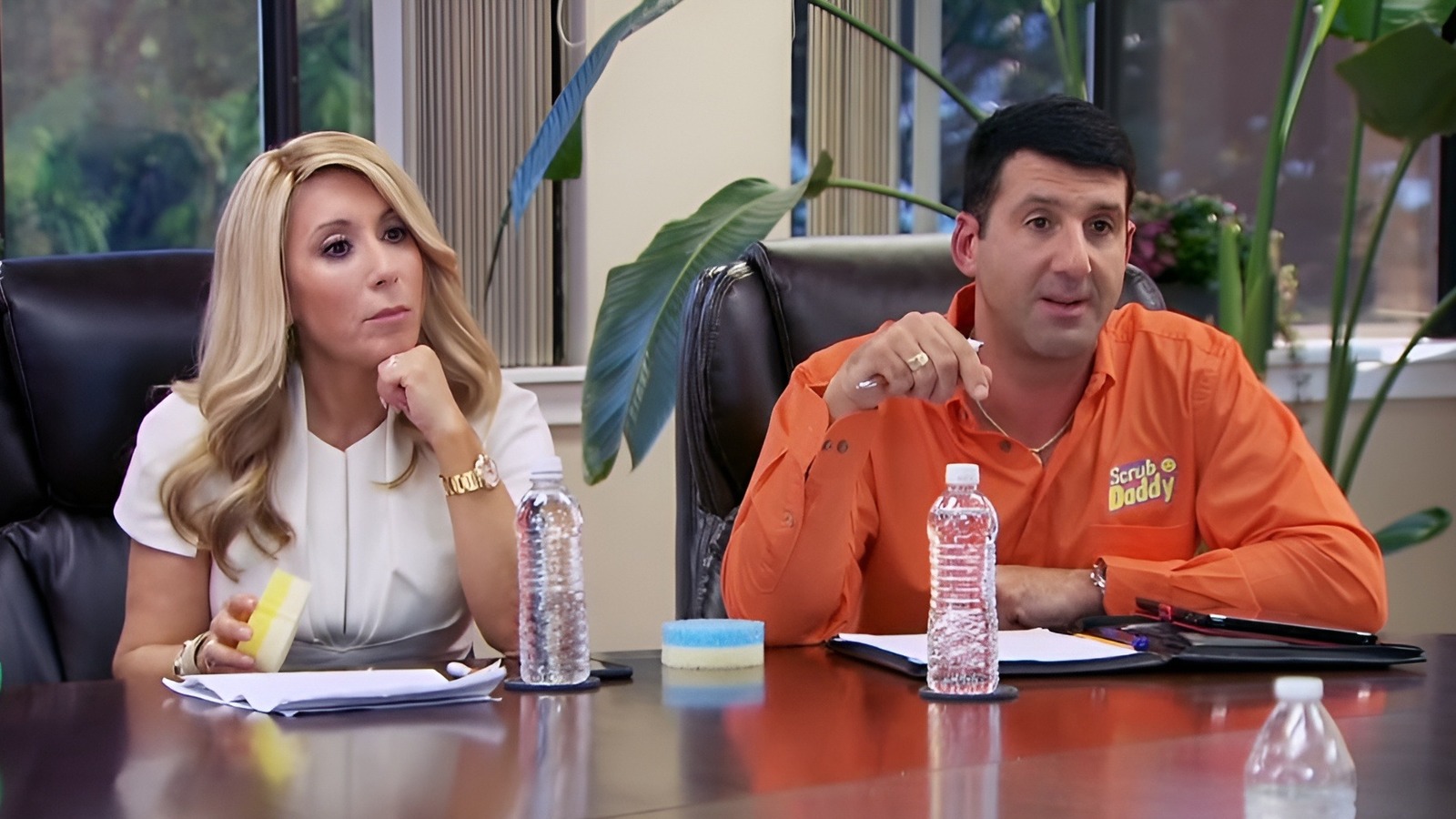
- Scrub Daddy: In Season 4, Greiner invested $200,000 for a 20% stake in Aaron Krause’s smiley-faced sponge company. By 2026, Scrub Daddy has expanded into a global cleaning empire with over 100 SKUs and lifetime retail sales exceeding $1.2 billion. Greiner’s 20% stake, while potentially diluted through further rounds or restructured over time, remains the most valuable single asset ever birthed on the show.
- Squatty Potty: Another massive success, this bathroom accessory saw sales jump from $1 million to over $30 million shortly after Greiner’s investment. It has since become a household name, contributing tens of millions in dividends and valuation growth to her portfolio.
- Simply Fit Board: This fitness product generated over $160 million in sales within a few years of its Shark Tank debut. Greiner’s ability to move units through television shopping and big-box retail partners like Walmart and Bed Bath & Beyond (and its successors) turned this into a high-margin winner.
3. The "Hero or Zero" Strategy and QVC Synergy
Greiner often uses the phrase "Hero or Zero" to describe products. This philosophy is the engine behind her earnings. By identifying "Heroes"—products with mass appeal and low manufacturing costs—she can leverage her existing infrastructure to achieve instant profitability.
A significant portion of Greiner's Shark Tank earnings is inextricably linked to her partnership with QVC. When Greiner strikes a deal on the show, she often has the product ready for a QVC segment within weeks. This immediate "Shark Tank Effect" generates massive upfront revenue, allowing her to recoup her initial investment almost instantly. The royalties and distributions from these rapid-scale events constitute a continuous stream of passive income that persists long after the episode airs.
Estimated ROI: A Breakdown of Major Investments
The following table highlights the performance of Greiner’s most lucrative Shark Tank deals as of the 2026 fiscal year.
| Product Name | Initial Investment | Equity Stake | Estimated Retail Sales (2026) | Impact Level |
|---|---|---|---|---|
| Scrub Daddy | $200,000 | 20% | $1.2 Billion+ | Legendary |
| Squatty Potty | $350,000 | 10% | $250 Million+ | High |
| Simply Fit Board | $125,000 | 20% | $175 Million+ | High |
| Sleep Styler | $75,000 | 25% | $100 Million+ | Medium-High |
| Bantam Bagels | $275,000 | 25% | $60 Million+ (Sold) | Exit Success |
| The Pizza Cupcake | $125,000 | 12.5% | $50 Million+ | Growth |
Strategic Exits and Liquidations
Making money on Shark Tank isn't just about holding equity; it's about knowing when to sell. Greiner has navigated several successful exits that have resulted in significant "dry powder" for her future investments.
A prime example is Bantam Bagels. Greiner invested $275,000 for 25% of the company in Season 6. The company was later acquired by T. Marzetti Company (a subsidiary of Lancaster Colony Corp) for $34 million in 2018. This exit alone likely netted Greiner a multi-million dollar profit, representing an exponential return on her initial investment in just a few years.
By 2026, Greiner has increasingly focused on these types of "exit-ready" consumer brands, shifting her portfolio toward companies that can be acquired by larger conglomerates like Procter & Gamble or Unilever.
The Cost of Doing Business: Why "Earnings" Aren't Net Profit
It is important to distinguish between "how much Lori has made" and her total net worth. Investing on Shark Tank carries significant overhead:
- Due Diligence Costs: Not every deal seen on TV closes. Greiner employs a team of lawyers and accountants to vet every company. These administrative costs can reach six figures annually.
- Failed Investments: For every Scrub Daddy, there are several "Zeros." While Greiner has a high success rate, she has undoubtedly lost hundreds of thousands of dollars on products that failed to gain traction in the competitive retail landscape.
- Inventory Financing: Often, a Shark's investment isn't just for equity; it’s a loan or a line of credit to fund a massive first order. While this generates interest income, it also ties up Greiner’s liquidity.
Despite these costs, the sheer scale of her winners far outweighs the losses. Her 2026 estimated net worth of $150 million to $200 million is a direct reflection of her Shark Tank success, as she was a successful inventor but not a centi-millionaire prior to the show’s global explosion.
Comparing Lori Greiner to Other Sharks
In terms of pure cash earnings from the show, Greiner is often cited as the most successful Shark alongside Mark Cuban. While Cuban may have higher-value tech exits, Greiner’s portfolio is consistently more profitable on a month-to-month basis due to the high volume of retail sales.
Her unique advantage—the ability to provide a "path to market" rather than just capital—means she often negotiates better equity terms. Entrepreneurs are frequently willing to give Greiner a larger percentage of their company because they know a "Lori deal" includes a spot on QVC and a likely path to the shelves of major retailers. This "intangible value" effectively increases her earnings by lowering her acquisition cost for equity.
Practical Insights for Aspiring Entrepreneurs
Lori Greiner’s earnings trajectory offers several lessons for business owners looking to scale:
- Demonstrability is Key: Products that solve a clear problem in seconds (like the Scrub Daddy changing texture in water) are the ones that make the most money.
- Packaging Matters: Much of Greiner’s value-add is in redesigning packaging to "pop" on a retail shelf.
- Scalability: She avoids businesses that rely solely on her time, favoring those that can be manufactured and shipped in the millions.
Frequently Asked Questions
Does Lori Greiner really make $50,000 per episode?
While exact contracts are confidential, industry data from SAG-AFTRA and historical reports on "A-list" reality talent indicate that long-standing Sharks like Greiner earn between $50,000 and $100,000 per episode as of 2026. This is a standard talent fee for a high-rated, long-running network program.
Which Shark Tank deal has made Lori the most money?
Scrub Daddy is unequivocally her most successful deal. With over $1.2 billion in lifetime sales, the dividends and the current valuation of her equity stake constitute the largest portion of her Shark Tank-related wealth.
Does Lori own 100% of the companies she invests in?
No. Lori Greiner typically takes an equity stake ranging from 10% to 33%. In rare cases, she may take a larger share if the company requires a total "turnaround" or if the entrepreneurs are looking to exit early, but the goal is usually a partnership with the founders.
Has Lori Greiner ever lost money on a Shark Tank deal?
Yes. Like all venture capitalists, Greiner has had investments that did not pan out. Some products fail to find a market, while others face manufacturing issues or legal disputes. However, her "Hero or Zero" vetting process is designed to minimize these losses by focusing on high-margin consumer goods.
How does Lori Greiner's net worth compare to Mark Cuban's?
Mark Cuban’s net worth is significantly higher (estimated at over $5 billion in 2026) because his wealth originated from the multi-billion dollar sale of Broadcast.com and his ownership of the Dallas Mavericks. However, within the context of Shark Tank investment returns, Greiner's retail-heavy portfolio is considered one of the most consistently profitable.
Final Recommendation
For those tracking the financial success of the Shark Tank investors, Lori Greiner serves as the primary case study in synergistic investing. Her earnings are not merely the result of picking winners; they are the result of her ability to create winners through her retail network. If you are an entrepreneur, focusing on "demonstrable value" and "retail readiness"—the two pillars of Greiner’s strategy—is the most reliable path to securing a high-value investment and achieving similar scale.
Image Gallery