How Life Insurance Money Affects Medicaid Eligibility
Life insurance policies can significantly impact Medicaid eligibility because the program is needs-based, meaning applicants must meet strict income and asset limits. While term life insurance generally does not affect eligibility, per...
Life insurance policies can significantly impact Medicaid eligibility because the program is needs-based, meaning applicants must meet strict income and asset limits. While term life insurance generally does not affect eligibility, permanent policies with cash value are often counted as "countable assets" if their face value exceeds $1,500, potentially disqualifying an applicant until the value is spent down.
Contents
Medicaid serves as a vital safety net for millions of Americans, particularly those requiring long-term care in nursing homes or assisted living facilities. However, because Medicaid is a "payer of last resort," the government requires applicants to exhaust most of their own financial resources before the program begins covering costs. In 2026, the intersection of life insurance and Medicaid remains one of the most complex areas of elder law and financial planning.
To navigate this landscape, it is essential to understand how different types of life insurance are categorized by state Medicaid agencies and how receiving a death benefit can suddenly trigger a loss of coverage.
The Distinction Between Term and Permanent Life Insurance
When assessing Medicaid eligibility, the type of life insurance policy you own is the most critical factor. Medicaid distinguishes between policies that have an investment component and those that are purely for protection.
Term Life Insurance
Term life insurance provides coverage for a specific period (the "term") and does not build cash value. Because there is no "cash surrender value" that the owner can withdraw or borrow against while alive, Medicaid typically treats term life insurance as an excluded asset. As long as the policy remains a term product with no investment feature, owning it will not count against the asset limit for Medicaid, which in most states is approximately $2,000 for an individual in 2026.
Permanent Life Insurance (Whole, Universal, Variable)
Permanent life insurance policies, such as whole life or universal life, are designed to last for the insured's entire lifetime and include a cash value component. Medicaid rules for these policies are more stringent:
- Face Value Threshold: Most states utilize a $1,500 threshold. If the total face value (the death benefit) of all permanent policies owned by the applicant is $1,500 or less, the cash value is generally ignored.
- Countable Assets: If the total face value exceeds $1,500, the entire cash surrender value of the policy is considered a countable asset. For example, if you have a whole life policy with a $10,000 death benefit and a $4,000 cash value, that $4,000 counts toward your $2,000 individual asset limit, likely making you ineligible for Medicaid.
How Medicaid Treats Death Benefit Payouts
The impact of life insurance on Medicaid is not limited to the policy owner; it also affects the beneficiary. If a Medicaid recipient (or an applicant) is named as the beneficiary of someone else's life insurance policy and that person passes away, the resulting "death benefit" is treated as a financial windfall.
The Month of Receipt: Income
In the month the life insurance proceeds are received, Medicaid classifies the money as income. If the payout exceeds the state’s monthly income limit for Medicaid (which is often based on a percentage of the Federal Poverty Level or a specific dollar amount like $2,829 for certain long-term care programs in 2026), the recipient may lose their eligibility for that month.
Subsequent Months: Assets
If the beneficiary retains any of that life insurance money into the following month, it converts from "income" to an "asset." If this pushes the individual's total assets above the $2,000 limit (or the applicable state limit), they will remain ineligible for Medicaid until the funds are "spent down" on qualified expenses. This transition from income to asset is a common trap that leads to the termination of benefits for seniors who were unaware of the reporting requirements.
The 5-Year Look-Back Period and Asset Transfers
One might assume that the simplest solution is to give the life insurance policy away or change the beneficiary to a family member before applying for Medicaid. However, Medicaid employs a 5-year look-back period (except in California, which has begun phasing out this period for certain programs).
When you apply for Medicaid, the agency reviews all financial transactions from the previous 60 months. If you transferred a life insurance policy’s ownership or "gifted" the cash value to someone else for less than fair market value, Medicaid will impose a penalty period. During this penalty period, the individual is ineligible for Medicaid coverage for long-term care, even if they otherwise meet all financial criteria. The length of the penalty is determined by dividing the value of the transferred asset by the average monthly cost of nursing home care in that state.
| Feature | Term Life Insurance | Permanent Life Insurance (Whole/Universal) |
|---|---|---|
| Cash Value | No | Yes |
| Asset Countability | Usually Excluded | Countable if Face Value > $1,500 |
| Medicaid Eligibility Impact | Low | High (due to Cash Surrender Value) |
| Transfer Risk | Low (no cash value to transfer) | High (subject to 5-year look-back) |
| Death Benefit Impact | Counts as Income/Asset for Beneficiary | Counts as Income/Asset for Beneficiary |
Strategies to Protect Medicaid Eligibility
While life insurance can complicate Medicaid eligibility, there are several legal and financial strategies used in 2026 to mitigate these risks. These strategies focus on converting countable assets into exempt assets.
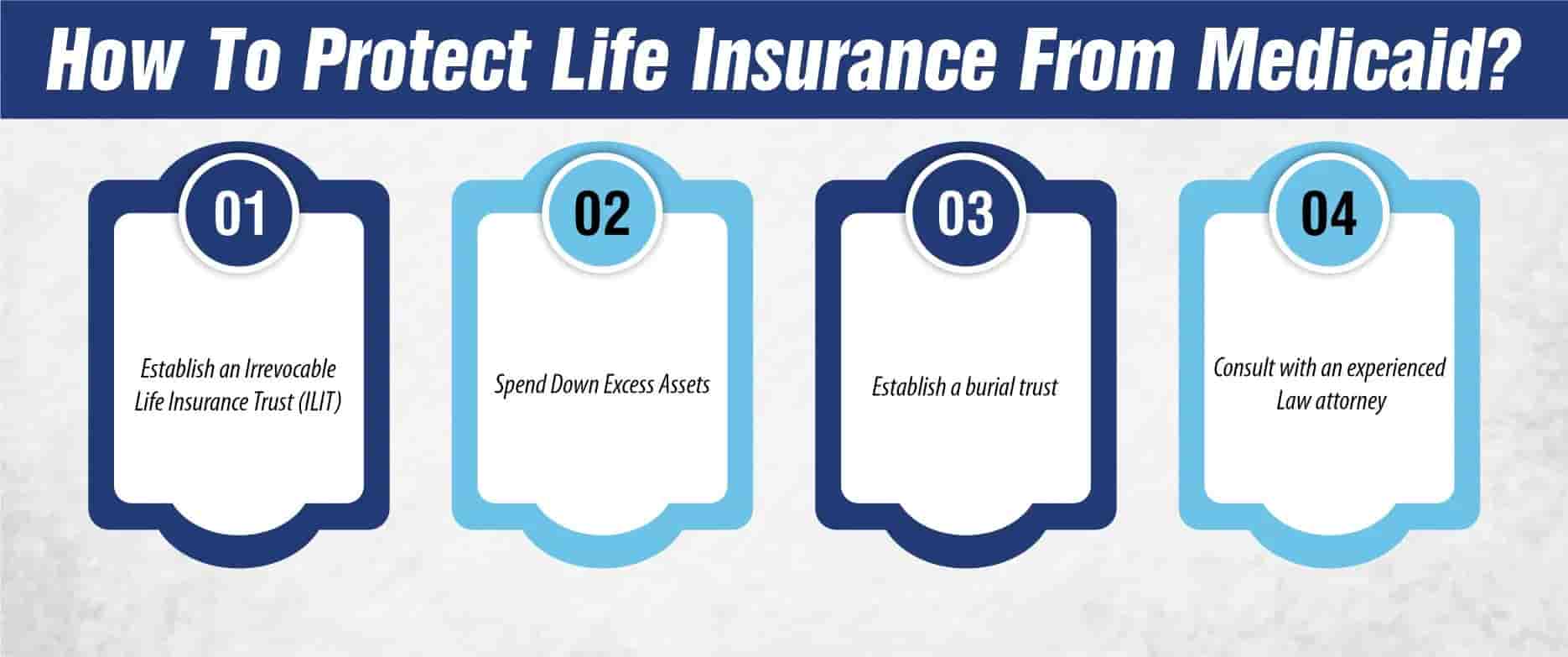
1. The "Spend Down" Strategy
If a life insurance policy’s cash value makes an applicant ineligible, they can "spend down" the value by cashing out the policy and using the funds for Medicaid-exempt purposes. This includes:
- Paying off a mortgage or other debts.
- Making home repairs or modifications for accessibility.
- Purchasing a pre-paid funeral contract (Irrevocable Burial Reserve).
- Buying a newer vehicle (usually one vehicle is exempt).
2. Irrevocable Life Insurance Trusts (ILIT)
By placing a life insurance policy into an Irrevocable Life Insurance Trust, the policyholder gives up ownership and control. Because the trust owns the policy, the cash value is no longer considered an asset of the individual for Medicaid purposes. However, this must be done well before the 5-year look-back window to avoid penalties.
3. Designating an Irrevocable Funeral Trust
In many states, you can transfer up to a certain amount (often around $15,000, though it varies by state) from the cash value of a life insurance policy into an irrevocable funeral trust. This money is specifically earmarked for burial and funeral expenses and is generally treated as an exempt asset by Medicaid.
4. Policy Loans
Some applicants choose to take a loan against the cash value of their life insurance policy. By borrowing the money and spending it on exempt assets (like home improvements), they reduce the countable cash value of the policy. However, the interest on the loan and the impact on the eventual death benefit must be carefully calculated.
Common Pitfalls and Mistakes
Navigating life insurance and Medicaid often leads to preventable errors that result in claim denials or benefit suspension.
- Failing to Disclose Policies: Some applicants believe that because a policy is small or "private," the state won't find it. Medicaid agencies use sophisticated data-matching systems to identify insurance policies tied to an applicant's Social Security number.
- Assuming Beneficiary Protection: Many people assume that if the money is paid to a beneficiary, the beneficiary’s own Medicaid status is safe. As noted, a death benefit payout can immediately disqualify a beneficiary who is currently receiving Medicaid.
- Improper Transfers: Giving a policy to a child or grandchild within the 5-year window is a common mistake. This is viewed as a "transfer for less than fair market value" and will almost certainly trigger a penalty period.
- Ignoring State Variations: Medicaid is a joint federal and state program. While federal guidelines exist, states like New York, Florida, and Texas have specific nuances regarding how they treat life insurance and "community spouse" allowances.
Frequently Asked Questions
Can I keep my life insurance if I go on Medicaid?
Yes, you can keep your life insurance, but its value may affect your eligibility. If it is a term policy, it usually doesn't count as an asset. If it is a permanent policy, the cash surrender value must typically be below $2,000 (along with your other assets) to qualify for Medicaid in 2026. If the cash value is higher, you may need to spend it down or transfer it into an exempt account like an irrevocable funeral trust.
What happens if I inherit life insurance money while on Medicaid?
If you are a Medicaid recipient and receive a life insurance payout, that money is counted as income for the month you receive it. If it puts you over the income limit, you may lose coverage for that month. If you still have the money the following month, it is counted as an asset. To stay on Medicaid, you must often "spend down" the inheritance on exempt items or services within the same calendar month you receive it.
Does the "face value" or "cash value" matter more for Medicaid?
Both matter, but for different reasons. Medicaid uses the face value (the death benefit) to determine if the policy should be looked at at all. If the total face value of all your permanent policies is $1,500 or less, Medicaid typically ignores them. If the total face value is over $1,500, then the cash surrender value (the money you can take out now) is what counts toward your asset limit.
Can I transfer my life insurance policy to my spouse?
While transfers to a spouse are often exempt from the 5-year look-back penalty, the cash value of the policy will still be counted toward the "Community Spouse Resource Allowance" (CSRA). In 2026, the CSRA limits how much a healthy spouse can keep while their partner receives Medicaid-funded long-term care. Transferring the policy may help the applicant qualify, but it could still put the spouse over their own asset limit.
Is there a way to make life insurance "Medicaid-exempt"?
The most common way to make a policy exempt is to transfer it into an Irrevocable Funeral Trust or an Irrevocable Life Insurance Trust (ILIT). Alternatively, cashing out the policy and spending the proceeds on exempt assets—such as a primary residence or a vehicle—effectively removes the cash value from your countable asset total.
Practical Recommendations
If you or a loved one are planning to apply for Medicaid in 2026, it is imperative to conduct a full audit of all life insurance policies currently in force. Begin by requesting the "current cash surrender value" and "face value" statements from your insurance carriers.
Because the rules regarding the 5-year look-back and asset limits are strictly enforced, consult with a qualified elder law attorney or a Medicaid planning professional before making any changes to policy ownership or beneficiaries. Proactive planning—ideally more than five years before care is needed—remains the most effective way to preserve a legacy for heirs while ensuring access to necessary medical benefits.
Image Gallery