Employment Background Check Laws by State: A Comprehensive Compliance Guide for 2026
As of 2026, employment background check laws are governed by the federal Fair Credit Reporting Act (FCRA) alongside a complex patchwork of state-level "Ban the Box" statutes, credit privacy acts, and salary history bans. To remain comp...
As of 2026, employment background check laws are governed by the federal Fair Credit Reporting Act (FCRA) alongside a complex patchwork of state-level "Ban the Box" statutes, credit privacy acts, and salary history bans. To remain compliant, employers must follow the most restrictive regulations applicable to their specific jurisdiction and candidate location.
Contents
The Foundation of Background Screening: The FCRA
Before navigating the nuances of state-specific legislation, every employer operating in the United States must understand the Fair Credit Reporting Act (FCRA). Enforced by the Federal Trade Commission (FTC) and the Consumer Financial Protection Bureau (CFPB), the FCRA sets the baseline for how consumer reports—including criminal records, driving records, and credit reports—are obtained and used for employment purposes.
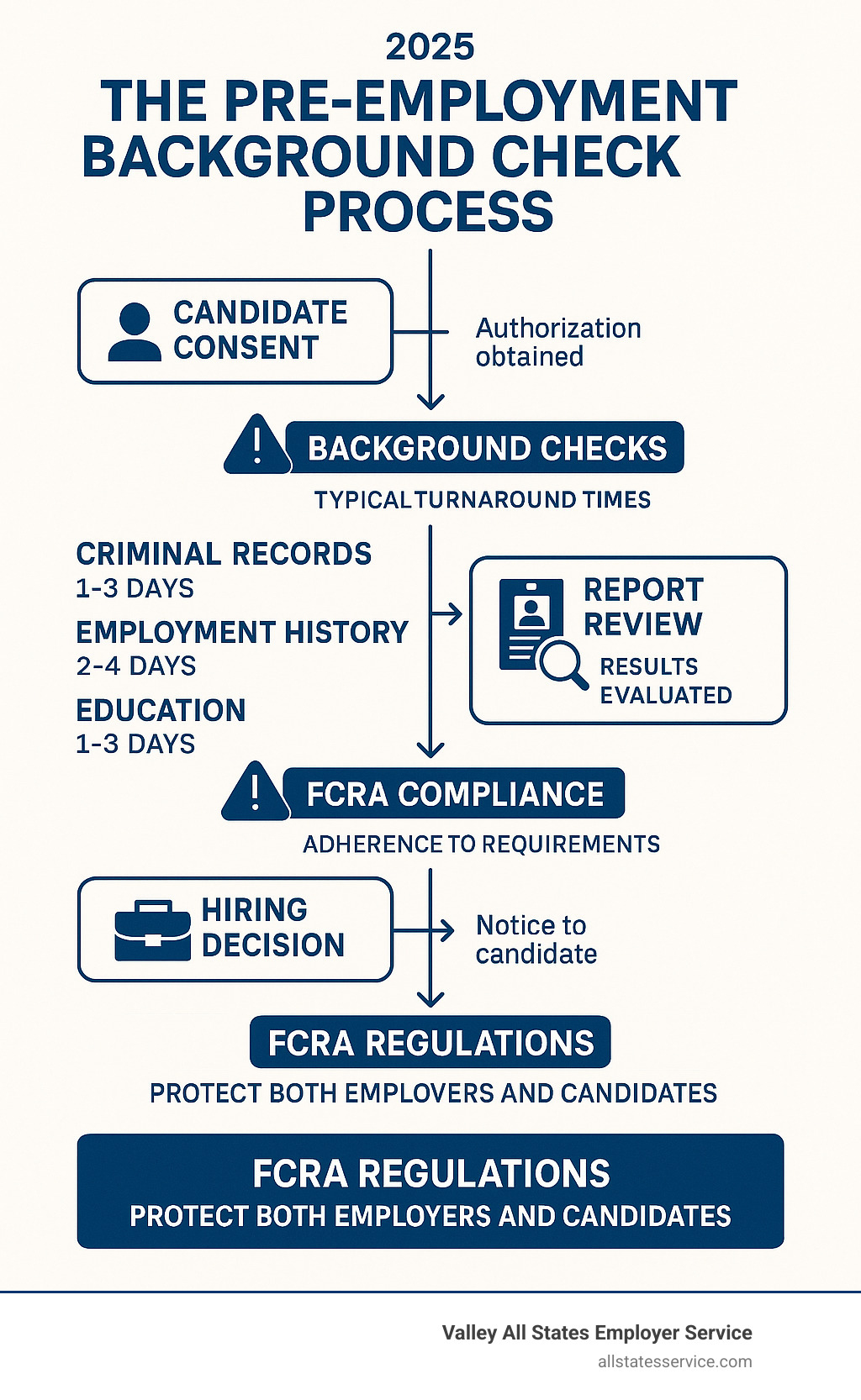
The FCRA requires a strict multi-step process. First, an employer must provide a standalone disclosure to the applicant, informing them that a background check will be conducted. This disclosure cannot be buried within an employment application; it must be a separate document. Second, the employer must obtain written authorization from the candidate.
If the results of the background check lead the employer to consider an adverse action (such as withdrawing a job offer), the FCRA mandates a two-step notification process. The employer must first send a Pre-Adverse Action Notice, providing the candidate with a copy of the report and a summary of their rights. This allows the candidate to dispute inaccuracies. If the employer decides to move forward with the rejection after a reasonable waiting period (typically five business days), they must issue a final Adverse Action Notice. Failure to follow these federal steps remains the leading cause of class-action litigation in 2026.
Ban the Box and Fair Chance Acts
"Ban the Box" refers to legislation that prohibits employers from asking about criminal history on initial job applications. The goal of these laws is to allow candidates to be evaluated based on their qualifications before their criminal record is considered. As of 2026, over 35 states and hundreds of cities have adopted some form of Ban the Box or Fair Chance legislation.
While early versions of these laws applied only to public sector employers, the majority of current state laws now extend to private employers. For example, California’s Fair Chance Act and Illinois’ Employee Credit Privacy Act have set rigorous standards that other states have since emulated. These laws typically dictate when an employer can inquire about criminal history—usually only after a conditional offer of employment has been made.
Beyond the timing of the inquiry, modern Fair Chance Acts often require an individualized assessment. This means employers cannot implement a blanket policy of rejecting anyone with a criminal record. Instead, they must consider the nature and gravity of the offense, the time passed since the offense or completion of the sentence, and the nature of the job held or sought.
State Restrictions on Credit Reports
The use of credit checks in employment has become increasingly restricted. Legislators argue that a candidate's personal financial history is rarely a valid predictor of job performance and that using such reports can unfairly disadvantage those who have suffered medical emergencies or long-term unemployment.
As of 2026, states including California, Colorado, Connecticut, Hawaii, Illinois, Maryland, Nevada, Oregon, Vermont, and Washington have enacted laws limiting the use of credit information for employment decisions. In these jurisdictions, credit checks are generally prohibited unless the position meets specific criteria, such as:
- Managerial or executive roles.
- Positions involving access to trade secrets or sensitive financial data.
- Jobs that require the employee to be a signatory on corporate bank accounts.
- Law enforcement or positions with the state department of justice.
In states like New York, while there isn't a statewide ban for private employers, New York City maintains one of the strictest credit check bans in the country under the Stop Credit Discrimination in Employment Act.
Salary History Bans and Pay Transparency
To combat the gender pay gap, many states have moved to prohibit employers from asking candidates about their previous salary, benefits, or other compensation. The logic is that basing a new salary on a previous one carries forward historical pay inequities.
In 2026, salary history bans are common in states like Massachusetts, New Jersey, New York, and Pennsylvania. Compliance in this area requires HR departments to audit their interview guides and application forms to ensure that questions regarding "current salary" are removed. Instead, employers are encouraged to provide a pay range for the position, a practice that is now legally mandated in several states (e.g., Colorado, Washington, and California) under pay transparency laws.
Marijuana and Drug Testing Limitations
The legal landscape for drug testing has shifted dramatically due to the widespread legalization of both medical and recreational marijuana. In 2026, many states have enacted protections for off-duty marijuana use.
States like New York and Nevada generally prohibit employers from testing for marijuana as a condition of employment, with exceptions for safety-sensitive roles or positions regulated by federal mandates (such as Department of Transportation roles). In California, the law (AB 2188) protects employees from discrimination based on their use of cannabis away from the workplace and off the clock. Employers in these states have largely shifted their focus to testing for impairment at work rather than the mere presence of non-psychoactive cannabis metabolites in a person's system.
Summary of State-Specific Background Check Laws (2026)
The following table summarizes the primary compliance requirements for major jurisdictions. Note that local ordinances (city or county) may impose additional restrictions beyond these state-level summaries.
| State | Ban the Box (Private) | Credit Check Restrictions | Salary History Ban | Marijuana Protections |
|---|---|---|---|---|
| California | Yes (Fair Chance Act) | Yes (CCRAA) | Yes | Yes (Off-duty use) |
| Colorado | Yes (Chance to Compete) | Yes | Yes | Limited |
| Florida | No (Local only) | No | No | No |
| Illinois | Yes (Fair Chance) | Yes | Yes | Limited |
| Massachusetts | Yes | No | Yes | Medical Only |
| Nevada | No (Public only) | Yes | Yes | Yes (Pre-employment) |
| New Jersey | Yes | No | Yes | Yes (Off-duty use) |
| New York | Yes (Article 23-A) | Local only (NYC) | Yes | Yes (Off-duty use) |
| Texas | No (Local only) | No | No | No |
| Washington | Yes (Fair Chance) | Yes | Yes | Yes (Pre-employment) |
Best Practices for Multi-State Compliance
For employers operating in multiple states, the complexity of managing background check laws can be overwhelming. To mitigate legal risk, many organizations adopt a "highest common denominator" approach. This involves creating a unified policy that meets the requirements of the most restrictive states (like California or New York) and applying it nationwide.
Key steps for maintaining a compliant screening program include:
- Reviewing Application Forms: Ensure no questions regarding criminal history or salary history appear on the initial application.
- Updating Disclosure and Authorization Forms: Use clear, standalone documents that comply with the FCRA and state-specific disclosure requirements (e.g., California’s specific investigative consumer report disclosures).
- Training Hiring Managers: Ensure those conducting interviews know which questions are legally off-limits, particularly regarding previous compensation and past arrests.
- Partnering with an Accredited CRA: Work with a Consumer Reporting Agency (CRA) accredited by the Professional Background Screening Association (PBSA). These agencies often provide automated tools to help manage state-specific adverse action notices and individualized assessment workflows.
- Monitoring Local Ordinances: Be aware that cities like Seattle, Philadelphia, and San Francisco have "Fair Chance" ordinances that are even more stringent than their respective state laws.
Frequently Asked Questions
Can an employer still conduct a background check in a "Ban the Box" state?
Yes. Ban the Box laws do not prohibit background checks; they only regulate the timing of the inquiry. In most cases, the employer must wait until after a conditional job offer has been made before conducting the search or asking the candidate about their criminal history.
What happens if an employer asks about salary history in a state where it is banned?
Asking about salary history in a restricted state can lead to significant legal penalties, including fines and lawsuits from the candidate. Many state labor departments actively investigate such claims. Employers should instead ask about the candidate’s salary expectations for the new role.
Do these state laws apply if the employee works remotely?
Generally, employment laws are governed by the location where the work is performed. If an employer is based in Texas but hires a remote worker living in California, the employer must typically comply with California’s background check and labor laws for that specific employee.
How far back can a background check look in 2026?
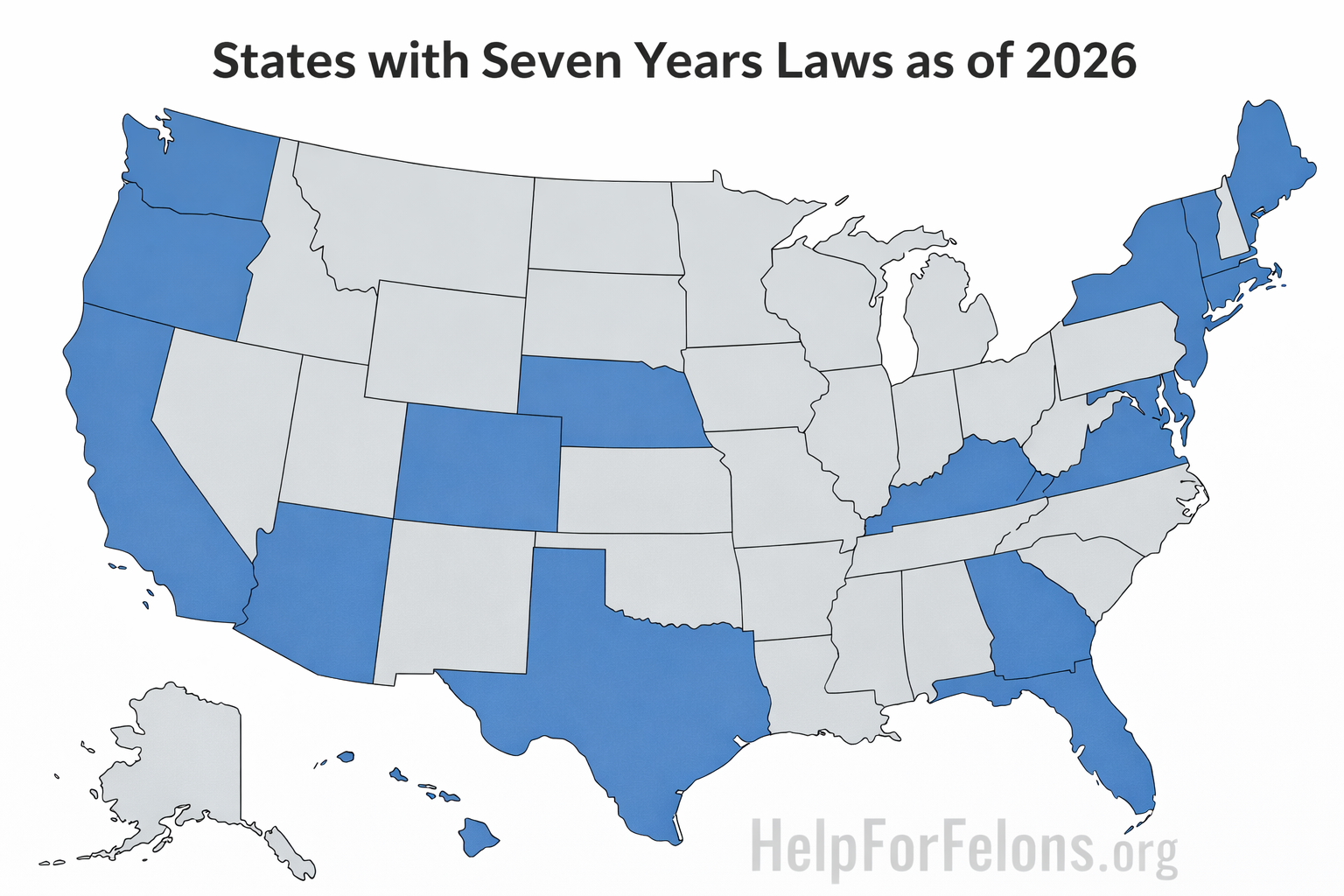
Under the FCRA, there is no federal limit on reporting criminal convictions. However, several states (including California, Kansas, Maryland, Massachusetts, New Hampshire, New York, and Washington) follow the "seven-year rule," which limits the reporting of most criminal records and tax liens to a seven-year window, depending on the candidate's expected salary.
Are there exceptions for "safety-sensitive" positions?
Yes. Most state laws regarding marijuana use and credit checks include broad exemptions for safety-sensitive roles (e.g., heavy machinery operators, healthcare workers) and positions within the financial sector or law enforcement.
Practical Recommendations
To navigate the evolving landscape of 2026 employment laws, organizations should conduct an annual audit of their background screening policies. Begin by mapping out every jurisdiction where you have employees, then verify if those locations have recently updated their Fair Chance or Pay Transparency statutes.
It is also highly recommended to implement a formal Individualized Assessment process. Even in states where it is not strictly required by law, following the EEOC’s guidance to consider the "nature-time-nature" of a criminal record provides a strong defense against potential claims of disparate impact discrimination. Finally, ensure your Adverse Action process is documented and provides candidates with the legally required time to respond to any findings in their report.
Image Gallery