Understanding the Physical Characteristics of Down Syndrome
Down syndrome is a genetic condition caused by the presence of all or part of a third copy of chromosome 21. While people with Down syndrome share this specific genetic profile, they exhibit a wide range of physical characteristics, of...
Down syndrome is a genetic condition caused by the presence of all or part of a third copy of chromosome 21. While people with Down syndrome share this specific genetic profile, they exhibit a wide range of physical characteristics, often referred to as phenotypic features. These features are highly variable; no single individual will possess all of them, and many of these traits are found in the general population.
Contents
The Biological Basis of Phenotypic Variation
The physical appearance of individuals with Down syndrome is a result of the genetic overexpression associated with trisomy 21. Because every person inherits a unique combination of DNA from their parents, the expression of these genetic traits is never uniform. Medical professionals use the term "phenotype" to describe the observable characteristics of an individual, which result from the interaction of their genotype with the environment.
It is important to emphasize that while there are recognized clinical indicators associated with Down syndrome, these are simply variations in human anatomy. They do not define a person’s personality, intelligence, or potential. Furthermore, because these physical markers exist along a spectrum, an individual may have many, few, or almost none of these features.
Common Physical Characteristics
While individual variation is significant, clinicians look for specific signs that occur with higher frequency in people with Down syndrome. These are often identified at birth or shortly thereafter.
- Craniofacial Features: Many people with Down syndrome have a flatter facial profile, particularly at the bridge of the nose. The head size may be slightly smaller than average (brachycephaly), and the back of the head may appear flatter.
- Ocular Characteristics: Almond-shaped eyes are common, often with a subtle fold of skin at the inner corner known as an epicanthic fold. Some individuals may have Brushfield spots, which are small white or grayish specks on the iris.
- Musculoskeletal Traits: Hypotonia, or low muscle tone, is common in infancy and can affect physical development, such as the timing of sitting or walking. Hands may be slightly shorter and wider, sometimes featuring a single deep crease across the palm (known as a palmar crease) and a slightly curved fifth finger (clinodactyly).
- Stature and Growth: Children and adults with Down syndrome often have a shorter stature compared to their neurotypical peers. Growth patterns may follow specific, tailored growth charts used by pediatricians to monitor health.
Addressing Common Misconceptions
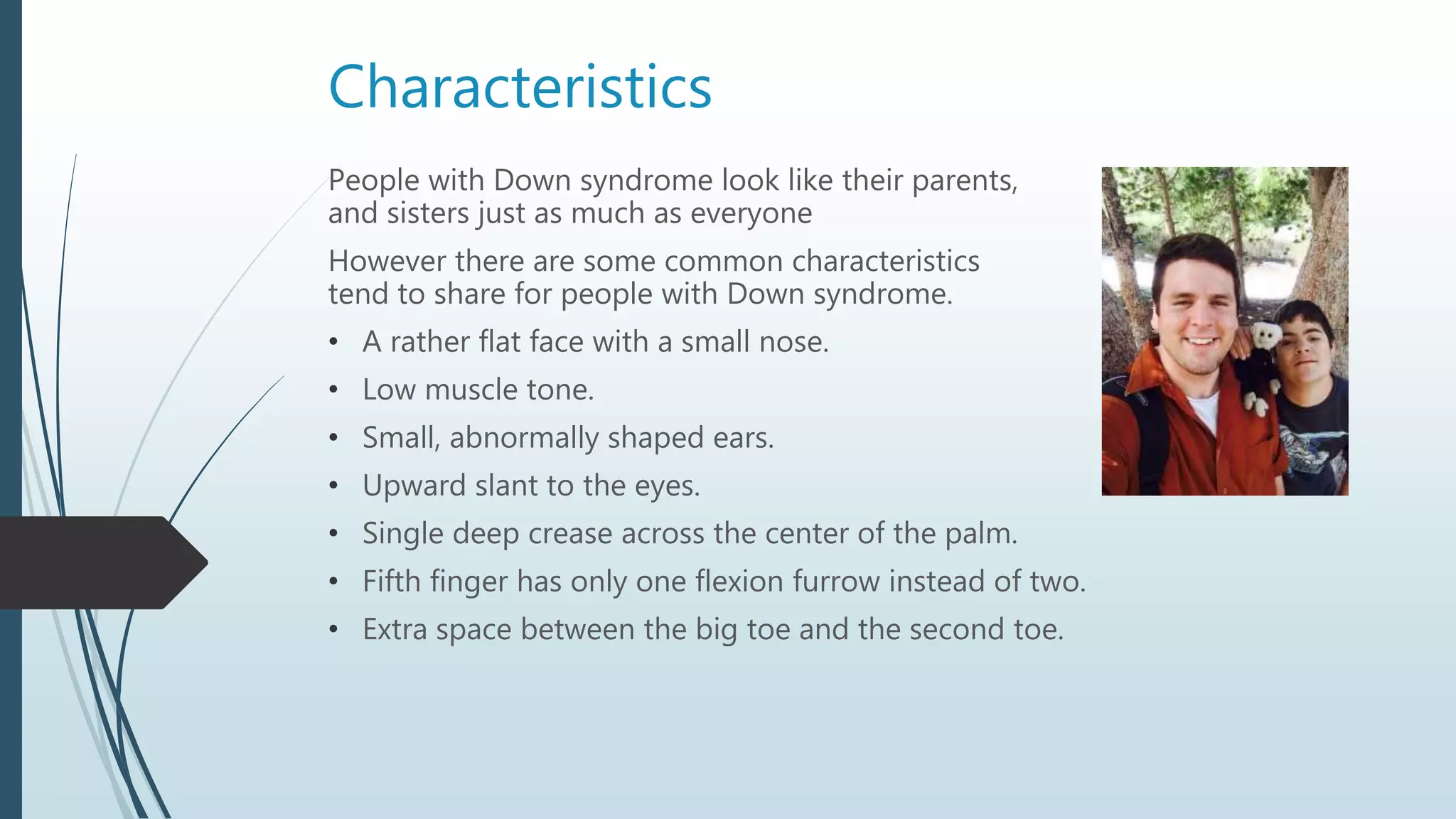
A persistent challenge in public perception is the tendency to view Down syndrome as a singular "look." In reality, people with Down syndrome resemble their biological family members—parents, siblings, and extended relatives—more than they resemble each other. A person with Down syndrome may have the eye color, hair texture, and skin tone characteristic of their specific ethnic or familial background.
The focus on physical appearance often distracts from the reality of individual health and development. While certain health concerns, such as congenital heart defects or thyroid issues, occur at higher rates in this population and require medical monitoring, these conditions are not "visible" in the way facial features are.
Clinical Observation and Comparison
The following table outlines frequently observed physical traits, though it must be noted that their presence is neither universal nor diagnostic of health status.
| Characteristic Category | Observation | Prevalence/Context |
|---|---|---|
| Facial Structure | Flattened nasal bridge | Varies significantly by ethnicity |
| Eye Shape | Upward slanting, almond shape | Often features epicanthic folds |
| Skin/Soft Tissue | Extra skin at the nape of the neck | Common in newborns |
| Hand Anatomy | Single palmar crease | Found in some, not all individuals |
| Muscle Tone | Hypotonia (low muscle tone) | Typically improves with age/therapy |
| Stature | Shorter overall height | Often apparent by school age |
Developmental Considerations and Health Monitoring
Because the physical characteristics of Down syndrome are often identified at birth, this identification serves as a signal for pediatricians to initiate early interventions. Physical traits themselves are benign, but the clinical objective is to provide support for any associated systemic challenges.
For example, low muscle tone is not just a physical trait; it is a clinical factor that benefits from physical and occupational therapy. These therapies help children build the strength necessary for motor milestones. Similarly, while specific facial features might correlate with a narrower ear canal, this is a functional consideration for ENT (Ear, Nose, and Throat) specialists rather than an aesthetic concern.
The Role of Genetics in Appearance
The variation in how people with Down syndrome look is dictated by the same biological inheritance that dictates how anyone else looks. If a person with Down syndrome has parents with dark hair and brown eyes, they are highly likely to have those traits. The "Down syndrome phenotype" is an overlay on the individual’s unique genetic inheritance from their parents.
In 2026, genetic counseling and prenatal screening have become more sophisticated, yet the fundamental truth remains: the physical traits associated with the condition are merely one part of a complex human identity. The medical community emphasizes that diagnostic confirmation for Down syndrome relies on a chromosomal analysis (karyotype or microarray), not on visual observation alone.
FAQ: Common Questions Regarding Physicality
Do all people with Down syndrome look exactly the same? No. While there are common physical traits associated with the condition, individuals with Down syndrome resemble their own biological family members and possess unique personal features just like any other person.
Why do some people with Down syndrome have a single palm crease? This is a minor anatomical variation known as a simian crease. While it is more common in individuals with Down syndrome, it also occurs in the general population and is not an indicator of health status.
Does a flatter facial profile cause medical problems? In some cases, facial structure, including a smaller oral cavity or a flatter midface, can impact breathing or speech. Pediatricians and specialists, such as speech-language pathologists, monitor these factors to provide support as needed.
How does Down syndrome affect growth and weight? Individuals with Down syndrome often follow a different growth curve than the general population. Pediatricians use specialized growth charts to track progress, and dietary or metabolic needs are addressed on an individual basis.
Can plastic surgery "correct" these physical traits? Historical discussions regarding "cosmetic" surgery for facial features have been largely controversial and generally discouraged by medical advocacy groups. Most practitioners and families prioritize functional health and quality of life over attempts to alter physical appearance.
Recommendation and Next Actions
If you are the parent of a child recently diagnosed with Down syndrome or are seeking information for a loved one, the most productive next step is to consult with a medical professional who specializes in Down syndrome. Avoid relying on generalized internet descriptions of "how they look," as these often lean toward stereotypes that do not reflect the diversity within the community.
Focus your efforts on establishing a team of specialists—including pediatricians, physical therapists, and speech therapists—to address specific developmental milestones. For the most accurate and supportive information, refer to recognized organizations such as the National Down Syndrome Society (NDSS) or the National Association for Down Syndrome (NADS). These resources provide evidence-based guidance that prioritizes the individual’s long-term health and inclusion over superficial descriptions.
Image Gallery