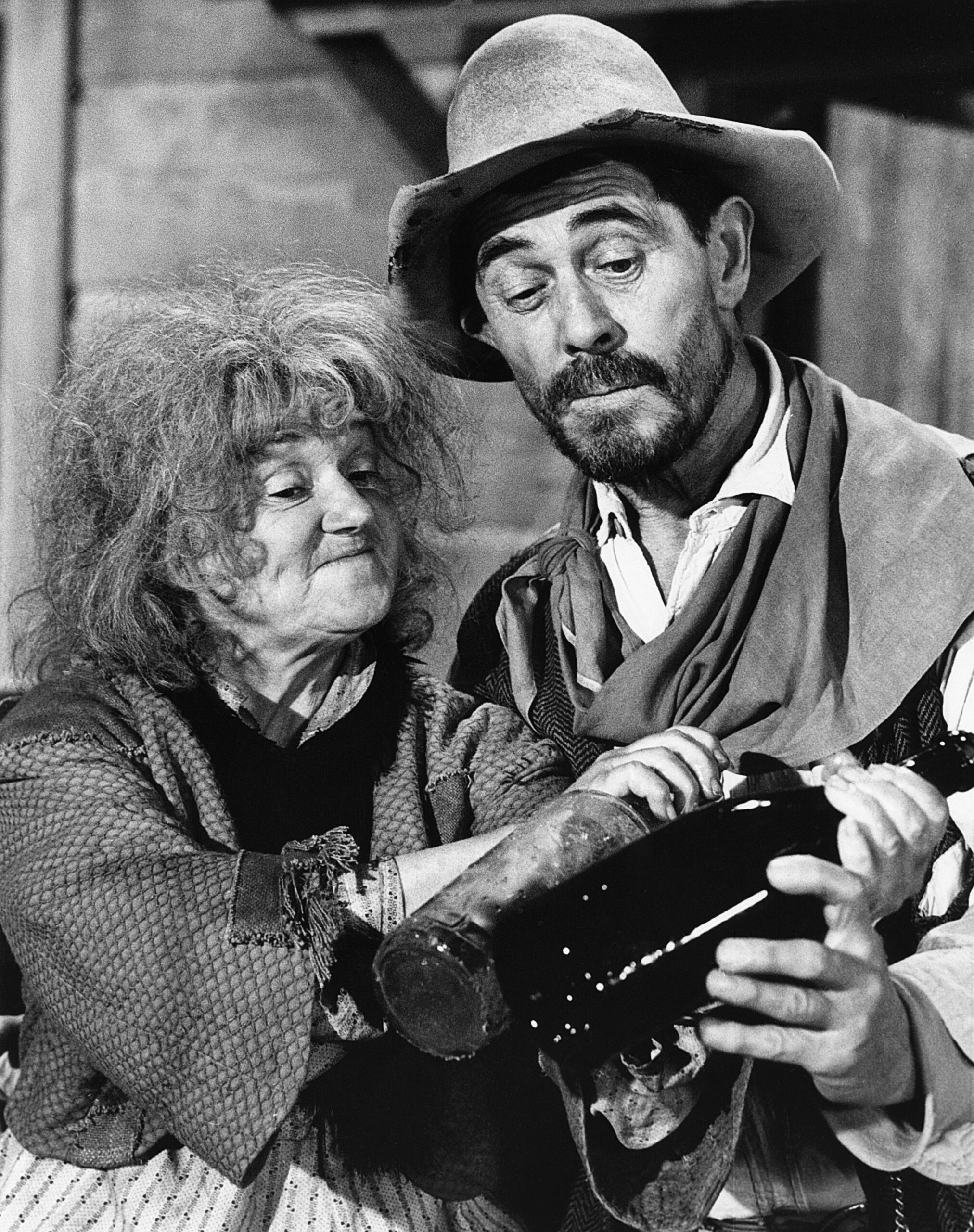
The Definitive Guide to the Gunsmoke Actors and Actresses You Should Know
The legendary cast of Gunsmoke is anchored by James Arness as Marshal Matt Dillon, Milburn Stone as Doc Adams, Amanda Blake as Miss Kitty Russell, and Ken Curtis as Festus Haggen. These performers, along with Dennis Weaver and Buck Tay...
The legendary cast of Gunsmoke is anchored by James Arness as Marshal Matt Dillon, Milburn Stone as Doc Adams, Amanda Blake as Miss Kitty Russell, and Ken Curtis as Festus Haggen. These performers, along with Dennis Weaver and Buck Taylor, defined the longest-running scripted Western in television history through 20 seasons of production.
Contents
The Foundation of Dodge City: The Core Four
To understand the enduring legacy of Gunsmoke, one must first recognize the "Core Four"—the actors who provided the emotional and moral framework of the series. While many Westerns of the 1950s and 60s relied on high-action tropes, Gunsmoke distinguished itself through character-driven narratives. This was made possible by a cast that remained largely intact for decades, a rarity in the television industry.
James Arness as Marshal Matt Dillon
James Arness was the literal and figurative giant of the series. Standing 6 feet 7 inches tall, Arness portrayed Matt Dillon for the entire 20-year run from 1955 to 1975. Interestingly, John Wayne was the one who recommended Arness for the role, even introducing the first episode to American audiences.
Arness brought a nuanced stoicism to the character. Unlike many "white hat" heroes of the era, his Matt Dillon was often weary, burdened by the weight of justice, and deeply human. By 2026, Arness remains a benchmark for the American Western archetype. His performance bridged the gap between the simplistic hero and the complex anti-hero seen in later cinema. His commitment to the role extended beyond the series into five made-for-TV movies in the late 1980s and early 90s, cementing his status as the face of the franchise.
Amanda Blake as Miss Kitty Russell
Amanda Blake portrayed Kitty Russell, the proprietor of the Long Branch Saloon, for 19 seasons. In an era where female characters in Westerns were often relegated to "damsels in distress" or background roles, Blake’s Kitty was a sharp-witted, independent business owner.
Her relationship with Matt Dillon was one of television’s most famous "will-they-won't-they" dynamics. While the show never explicitly depicted them as a married couple, the subtle chemistry and mutual respect between Blake and Arness suggested a deep, unspoken bond. Blake's departure in 1974, just one year before the series ended, marked a significant shift in the show's atmosphere, as she was often considered the "heart" of Dodge City.
Milburn Stone as Dr. Galen "Doc" Adams
Milburn Stone provided the show's moral conscience as the cranky but dedicated town physician. Stone was one of only two actors (alongside Arness) to stay with the series for its entire duration, though he missed several episodes in 1971 due to heart surgery.
Doc Adams was more than just a medical professional; he was Matt Dillon’s sounding board. Stone won an Emmy for the role in 1968, a testament to his ability to balance dry humor with profound gravitas. His constant bickering with the deputies—first Chester and later Festus—provided much of the series' lighthearted relief without undermining the serious stakes of the plot.
The Evolution of the Deputy: From Chester to Festus
The role of the Marshal’s assistant saw the most significant casting transition in the show's history. This shift represented the series' ability to adapt and reinvent its humor while maintaining its core identity.
Dennis Weaver as Chester Goode
In the early years of Gunsmoke, Dennis Weaver’s Chester Goode was the loyal, limping assistant to Matt Dillon. Weaver famously invented the "stiff-legged" walk for Chester to make the character more distinct and less of a traditional "tough guy."
Weaver’s performance was rooted in vulnerability and loyalty. However, by 1964, Weaver sought to expand his horizons, leading to his departure and the introduction of a very different kind of sidekick. Weaver eventually found massive success in the series McCloud, but his contribution to the early "black and white" era of Gunsmoke remains iconic for its sincerity and physical character acting.
Ken Curtis as Festus Haggen
When Ken Curtis joined the cast as Festus Haggen, he filled the void left by Weaver with a character that was arguably even more beloved. Festus was a scruffy, illiterate, but incredibly sharp-witted frontiersman. Curtis, who was a classically trained singer and a member of the Sons of the Pioneers, completely transformed his voice and mannerisms for the role.
The interaction between Festus and Doc Adams became a cornerstone of the show's later years. Their verbal sparring was a masterclass in comedic timing, often providing a "B-plot" that kept the show grounded during more intense storylines. By the time the show concluded, Curtis had appeared in 304 episodes, making Festus an inseparable part of the Gunsmoke mythos.
Key Supporting Cast and Notable Departures
While the main leads carried the show, the supporting cast and guest stars were essential for the show’s longevity. As the series transitioned from a 30-minute format to a 60-minute format and eventually into color, the ensemble grew to include new archetypes of the American West.
- Buck Taylor as Newly O’Brien: Joining in 1967, Taylor played a gunsmith who eventually became a deputy. Newly represented the "new West"—a character who was technically proficient and more educated than previous deputies, reflecting the changing times of the late 19th-century setting.
- Burt Reynolds as Quint Asper: Before becoming a global superstar, Burt Reynolds spent three seasons (1962–1965) on Gunsmoke playing a "half-breed" blacksmith. His character explored the racial tensions of the frontier, a theme the show tackled with surprising frequency for its time.
- Glenn Strange as Sam Noonan: The reliable bartender at the Long Branch, Strange was a veteran of horror films (having played Frankenstein's Monster) who brought a steady, calming presence to the chaotic saloon scenes until his death in 1973.
Comparison of Principal Gunsmoke Cast Members
| Actor | Character | Years Active | Primary Role Type |
|---|---|---|---|
| James Arness | Matt Dillon | 1955–1975 | The Lawman (Marshal) |
| Milburn Stone | Doc Adams | 1955–1975 | The Medic/Mentor |
| Amanda Blake | Kitty Russell | 1955–1974 | The Businesswoman |
| Ken Curtis | Festus Haggen | 1964–1975 | The Deputy/Sidekick |
| Dennis Weaver | Chester Goode | 1955–1964 | The Deputy/Sidekick |
| Buck Taylor | Newly O'Brien | 1967–1975 | The Gunsmith/Deputy |
| Burt Reynolds | Quint Asper | 1962–1965 | The Blacksmith |
The Guest Star Phenomenon
Gunsmoke served as a revolving door for Hollywood talent. Because the show ran for two decades, it captured actors at the beginning, middle, and end of their careers. Seeing these faces is part of the modern viewing experience for fans in 2026, who often enjoy spotting future icons in Dodge City.
A-list stars like Harrison Ford, Charles Bronson, and Kurt Russell appeared in guest roles early in their careers. The show also welcomed veterans of the silent film era and classic Hollywood, such as Bette Davis and Richard Dreyfuss. This high standard for guest casting ensured that even "filler" episodes felt like prestige television. The depth of the acting pool allowed the writers to explore diverse perspectives, from the plight of displaced Native Americans to the struggles of immigrant families settling the Kansas plains.
Production and Technical Evolution
The actors of Gunsmoke had to navigate significant technical shifts over 20 years. The show began as a gritty, 30-minute adult Western on radio (starring William Conrad as Matt Dillon) before moving to TV. The television actors had to adapt from the intimate, claustrophobic 4:3 black-and-white frame of the 1950s to the expansive, color-saturated landscapes of the 1970s.
James Arness and Milburn Stone, in particular, were lauded for their ability to maintain character consistency despite these changes in production value. The shift to color in 1966 required more elaborate makeup and costume considerations, yet the performances remained grounded. This technical adaptability is a primary reason why the show remains broadcast-quality and watchable in high-definition formats today.
Frequently Asked Questions
Why did Dennis Weaver leave Gunsmoke?
Dennis Weaver left the series in 1964 because he felt he had explored the character of Chester Goode as much as he could. He was eager to pursue leading roles and avoid being typecast as a "sidekick." His gamble paid off, as he went on to star in several successful series and the cult classic film Duel.
Is anyone from the original Gunsmoke cast still alive in 2026?
By 2026, most of the primary cast members from the show’s early years have passed away. James Arness passed in 2011, Amanda Blake in 1989, and Milburn Stone in 1980. However, Buck Taylor (Newly O'Brien) remains an active figure in the Western community, often appearing at fan conventions and pursuing a successful second career as a Western artist.
Was the relationship between Matt Dillon and Miss Kitty ever resolved?
The show’s creators intentionally kept the relationship ambiguous. While it was clear they were the primary love interests of each other's lives, a marriage was never depicted. This was partly to maintain Matt Dillon’s status as a lone lawman and partly to respect the independent nature of Kitty’s character.
How did Ken Curtis get the role of Festus?
Ken Curtis had actually appeared on Gunsmoke in various guest roles—sometimes even as a villain—before being cast as Festus Haggen. The producers were so impressed with his range and his ability to create a unique dialect that they brought him on as a permanent replacement for the deputy role after Dennis Weaver’s departure.
Final Recommendations for Fans
For those looking to truly appreciate the cast of Gunsmoke in 2026, it is highly recommended to watch the transition episodes between Season 9 and Season 10. This period showcases the handoff from Weaver to Curtis and highlights the incredible ensemble work of Arness, Stone, and Blake during the show's peak creative years. To see the cast in a different light, seek out the Season 12 episode "The Snap Out," which features some of the best character work for Milburn Stone.
Image Gallery