Why the Community Degree Matters in Urban Design
The community degree in urban design refers to the depth of participatory engagement and social integration within a development project. It measures how effectively residents influence planning and how well the final built environment...
The community degree in urban design refers to the depth of participatory engagement and social integration within a development project. It measures how effectively residents influence planning and how well the final built environment fosters social cohesion. In 2026, high community degrees are essential for ensuring project longevity, reducing planning friction, and creating resilient, climate-adaptive neighborhoods.
Contents
Urban design is no longer a purely aesthetic or architectural pursuit. As we navigate the complexities of 2026, city planning has transitioned into a socio-technical discipline where the success of a bridge, park, or housing complex is judged not just by its structural integrity, but by its "community degree." This metric quantifies the relationship between the physical environment and the people who inhabit it. A high community degree signifies that a project has moved beyond superficial consultation into true co-creation, resulting in spaces that are more functional, equitable, and sustainable.
Defining the Community Degree in Modern Urbanism
In the context of 2026 urban planning standards, the "community degree" is a multifaceted indicator used to evaluate the intensity of stakeholder involvement and the resulting social connectivity of a site. Historically, urban design often relied on a "top-down" approach, where experts dictated the flow of a city based on efficiency and zoning laws. However, this often led to "placelessness"—environments that felt sterile or disconnected from the local culture.
The community degree challenges this by prioritizing "lived experience" as a primary data source. It is categorized into three specific dimensions:
- Participatory Intensity: The extent to which residents actually influence the design outcomes. This ranges from simple "information sessions" (low degree) to "citizen control" (high degree).
- Social Connectivity: The physical layout’s ability to encourage spontaneous social interactions. This involves the placement of "third places"—spaces that are neither work nor home, such as plazas and community gardens.
- Psychological Ownership: The degree to which a community feels responsible for and connected to their environment. This is often the strongest predictor of long-term maintenance and safety in urban areas.
The Shift from Consultative to Collaborative Planning
By 2026, the global shift toward collaborative planning has made the community degree a mandatory consideration for most municipal approvals. In previous decades, a "public hearing" was often a box-ticking exercise performed late in the design phase. Today, high-degree projects integrate community feedback during the "pre-concept" stage.
The Role of Digital Twins and AR
Technology has significantly boosted the community degree in recent years. Urban designers now utilize Digital Twins—real-time virtual models of a city—to allow residents to visualize proposed changes. Using Augmented Reality (AR) on mobile devices, citizens can stand on a street corner and see a 3D rendering of a proposed park or transit hub. This level of transparency increases the community degree because it democratizes technical data, allowing non-experts to provide informed, high-quality feedback on shadows, wind tunnels, and sightlines.
Overcoming the "Expert-Layperson" Divide
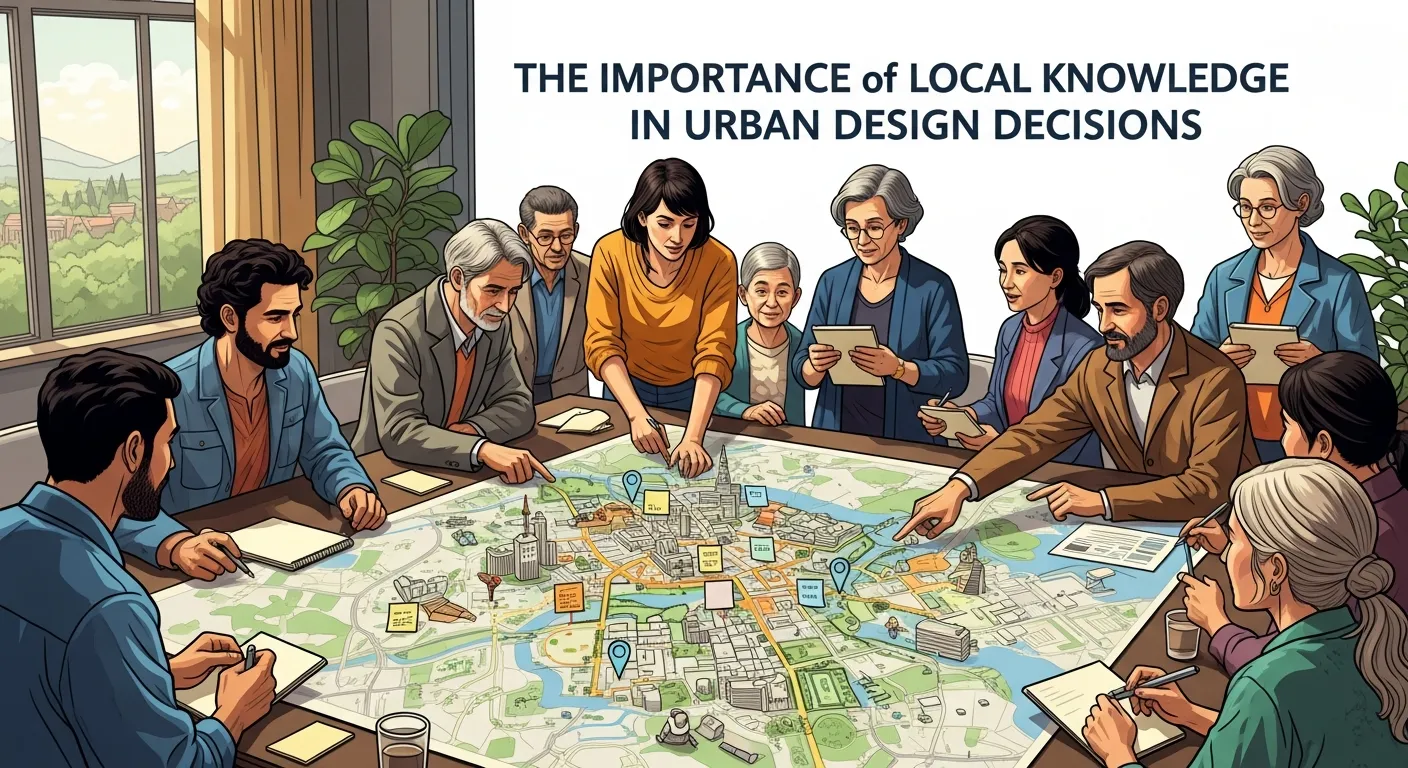
High community degree planning focuses on bridging the gap between professional jargon and local needs. Designers are now trained to act as facilitators rather than just creators. When a community’s degree of involvement is high, the final design reflects the specific cultural and functional nuances of the neighborhood—such as identifying a specific street corner that traditionally serves as an informal market or recognizing a pedestrian shortcut that is vital for local seniors.
Why a High Community Degree is Economically Vital
There is a common misconception that high community engagement slows down projects and increases costs. In reality, a high community degree acts as a risk-mitigation strategy. By 2026, the financial cost of public opposition, legal challenges, and "NIMBY" (Not In My Backyard) sentiment has reached record highs.
Projects that invest in a high community degree early on typically see:
- Faster Approvals: When the community feels they have "signed off" on a project because their concerns were addressed in the design, the permit process faces fewer appeals.
- Reduced Maintenance Costs: Communities with a high sense of ownership are more likely to participate in "stewardship" programs, such as volunteer park maintenance or neighborhood watch initiatives.
- Higher Property Resilience: Socially cohesive neighborhoods recover faster from economic downturns or environmental disasters because the networks of mutual aid are already built into the urban fabric.
Measuring the Community Degree: A Technical Comparison
To understand where a project stands, urban designers use a variation of the "Ladder of Participation." The following table outlines the different levels of the community degree and their practical implications in 2026 urban design.
| Degree Level | Interaction Type | Planning Role | Long-term Outcome |
|---|---|---|---|
| Low (Informative) | One-way communication | The community is told what will happen. | Potential for high public resistance and social friction. |
| Moderate (Consultative) | Feedback loops | Designers ask for opinions but retain all decision power. | "Standard" developments with average social cohesion. |
| High (Collaborative) | Partnership | Residents and designers co-develop the master plan. | Strong local identity and high project satisfaction. |
| Maximum (Empowerment) | Community-Led | Residents hold the final vote or manage the project budget. | Exceptional resilience and deep cultural integration. |
The Impact on Social Equity and Displacement
One of the most critical reasons the community degree matters in 2026 is its role in combating gentrification and involuntary displacement. When the community degree is low, new developments often cater to an outside demographic, driving up costs and erasing local history.
In contrast, a high community degree ensures that inclusive zoning and affordable housing are central to the conversation. By involving long-term residents in the design process, planners can identify "cultural anchors"—the local barbershops, churches, or community centers—that must be preserved to maintain the neighborhood's social fabric. This approach shifts the goal of urban design from "revitalization" (which often implies starting over) to "evolution" (which builds upon existing community assets).
Technical Requirements for Achieving a High Community Degree
Achieving a high community degree is a technical challenge that requires specific tools and methodologies. In 2026, the following prerequisites are considered industry standards:
- Multilingual Engagement Platforms: Ensuring that all digital and physical outreach is accessible in the primary languages spoken in the district.
- Hyper-local Data Analysis: Using GIS (Geographic Information Systems) to map not just infrastructure, but social patterns, such as where children play or where delivery drivers congregate.
- Tactical Urbanism Pilots: Implementing temporary, low-cost versions of a design (like a "pop-up" bike lane or plaza) to gather real-world data on how the community uses the space before making it permanent.
- Equitable Compensation: Recognizing that "community expertise" has value. Many modern projects now provide stipends or childcare for residents who participate in intensive multi-day design "charrettes" (collaborative planning workshops).
Common Mistakes and Barriers
Despite its importance, several factors can undermine the community degree. One major barrier is "participation fatigue." In high-growth cities, residents are often bombarded with surveys and meeting requests, leading to lower engagement from the very people planners need to reach.
Another mistake is the "echo chamber" effect, where only a small, vocal minority (who have the time and resources to attend meetings) represents the entire community. To solve this, designers in 2026 use AI-driven sentiment analysis of social media and local forums to capture a broader range of opinions, including those from marginalized groups who may not attend traditional town halls.
Strategic Implementation for Urban Designers
For professionals looking to increase the community degree of their projects, the focus must be on transparency and iterative design. Every piece of feedback should be tracked, and more importantly, the community should be shown where that feedback was incorporated or why it was technically unfeasible.
When residents see their input physically reflected in a blueprint—whether it’s a specific type of tree, the orientation of a bench, or the width of a sidewalk—the "degree" of their connection to the project increases exponentially. This trust is the most valuable currency an urban designer can possess in 2026.
Frequently Asked Questions
Does a high community degree always mean a slower project timeline? While the initial planning phase may take longer due to the collaborative process, the overall timeline is often shorter. By addressing concerns early, projects avoid the months or years of delays caused by public protests, lawsuits, and political stalls that frequently plague low-engagement developments.
How is the community degree quantified for municipal reporting? Planners typically use a "Social Impact Assessment" (SIA). This includes metrics such as the percentage of diverse demographic participation, the number of design changes directly attributed to public input, and post-occupancy "social connectivity" scores measured via resident surveys and foot-traffic sensors.
What is the difference between community degree and public relations? Public relations (PR) is about managing the image of a project to gain approval. The community degree is about the substance of the project—actual changes to the design and a shift in power dynamics. PR seeks to "sell" a vision; a high community degree seeks to "build" a shared vision.
Can a high community degree be achieved in purely commercial developments? Yes. Modern commercial developers use a high community degree to ensure their retail or office space becomes a "destination." By including community-vetted amenities (like public restrooms, shaded seating, or local art), developers increase the "dwell time" of visitors, which directly benefits the commercial tenants.
How does climate change affect the importance of the community degree? In 2026, "climate resilience" is a local effort. A high community degree ensures that disaster response plans and green infrastructure (like bioswales) are maintained by the people who live there. Without community buy-in, green infrastructure often fails due to neglect or misunderstanding of its function.
Is there a risk of "NIMBYism" overriding good design in a high-degree model? A high community degree actually helps solve NIMBYism by moving beyond "Yes/No" conflicts. It shifts the conversation to "How can we make this work for you?" This collaborative approach often uncovers the root of the objection—such as traffic or light pollution—which can then be solved through technical design rather than project cancellation.
Practical Recommendation
To maximize the community degree in your next urban design project, begin with a Stakeholder Mapping Exercise before a single line is drawn on a map. Identify not just the homeowners, but the renters, local business owners, transit users, and youth. Use a "mobile engagement office"—a van or pop-up tent—that moves to where people already gather, rather than expecting them to come to a city hall meeting. By meeting people in their own spaces, you demonstrate respect and significantly increase the quality and depth of the data you receive.
Image Gallery