Union Pacific Railroad: Operations and Impact of the Largest U.S. Freight Operator
Union Pacific Railroad (UP) is the largest freight railroad in the United States by route mileage, operating a vast 32,200-mile network across 23 states. Headquartered in Omaha, Nebraska, it serves as a critical backbone for the North...
Union Pacific Railroad (UP) is the largest freight railroad in the United States by route mileage, operating a vast 32,200-mile network across 23 states. Headquartered in Omaha, Nebraska, it serves as a critical backbone for the North American supply chain, connecting West Coast and Gulf Coast ports with major Midwestern and Eastern gateways while facilitating extensive trade with Mexico and Canada.
Contents
As of 2026, Union Pacific continues to define the standards for Class I railroad operations through its sophisticated logistics infrastructure and its role as a primary mover of international containers, agricultural products, and industrial chemicals. To understand the magnitude of this entity, one must look beyond the locomotives and into the integrated technological and economic systems that allow it to move millions of carloads annually.
The Geographic and Strategic Footprint of Union Pacific
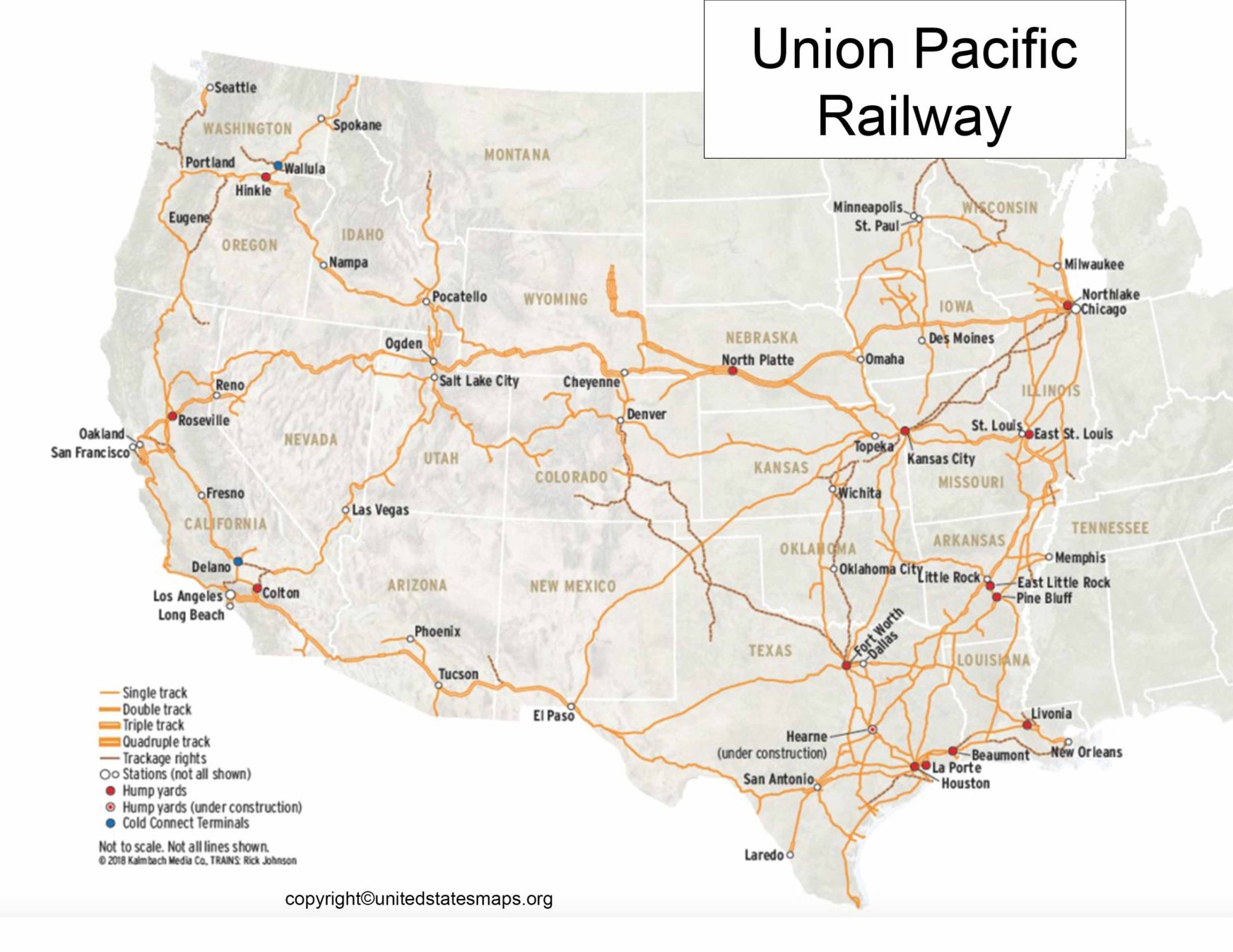
The Union Pacific network is often referred to as the "Golden Empire," a moniker earned through its historical expansion and its strategic dominance of the Western United States. The railroad operates in two-thirds of the country, covering a territory that includes some of the fastest-growing population centers and most productive agricultural regions in the world.
The 23-State Network
The railroad’s tracks stretch from the Pacific Ocean to the Mississippi River. Key states in its footprint include California, Texas, Illinois, and Nebraska. This geography allows Union Pacific to maintain a near-monopoly or duopoly (alongside BNSF Railway) in critical corridors.
One of the most vital components of this network is the connection to the Port of Los Angeles and the Port of Long Beach. These "San Pedro Bay" ports handle a significant percentage of all U.S. waterborne imports. Union Pacific’s ability to move these goods from the docks to inland hubs like Chicago and Dallas is a cornerstone of the national economy.
International Gateways and Nearshoring
By 2026, the trend of "nearshoring"—companies moving manufacturing from Asia to Mexico—has significantly boosted Union Pacific’s strategic value. UP is the only railroad that serves all six major Mexico gateways: Calexico, Eagle Pass, El Paso, Laredo, Brownsville, and Nogales.
The Laredo gateway, in particular, has become the busiest commercial crossing on the U.S.-Mexico border. Union Pacific’s partnership with Mexican carriers and its investments in high-capacity intermodal terminals in Texas have positioned it to capture the lion's share of finished automobiles, auto parts, and consumer goods flowing north across the border.
Core Business Segments: What Union Pacific Carries
Union Pacific categorizes its freight into three primary macro-groups: Bulk, Industrial, and Premium. This diversification protects the company from volatility in any single economic sector.
1. Bulk (Agricultural and Energy)
Union Pacific is a primary transporter of grain, soda ash, and coal. While coal volumes have faced a long-term secular decline due to the shift toward renewable energy and natural gas, UP remains a vital link for the Powder River Basin.
In the agricultural sector, the railroad moves wheat, corn, and soybeans from the Midwest to export terminals in the Pacific Northwest and the Gulf Coast. In 2026, the transportation of renewable diesel feedstocks—such as soybean oil and used cooking oil—has emerged as a high-growth sub-segment within the bulk category.
2. Industrial (Chemicals and Construction)
The Gulf Coast is home to the world’s largest concentration of petrochemical plants. Union Pacific’s extensive trackage in Texas and Louisiana makes it the dominant carrier for plastics, fertilizers, and liquid chemicals. Additionally, the railroad moves massive quantities of "rock and gravel" (aggregates), lumber, and steel required for urban infrastructure projects across the Sun Belt.
3. Premium (Intermodal and Automotive)
The Premium segment is the largest revenue contributor. It includes:
- Intermodal: Moving shipping containers and truck trailers. This is the railroad’s most direct competition with the long-haul trucking industry.
- Automotive: UP is the largest automotive carrier west of the Mississippi, transporting finished vehicles from assembly plants to distribution centers and moving parts to factories.
Comparative Analysis: Union Pacific vs. Other Class I Railroads
To understand Union Pacific’s standing in 2026, it is helpful to compare its operational scale with its primary competitors. While BNSF is its main rival in the West, the merger of Canadian Pacific and Kansas City Southern (CPKC) has created a new north-south competitor.
| Metric (Estimated 2026) | Union Pacific (UP) | BNSF Railway | CSX Transportation | Norfolk Southern (NS) |
|---|---|---|---|---|
| Route Miles | ~32,200 | ~32,500 | ~20,000 | ~19,300 |
| States Served | 23 | 28 | 26 | 22 |
| Primary Region | West / Midwest | West / Midwest | East / Southeast | East / Midwest |
| Primary Port Focus | LA/Long Beach, Houston | LA/Long Beach, Seattle | New York, Savannah | Norfolk, Savannah |
| Mexico Access | 6 Gateways | 5 Gateways | Limited (via interchange) | Limited (via interchange) |
Technological Integration and Precision Scheduled Railroading (PSR)
The operational philosophy of Union Pacific in 2026 is rooted in Precision Scheduled Railroading (PSR). Initially popularized by the late Hunter Harrison, PSR focuses on moving trains on fixed schedules rather than waiting for a train to be "full."
Operational Efficiency
Under PSR, Union Pacific has increased its "train length" and "locomotive productivity." By 2026, the use of distributed power—placing locomotives in the middle or at the end of a train rather than just at the front—has allowed UP to routinely operate freight trains exceeding 12,000 feet in length. This reduces the number of crews required and increases the throughput capacity of existing tracks.
The Digital Twin and AI
Union Pacific utilizes "Digital Twin" technology to simulate its entire network. This allows dispatchers to predict bottlenecks before they occur. Furthermore, autonomous track inspection cars use lasers and high-frequency cameras to detect microscopic cracks in the rails or shifts in the ballast. This predictive maintenance significantly reduces the risk of derailments and service interruptions.
Positive Train Control (PTC)
UP has fully implemented Positive Train Control, a safety technology designed to automatically stop a train before certain types of accidents occur, such as train-to-train collisions or derailments caused by excessive speed. In 2026, this system is being integrated with energy management software to optimize fuel consumption based on topography and train weight.
Sustainability and the Drive Toward Net Zero
The rail industry is inherently more fuel-efficient than trucking, with the ability to move one ton of freight nearly 500 miles on a single gallon of diesel. However, Union Pacific has committed to aggressive carbon reduction targets for 2030 and 2050.
- Alternative Fuels: UP is testing high-blend biofuels and renewable diesel across its fleet. These "drop-in" fuels allow for immediate emissions reductions without requiring new locomotive engines.
- Battery-Electric Locomotives: In 2026, Union Pacific is expanding its pilot programs for battery-electric locomotives in railyard operations. These "yard switchers" eliminate local emissions in urban areas like Los Angeles and Chicago.
- Hydrogen Research: While still in the developmental phase, UP is collaborating with manufacturers to explore hydrogen fuel-cell technology for long-haul applications, which remains the "holy grail" of zero-emission heavy freight.
Economic Impact and Investment Profile
Union Pacific is not just a transport company; it is a leading indicator of the U.S. economy. Because it moves everything from raw materials to finished consumer goods, its quarterly carload data is closely watched by economists.
For investors, Union Pacific (NYSE: UNP) has historically been valued for its strong "moat." Building a new transcontinental railroad is a physical and regulatory impossibility in the modern era, giving UP a permanent competitive advantage in its territory. The company is known for its consistent dividend payments and aggressive share buyback programs, though these are often balanced against the massive capital expenditures (CapEx) required to maintain thousands of miles of steel rail and a fleet of over 7,000 locomotives.
Challenges and Operational Constraints
Despite its dominance, Union Pacific faces several ongoing challenges in 2026:
- Labor Relations: Maintaining a skilled workforce in a high-pressure, 24/7 environment remains difficult. Negotiations with rail unions regarding paid sick leave and predictable scheduling continue to be a focal point of corporate strategy.
- Regulatory Scrutiny: The Surface Transportation Board (STB) keeps a close watch on rail "reciprocal switching" and service levels. If a railroad fails to provide adequate service to a "captive shipper" (a customer with no other transport options), the STB can intervene.
- Climate Change: Extreme weather events, including wildfires in the West and flooding in the Midwest, pose constant threats to infrastructure. UP must invest billions annually in "hardening" its network against these disruptions.
Frequently Asked Questions
Is Union Pacific larger than BNSF?
It depends on the metric. Union Pacific and BNSF are roughly equal in route mileage (each around 32,000 miles). Union Pacific is a publicly traded company, whereas BNSF is a wholly-owned subsidiary of Berkshire Hathaway. UP often leads in total revenue and market capitalization among all U.S. freight carriers.
What states does Union Pacific not serve?
Union Pacific primarily operates in the Western two-thirds of the U.S. It does not have its own tracks in the Northeast (e.g., New York, Pennsylvania) or the deep Southeast (e.g., Florida, Georgia). Goods heading to those regions are "interchanged" with Eastern railroads like CSX or Norfolk Southern in gateways like Chicago, St. Louis, or Memphis.
How does Union Pacific contribute to environmental goals?
Rail is approximately 3 to 4 times more fuel-efficient than trucks. By shifting freight from highways to rails, Union Pacific helps reduce total highway congestion and greenhouse gas emissions. Additionally, UP is actively transitioning to renewable diesel and testing electric locomotives for yard operations.
Can individuals ship small packages via Union Pacific?
No. Union Pacific is a "Class I" wholesale freight carrier. It handles large-scale shipments, such as full containers, carloads of grain, or entire trains of chemicals. Small package delivery is handled by companies like UPS or FedEx, which may themselves use Union Pacific's intermodal service to move their trailers long distances.
Where is the busiest part of the Union Pacific network?
The "Triple Track" in Nebraska (the Platte River valley) is one of the busiest rail corridors in the world. It serves as the main artery for east-west traffic, carrying everything from coal to consumer electronics. The Laredo, Texas gateway is another critical high-volume point for international trade.
Recommendations for Business and Logistics Planning
For businesses looking to integrate Union Pacific into their supply chain in 2026, the following steps are recommended:
- Evaluate Intermodal Options: For shipments over 500 miles, intermodal rail often provides a 10-15% cost saving over long-haul trucking while significantly lowering the carbon footprint of the shipment.
- Utilize Nearshoring Infrastructure: Companies manufacturing in Mexico should look at the "Falcon Premium" service—a joint venture between UP, CPKC, and CN—which offers some of the fastest transit times for automotive and consumer goods from Mexico to Chicago and Canada.
- Leverage Digital Tools: Use UP’s "ShipCarsNow" and other proprietary API tools to track shipments in real-time. Modern rail logistics requires deep integration between the shipper's Warehouse Management System (WMS) and the railroad’s tracking data to manage inventory "just-in-time."
Image Gallery