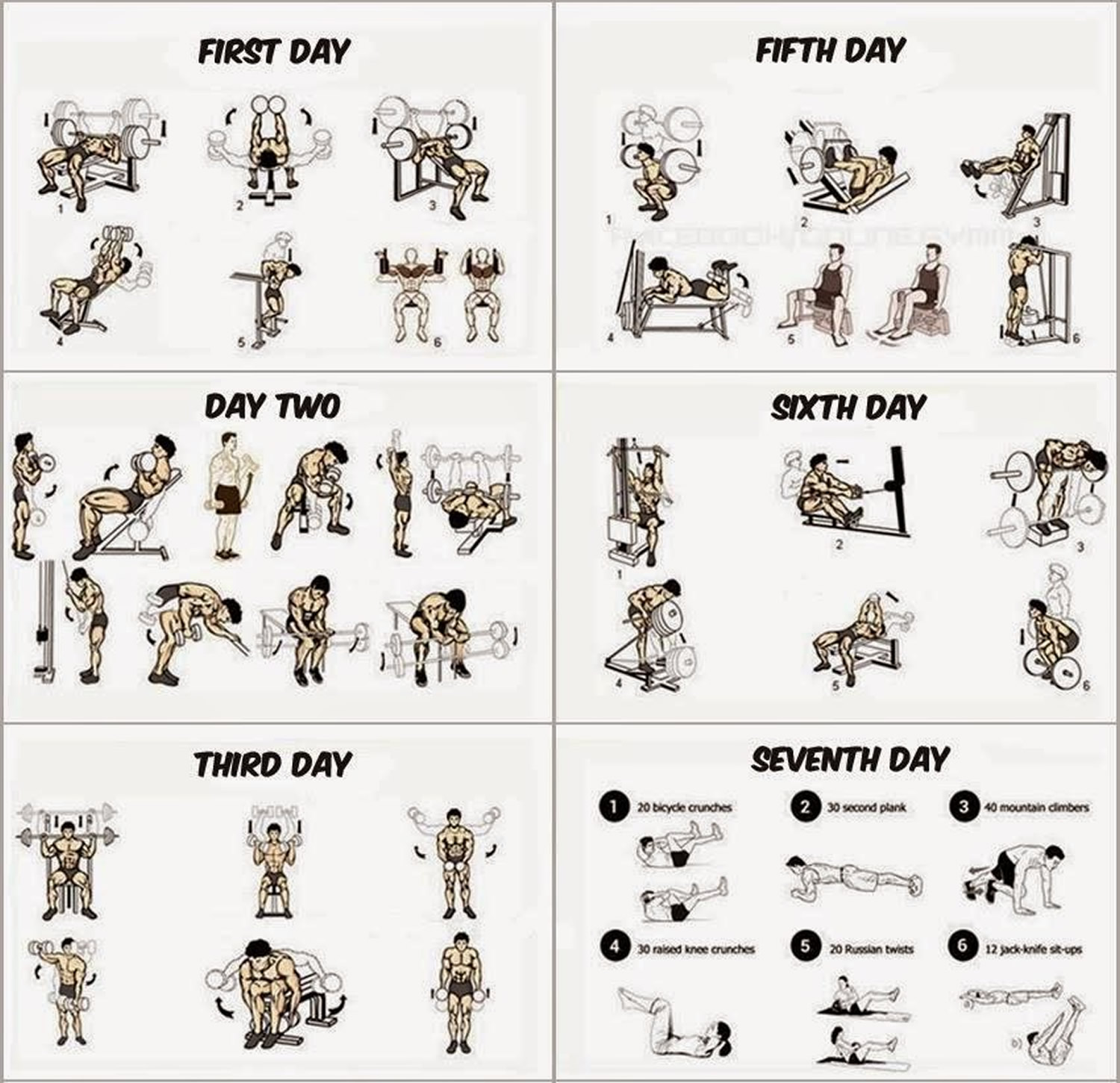
The Best Weekly Workout Routine to Build Muscle for Busy Lifters
The best weekly workout routine to build muscle for busy lifters is a 3-day Full-Body split executed on non-consecutive days, such as Monday, Wednesday, and Friday. By training every major muscle group three times per week using compou...
The best weekly workout routine to build muscle for busy lifters is a 3-day Full-Body split executed on non-consecutive days, such as Monday, Wednesday, and Friday. By training every major muscle group three times per week using compound exercises and high intensity, lifters can trigger optimal muscle growth with just three hours of total gym time weekly.
Contents
The Science of Time-Efficient Hypertrophy
Building muscle (hypertrophy) does not require spending two hours in the gym six days a week. For individuals balancing demanding careers, family obligations, and personal lives, understanding the physiological drivers of muscle growth allows for maximum results in minimal time.
Sports science research demonstrates that muscle hypertrophy is primarily driven by three factors: mechanical tension, weekly training volume, and consistency. Among these, total weekly volume—measured in hard, working sets per muscle group—is the primary variable determining gains.
Total Weekly Volume = Hard Working Sets per Muscle Group per Week Optimal Range for Busy Lifters = 10 to 12 Sets / Muscle Group / Week
1. The Weekly Volume Threshold
A comprehensive meta-analysis published in the Journal of Sports Sciences established a clear dose-response relationship between weekly resistance training volume and muscle growth. While higher volumes (15–20 sets per muscle group per week) can offer incremental benefits for advanced bodybuilders, performing 10 to 12 direct sets per muscle group per week captures approximately 80% to 90% of total potential hypertrophy. For a busy lifter, this represents the sweet spot of training efficiency, avoiding the point of diminishing returns where extra time yields minimal additional muscle.
2. Training Frequency and Protein Synthesis
After a hard resistance training session, Muscle Protein Synthesis (MPS) elevates for approximately 24 to 48 hours before returning to baseline levels. A traditional "bro split," which hits each muscle group only once per week (e.g., "Chest Day" on Monday), leaves that muscle in a non-building state for five to six days out of seven.
Conversely, a high-frequency approach—such as hitting every muscle group two to three times per week—keeps MPS continually elevated throughout the week. A meta-analysis in the Journal of Sports Sciences confirmed that training a muscle group two to three times per week produces superior hypertrophy compared to once-weekly training when total weekly volume is matched.
3. Proximity to Failure (RIR)
When total training volume is streamlined to save time, the intensity of effort on every set becomes non-negotiable. To stimulate high-threshold motor units responsible for growth, working sets must be taken within 1 to 3 Repetitions in Reserve (RIR). RIR measures how many additional repetitions you could perform before reaching concentric muscular failure.
- 0 RIR: Absolute failure (cannot perform another rep with good form).
- 1 RIR: Could perform 1 more rep.
- 2 RIR: Could perform 2 more reps.
- 3 RIR: Could perform 3 more reps (minimum threshold for optimal hypertrophy).
Training lower than 3 RIR (i.e., leaving 4 or 5 reps "in the tank") fails to generate sufficient mechanical tension when operating on a reduced total set count.
The 3-Day Full-Body Split (The Gold Standard)
The 3-day full-body workout routine is the most efficient schedule for busy lifters. It distributes your weekly volume across three 50-to-60-minute sessions, allowing 48 hours of recovery between workouts.
Weekly Schedule Layout
- Monday: Full Body A
- Tuesday: Rest / Active Recovery
- Wednesday: Full Body B
- Thursday: Rest / Active Recovery
- Friday: Full Body C
- Saturday & Sunday: Rest / Active Recovery
Workout A (Monday) — Focus: Heavy Quad & Horizontal Push/Pull
| Exercise | Primary Target | Working Sets | Rep Range | Rest Interval | Target RIR |
|---|---|---|---|---|---|
| Barbell Back Squat | Quadriceps, Glutes | 3 | 6 – 8 | 2.5 minutes | 2 RIR |
| Incline Dumbbell Press | Upper Chest, Front Delts | 3 | 8 – 10 | 2.0 minutes | 1-2 RIR |
| Chest-Supported Row | Latissimus Dorsi, Rhomboids | 3 | 8 – 10 | 2.0 minutes | 1-2 RIR |
| Romanian Deadlift (RDL) | Hamstrings, Glutes | 2 | 10 – 12 | 2.0 minutes | 2 RIR |
| Standing Calf Raise | Gastrocnemius | 3 | 12 – 15 | 60 seconds | 1 RIR |
Session Duration: ~50 minutes
Workout B (Wednesday) — Focus: Hinge & Vertical Push/Pull
| Exercise | Primary Target | Working Sets | Rep Range | Rest Interval | Target RIR |
|---|---|---|---|---|---|
| Trap Bar Deadlift | Posterior Chain, Quads | 3 | 5 – 7 | 3.0 minutes | 2 RIR |
| Standing Overhead Press | Anterior/Lateral Delts, Triceps | 3 | 6 – 8 | 2.0 minutes | 1-2 RIR |
| Weighted Lat Pulldown or Pull-Ups | Latissimus Dorsi, Biceps | 3 | 8 – 10 | 2.0 minutes | 1-2 RIR |
| Bulgarian Split Squat | Quads, Glutes | 2 | 10 – 12 per leg | 90 seconds | 2 RIR |
| Incline Dumbbell Biceps Curl | Biceps Brachii | 2 | 10 – 12 | 60 seconds | 1 RIR |
| Triceps Overhead Extension | Triceps (Long Head) | 2 | 10 – 12 | 60 seconds | 1 RIR |
Session Duration: ~55 minutes
Workout C (Friday) — Focus: Machine Leg Press & Horizontal Angle Variation
| Exercise | Primary Target | Working Sets | Rep Range | Rest Interval | Target RIR |
|---|---|---|---|---|---|
| Leg Press | Quadriceps | 3 | 8 – 10 | 2.0 minutes | 2 RIR |
| Flat Barbell or Dumbbell Bench | Chest, Triceps | 3 | 8 – 10 | 2.0 minutes | 1-2 RIR |
| Seated Cable Row (Wide Grip) | Mid-Back, Upper Lats | 3 | 10 – 12 | 90 seconds | 1-2 RIR |
| Lying Hamstring Curl | Hamstrings | 3 | 10 – 12 | 90 seconds | 1 RIR |
| Dumbbell Lateral Raise | Lateral Deltoids | 4 | 12 – 15 | 60 seconds | 1 RIR |
Session Duration: ~50 minutes
Alternative Option: The 4-Day Upper/Lower Split
For lifters who prefer shorter daily gym sessions (under 45 minutes) or who cannot block out a full hour three times a week, a 4-Day Upper/Lower Split is the ideal alternative. This setup allows you to focus on half the body per session, reducing daily exercise counts while keeping weekly muscle volume equal to the 3-day routine.
Weekly Schedule Layout
- Monday: Upper Body A
- Tuesday: Lower Body A
- Wednesday: Rest
- Thursday: Upper Body B
- Friday: Lower Body B
- Saturday & Sunday: Rest
Sample Upper Body A (40 Minutes): 1. Incline Barbell Bench Press: 3 sets x 6-8 reps 2. Neutral-Grip Cable Pull-Down: 3 sets x 8-10 reps 3. Standing Dumbbell Overhead Press: 3 sets x 8-10 reps 4. Face Pulls: 3 sets x 12-15 reps Sample Lower Body A (40 Minutes): 1. Barbell Squat: 3 sets x 6-8 reps 2. Romanian Deadlift: 3 sets x 8-10 reps 3. Leg Extension: 3 sets x 10-12 reps 4. Standing Calf Raise: 3 sets x 12-15 reps
Time-Saving Intensity & Efficiency Techniques
When time is your strict constraint, how you structure your rest periods and set transitions can shave 15 to 20 minutes off your daily workouts without compromising strength or muscle stimulus.
1. Antagonistic Supersets
An antagonistic superset pairs two exercises targeting opposing muscle groups back-to-back with minimal rest between the two movements, followed by a standard rest period. Because the non-working muscle rests while the opposite muscle works, work capacity remains high while session duration plummets.
- Pairing Example: Bench Press (Chest) immediately followed by Bent-Over Rows (Back).
- Rest Structure: Perform Bench Press $\rightarrow$ Rest 60 seconds $\rightarrow$ Perform Bent-Over Row $\rightarrow$ Rest 60 seconds $\rightarrow$ Repeat.
- Time Saved: Reduces total rest time for opposing groups by 40%.
2. Rest-Pause Sets for Arms and Lateral Delts
Isolation movements (like lateral raises, biceps curls, and triceps extensions) respond exceptionally well to rest-pause training. This method allows you to achieve maximum motor unit recruitment in a fraction of the time.
- Select a weight you can perform for 10–12 repetitions to near failure (1 RIR).
- Perform the initial set of 10–12 reps.
- Rest for exactly 15 seconds while holding or setting down the weights.
- Perform a second mini-set of 3–5 reps to failure.
- Rest another 15 seconds.
- Perform a final mini-set of 2–4 reps to failure.
Result: You complete the equivalent volume of 3 traditional sets in under two minutes total.
3. Streamlined Warm-Ups
Many lifters waste 20 to 30 minutes on static stretching, foam rolling, and cardio warm-ups. For hyper-efficient muscle building, use exercise-specific warm-ups:
- Skip static stretching prior to lifting; it does not reduce injury risk and can temporarily diminish peak force production.
- Perform 2 to 3 minutes of general movement (e.g., brisk walking or rowing) simply to raise core body temperature.
- Move directly to your first main exercise (e.g., Back Squat) and perform progressive warm-up sets:
- Set 1: Empty Bar $\times 10$ reps
- Set 2: 50% Working Weight $\times 5$ reps
- Set 3: 75% Working Weight $\times 2$ reps
- Working Sets Begin.
Comparing Weekly Workout Splits for Busy Schedules
Selecting the correct routine depends on your exact weekly schedule, available daily time windows, and individual recovery capabilities.
| Routine Split | Weekly Frequency | Avg. Session Duration | Weekly Set Volume per Muscle | Muscle Growth Potential | Key Advantage | Primary Limitation |
|---|---|---|---|---|---|---|
| 3-Day Full Body | 3 Days / Week | 50 – 60 Mins | 9 – 12 Sets | High | Maximum time efficiency; 4 full rest days weekly | Higher systemic fatigue per single session |
| 4-Day Upper/Lower | 4 Days / Week | 40 – 45 Mins | 10 – 12 Sets | High | Shorter workouts; easy to fit into lunch breaks | Requires 4 separate gym visits per week |
| 3-Day Push/Pull/Legs | 3 Days / Week | 45 – 50 Mins | 6 – 8 Sets | Moderate | Low systemic fatigue per session | Lower frequency per muscle group (1x/week) |
| 5-Day Bodypart Split | 5 Days / Week | 60 – 75 Mins | 15 – 20 Sets | High (Sub-optimal efficiency) | High isolation focus | Extremely high time commitment; inefficient |
Nutrition, Recovery, and Progressive Overload
A perfectly designed workout routine will not yield muscle growth unless supported by proper progressive overload principles, nutrition, and recovery management.
Muscle Hypertrophy = (Progressive Mechanical Tension) + (Adequate Protein & Calories) + (Sufficient Recovery)
1. The Double Progression Model
To ensure continuous strength and muscle gains without spending hours calculating complex periodization formulas, implement the Double Progression Model:
- Establish a target repetition range for an exercise (e.g., 8 to 10 reps).
- Select a weight you can control for 8 reps with proper technique.
- In subsequent workouts, attempt to add repetitions with that same weight until you can perform 10 reps on all working sets with good form.
- Once achieved, increase the load by the smallest available increment (e.g., 2.5 to 5 lbs or 1 to 2 kg) for the next workout.
- This drops your rep count back down toward 8 reps. Repeat the process.
2. Protein Requirements and Energy Balance
According to the position stand of the International Society of Sports Nutrition (ISSN), individuals engaging in resistance training to build muscle should consume between 1.6 and 2.2 grams of protein per kilogram of body weight per day (approximately 0.7 to 1.0 grams per pound).
- Caloric Surplus: To maximize muscle hypertrophy, consume a mild daily energy surplus of 200 to 300 calories above maintenance.
- Body Recomposition: Lifters with higher body fat levels or those returning from a long training layoff can build muscle at maintenance calories (zero surplus) while simultaneously losing fat.
3. Managing Non-Fitness Stress and Sleep
Systemic stress from long working hours, corporate responsibilities, and sleep deprivation elevates cortisol levels, impairing muscle tissue repair and reducing central nervous system recovery.
Aim for 7 to 9 hours of quality sleep per night. If work travel or family duties temporarily limit sleep to under six hours, avoid pushing sets to absolute failure (0 RIR). Scale your intensity back to 2–3 RIR to mitigate injury risk and excess central fatigue.
Common Mistakes That Waste Time and Stall Gains
Busy lifters cannot afford wasted gym time. Avoid these widespread training errors:
- Chasing "Junk Volume": Performing 20+ sets per muscle group per session leads to excessive muscle damage that overtaxes recovery capacity without generating extra growth. Quality of effort always supersedes set quantity.
- Excessive Rest Between Isolation Exercises: Resting 3 to 4 minutes between dumbbell lateral raises or arm curls is unnecessary. Save long rest periods (2 to 3 minutes) strictly for heavy compound lifts like deadlifts, squats, and bench presses.
- Frequent Program Hopping: Switching exercises or split routines every two to three weeks prevents you from applying progressive overload. Stick with the same core exercise selection for at least 8 to 12 weeks before rotating movements.
- Phone Distraction: Browsing emails or social media between sets can unintentionally stretch 60-second rest periods into 4-minute lulls, doubling your time spent in the gym while lowering workout density.
Frequently Asked Questions
Can you really build significant muscle lifting only 3 days a week?
Yes. Muscle hypertrophy is governed by total weekly volume and mechanical tension, not daily gym attendance. A 3-day full-body routine provides 9 to 12 high-quality working sets per muscle group per week, which falls squarely within the established scientific range for optimal growth.
Is a 3-day full-body routine better than a 4-day upper/lower split for busy adults?
Neither split is inherently superior for raw muscle growth if total weekly volume and intensity are identical. The 3-day full-body split is better for individuals who prefer fewer overall gym visits and full rest days. The 4-day upper/lower split is superior for lifters who prefer shorter daily workouts (40 minutes vs. 60 minutes).
How long should a busy lifter rest between sets?
Rest 2 to 3 minutes for heavy compound exercises (such as squats, deadlifts, and bench presses) to allow full ATP recovery and force output. Rest 60 to 90 seconds for smaller isolation movements (such as lateral raises, biceps curls, and calf raises) to keep session duration tight.
What should I do if work commitments force me to miss a scheduled workout day?
Simply push the workout schedule back by one day. If you miss Wednesday's Workout B, perform Workout B on Thursday, Workout C on Saturday, and resume your normal schedule the following week. Do not attempt to compress two full workouts into a single day.
Should I perform cardio on the same days as my lifting routine?
If time permits, perform low-to-moderate-intensity cardio (such as brisk walking or zone-2 cycling) after your lifting session or on rest days. Avoid high-intensity cardio immediately prior to weight training, as it depletes glycogen stores and reduces mechanical force output during your main lifts.
Practical Action Plan to Start This Week
- Select Your Split: Choose the 3-Day Full Body routine if you can commit to 60-minute blocks, or the 4-Day Upper/Lower split if you only have 40-minute daily windows.
- Log Your Baseline Loads: During your first week, perform each exercise with conservative weights to establish baseline numbers where you hit failure at 2 RIR.
- Commit to Double Progression: Track your reps and weights meticulously using a notebook or smartphone app. Focus exclusively on adding one rep or a small weight increment every workout.
- Simplify Your Meal Prep: Secure your daily protein target (1.6 to 2.2g/kg) using convenient, high-quality sources like Greek yogurt, whey protein, lean poultry, and eggs to save time on meal preparation.
Image Gallery