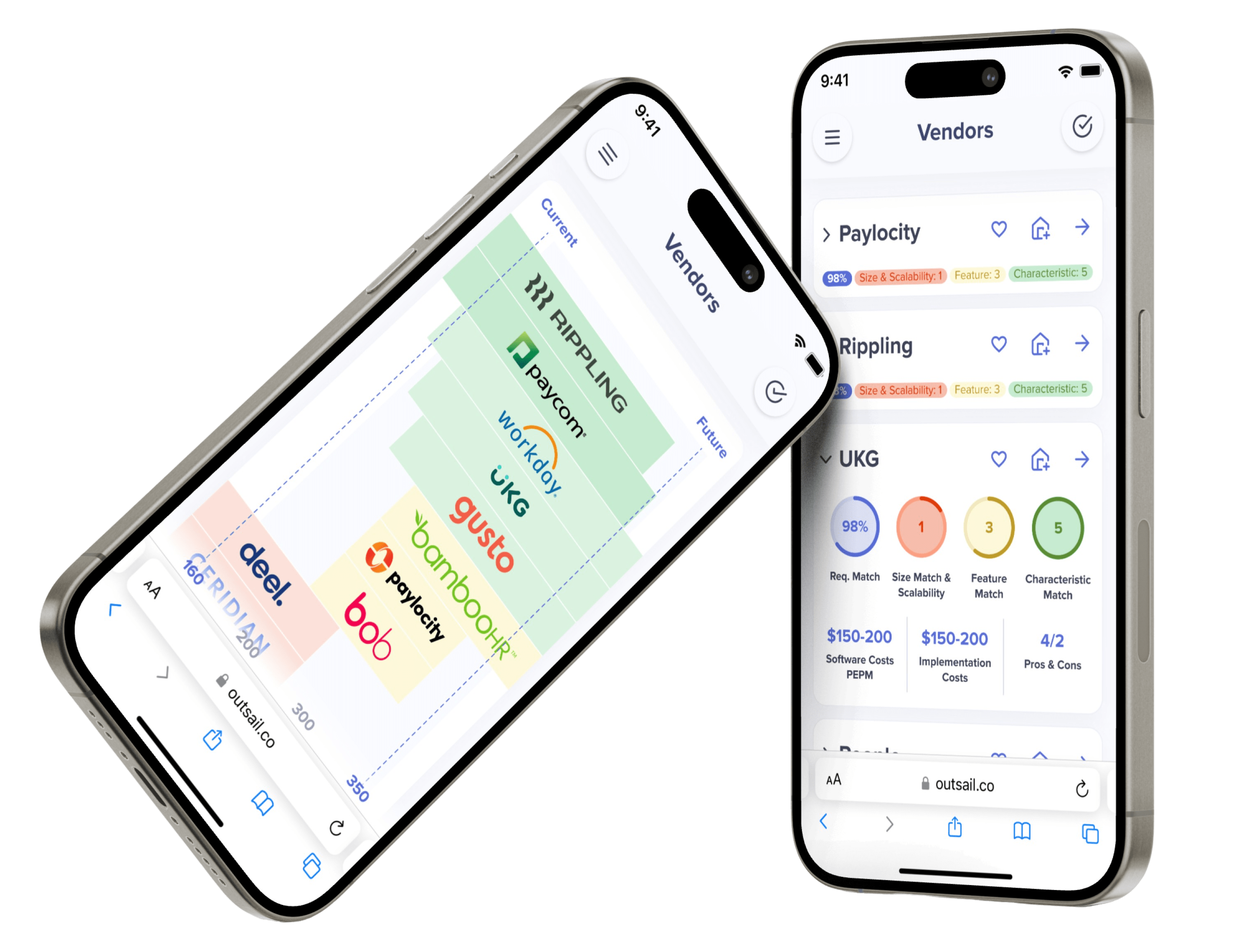
Exploring the HRIS Landscape: A Comprehensive Guide to Modern HR Systems
Exploring the HRIS landscape requires evaluating core Human Resource Information Systems across payroll, talent management, benefits administration, compliance, and workforce analytics. Whether assessing enterprise platforms like Workd...
Exploring the HRIS landscape requires evaluating core Human Resource Information Systems across payroll, talent management, benefits administration, compliance, and workforce analytics. Whether assessing enterprise platforms like Workday and SAP SuccessFactors or agile mid-market solutions like Rippling and BambooHR, selecting the right HRIS involves analyzing architectural scalability, data security, total cost of ownership, and native integration capabilities.
Contents
Understanding the HRIS Ecosystem and Disambiguation
When analyzing queries around exploring the HRIS landscape—sometimes colloquially or phonetically conflated with celebrity search terms like "HRIS Hemsworth"—it is critical to establish the precise technical domain. The focus rests entirely on Human Resource Information Systems (HRIS) and Human Capital Management (HCM) digital architecture. While fitness or lifestyle platforms associated with figures such as Chris Hemsworth exist in consumer wellness, enterprise organizations evaluate HRIS software to manage employee lifecycle data, automated payroll workflows, regulatory compliance, and workforce management.
An HRIS serves as the single source of truth for an organization's internal workforce data. Modern platforms unify disparate HR functions into a cohesive, cloud-based infrastructure. At its foundation, a robust HRIS manages master data records, organizational structures, compensation bands, tax withholding details, and benefit election rules.
- CENTRAL HRIS CORE
- Core HR & Employee Database
- Payroll & Tax Filing
- Benefits Administration
- Time, Attendance & PTO
- Talent Acquisition (ATS)
- Performance & Learning (LMS)
- REST APIs / Webhooks / OAuth
- Integrated Systems
- ERP (Financials)
- Identity (SSO)
- BI & Analytics Platforms
The evolution of cloud computing has transformed traditional HR database systems into intelligent software suites. Modern systems combine transactional processing with predictive analytics, allowing leadership teams to project turnover, optimize labor costs, and streamline international payroll across multiple legal entities.
Key Segments of the HRIS Software Market
The modern HRIS market is divided into distinct tiers tailored to organizational size, legal complexity, and operational scope. Identifying where an organization fits within these segments prevents over-spending on enterprise bloat or under-investing in system capability.
1. Small to Mid-Sized Business (SMB) Platforms
Designed for companies with 1 to 150 employees, SMB platforms prioritize rapid deployment, intuitive user interface (UI), and automated out-of-the-box workflows.
- Key Vendors: BambooHR, Gusto, GoCo.
- Core Strengths: Fast implementation timelines (often under 30 days), minimal administrator training requirements, and direct integration with popular small-business accounting software.
- Limitations: Limited support for complex global multi-currency payroll, rigid custom field parameters, and basic role-based access controls (RBAC).
2. Mid-Market and Growth-Oriented Systems
Targeted at organizations with 150 to 2,000 employees, these platforms offer flexible policy configurations, sophisticated custom workflows, and integrated device/IT management.
- Key Vendors: Rippling, Paylocity, Paycom, Namely.
- Core Strengths: Seamless management of domestic remote workforces, automated state-tax registration handling, consolidated IT device provisioning alongside HR onboarding, and flexible API connections.
- Limitations: Escalating module costs as headcount grows; potential complexity during multi-national expansions.
3. Enterprise Human Capital Management (HCM) Suites
Built for global enterprises with complex matrixed organization structures, thousands of employees, and strict multi-jurisdictional compliance mandates.
- Key Vendors: Workday HCM, SAP SuccessFactors, Oracle Fusion Cloud HCM.
- Core Strengths: Deep configurable approval chains, advanced talent pipeline planning, native union/works council wage rule processing, and localized compliance in over 100 countries.
- Limitations: Extended implementation windows (6 to 18 months), high professional service fees, and requirement for dedicated system administrators.
Essential Technical Capabilities and Modules
Evaluating HRIS software requires dissecting the specific operational modules that compose the suite. Enterprise buyers must audit these core capabilities during the procurement process.
- CRITICAL HRIS SYSTEM MODULES
- Core HR & Records
- Custom Objects
- Audit Logging
- RBAC Policies
- Global Payroll
- Multi-Currency
- Local Tax Engine
- Direct Deposit
- Workforce Analytics
- Predictive Retention
- Automated Reports
- Executive Dashboards
- Core HR & Records
Advanced Data Architecture and Security
HRIS platforms process sensitive Personally Identifiable Information (PII), banking details, medical leave notes, and compensation data. Modern systems must enforce stringent data governance protocols, including role-based access control, field-level encryption, and continuous audit logging. Alignment with security standards defined by the National Institute of Standards and Technology ensures that candidate and employee records maintain confidentiality and system integrity. Platforms must maintain SOC 2 Type II certifications and comply with regional privacy statutes such as the European Union's GDPR and California's CCPA.
AI-Driven Analytics and Workforce Planning
Modern platforms leverage machine learning models to analyze employee turnover trends, compensation parity, and talent acquisition velocity. Rather than simply generating static PDF reports, advanced systems provide real-time dashboards that project the financial impact of merit raises, employee absence patterns, and department restructuring.
Global Payroll and Statutory Compliance
As remote and hybrid work environments remain standard, payroll complexity has increased. Modern HRIS platforms incorporate automated tax calculation engines that adapt to state, provincial, and national tax changes. Compliance frameworks must adhere to guidelines set by governing bodies such as the U.S. Department of Labor regarding the Fair Labor Standards Act (FLSA), overtime calculations, and leave management rules.
Comparative Evaluation of Leading HRIS Platforms
Selecting an HRIS requires matching organization size, technical capabilities, and budgetary constraints against platform characteristics. The table below outlines key market options across core operational categories.
| Platform | Primary Market Target | Core Strengths | Implementation Complexity | Typical Pricing Structure |
|---|---|---|---|---|
| Rippling | Mid-Market (20–2,000 employees) | Unified HR, IT, and Finance management; powerful automation engine | Low to Moderate (2–8 weeks) | Per-user/per-month base + modular fees |
| BambooHR | SMB (10–250 employees) | User-friendly self-service portal; strong culture and performance features | Low (2–4 weeks) | Tiered per-employee pricing |
| Workday HCM | Enterprise (1,000+ employees) | Unmatched analytics, global matrix management, finance integration | High (6–18 months) | Annual contract based on scale and modules |
| Paylocity | Mid-Market (100–1,500 employees) | Strong payroll engine, custom employee engagement modules | Moderate (4–12 weeks) | Per-employee/per-month model |
| SAP SuccessFactors | Global Enterprise (2,000+ employees) | Extensive localization, deep learning management (LMS) features | High (8–18 months) | Enterprise subscription licensing |
Steps to Select and Implement the Right HRIS Solution
Deploying a new HRIS is an operational shift that impacts every employee within an organization. Following a structured methodology mitigates project overrun and minimizes downtime.
- STEP 1: Requirements Mapping & Stakeholder Discovery
- STEP 2: Vendor Selection, RFP & Proof-of-Concept (PoC)
- STEP 3: Data Cleansing, Schema Mapping & Security Audit
- STEP 4: System Configuration, API Hookup & User Sandbox
- STEP 5: Change Management, Training & Phased Go-Live
Step 1: Requirements Mapping and Stakeholder Alignment
Begin by convening a cross-functional steering committee comprising HR operations, IT, Finance, Legal, and executive leadership. Map existing operational pain points, mandatory regulatory requirements, desired third-party integrations (e.g., identity providers, benefits brokers), and multi-entity reporting requirements.
Step 2: Request for Proposal (RFP) and Vendor Shortlisting
Draft a functional RFP covering mandatory criteria:
- Native payroll capabilities vs. third-party API dependencies.
- Custom field limits and database extension capabilities.
- API documentation maturity (REST, Webhooks, GraphQL support).
- Service Level Agreements (SLAs) for system uptime and customer support ticket response.
Evaluate candidates through customized vendor demonstrations using actual business scenarios rather than canned marketing scripts.
Step 3: Total Cost of Ownership (TCO) Calculation
Look beyond the base software subscription fee. A complete TCO analysis accounts for:
- One-time implementation and data migration fees charged by third-party integrators.
- Ongoing module add-on fees (e.g., advanced analytics, international employer of record services).
- Internal staff allocation costs during configuration and acceptance testing.
- API call volume charges or premium connector licensing fees.
Step 4: Data Cleansing and Migration Architecture
Data migration represents the single largest failure point in HRIS deployments. Clean legacy databases before running import scripts. Standardize job titles, address formatting, historical pay structures, and emergency contact fields. Establish strict data transformation mappings between legacy databases and the target HRIS database schema.
Step 5: Phased Rollout and User Adoption
Avoid full "big-bang" implementations where every module goes live simultaneously across all global entities. Instead, execute a phased rollout:
- Deploy Core HR and Identity Sync for internal IT access.
- Launch Payroll and Benefits open enrollment modules.
- Roll out Performance Management, Learning, and Advanced Analytics.
Provide role-based training sessions for administrators, managers, and general staff prior to cutting over from legacy systems.
Common Pitfalls and Troubleshooting Implementation Challenges
HRIS projects frequently encounter operational friction. Anticipating these challenges allows project managers to implement corrective controls early.
1. Data Silos and Poor Integration Scoping
- Issue: HR management discovers after contract signing that the HRIS cannot sync data bi-directionally with the enterprise ERP system without custom middleware.
- Resolution: Require full API documentation audits during the pre-sale evaluation. Test OAuth 2.0 authentication protocols and REST endpoint availability in a sandbox environment before signing.
2. Underestimating Change Management
- Issue: Low employee adoption of self-service portals leads to an influx of manual helpdesk tickets submitted to HR staff.
- Resolution: Develop concise, video-based self-service guides for routine tasks such as updating direct deposit details, requesting PTO, and viewing tax forms. Incentivize early portal activation.
3. Over-Customization of Standard Workflows
- Issue: Attempting to force a modern cloud HRIS to replicate convoluted, legacy paper processes leads to custom coding that breaks during vendor software updates.
- Resolution: Adapt organizational processes to align with standard industry best practices natively embedded within modern HRIS platforms whenever possible.
Frequently Asked Questions
What is the primary functional difference between an HRIS, HRMS, and HCM?
While vendor marketing teams frequently use these terms interchangeably, distinct technical boundaries exist. An HRIS (Human Resource Information System) focuses primarily on core numerical and structural demographic data, tracking employee records, payroll, and benefits. An HRMS (Human Resource Management System) expands on an HRIS by adding complex talent management, onboarding, and workforce scheduling. An HCM (Human Capital Management) represents the most comprehensive enterprise suite, incorporating multi-national strategic workforce planning, compensation modeling, talent analytics, and global compliance frameworks.
How long does a typical HRIS implementation take to complete?
Implementation timelines depend directly on organizational size and structural complexity. Small business platforms (under 150 employees) often complete implementation in 2 to 4 weeks. Mid-market solutions servicing several hundred employees across multiple states typically require 8 to 16 weeks. Enterprise-tier HCM deployments involving international legal entities, custom ERP integrations, and global payroll processing usually require 6 to 18 months.
What are the recurring cost structures for cloud-based HRIS platforms?
Cloud HRIS platforms operate primarily on a Software-as-a-Service (SaaS) pricing structure. Vendors typically quote a PEPM (Per Employee Per Month) fee, occasionally paired with a base platform fee. Entry-level systems start around $5 to $10 PEPM for core features, while advanced mid-market and enterprise platforms range from $15 to $35+ PEPM depending on added modules such as applicant tracking, performance reviews, and global payroll extensions.
How do modern HRIS platforms handle remote and international labor compliance?
Modern systems leverage built-in compliance engines that monitor geographic tax rules, mandatory leave accrual policies, and statutory filing obligations based on the employee's documented primary address. For multi-national hiring without local corporate entities, many HRIS systems offer integrated Employer of Record (EOR) modules or native API connections to EOR platforms to automate compliant global contract generation and cross-border payroll.
What security certifications should an enterprise require from an HRIS vendor?
Given that an HRIS processes highly confidential personal, medical, and financial records, vendors must demonstrate independent third-party validation. Minimum industry standards include SOC 1 Type II and SOC 2 Type II reports, ISO/IEC 27001 certification, full end-to-end encryption for data at rest (AES-256) and in transit (TLS 1.3), mandatory multi-factor authentication (MFA), and compliance with GDPR and applicable state privacy laws.
Strategic Next Steps for HR and IT Leadership
Navigating the HRIS market successfully requires a structured, data-driven approach that balances immediate administrative relief with long-term technological scalability. Organizations planning an HRIS evaluation should execute the following actions:
- Audit Existing Workflows: Document every current HR process, pain point, manual spreadsheet, and software integration across payroll, talent acquisition, and employee record-keeping.
- Build a Technical Scorecard: Create a clear evaluation matrix prioritizing mandatory capabilities (e.g., multi-state tax handling, native identity integration) versus optional features.
- Engage Key Stakeholders Early: Involve IT security, Legal, and Finance leads during initial software demonstrations to evaluate security protocols and integration architecture prior to procurement.
- Schedule Interactive Sandboxes: Request hands-on sandbox environments from shortlisted vendors to test real-world scenarios with actual internal administrators before finalizing software contracts.
Image Gallery