The Old Motocross Game That Set a Standard: How Motocross Madness Redefined Off-Road Gaming
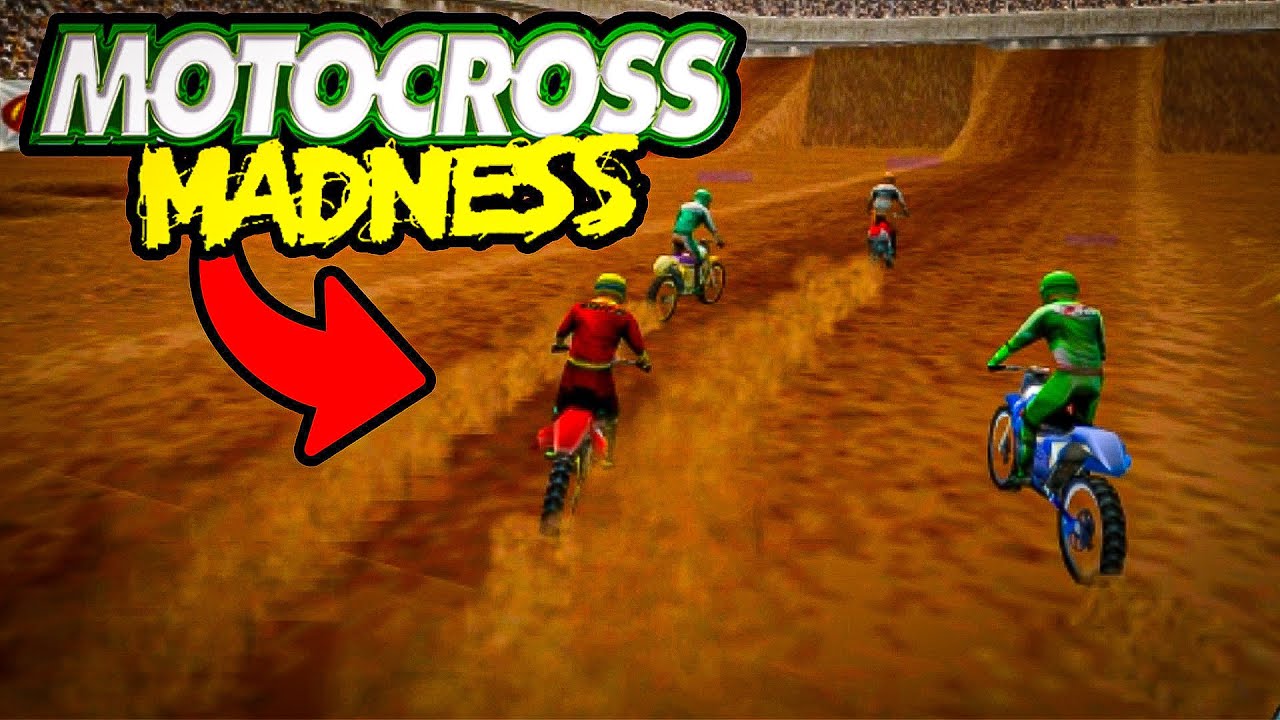
When gamers talk about the old motocross game that set a standard for the entire genre, they are almost universally referring to Microsoft and Rainbow Studios' 1998 masterpiece, Motocross Madness. By introducing realistic terrain physi...
When gamers talk about the old motocross game that set a standard for the entire genre, they are almost universally referring to Microsoft and Rainbow Studios' 1998 masterpiece, Motocross Madness. By introducing realistic terrain physics, open-ended freestyle environments, and advanced rider mechanics, it transformed off-road digital racing from primitive arcade loops into a true 3D simulation.
Contents
Defining the Genre: Why Motocross Madness Became the Industry Benchmark
Prior to the late 1990s, virtual motorcycle racing was primarily restricted to fixed two-dimensional tracks or rigid pseudo-3D corridors. Arcade games provided speed, but they lacked genuine weight, suspension dynamics, and environmental freedom. When Microsoft published Rainbow Studios' Motocross Madness for PC in 1998, it permanently altered player expectations for racing simulations.
Rainbow Studios did not merely build a virtual racetrack; they constructed a physics-driven engine capable of calculating real-time rider weight distribution, tire traction, and kinetic energy over irregular topography. This breakthrough turned terrain topology into an interactive obstacle rather than a static visual backdrop.
- Early 2D Era: Excitebike (1984) / Arcade (Flat planes, simple timing)
- 3D Revolution (1998): Motocross Madness (Rainbow Studios) (Open terrain, true rider physics)
- Modern Simulation: MX vs. ATV / MX Bikes (Deformable dirt, telemetry)
While Nintendo's 1984 classic Excitebike pioneered basic pitch control and heat management on 8-bit hardware, Motocross Madness established the modern design vocabulary for 3D off-road titles. It proved that off-road racing games required open spaces, dynamic suspension compression, and risk-reward stunt mechanics to capture the true discipline of motocross.
Key Innovations That Established Modern Racing Standards
The enduring reputation of Motocross Madness stems from several technical and gameplay innovations that became mandatory features for subsequent off-road racing titles across console and PC platforms.
- Motocross Madness (1998)
- Real-Time Physics
- Heightmap terrain
- Suspension compression
- Open-World Exploration
- Baja open fields
- Stunt quarries
- Dynamic Animation
- Weight shifting
- Ragdoll crashes
- Real-Time Physics
Terrain Heightmaps and Physics-Driven Suspension
In 1998, most computer games rendered environments using simple polygonal boxes. Rainbow Studios utilized complex terrain heightmaps that allowed smooth elevation changes, rolling hills, steep bluffs, and natural washouts.
The game engine constantly computed the motorcycle's speed, launch angle, and suspension travel against the gradient of the hill:
- Pre-loading Suspension: Players learned to compress their bike's shocks right before reaching the lip of a jump to gain maximum elevation—a real-world riding technique known as "seat bouncing" or pre-jumping.
- Landing Angle Alignment: Players had to match the pitch of their front and rear wheels to the downhill slope of a landing ramp. Landing flat meant lost momentum or a violent crash, reinforcing the physics-based feedback loop.
Open-World Exploration and Freestyle Stunt Quarries
Motocross Madness introduced open-world stunt fields, notably the massive Baja desert maps and rock quarries. Instead of keeping players locked within fences or visual walls, the game encouraged unrestricted off-road exploration. Players could ride to the highest peaks, perform acrobatic stunts off natural ramps, or create custom lines across open terrain.
This freedom birthed the dedicated "Stunt Mode," which scored players based on airborne trick execution, jump height, and successful landings. This mechanic predated the widespread popularized trick system of the Tony Hawk's Pro Skater series and set the blueprint for future freestyle motocross (FMX) video games.
The Iconic "Boundary Cannon" Penalty
One of the most memorable mechanics in gaming history emerged as a solution to map boundaries. In many 1990s games, invisible walls would abruptly stop the player, breaking immersion. Rainbow Studios chose a more creative approach: if a player rode to the outer edge of an open map, their rider would climb an invisible cliff wall until reaching the top boundary.
At the summit, a loud explosive sound effect fired, launching the rider and motorcycle thousands of feet back into the middle of the play area. This invisible slingshot mechanic turned an operational boundary into an iconic, fan-favorite feature that remains widely discussed decades later.
Technical Foundations and Hardware Innovation
The success of Motocross Madness was closely tied to the hardware revolution happening in PC gaming during the late 1990s. The game was engineered specifically to take advantage of 3D graphics hardware acceleration through Microsoft's DirectX API.
| Hardware Layer | Software & Engine Implementation |
|---|---|
| 3D Accelerator (3dfx) | Utilized Direct3D hardware rendering for high-resolution 16-bit texture mapping |
| CPU Processing | Real-time vector calculation for vehicle trajectory and rider posture |
| Audio Hardware | Positional 3D audio cues for engine RPM and environmental acoustics |
By leveraging hardware-accelerated 3D graphics (such as 3dfx Voodoo graphics cards), the game offered unprecedented visual fidelity:
- Dynamic Particle FX: Dirt roost, dust clouds, and exhaust smoke reacted to bike acceleration.
- Deformable Rider Models: The rider's body moved independently of the chassis, leaning into corners, absorbing impacts, and flying off the handlebars during collisions.
- Variable Camera Views: Players could switch seamlessly between tight third-person tracking cameras and wide cinematic viewpoints to assess terrain obstacles.
The Lineage of Off-Road Racing Games
The design elements pioneered in 1998 created a direct evolutionary path that shaped off-road arcade games and hyper-realistic simulators for decades.
- 1984: Excitebike (NES)
- 1998: Motocross Madness (PC / Rainbow Studios)
- 2000: Motocross Madness 2 (PC)
- 2001: ATV Offroad Fury Series (PlayStation 2)
- 2004: MX Unleashed & MX vs. ATV (Console Expansion)
- Present Era: Modern Simulators (MX Bikes, MXGP Series)
- 1998: Motocross Madness (PC / Rainbow Studios)
Excitebike (1984): The 2D Predecessor
While Motocross Madness defined 3D space, Nintendo's Excitebike laid the structural foundation for the genre fourteen years earlier. Designed by Shigeru Miyamoto, Excitebike introduced core mechanics that persist today:
- Overheating engine management while using turbo boosts.
- Pitch adjustment using the directional pad to optimize landings.
- An in-game track editor allowing players to design custom obstacle loops.
Motocross Madness 2 (2000) and Commercial Peak
In 2000, Microsoft published Motocross Madness 2, expanding the original formula with licensed motorcycles (Yamaha), fully populated environments featuring moving trains and trees, and improved multiplayer networking over the MSN Gaming Zone. The sequel refined physics handling and allowed player communities to create hundreds of custom tracks using external editing tools.
The THQ and Rainbow Studios Console Expansion
Following their work with Microsoft, Rainbow Studios brought their physics engine expertise to Sony console hardware. They developed ATV Offroad Fury (2001) for the PlayStation 2 and later partnered with THQ to release MX Unleashed (2004) and MX vs. ATV Unleashed (2005). These titles refined the dual-analog stick controls (using one stick for steering and the second for rider weight distribution), which remains the standard input scheme for modern motorcycle simulators.
Technical & Feature Comparison Across Era-Defining Titles
To understand how off-road games evolved, the following table compares key titles that redefined motocross simulation across different gaming generations.
| Game Title | Release Year | Developer / Publisher | Primary Platform | Core Innovations | Physics & Handling Style |
|---|---|---|---|---|---|
| Excitebike | 1984 | Nintendo EAD / Nintendo | NES | Track editor, engine heat management, 2D pitch adjustments | Arcade / 2D Sprite-based |
| Motocross Madness | 1998 | Rainbow Studios / Microsoft | PC (Windows) | 3D heightmaps, open-world stunt maps, boundary cannon, suspension pre-loading | Semi-simulation / Physics-driven 3D |
| Motocross Madness 2 | 2000 | Rainbow Studios / Microsoft | PC (Windows) | Licensed bikes, environmental hazards (trains/trees), expanded multiplayer | Refined 3D physics simulation |
| ATV Offroad Fury 2 | 2002 | Rainbow Studios / Sony | PlayStation 2 | Dual-vehicle classes, refined FMX trick system, online console play | Balanced arcade-sim |
| MX vs. ATV Unleashed | 2005 | Rainbow Studios / THQ | PS2, Xbox, PC | Combined FMX, monster trucks, buggies, smooth dual-stick weight control | Arcade-action simulation |
| MX Bikes | 2019–Present | PiBoSo | PC (Windows) | Advanced tire deformation, chassis flex, full telemetry, VR support | Ultra-realistic physics simulator |
How to Play Classic Motocross Titles Today
Preserving and running late-90s PC titles on modern hardware presents unique technical challenges, primarily due to shifting operating system architectures, display resolutions, and obsolete DirectX interfaces.
| Platform/OS Target | Primary Tool / Solution | Optimization Step |
|---|---|---|
| Windows 10 / 11 | dgVoodoo 2 Wrapper | Map DirectX 1-7 to Direct3D 11/12 |
| Linux / Steam Deck | Wine / Proton Compatibility | Enable D3D windower & 4:3 lock |
| System Memory / CPU | CPU Affinity Utility | Restrict process to single core |
Running Motocross Madness 1 & 2 on Modern Windows
If you own original CD-ROM media for Motocross Madness or Motocross Madness 2, Windows 10 and 11 will not run the executable files natively without graphics translation layers.
- DirectX API Translation: Download dgVoodoo 2, an open-source graphics wrapper that translates legacy Direct3D 1–7 calls into modern Direct3D 11 or 12 calls. Place the
D3D8.dllandGlide.dllfiles into the game directory. - Resolution & Aspect Ratio Locking: Configure dgVoodoo 2 to output at native monitor resolutions (e.g., 1920x1080 or 2560x1440) while maintaining a 4:3 pillarboxed aspect ratio to prevent stretched textures.
- CPU Affinity Adjustments: Multi-core processors can cause legacy game loops to run too fast or crash. Set the CPU affinity of
mcm.exeormcm2.exeto run on a single processor core via Windows Task Manager or command line launch scripts.
Controller Configuration
Original games expected DirectInput gamepads or analog joysticks. Modern Xbox Wireless Controllers and DualSense controllers utilize XInput.
- Use controller-mapping software such as Steam Input or reWASD to map modern left thumbsticks to steering (A/D keys or X-axis) and right thumbsticks to rider weight distribution.
- Map throttle and front brake bindings to analog triggers with a 15% deadzone buffer to prevent phantom inputs.
Modern Successors: What Fans of Classic Motocross Play Today
Gamers seeking the high-speed thrills, trick dynamics, or technical physics pioneered by Motocross Madness have several modern choices depending on their preferred gameplay style.
- Player Preference
- Pure Physics Simulation
- MX Bikes (PiBoSo)
- TrackDayR
- Fast Arcade & Freestyle
- MX vs. ATV Legends
- Monster Energy Supercross
- Pure Physics Simulation
Pure Simulators: MX Bikes
For players who enjoyed the realistic weight distribution and terrain feedback of Motocross Madness, MX Bikes (developed by PiBoSo) is the definitive spiritual successor. It features full physics simulation of tire flex, soil compaction, and chassis geometry. The learning curve is steep, but it offers the most accurate physical representation of motorcycle dynamics available on PC.
Arcade & Freestyle: MX vs. ATV Legends
If you prefer open-world stunt maps, large jumps, and accessible FMX tricks reminiscent of Motocross Madness 2, Rainbow Studios continues to develop the MX vs. ATV series under THQ Nordic. MX vs. ATV Legends features expansive open-world tracks, multi-vehicle races, and modern dual-stick control layouts.
Frequently Asked Questions
Which game is considered the first 3D motocross game to use realistic physics?
Motocross Madness (1998), developed by Rainbow Studios and published by Microsoft, is widely recognized as the first 3D motocross game to integrate a comprehensive physics engine. It introduced suspension compression, dynamic weight transfer, and heightmap-driven terrain handling.
What happened when you reached the edge of the map in Motocross Madness?
When a player rode to the far perimeter of a map, their motorcycle climbed a steep invisible incline to the border wall. Upon reaching the top, a cannon sound effect played, blasting the rider and bike high into the air and launching them back toward the center of the terrain.
Can I run Motocross Madness on Windows 11?
Yes, but running original CD-ROM builds on modern operating systems requires compatibility wrappers such as dgVoodoo 2. These tools translate legacy Direct3D calls to modern graphics APIs (Direct3D 11/12), resolve screen resolution stretching, and fix frame-rate bugs on multi-core processors.
What was the main difference between Motocross Madness 1 and 2?
Motocross Madness 2 (2000) added officially licensed motorcycles from Yamaha, introduced dynamic environmental objects like moving trains and trees, improved multiplayer netcode, and featured a comprehensive track editor for user-created content.
Who developed the original Motocross Madness games?
Motocross Madness and Motocross Madness 2 were developed by Phoenix-based Rainbow Studios and published by Microsoft. Rainbow Studios later created other landmark off-road series, including ATV Offroad Fury and MX vs. ATV.
Next Steps for Retro Racing Fans
To experience or re-experience the golden era of off-road racing:
- Verify Original Media: Secure original installation files or disc images for Motocross Madness 2.
- Install Graphics Wrappers: Set up dgVoodoo 2 inside the installation directory to resolve DirectX rendering conflicts on modern hardware.
- Explore Modern Alternatives: If technical setup proves challenging, check out MX Bikes on Steam for pure physics simulation, or MX vs. ATV Legends for open-world arcade freestyle action.
Image Gallery