How to Remove Public Information Online: A Step-by-Step Guide
Removing public information online requires a systematic approach involving direct removal requests to data brokers, optimization of privacy settings on personal accounts, and utilization of legal opt-out mechanisms. Because data repli...
Removing public information online requires a systematic approach involving direct removal requests to data brokers, optimization of privacy settings on personal accounts, and utilization of legal opt-out mechanisms. Because data replicates across multiple third-party aggregators, achieving digital privacy demands persistent monitoring, adherence to platform-specific removal guidelines, and understanding the legal frameworks governing data availability.
Contents
Managing your digital footprint has transitioned from a routine maintenance task to an essential component of personal security and privacy management. As public records, court filings, social media footprints, and data broker profiles proliferate across the internet, individuals frequently find themselves exposed to unsolicited marketing, identity theft risks, and targeted harassment. Addressing this visibility requires moving beyond passive concealment to actively exercising legal rights and utilizing automated or manual removal protocols.
Understanding how information enters the public domain helps shape an effective removal strategy. Public information generally falls into two distinct categories: government-held records (such as property deeds, marriage licenses, and court judgments) and commercial aggregators (such as people-search engines, marketing databases, and social media platforms). Each category demands a different tactical response, distinct technical thresholds, and varying degrees of permanence when attempting suppression or full deletion.
Understanding the Landscape of Public Information Online
The first step in mitigating your online exposure is mapping the ecosystem where your data resides. Public records are legally mandated disclosures maintained by local, state, and federal governments to ensure transparency. While these repositories serve important civic functions, data brokers routinely scrape these government databases, combine them with commercial purchasing history, and publish them on searchable consumer profiles.
Commercial data brokers operate legally in many jurisdictions, collecting information from public filings, loyalty programs, and browsing trackers. When these records surface on people-search sites, they often display historical addresses, phone numbers, family member associations, and estimated income brackets. Removing this data permanently is rarely a one-time event; rather, it requires an ongoing maintenance cycle because brokers frequently re-index databases from newly updated public records.
Furthermore, distinction must be made between information you control and information controlled by third parties. Social media profiles, personal blogs, and forums allow for immediate deletion or privacy adjustment. Conversely, news archives, court dockets, and third-party aggregator directories require specific legal mechanisms, formal opt-out filings, or direct petitions to webmasters to achieve suppression or redaction.
Step 1: Direct Removal from People-Search Sites and Data Brokers
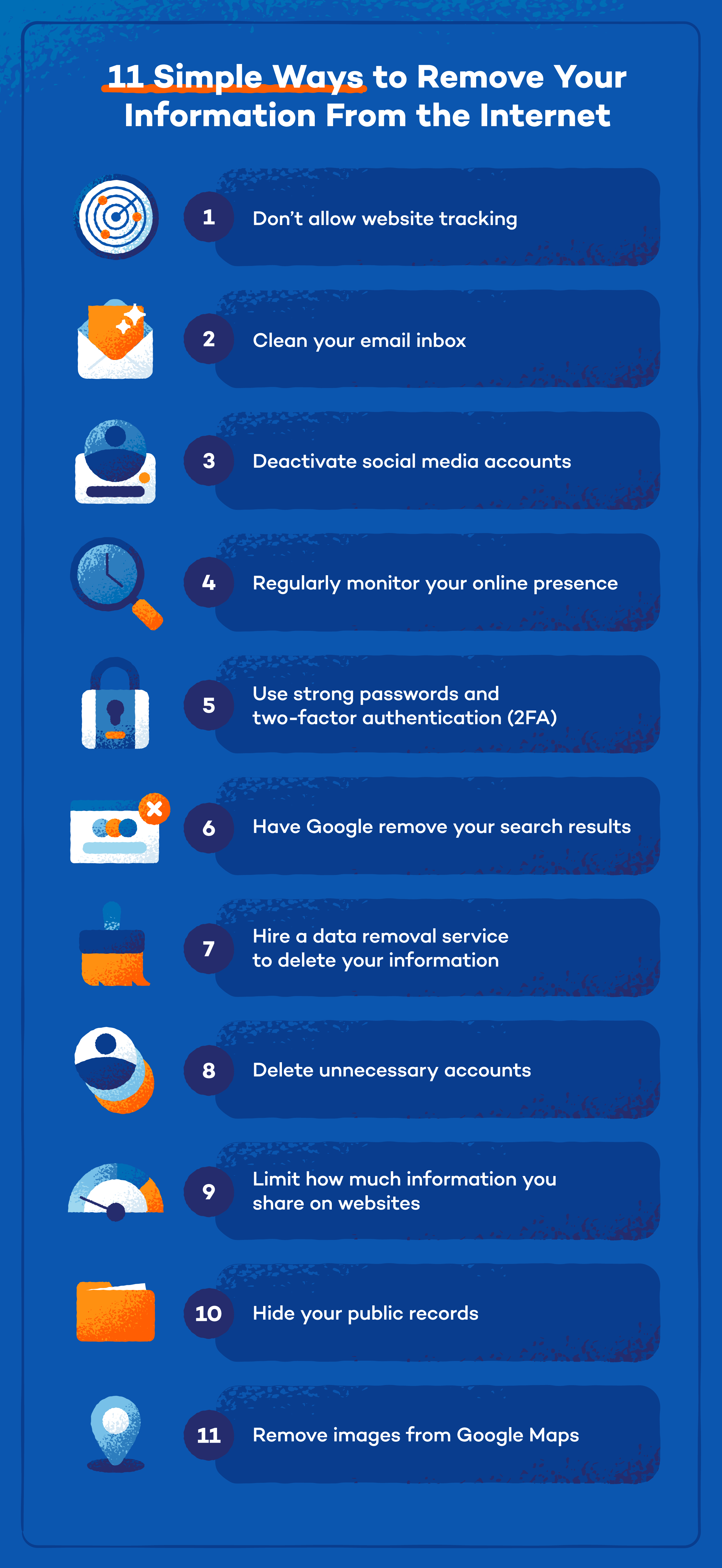
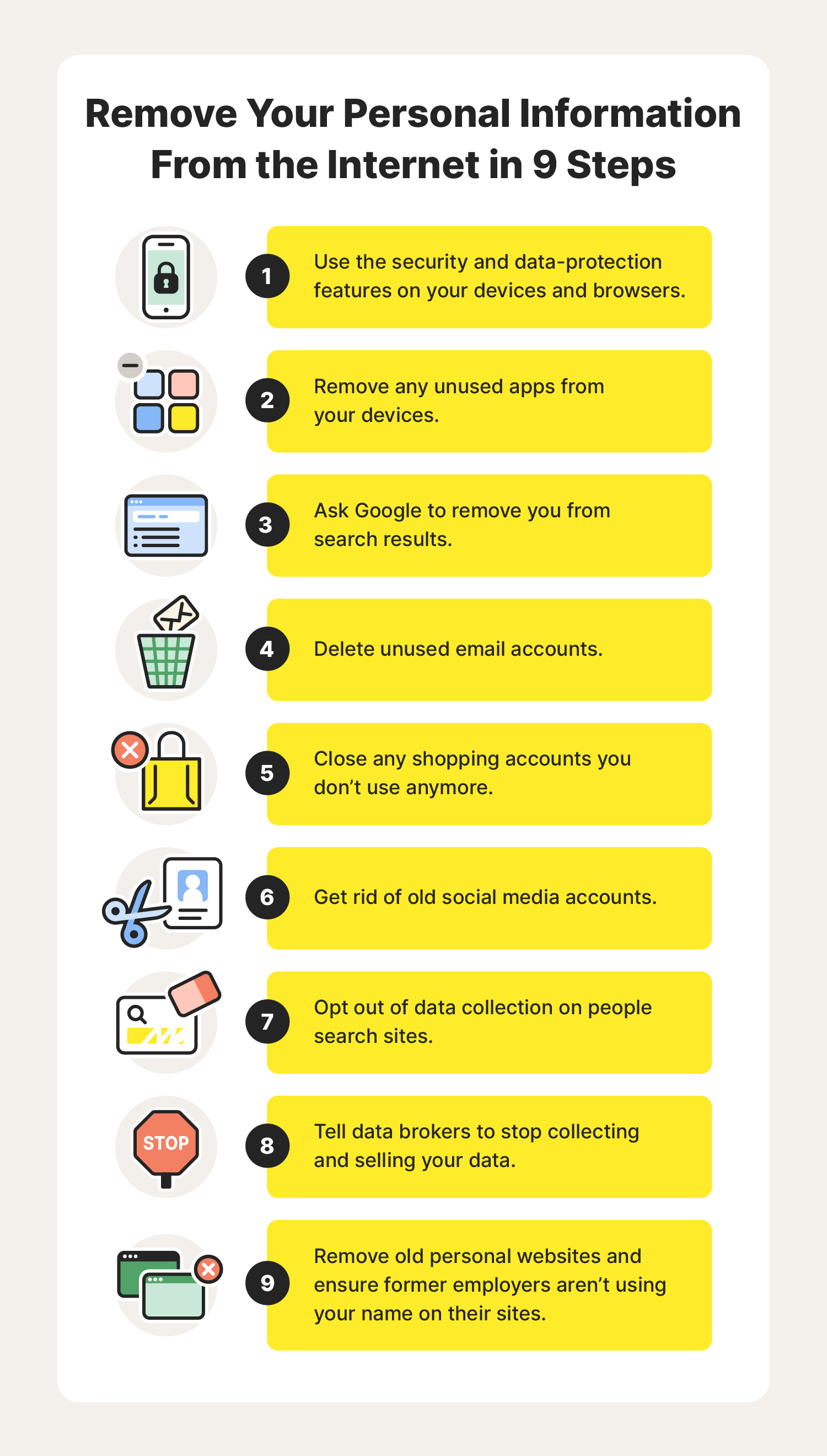
People-search engines represent the most common source of unwanted public exposure. Major platforms compile profiles using automated scrapers. To remove your information from these sites, you must navigate each platform's individual opt-out page, as there is no single master switch to purge data across the entire industry.
Most data brokers provide an opt-out form buried in their footer links, typically labeled "Do Not Sell My Info," "Opt-Out," or "Privacy." The process generally requires you to search for your listing, copy the specific URL of your profile, and submit it along with an email address for verification. Some brokers require identity verification via a copy of a government-issued ID with sensitive information redacted, though privacy advocates recommend exercising caution and reviewing the broker's privacy policy before submitting sensitive documents.
Maintaining an organized approach to data broker removal can significantly reduce the administrative burden. The table below outlines major categories of data aggregators, their general opt-out mechanisms, and typical processing timeframes.
| Data Broker Type | Primary Opt-Out Method | Typical Processing Time | Verification Requirements |
|---|---|---|---|
| People-Search Aggregators | Online form submission or email request | 48 hours to 4 weeks | Email confirmation; occasionally redacted ID |
| Marketing & Lead Generation Databases | Centralized suppression lists and direct forms | 2 to 6 weeks | Email confirmation or phone verification |
| Public Records Scrapers | Specific URL removal request per record | 7 to 14 business days | Matching public record identifier or form completion |
| Professional Networking Directories | Account settings or support ticket submission | Immediate to 72 hours | Account login and authentication |
Automated privacy services can handle these repetitive submissions on a recurring subscription basis. These services continuously scan the web for new listings and automatically file removal requests on your behalf, providing a practical alternative for individuals facing widespread data exposure.
Step 2: Managing and Erasing Social Media and Account Histories
Personal accounts on social media platforms, forums, and legacy websites often expose more granular public information than data brokers do. Even when profiles are set to private, historical posts, comments, and tagged photos frequently remain indexed by search engines or accessible via cached pages.
To clean this footprint, begin by auditing every active and dormant online account you own. Download a copy of your data archive from major platforms like Meta, Google, and X to review historical content that may no longer be visible on your active timeline. Manually delete obsolete posts, photos, and check-ins rather than simply deactivating the account, as deactivation often leaves data intact on servers or preserves public caching.
When deleting accounts permanently, follow the platform's multi-step deletion path rather than choosing temporary deactivation. After deletion, monitor search engine results for your name to identify cached snippets or third-party aggregators that mirrored your content while your accounts were active. You can request that search engines remove outdated cached URLs using dedicated removal tools provided by search engine operators.
Step 3: Addressing Government Records and Legal Publications
Government-held public records present the most rigid challenge for online removal because statutory transparency laws often require agencies to make these documents accessible to the public. However, specific mechanisms exist to restrict access, seal records, or redact sensitive identifiers in certain scenarios.
- Property Records: If your home address is tied to property tax assessments or county deeds, consult your local county clerk or assessor's office regarding privacy protections. Many jurisdictions allow law enforcement personnel, judges, victims of domestic violence, and public officials to shield their residential addresses from public web portals. Placing property ownership into an anonymous trust or a Limited Liability Company (LLC) can also prevent your personal name from appearing in municipal property databases, subject to local state laws and disclosure requirements.
- Court Records: Criminal convictions, civil lawsuits, and bankruptcy filings create permanent public dockets. Expungement or record sealing offers a legal pathway to remove or restrict public access to criminal histories, but eligibility criteria vary widely by jurisdiction and depend on the nature of the offense and completion of sentencing terms. Consult a qualified attorney to navigate local expungement petitions.
- Vital Statistics: Birth, marriage, and death records are managed at the state or municipal level. Most vital statistics offices restrict public online access to these records by implementing statutory waiting periods or requiring specific familial relationships to obtain certified copies, minimizing the risk of automated web scraping for recent filings.
Step 4: Utilizing Search Engine De-indexing and Privacy Regulations
When information cannot be completely deleted from the source website, having it removed from search engine results pages (SERPs) drastically reduces its visibility to the general public. Major search engines provide mechanisms to de-index URLs that violate privacy policies, expose sensitive personal identifiable information (PII), or contain non-consensual explicit imagery.
Google and other major search engine operators accept removal requests for specific categories of information, including:
- Confidential personal identification numbers, such as Social Security numbers or tax IDs.
- Bank account and credit card numbers.
- Personal contact details, including physical home addresses, phone numbers, and email addresses published with malicious intent or accompanied by threats.
- Compromised credentials or login information.
To submit a de-indexing request, locate the specific URL where the sensitive information appears, navigate to the search engine’s legal or privacy removal support page, and provide the requested URLs along with context explaining how the content violates privacy guidelines. If approved, the source page remains live on the host server, but it will no longer appear when users search for your name or related keywords on that search engine.
Furthermore, legislative frameworks such as the European Union’s General Data Protection Regulation (GDPR) provide a formal "Right to be Forgotten," allowing individuals to request that search engines and website operators remove personal data from search listings when it is inadequate, irrelevant, or no longer necessary. For residents outside the EU, similar state-level privacy laws in the United States (such as the California Consumer Privacy Act) establish enforceable rights to demand data deletion directly from covered businesses.
Common Mistakes to Avoid When Removing Online Information
Attempting to scrub public information online without a clear strategy often leads to wasted time and incomplete results. Avoiding common pitfalls ensures your efforts yield tangible privacy improvements.
- Relying Solely on Account Deactivation: Deactivating an account hides your profile from view on some platforms, but it rarely deletes underlying databases. Always choose permanent account deletion options.
- Ignoring the Refresh Cycle: Data brokers constantly re-scrape public registries. Treating data removal as a one-time project leaves you vulnerable to newly generated listings within weeks. Ongoing monitoring is essential.
- Falling for Scams: Be cautious of commercial services promising 100% permanent erasure of all public data across the entire internet for a low fee. No service can legally override statutory government transparency laws or force every foreign-hosted website to comply.
- Neglecting Search Engine Caches: Deleting a page on a website does not instantly remove its appearance in search engine results. You must actively request cache updates and de-indexing from search providers.
Frequently Asked Questions
Can all public information be permanently removed from the internet?
No. Certain government records, court judgments, and regulatory filings are mandated by law to remain accessible for public transparency. While these records cannot always be erased from official government databases, their visibility can often be minimized through search engine de-indexing, legal record sealing, or privacy shielding mechanisms.
How long does it take for data brokers to remove a listing?
Most reputable data brokers process opt-out requests within 48 hours to 30 days, depending on their internal verification procedures and update schedules. Because brokers periodically re-scrape public databases, listings can occasionally reappear, requiring continuous monitoring and recurring removal requests.
What is the difference between data deletion and search engine de-indexing?
Data deletion involves completely erasing information from the host server where it is published, rendering it entirely inaccessible. Search engine de-indexing removes the URL from search engine results pages (SERPs), meaning the source page still exists on the web, but it cannot be found by searching for your name on that specific search engine.
Do I need to pay for privacy removal services?
You can manually remove your information from people-search sites and request search engine de-indexing at no cost by using public opt-out forms. Paid privacy services automate this labor-intensive process, continuously scanning the web and submitting removal requests on your behalf, which is beneficial for individuals facing extensive online exposure.
Can my home address be removed from county property records?
Complete deletion of property deeds from public county archives is generally prohibited by municipal recordkeeping laws. However, many jurisdictions allow specific categories of individuals—such as law enforcement officers, judges, and safety-at-risk individuals—to shield their addresses from public online portals. Additionally, holding property through an anonymous LLC or trust can obscure personal name associations in certain states.
Image Gallery