Newark Firefighter Death Highlights Port Safety Issues and Marine Firefighting Deficiencies
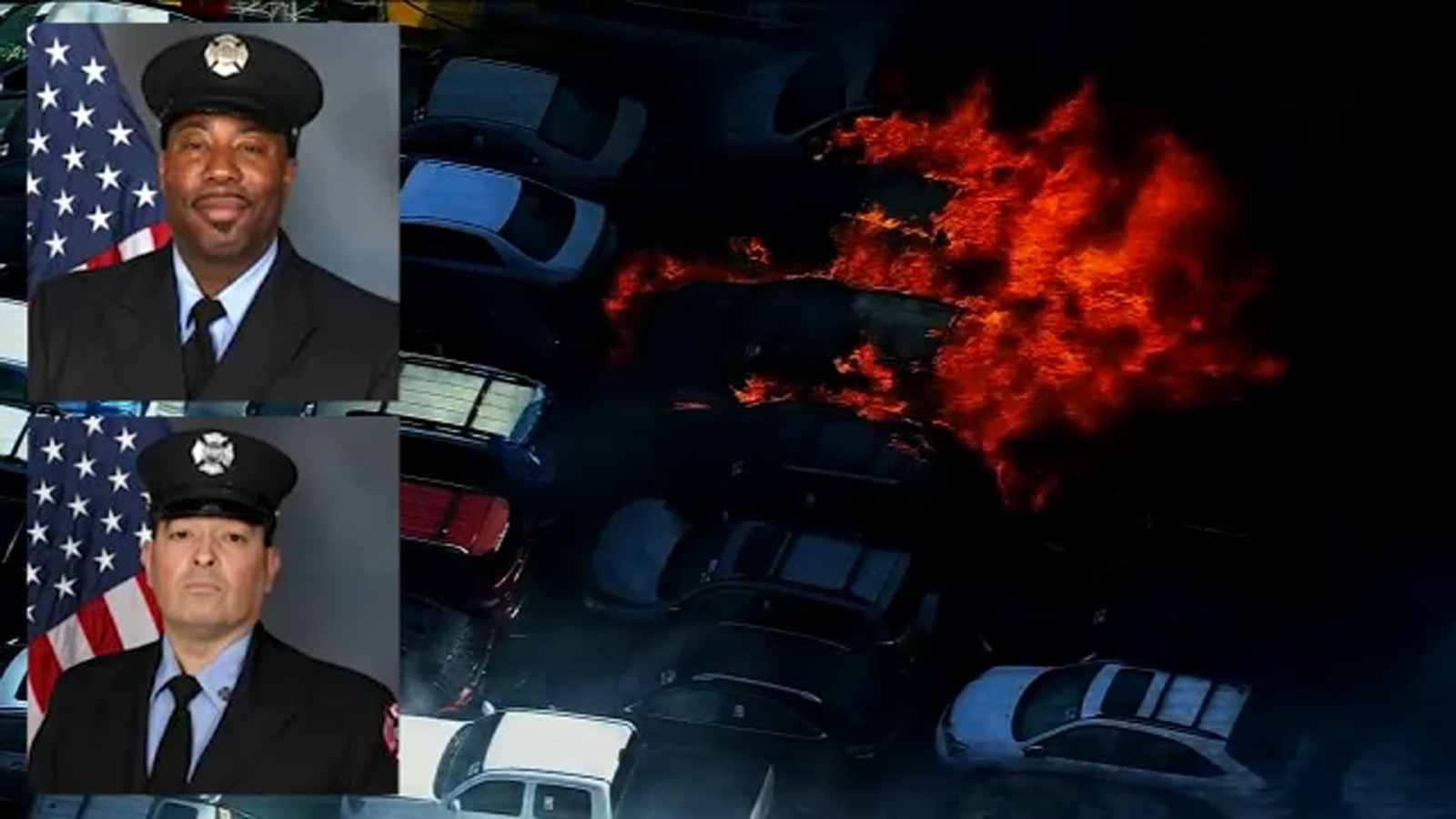
The July 2023 deaths of Newark Fire Department Captains Augusto "Augie" Acabou and Wayne "Zuma" Brooks Jr. aboard the cargo ship Grande Costa d'Avorio exposed critical structural vulnerabilities in maritime emergency response across ma...
The July 2023 deaths of Newark Fire Department Captains Augusto "Augie" Acabou and Wayne "Zuma" Brooks Jr. aboard the cargo ship Grande Costa d'Avorio exposed critical structural vulnerabilities in maritime emergency response across major U.S. seaports. The line-of-duty deaths highlighted systemic gaps in municipal firefighter marine training, critical radio communication failures inside steel-hulled vessels, and inadequate emergency pre-planning between port operators, vessel crews, and local emergency services.
Contents
The Port Newark Ship Fire: Operational Context and Incident Timeline
On the evening of July 5, 2023, a fire broke out on Deck 10 of the Grande Costa d'Avorio, an Italian-flagged Roll-on/Roll-off (RORO) vehicle carrier docked at Port Newark, New Jersey. The vessel was loaded with over 1,200 used cars, trucks, and tractors, as well as 157 freight containers. The initial fire originated when a push vehicle—used by longshoremen to move non-running automobiles onto the ship—caught fire on an upper cargo deck.
- Port Newark Dockside Operations
- Deck 10: Initial Vehicle Fire
- Rapid Flame Spread Across RORO Cargo
- Municipal First Responders Arrive
- Entry into Confined Steel Enclosure
- Operational Failures Occur
- Extreme Heat, Radio Blackout, Disorientation
- Mayday Calls & Entrapment
- Line-of-Duty Deaths & National Safety Review
Newark Fire Department personnel responded rapidly to the scene under standard structural dispatch protocols. Upon boarding the ship, firefighters encountered extreme radiant heat, dense toxic smoke, and zero visibility inside cramped, maze-like cargo holds. Unlike residential or commercial buildings, the interior of a RORO vessel functions as an interconnected, uninsulated steel furnace.
As crews advanced hose lines into Deck 10 and Deck 11, conditions deteriorated rapidly. The intense thermal buildup caused rapid fire propagation across tightly packed vehicles. Captain Acabou and Captain Brooks became trapped in narrow passages between vehicles and ship bulkheads. Despite heroic rescue attempts by team members and external units, both firefighters succumbed to thermal injuries and smoke inhalation before they could be extricated. It took fire crews nearly six days to fully extinguish the fire.
Core Port Safety Deficiencies Identified by Official Investigations
Subsequent investigations led by the National Transportation Safety Board (NTSB), the United States Coast Guard (USCG), the Occupational Safety and Health Administration (OSHA), and state labor agencies unraveled a series of interconnected safety failures. These findings transformed a localized marine incident into a catalyst for national port safety reform.
1. Inadequate Municipal Marine Firefighting Training
The primary finding across regulatory reviews was the stark disconnect between municipal structural firefighting tactics and the specialized demands of marine firefighting. Most land-based fire departments responsible for protecting ocean terminals receive minimal training on shipboard layout, naval terminology, ship stability, or shipboard fixed suppression systems.
Land-based firefighters are trained to vent structures to let heat and smoke escape, a technique that can inadvertently feed fresh oxygen into a ship hold fire, causing catastrophic flashovers. In the Grande Costa d'Avorio incident, responding firefighters lacked familiarization with RORO deck configurations, deck numbering conventions, and international shore connections, severely hindering navigation and tactical suppression.
2. Severe Radio Communication Blackouts
Inside a steel-hulled ship, standard ultra-high frequency (UHF) and very-high frequency (VHF) portable radios used by municipal departments suffer severe signal attenuation. The thick steel deck plates and bulkheads effectively act as a Faraday cage, blocking radio signals from reaching command posts situated outside on the dock or upper decks.
During the Port Newark emergency, Mayday transmissions were degraded or missed entirely. First responders inside the hold lost communication with the Incident Commander on the pier, preventing timely tracking of firefighter positions, air consumption management, and coordinated retreat orders.
3. Crew Language Barriers and Delayed Emergency Response
Initial efforts to control the fire by the vessel’s crew were plagued by communication breakdowns between Italian-speaking crew members, local longshoremen, and incoming municipal fire officers. Language gaps delayed the transfer of critical information, including:
- The exact location and nature of the initial fire source.
- The operational status of the ship’s fixed carbon dioxide ($CO_2$) fire-extinguishing system.
- Accurate engineering schematics and vessel fire control plans.
Furthermore, investigative reports noted that the ship's crew attempted to battle the blaze initially without immediately notifying shore-based emergency dispatch, allowing the fire to gain uncontrolled momentum prior to the arrival of the Newark Fire Department.
4. Logistics and Fire Risks of Used Vehicle Shipments
The incident underscored the distinct hazard profile of loading used, non-running vehicles onto ocean-bound cargo vessels. Many of these vehicles leak fuel, oil, and hydraulic fluids onto cargo decks, creating continuous vapor trails and highly flammable liquid pools. The push vehicles used to maneuver these disabled cars often operate under heavy loads in unventilated areas, creating severe mechanical and electrical ignition hazards.
Comparative Analysis: Structural vs. Marine Firefighting Requirements
Managing fires aboard commercial vessels requires fundamentally different strategies, equipment, and command structures compared to standard municipal building fires.
| Operational Factor | Standard Structural Firefighting | Commercial Shipboard / Port Firefighting |
|---|---|---|
| Enclosure Environment | Drywall, wood frame, concrete; permeable to heat release and manual ventilation. | Continuous heavy steel plates; traps heat, creates intense thermal feedback, conductively spreads fire to adjacent decks. |
| Radio Propagation | High penetration through wood, brick, and glass; reliable direct line-of-sight signal. | Severe attenuation; radio waves fail to penetrate steel bulkheads without tactical leaky-feeder repeaters. |
| Navigation & Access | Standard floor plans, uniform stairwells, labeled doors, familiar egress points. | Multi-level subterranean mazes, narrow companionways, vertical ladders, non-standard deck designations. |
| Stability Considerations | Water weight increases floor load; structural collapse risk limited to building footprint. | Massive water weight introduced by fire hoses compromises ship stability (free surface effect), risking capsizing. |
| Suppression Systems | Standard commercial sprinklers, municipal hydrants, uniform thread standpipes. | Fixed $CO_2$, water mist, or foam systems; requires specialized international shore connections (ISC) to match land hoses. |
| Command & Control | Unified Command strictly under local fire department authority. | Complex Multi-Agency Command involving Municipal Fire, USCG, Port Authority, Ship Master, and Marine Pilots. |
Regulatory Responses and Nationwide Port Reforms
The loss of Captain Acabou and Captain Brooks prompted swift regulatory scrutiny and led to legislative and operational overhauls aimed at safeguarding port communities and emergency personnel nationwide.
- Port Newark Safety Failure (2023)
- OSHA & NJ DOL Enforcement
- Fines & Safety Violations
- Mandatory PPE Overhauls
- Mandatory Ship Familiarization
- USCG & NTSB Mandates
- Enhanced Marine Tactics
- Nationwide Port Audits
- Vessel Safety Protocols
- Standardized Port Safety Architecture
- OSHA & NJ DOL Enforcement
OSHA and State Regulatory Violations
Following extensive post-incident inspections, state safety regulators issued multiple citations to the Newark Fire Department and municipal authorities. Citations highlighted failure to provide adequate marine firefighting training, lack of standardized Mayday protocols for marine environments, insufficient air management tracking, and failure to issue appropriate specialized gear for vessel entry.
These enforcement actions established a precedent: municipal fire departments with major port infrastructure inside their jurisdiction are legally obligated to maintain specialized operational readiness for shipboard hazards.
United States Coast Guard Safety Alerts
The U.S. Coast Guard issued comprehensive marine safety alerts targeting international shipping lines, terminal operators, and port authorities. Key Coast Guard recommendations include:
- Pre-Arrival Operational Briefings: Requiring vessel masters to verify the functional status of onboard firefighting equipment and clear language translation tools prior to entering U.S. ports.
- Strict Maintenance on Cargo Handling Equipment: Mandatory inspections for all push trucks, forklifts, and tow vehicles operating within vessel cargo holds.
- Standardized International Shore Connections: Mandatory dockside verification that shipboard firefighter hose connections match local municipal thread configurations.
Legislative Actions and Federal Funding Allocation
Federal and state lawmakers introduced targeted legislation to bridge the funding gap for port-adjacent fire departments. Federal port security grant programs were restructured to explicitly allow municipalities to apply for maritime firefighting training funds, tactical marine radio repeaters, and specialized thermal imaging equipment built for high-heat steel environments.
Best Practices for Port Authorities and Municipal Fire Departments
To prevent similar tragedies, port authorities, municipal emergency services, and maritime operators must adopt integrated safety management frameworks tailored to complex port environments.
- Integrated Port Safety Framework
- Pre-Incident Planning
- Digital Vessel Maps
- Port-Wide Surveys
- Hazardous Cargo Logs
- Tactical Infrastructure
- Bi-Directional Radios
- Tactical Repeater Trucks
- Compatible Hose Adapters
- Interagency Governance
- Joint Exercises
- Unified Command Drills
- Language Translation
- Pre-Incident Planning
1. Mandatory Joint Pre-Incident Planning
Local fire departments must conduct regular, structured walk-throughs of cargo, container, and passenger vessels visiting local piers. Fire departments should maintain digital repositories of general arrangement plans, fire control plans, and hazardous cargo manifests for high-frequency vessel callers.
2. Deployment of Tactical Marine Radio Infrastructure
Municipalities serving deepwater ports must invest in maritime-capable communications gear. This includes:
- Portable bi-directional amplifier (BDA) systems.
- Tactical radio repeater units equipped with "leaky feeder" coaxial cables that can be dropped down ship companionways to carry signals through steel decks.
- Interoperable radio channels shared between local emergency services, port authority police, tugboat captains, and the Coast Guard Sector Command Center.
3. Specialized Marine Firefighting Certification
Fire departments responsible for seaport coverage should certify personnel under national standards such as NFPA 1005 (Standard for Professional Qualifications for Marine Fire Fighting Personnel for Land-Based Fire Fighters). Operational training must emphasize:
- Boundary Cooling: Applying water to adjacent bulkheads and decks to contain heat transfer rather than making immediate, aggressive interior pushes into unventilated holds.
- Ship Stability Monitoring: Working directly with ship engineers and marine surveyors to calculate dewatering rates, preventing dangerous list angles caused by trapped firefighting water.
- Fixed Suppression Integration: Understanding when to seal a vessel hold and deploy high-pressure carbon dioxide or clean-agent systems rather than introducing fresh air through open hatches.
4. Enhanced Cargo Terminal Oversight
Terminal operators must enforce strict safety rules on pier-side activities:
- Inspecting all vehicle batteries and fuel systems before staging cars for loading.
- Requiring operational fire extinguishers on all towing and push equipment used inside vessel holds.
- Maintaining clear access lanes on piers so responding emergency apparatus can position unhindered alongside vessel gangways.
Frequently Asked Questions
Why is fighting a shipboard fire more dangerous than a standard building fire?
Shipboard fires take place within dense, uninsulated steel compartments that hold and reflect intense heat back into the space, creating extreme thermal conditions. Additionally, ships present complex, unfamiliar layouts, limited entry and exit points, zero visibility, severe radio signal blockages through steel bulkheads, and the added danger of destabilizing or capsizing the vessel if too much firefighting water accumulates inside.
What specific causes led to the firefighter fatalities in the Port Newark incident?
Captains Augusto Acabou and Wayne Brooks Jr. encountered extreme heat, dense smoke, and zero visibility inside Deck 10 of the Grande Costa d'Avorio. The narrow spaces between tightly packed vehicles, combined with radio communication failures through the ship's steel structure and rapid fire expansion, resulted in disorientation, entrapment, and air depletion before rescue teams could reach them.
What regulatory agencies investigate port fires and firefighter line-of-duty deaths?
Major maritime incidents in the United States involving firefighter line-of-duty deaths are investigated by multiple federal and state entities. The National Transportation Safety Board (NTSB) determines the fundamental cause of the marine accident; the U.S. Coast Guard (USCG) investigates vessel safety, crew compliance, and maritime navigation standards; and OSHA (along with state labor departments) evaluates first responder safety violations, training shortfalls, and protective equipment standards.
How do radio communications fail inside cargo ships, and how can it be fixed?
Radio waves used by standard emergency radios struggle to pass through thick steel bulkheads and multi-layered deck structures, creating total communication dead zones inside ships. This is addressed by deploying specialized marine radio technology, such as tactical repeater systems with "leaky feeder" cable networks lowered down hatches, specialized multi-band maritime radios, and auxiliary radio relay stations set up along access routes.
What is NFPA 1005 and why is it critical for seaport fire departments?
NFPA 1005 is the national standard establishing professional qualifications for land-based firefighters who respond to marine vessel fires. It sets criteria for understanding shipboard terminology, vessel stability calculations, international shore connections, vessel fire control plans, and specialized marine tactics—training that is essential for preventing firefighter injuries and deaths at major shipping ports.
Strategic Action Steps for Seaport Emergency Management
To ensure safety standards keep pace with expanding global maritime commerce, municipal leaders, fire department chiefs, and port operators must take concrete operational steps:
- Audit Marine Readiness Immediately: Municipalities bordering commercial shipping channels should conduct comprehensive audits of their current marine firefighting readiness, identifying gaps in training, apparatus, and specialized equipment.
- Standardize Interagency Emergency Protocols: Establish formal Unified Command protocols uniting local fire services, Coast Guard sectors, port authorities, and vessel operating agencies under single pre-scripted emergency response plans.
- Mandate Specialized Gear and Tactical Communications: Equip all port-assigned fire companies with high-penetration radio repeaters, specialized thermal imaging cameras calibrated for high-temperature steel environments, and standardized international hose adapters.
- Institutionalize Recurring Joint Drills: Conduct mandatory multi-agency drills aboard commercial cargo vessels at least twice a year to practice boundary cooling, shipboard search-and-rescue, tactical communications, and emergency dewatering procedures.
By transforming the painful lessons of the Port Newark tragedy into enforced operational policy, port authorities and fire departments can protect first responders and build safer maritime supply chains.
Image Gallery