The Rarest House Cat in the World: Breeds, Genetics, and Ownership Reality
The rarest naturally occurring house cat breed in the world is the Sokoke, a landrace breed originating from the Arabuko-Sokoke Forest in Kenya, with a global registered population of only a few hundred. Among wild-domestic hybrids, th...
The rarest naturally occurring house cat breed in the world is the Sokoke, a landrace breed originating from the Arabuko-Sokoke Forest in Kenya, with a global registered population of only a few hundred. Among wild-domestic hybrids, the F1 Savannah and the Caracat represent the rarest and most expensive feline companions kept in specialized domestic environments.
Contents
Defining "Rarity" in Domestic Cats
When evaluating what makes a domestic cat rare, felinologists and registries separate cats into distinct categories: naturally occurring landraces, specialized mutation breeds, and wild-domestic hybrids. A breed's rarity can stem from geographic isolation, strict breeding bottlenecks, genetic anomalies, or complex reproductive challenges.
- Rare House Cat Breeds
- Natural/Landrace (e.g., Sokoke)
- Mutational (e.g., Lykoi)
- Wild Hybrids (e.g., F1 Sav.)
- Natural Landraces: Breeds that evolved naturally in specific geographic regions with minimal human intervention. Because their gene pools developed in isolation, transferring them to international breeding programs while maintaining genetic health is extremely difficult.
- Mutational Breeds: Domestic cats possessing spontaneous genetic mutations that alter coat patterns, hair structure, or body composition (such as sparse coats or hairlessness). These breeds require tight selective breeding to preserve the trait without introducing hereditary health disorders.
- Wild-Domestic Hybrids: Crosses between domestic cats (Felis catus) and wild felid species, such as the African Serval (Leptailurus serval) or Eurasian Lynx (Lynx lynx). Their scarcity is driven by biological incompatibility, low litter yields, and legal restrictions.
Understanding these distinctions is essential for prospective owners, as care requirements, legal permissions, and behavioral traits vary dramatically depending on the origins of the breed.
The World's Rarest Natural Breed: The Sokoke
The Sokoke (formerly known as the Sokoke Forest Cat) holds the position of the rarest recognized natural domestic cat breed. Native to the coastal rain forest of the Arabuko-Sokoke area in Kenya, the local Giriama people originally called these cats Khadzonzzo, meaning "look like tree bark" due to their unique coat pattern.
Sokoke Ancestry & Discovery Timeline:
- Pre-1970s: Native Giriama Region
- 1978: First Litter Found
- 1980s: Exported to Denmark
- 1993: FIFe Official Recognition
Discovery and Breed History
In 1978, local coconut farmer Jeni Slater discovered a litter of unique, feral-acting kittens in the forest margins of Kenya. Recognizing their distinctive physical traits, she brought them into her home. Breeding programs expanded when Danish cat enthusiast Gloria Moldrup acquired breeding pairs from Slater during the 1980s to establish a European sanctuary for the breed.
The Fédération Internationale Féline (FIFe) officially recognized the Sokoke in 1993, followed years later by The International Cat Association (TICA), which granted it Advanced New Breed status.
Distinctive Physical and Genetic Attributes
The Sokoke possesses several genetic and physical traits distinct from standard domestic cats:
- African Tabby Pattern: The coat features a blotched tabby marking with washed-out, wood-grained ticking that camouflage the cat against tree bark.
- Hind-Leg Anatomy: Their hind legs are noticeably longer than their front legs, giving them a high-hipped, spring-like gait similar to wild felids.
- Muscular Build and Coat Texture: They have a slender, highly muscular body with virtually no undercoat, making their fur short, stiff, and glossy.
- Sensory and Behavioral Traits: Sokokes retain exceptional agility, quick reflexes, and an affinity for climbing and swimming. They are vocal, communicative, and bond intensely with their primary human household.
Because the Sokoke developed naturally without human line-breeding, it has minimal hereditary health flaws. However, because fewer than 300 fully documented Sokoke cats are registered across global databases, maintaining genetic diversity without inbreeding is the primary challenge for legitimate breeders.
Other Ultra-Rare House Cat Breeds
While the Sokoke leads natural breeds in rarity, several other domestic cat breeds feature extremely small global populations due to strict breeding protocols or restricted mutation pools.
Khao Manee (The White Gem of Siam)
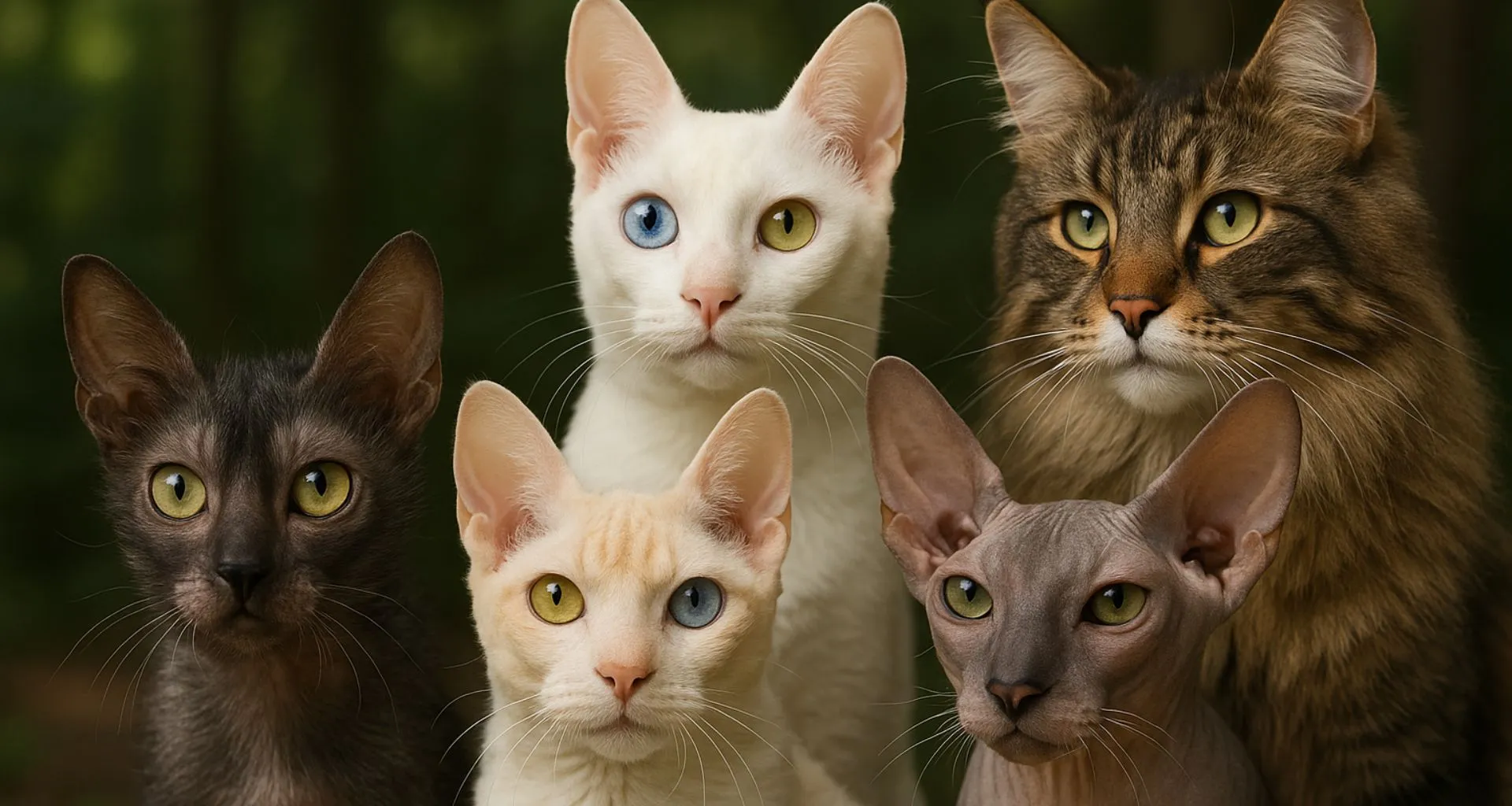
Originating in Thailand, the Khao Manee was historically reserved exclusively for Thai royalty. Known for its pure snow-white coat and luminous eyes—often exhibiting heterochromia (one blue eye and one gold or green eye)—this breed existed solely within Thailand for centuries.
Although recognized by TICA and the Cat Fanciers' Association (CFA), breeding stock outside Southeast Asia remains scarce, driving high acquisition costs and long waitlists for verified pedigrees.
Lykoi (The Werewolf Cat)
The Lykoi is a natural mutation breed discovered in 2011 in Tennessee, USA. The mutation affects hair follicles, leaving the cat without an undercoat and causing patchy hairlessness around the eyes, nose, muzzle, and ears.
Lykoi Phenotypic Traits:
- Recessive Hair Mutation
- Full Roan Pattern (Amalg. Black/White)
- Partial Hairlessness (Facial Mask & Legs)
Their unique "roan" coat pattern—a mixture of solid black hairs and white hairs—is unique among domestic cats. Because the mutation is recessive, producing true-to-type Lykoi cats requires careful pairing of tested carriers to avoid compounding genetic defects.
Peterbald
Developed in St. Petersburg, Russia, in 1994, the Peterbald resulted from experimental mating between a Don Sphynx and an Oriental Shorthair. Peterbalds carry a dominant hair-loss gene that can render them completely hairless, or covered in a fine velour, flock, or brush coat. They have elongated limbs, large bat-like ears, and a narrow wedge-shaped head. Their high metabolic rate requires a calorie-dense diet and protection from environmental temperature extremes.
Wild-Domestic Hybrids: F1 Savannah and Caracat
Hybrid cats cross domestic breeds with wild felid species. The F1 Savannah represents a first-generation cross between a domestic cat (often an Oriental Shorthair or Egyptian Mau) and an African Serval.
The Caracat crosses a domestic cat with an Eurasian Caracal (Caracal caracal).
Hybrid Generation Scale (F1 vs F5):
- F1 Generation
- 50%+ Wild Blood
- High Instability
- Complex Care
- F5 Generation
- < 5% Wild Blood
- Fully Domestic
- Standard Care
The rarity of F1 hybrids is caused by major biological barriers:
- Gestation Length Mismatches: African Servals have a gestation period of roughly 73 days, whereas domestic cats average 65 days. This discrepancy often results in premature births or miscarriages.
- Early-Generation Male Infertility: According to Haldane's Rule, male offspring of early-generation hybrid crosses (F1 through F4) are almost always sterile, restricting breeding expansion to female lines backcrossed to domestic studs.
- The Ashera Marketing Myth: The so-called "Ashera cat," marketed in the mid-2000s as a rare hybrid of Serval, Asian Leopard Cat, and domestic cat for up to $125,000, was exposed through DNA forensic testing by the UC Davis Veterinary Genetics Laboratory as simply re-branded F1 Savannah cats sold at inflated prices.
Rare House Cat Breed Comparison
The following table summarizes key metrics for the rarest domestic and hybrid cat breeds worldwide.
| Breed Name | Classification | Country of Origin | Primary Cause of Rarity | Primary Registry Status | Estimated Cost (USD) |
|---|---|---|---|---|---|
| Sokoke | Natural Landrace | Kenya | Tiny founder population, restricted geographic origin | TICA, FIFe, GCCF | $1,500 – $3,000 |
| Khao Manee | Natural/Ancient | Thailand | Centuries of geographic restriction in Siam | TICA, CFA | $1,800 – $4,000 |
| Lykoi | Genetic Mutation | United States | Recessive mutation requiring strict breeding control | TICA, CFA | $1,500 – $3,500 |
| Peterbald | Structural Hybrid | Russia | Specialized breeding programs, small global stock | TICA, CFA | $1,700 – $3,000 |
| F1 Savannah | Wild-Domestic Hybrid | United States | Gestation gaps, male sterility, low litter rates | TICA (F4+ only for championship) | $10,000 – $25,000 |
| Caracat | Wild-Domestic Hybrid | Russia / USA | Severe biological mismatch, high mortality rates | Unrecognized by major registries | $15,000 – $30,000+ |
Key Drivers of Breed Rarity
Understanding why a cat breed remains rare requires examining biological, geographic, and legal constraints.
Factors Restricting Supply:
- Biological: Low Litter Sizes, Infertility
- Geographic: Isolated Native Habitats
- Legal & Ethical: Breed Club Registry Bans
1. Biological and Reproductive Barriers
Wild-domestic hybrids face severe reproductive hurdles. Male sterility across early generations limits how fast populations can grow. Furthermore, size disparities between wild studs and domestic queens pose significant risks during mating and delivery, often requiring surgical interventions such as Cesarean sections.
2. Small Founder Populations
Breeds like the Sokoke rely on fewer than two dozen original foundation animals brought out of Kenya. To expand the population safely, registered breeders must carefully calculate Inbreeding Coefficients (COI). Pairing cats with high genetic overlap leads to inbreeding depression, compromised immune systems, and shortened lifespans.
3. Legal and Regulatory Bans
Many municipal, state, and international authorities regulate or prohibit owning high-percentage hybrid cats.
- In the United States, states such as California, New York, and Georgia ban early-generation (F1–F4) hybrid cats without specialized exotic permits.
- In the United Kingdom, keeping an F1 Savannah or Caracat requires a license under the Dangerous Wild Animals Act 1976, along with strict secure-enclosure specifications.
Ownership Considerations: Costs, Care, and Environment
Acquiring an ultra-rare house cat requires significant financial resources, legal verification, and tailored home environments.
Essential Requirements for Rare Cat Ownership:
- Legal Clearances: Permits, Permits, Zoning Verification
- Secure Enclosures: Catios, Double-Door Air-Locks
- Specialized Diets: Raw Meat, High-Protein Balancers
Financial Commitment
Beyond the initial purchase price, owning a rare breed involves substantial ongoing costs:
- Exotic Veterinary Care: Standard feline veterinarians may lack experience with wild-hybrid metabolic needs or rare mutation breeds like the Peterbald. Specialized veterinary care often incurs premium fees.
- Specialized Nutrition: High-percentage hybrids and muscular landraces (like the Sokoke and F1 Savannah) thrive best on nutritionally balanced raw meat diets or high-protein, grain-free feeds formulated without fillers.
- Insurance Constraints: Many standard pet insurance providers exclude F1–F3 hybrids or rare breeds without clear pedigree documentation from coverage plans.
Housing and Environmental Enrichment
Rare breeds typically possess high intelligence, high drive, and remarkable physical capability.
- Vertical Space: Sokokes and Savannahs require extensive vertical territory, including ceiling-mounted walkways, sturdy scratching posts, and high perches.
- Secure Enclosures: Early-generation hybrids often require outdoor escape-proof enclosures ("catios") featuring double-door safety locks, roof covers, and buried mesh to prevent digging.
- Behavioral Needs: These cats demand daily physical exercise and intense mental stimulation. Boredom often manifests as destructive scratching, territorial spraying, or vocal distress.
Pedigree Verification and Avoiding Fraud
Because rare cat breeds command high prices, scammers frequently target unsuspecting buyers. Fraudulent sellers often advertise mixed-breed tabby kittens as rare Sokokes, or domestic shorthairs as "exotic hybrids."
Pedigree Verification Checklist:
- Step 1: Request Cattery Registration Number (TICA, CFA, FIFe)
- Step 2: Cross-check Number directly with Registry Database
- Step 3: Obtain Certified 3-to-5 Generation Pedigree
- Step 4: Conduct Independent DNA Testing (UC Davis VGL / Optimal Selection)
To protect your financial investment and ensure animal welfare, follow these steps:
- Verify Registry Registration: Demand registration numbers issued by recognized bodies such as TICA, CFA, FIFe, or the Governing Council of the Cat Fancy (GCCF). Contact the registry directly to confirm the breeder's standing.
- Review Certified Pedigrees: Request an official multi-generational pedigree certificate showing the cat's ancestry, registered names, and registration numbers across at least three to five generations.
- Perform DNA Verification: Utilize DNA panels from institutions like the UC Davis Veterinary Genetics Laboratory to confirm genetic markers, parentage, and screen for hereditary disorders.
- Inspect the Breeding Facility: Avoid buying from breeders who refuse video tours or in-person visits to inspect their facilities. Ensure kittens remain with their mothers until at least 12 to 14 weeks of age.
Frequently Asked Questions
What is the single rarest recognized natural cat breed?
The Sokoke is widely considered the rarest natural domestic cat breed recognized by major international cat registries. Originating in Kenya, its global population remains under a few hundred registered animals.
Is the Ashera cat a real, distinct breed?
No. Independent DNA testing conducted by geneticists confirmed that cats sold as "Asheras" by Lifestyle Pets were simply F1 Savannah cats purchased from domestic breeders and resold under a fake brand name at inflated prices.
Are rare hybrid cats like the F1 Savannah safe in homes with children?
F1 Savannah cats retain strong wild instincts, significant physical strength, and high energy. While they can bond deeply with experienced adult handlers, they are generally not recommended for households with young children or small prey pets like rodents and birds.
How much does the rarest house cat cost?
Prices range from $1,500 to $3,000 for rare natural breeds like the Sokoke or Lykoi, up to $10,000 to $30,000+ for first-generation wild-domestic hybrids like the F1 Savannah or Caracat.
Do rare cat breeds have more health problems?
Not necessarily. Natural landrace breeds like the Sokoke benefit from strong natural selection and generally exhibit robust health. However, mutational breeds (like the Lykoi) and wild hybrids require careful management to prevent inbreeding depression or dietary deficiencies.
Expert Summary and Next Actions
If you are considering adding a rare house cat breed to your household, approach the decision with careful planning:
- Check Local Exotic Animal Laws: Consult your city, county, and state wildlife regulations to confirm whether high-generation hybrid cats or exotic breeds are legal in your jurisdiction.
- Connect with Accredited Breed Clubs: Reach out directly to recognized breed clubs affiliated with TICA or CFA rather than unverified classified listings or social media brokers.
- Prepare Your Home Environment: Ensure you have the physical space, financial resources for specialized veterinary care, and time required to provide intense daily stimulation before committing to a rare breed.
Image Gallery