How an Independent Contractor Workers Compensation Letter Works
An independent contractor workers compensation letter is a formal document—often called a waiver of subrogation, an independent contractor acknowledgment, or proof of exemption—that clarifies a worker's status and delineates liability...
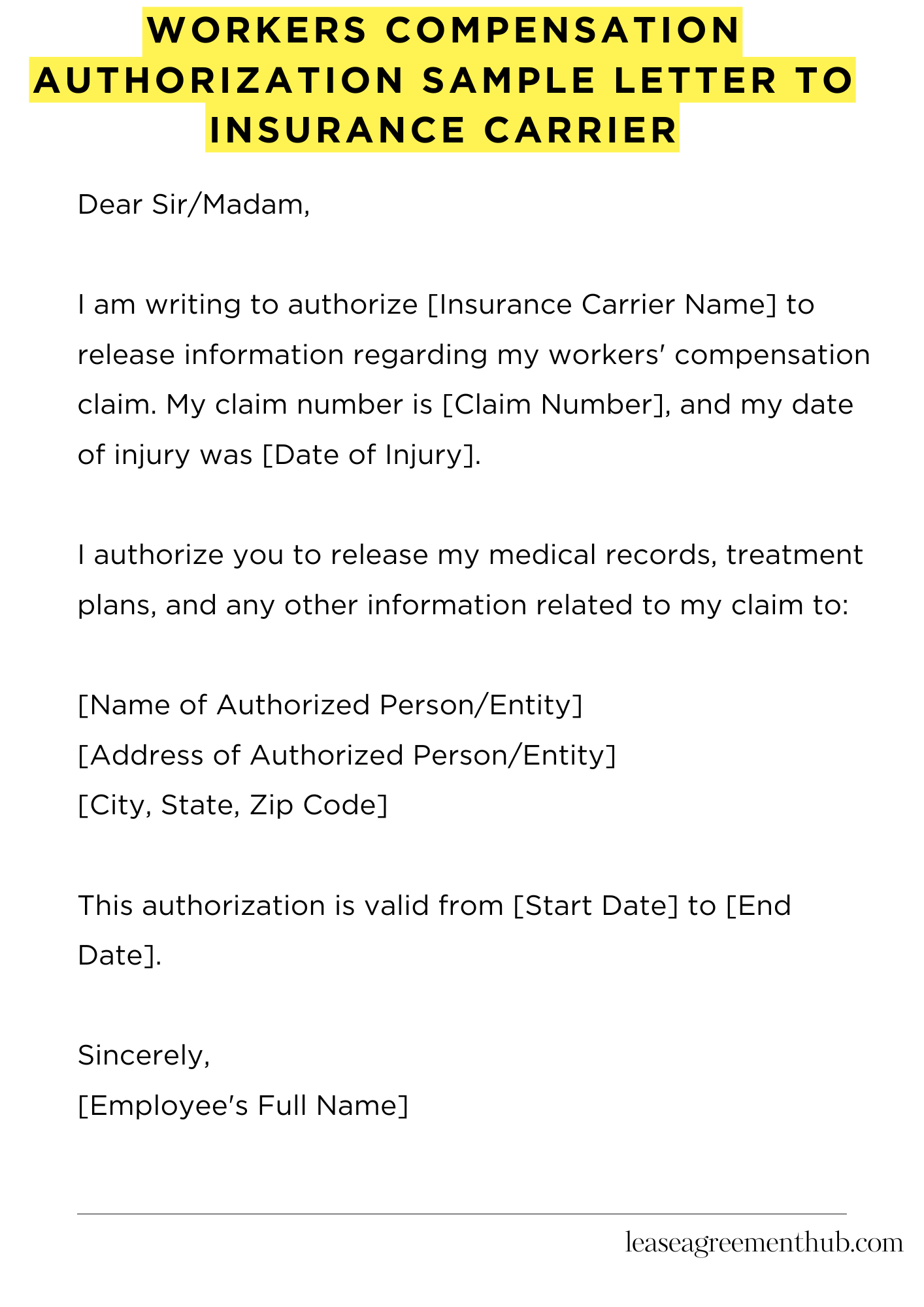
An independent contractor workers compensation letter is a formal document—often called a waiver of subrogation, an independent contractor acknowledgment, or proof of exemption—that clarifies a worker's status and delineates liability responsibilities between hiring entities, general contractors, and insurance carriers. Because statutory laws generally exclude independent contractors from mandatory workers' compensation coverage, this letter serves as a critical verifiable instrument to manage legal risk, prevent classification disputes, and satisfy project compliance requirements.
Contents
Operating as an independent contractor offers professional freedom, but it also shifts the burden of risk management, tax withholding, and insurance procurement entirely onto the individual. When hiring organizations engage independent professionals, they face distinct liabilities under state labor codes. If an independent contractor suffers an injury on a job site without proper coverage, courts or state boards may occasionally reclassify them as employees if control indicators point toward an employee-employer relationship.
To mitigate these risks, project owners, general contractors, and insurance auditors demand documentation confirming the contractor's independent operational status and their acknowledgment that they are not covered under the hiring entity's primary workers' compensation policy. Understanding how these letters function, what they contain, and how they protect both parties is vital for navigating modern commercial contracts and regulatory compliance.
The Legal and Operational Foundations of Contractor Classification
To comprehend why a workers' compensation letter is necessary, one must examine the legal line separating W-2 employees from 1099 independent contractors. State workers' compensation boards enforce strict regulations regarding who must be insured. Generally, employers must purchase workers' compensation insurance for all statutory employees to cover medical expenses and lost wages resulting from workplace injuries.
Independent contractors, conversely, operate as separate business entities. Because they control their own hours, methods, tools, and project outcomes, they fall outside the statutory definition of an employee in most jurisdictions. However, insurance auditors evaluating a hiring company's annual payroll often scrutinize payments made to 1099 workers. If the hiring company cannot prove that these workers operated as independent businesses and maintained their own coverage or legal exemptions, auditors may reclassify those payments as subject payroll, leading to costly retroactive premium assessments and unexpected audits.
The Purpose of the Documentation
A workers' compensation letter for independent contractors serves three primary administrative functions:
- Audit Defense: It provides insurance auditors with written proof that a specific contractor operated independently, thereby preventing the inclusion of contractor payments in the hiring company’s premium calculations.
- Liability Clarification: It explicitly states that the independent contractor assumes full responsibility for their own occupational injuries, safety compliance, and insurance coverage.
- Contractual Compliance: It satisfies upstream project requirements where property owners or general contractors mandate that all on-site personnel either carry active workers' compensation insurance or formally declare independent status.
Key Components of a Workers' Compensation Letter
While formats vary based on state regulations, industry practices, and specific corporate risk-management guidelines, a comprehensive independent contractor workers' compensation letter typically includes several standard sections. Vague or incomplete letters are routinely rejected by corporate compliance departments and insurance auditors.
1. Identifying Information
The document must clearly state the legal names, business entities, addresses, and contact details of both the hiring entity (principal) and the independent contractor. If the contractor operates as a Single-Member LLC, Corporation, or Partnership, the official registered business name must be used alongside the contractor's individual name.
2. Declaration of Independent Status
This core section features an explicit legal declaration by the contractor affirming that they operate as an independent business entity, maintain control over their work methods, supply their own tools and equipment, and possess the right to control the performance of the contracted services.
3. Acknowledgment of Exclusion from Coverage
The letter must explicitly state that the contractor understands they are not covered by the hiring entity's workers' compensation insurance policy. It clarifies that no payroll deductions for workers' compensation will be made, and that the hiring entity bears no financial or legal responsibility for workplace injuries sustained by the contractor.
4. Insurance and Indemnification Disclosures
Many letters require the contractor to list their own private occupational accident insurance, general liability insurance details, or state-issued independent contractor exemption numbers. Furthermore, an indemnification clause is frequently included, protecting the hiring entity from claims brought by the contractor or their subcontractors.
5. Signatures and Execution
The document must be signed and dated by an authorized representative of the independent contractor entity. In many jurisdictions, notarization is recommended or required to give the document heightened evidentiary weight during administrative hearings or insurance audits.
Comparison of Worker Classifications and Documentation Requirements
Navigating worker documentation requires recognizing how different classifications alter insurance and liability obligations. The following table contrasts standard employment types with independent contractors regarding workers' compensation structures.
| Feature / Requirement | W-2 Employee | 1099 Independent Contractor | Sole Proprietor / Exempt Contractor |
|---|---|---|---|
| Mandatory Coverage | Required by state law in nearly all jurisdictions. | Generally exempt; contractor is responsible for self-protection. | May be statutorily exempt from purchasing coverage depending on state rules. |
| Primary Document | Form W-4, employment contract, payroll enrollment. | Form W-9, Master Services Agreement (MSA), Workers' Comp Letter. | State exemption certificate, waiver, or affidavit letter. |
| Audit Vulnerability | Fully covered under standard payroll audits. | Payments scrutinized; requires proof of independence to exclude from audit. | Requires state-verified exemption filing to avoid retroactive penalties. |
| Injury Liability | Employer's workers' compensation insurance absorbs cost. | Contractor absorbs cost via personal insurance or out-of-pocket. | Contractor absorbs cost; hiring entity is shielded by signed declarations. |
State-Specific Nuances and Regulatory Variations
Workers' compensation is governed primarily at the state level rather than the federal level. Consequently, how an independent contractor workers' compensation letter functions depends heavily on the geographic jurisdiction where the work is performed.
The ABC Test and Strict Definitions
States utilizing the stringent "ABC Test"—such as California, New Jersey, and Massachusetts—impose high hurdles for establishing independent contractor status. Under these tests, a worker is presumed to be an employee unless the hiring entity can prove three cumulative criteria:
- (A) The worker is free from control and direction in performance of the work.
- (B) The work is performed outside the usual course of the hiring entity's business.
- (C) The worker is customarily engaged in an independently established trade, occupation, or business.
In states with strict ABC tests, a simple signed letter or acknowledgment form is insufficient on its own if the operational reality of the working relationship mirrors employment. Auditors and labor boards look past paper documents to evaluate the actual behavioral and financial control exerted over the worker. Therefore, the letter must accurately reflect a genuinely independent commercial relationship.
State-Specific Exemption Forms
In construction, trucking, and roofing sectors, several state workers' compensation boards (such as Texas, Florida, and Colorado) provide formal, state-issued independent contractor election or exemption forms. While a corporate compliance letter works well for general business-to-business services, high-risk industries often require contractors to file official state documents to legally opt out of workers' compensation systems.
Step-by-Step Process for Implementing and Verifying the Letter
For hiring entities and contractors alike, establishing a transparent workflow ensures that documentation protects all parties effectively.
Step 1: Establish the Scope of Work
Before drafting or signing any compliance letters, both parties must execute a clear Master Services Agreement (MSA) or Statement of Work (SOW) that outlines project deliverables, timelines, and compensation without establishing employer-like supervision over daily execution.
Step 2: Draft or Request the Appropriate Letter
The hiring company’s risk-management or legal department typically provides a standardized workers' compensation acknowledgment template. Alternatively, the independent contractor may provide a verified affidavit of exemption alongside their Certificate of Insurance (COI).
Step 3: Verify Business Credentials and Licensing
Hiring entities should never rely solely on a signed letter without verification. Best practices dictate checking:
- Business entity registration with the Secretary of State.
- Active federal Employer Identification Number (EIN) or valid sole proprietorship records.
- Any applicable trade licenses required for specialized labor (e.g., electrical, plumbing, general contracting).
Step 4: Annual Review and Renewal
Business operations evolve, and insurance policies expire. Independent contractor status letters should be reviewed and renewed annually. If a contractor hires sub-tier workers or shifts their business model, a new evaluation of their workers' compensation exposure is required.
Common Pitfalls and Troubleshooting
Missteps in handling independent contractor documentation can lead to severe financial penalties during workers' compensation audits or personal injury lawsuits.
Misclassification Creep
The most common hazard occurs when a company relies on a workers' compensation waiver letter while treating the contractor like an employee. If a company dictates exact working hours, supplies all heavy machinery on a daily basis, and manages the contractor step-by-step, labor boards will disregard the letter and mandate retroactive workers' compensation premiums, fines, and tax penalties.
Unverified Claims of Coverage
Contractors occasionally sign letters asserting they have private coverage or independent status without maintaining active policies. Hiring entities should request a certificate of liability insurance or an official state waiver confirmation rather than accepting an unverified signature at face value.
Ambiguous Wording
Using generic internet templates that lack jurisdiction-specific terminology leaves gaps during legal disputes. A letter must explicitly name the specific project or master agreement to prevent broad, unverified waivers that courts might deem unconscionable or overly broad.
Frequently Asked Questions
Does an independent contractor workers' compensation letter replace a Certificate of Insurance (COI)?
No. A workers' compensation letter is typically a self-attestation or contractual acknowledgment of status and risk assumption. A Certificate of Insurance (COI) is an official document issued by an insurance broker verifying that an active insurance policy is in force. Many organizations require both documents.
Can an independent contractor sue the hiring company if they are injured on the job?
Generally, independent contractors cannot file claims against the hiring company's workers' compensation system if they signed a valid exemption and maintain independent status. However, if negligence on the part of the hiring entity caused the injury, the contractor may pursue a third-party personal injury lawsuit, which is why comprehensive general liability insurance and indemnity agreements are also critical.
What happens if an insurance auditor rejects the contractor's letter?
If an insurance auditor determines that the letter does not sufficiently prove independent business operation—or if state tests classify the worker as a statutory employee—the auditor will add the contractor's gross payments to the hiring company's auditable payroll, resulting in an increased premium invoice.
Are sole proprietors required to have workers' compensation insurance?
Requirements vary significantly by state and industry. In many states, sole proprietors without employees are legally permitted to opt out of workers' compensation coverage, but they must often file a formal notice of election with the state workers' compensation division to document their exemption.
How often should independent contractor letters be updated?
Best practices recommend updating independent contractor acknowledgment letters and collecting new compliance documentation annually, or whenever a new contract or project scope is initiated.
Practical Recommendations for Next Actions
To ensure complete legal and financial protection, hiring entities and independent contractors should coordinate closely with qualified legal counsel or licensed insurance brokers. If you are a hiring entity, audit your current 1099 vendor files to verify that signed workers' compensation letters are on file and cross-referenced with active business entity records. If you are an independent contractor, maintain organized records of your business incorporation documents, client agreements, and insurance policies to streamline onboarding and protect your operational autonomy.
Image Gallery