How Pengadilan Tata Usaha Negara Operates: A Guide to Indonesian Administrative Law
The Administrative Court of Indonesia, known locally as Pengadilan Tata Usaha Negara (PTUN), operates as a specialized judicial body designed to resolve legal disputes between private individuals or legal entities and public administra...
The Administrative Court of Indonesia, known locally as Pengadilan Tata Usaha Negara (PTUN), operates as a specialized judicial body designed to resolve legal disputes between private individuals or legal entities and public administration authorities. The court examines, decides, and settles administrative disputes arising from written public decisions (Keputusan Tata Usaha Negara) or administrative actions (Tindakan Administrasi Pemerintahan) executed by government bodies or officials.
Contents
Foundations and Legal Framework of the PTUN System
The Indonesian administrative court system was established to enforce the rule of law (Rechtsstaat) and safeguard citizens against arbitrary executive power. The core statutory foundation of the PTUN system is governed by Law No. 5 of 1986 on State Administrative Courts, which was subsequently amended by Law No. 9 of 2004 and Law No. 51 of 2009.
In addition to these core judicial statutes, the administrative dispute landscape underwent significant modernization following the enactment of Law No. 30 of 2014 on Government Administration. This legislation broadened the scope of administrative oversight from purely formal written decrees to include physical administrative actions (Tindakan Faktual) and administrative omissions.
The Indonesian administrative judiciary operates under a three-tiered court structure supervised by the Supreme Court of the Republic of Indonesia (Mahkamah Agung):
Pengadilan Tata Usaha Negara (PTUN): The administrative court of first instance, located in provincial capitals or district hubs across Indonesia.
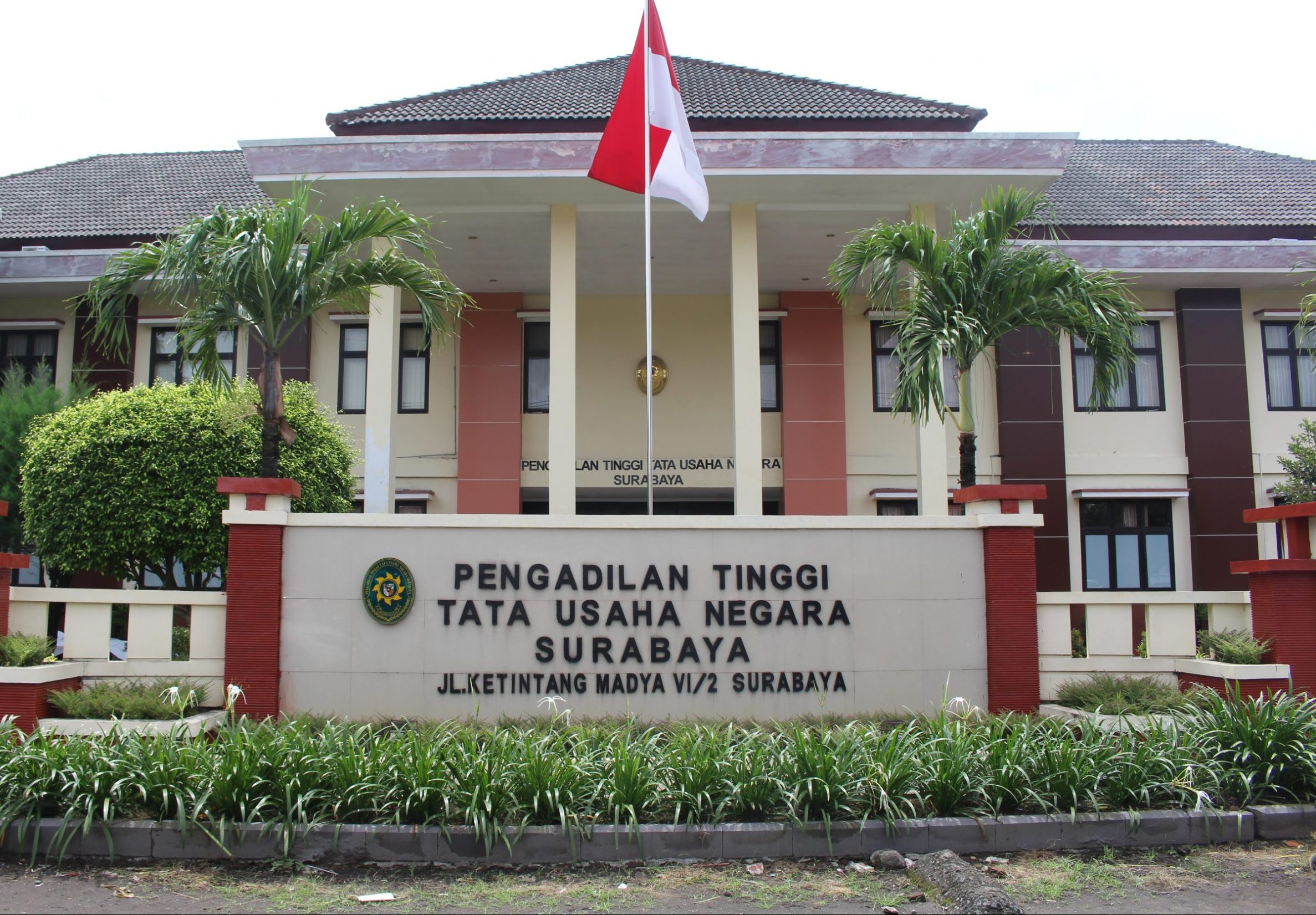
Pengadilan Tinggi Tata Usaha Negara (PTTUN): The administrative court of appeal, which reviews decisions rendered by the lower PTUN courts within its regional jurisdiction.
Mahkamah Agung (Kamur TUN): The Supreme Court's Administrative Chamber, acting as the court of final resort for cassation (Kasasi) and extraordinary judicial review (Peninjauan Kembali).
Citizen / Entity
Administrative Remedies: Keberatan & Banding Administratif
First Instance: PTUN
Appeals: PTTUN
Final Resort: Supreme Court (Mahkamah Agung)
Jurisdiction and Subject Matter: What Can Be Litigated?
Understanding how PTUN operates requires identifying the specific dispute subjects that fall under its absolute competence (Kompetensi Absolut). A plaintiff cannot bring general civil claims or criminal charges to the PTUN; the court solely adjudicates public law disputes resulting from state administrative acts.
The Object of the Dispute (Obyek Sengketa)
Historically, the sole object of a PTUN lawsuit was a Keputusan Tata Usaha Negara (KTUN)—a written decision issued by a administrative body or official containing public administrative legal actions based on effective laws and regulations. To qualify as an actionable KTUN under Law No. 5 of 1986, the decree had to meet four criteria:
- Concrete (Konkret): The subject matter is explicit and not abstract (e.g., the revocation of a specific business permit).
- Individual (Individual): The decision is addressed directly to specified individuals or legal entities rather than the general public.
- Final (Final): The decision is definitive and requires no further approval from higher authorities to produce legal consequences.
- Legal Consequences (Menimbulkan Akibat Hukum): The decision alters, creates, or abolishes existing rights or legal status for the target recipient.
Under Law No. 30 of 2014, the object of litigation expanded beyond written KTUNs to include Tindakan Administrasi Pemerintahan (factual government actions). Factual actions encompass official conduct, physical measures, or government omissions that directly harm a citizen's rights—such as the unauthorized physical demolition of property or administrative delays by a municipal bureau.
Furthermore, Law No. 30 of 2014 revised the concept of Fictitious Administrative Decisions. Previously, if an agency failed to respond to a citizen's request within the statutory deadline, it was deemed a legal refusal (Fictitious Negative). Under the modern government administration framework, an agency's failure to act upon a valid citizen application within the prescribed deadline is deemed a legal grant (Fictitious Positive), which can be submitted to the PTUN for judicial confirmation.
Matters Excluded from PTUN Jurisdiction
The PTUN cannot hear all government-related grievances. The law explicitly excludes several categories of public decisions from PTUN jurisdiction:
- Civil Law Disputes: Decisions that govern private civil contractual arrangements involving state enterprises or agencies acting in a private capacity.
- Criminal Procedure Decisions: Warrants, detentions, or indictments regulated under the Code of Criminal Procedure (KUHAP).
- Military Decisions: Administrative measures concerning members of the Indonesian National Armed Forces (TNI), which fall under Military Courts (Pengadilan Militer).
- General Regulatory Rules (Regeling): Laws, ministerial regulations, or regional ordinances of general application. Review of regulations below statutory law falls under the judicial review jurisdiction of the Supreme Court (Mahkamah Agung).
- Election Disputes during Ongoing Electoral Processes: Specific electoral disputes reserved for the General Elections Supervisory Agency (Bawaslu) or specialized electoral dispute mechanisms.
Mandatory Prerequisites: Administrative Remedies
Before filing a lawsuit at the PTUN, prospective plaintiffs must navigate mandatory administrative remedies (Upaya Administratif). Introduced in Law No. 30 of 2014 and clarified by Supreme Court Regulation (PERMA No. 6 of 2018), failure to exhaust internal administrative remedies renders a PTUN lawsuit inadmissible (Niet Ontvankelijk Verklaard / NO).
Administrative remedies consist of two mandatory sequential stages:
1. Objection (Keberatan)
The aggrieved party must submit a written objection directly to the administrative official or agency that issued the disputed decision or conducted the factual action. Under statutory rules, an objection must be lodged within 21 working days from the date the applicant received or became aware of the disputed decision or action. The agency has 10 working days (unless specific statutes provide otherwise) to issue a decision on the objection.
2. Administrative Appeal (Banding Administratif)
If the agency rejects the initial objection or fails to respond within the legal timeframe, the aggrieved party must file an administrative appeal to the hierarchical superior of the issuing authority (e.g., appealing a Regent's decision to the Provincial Governor). The superior authority has 10 working days to render a ruling.
If the administrative appeal is rejected or unanswered, the legal dispute fully matures into an actionable PTUN lawsuit.
- Disputed Decree / Action
- Stage 1: Submit Objection / Keberatan to Issuing Agency (Within 21 Working Days)
- Stage 2: Submit Administrative Appeal / Banding Administratif to Superior Body (Agency failure / rejection within 10 Working Days)
- Stage 3: File Lawsuit with PTUN (Within 90 Calendar Days) (Superior failure / rejection within 10 Working Days)
Statute of Limitations (Daluwarsa)
A lawsuit at the PTUN must be registered within 90 calendar days after the final internal administrative decision (Banding Administratif) is received by the plaintiff, or from the date the statutory response window for administrative remedies expires without action.
The Step-by-Step Trial Procedure in PTUN
Once administrative remedies are exhausted, the litigation phase follows a strict, legally prescribed workflow. The trial process in the PTUN differs from traditional civil courts due to the active role assigned to administrative judges.
- E-Court Registration & Payment
- Prosedur Dismissal (Chief Judge Review)
- Rejected: Dismissal Order (Penetapan Dismissal): Resistance (Perlawanan)
- Accepted: Proceed to Preparatory Examination
- Preparatory Examination (Pemeriksaan Persiapan)
- Main Court Hearings (Pemeriksaan Perkara)
- Lawsuit Reading (Gugatan)
- Defendant Answer (Jawaban)
- Replik & Duplik
- Evidentiary Stage (Pembuktian)
- Conclusions (Kesimpulan)
- Verdict (Putusan) & Execution (Eksekusi)
Stage 1: Registration and E-Court Integration
Modern PTUN proceedings operate primarily through the Supreme Court's integrated digital platform (E-Court), regulated under Supreme Court Regulation PERMA No. 7 of 2022. Plaintiffs or their legal counsels register cases, pay court fees (panjar biaya perkara), and file pleadings electronically. Summonses and court notices are served digitally (e-Summons).
Stage 2: Dismissal Process (Prosedur Dismissal)
Uniquely in Indonesian civil procedure, administrative courts implement a preliminary screening mechanism conducted by the Chief Judge (Ketua PTUN). During the Dismissal Process, the Chief Judge examines the administrative petition without holding public hearings to evaluate whether:
- The court lacks absolute or relative competence to hear the case.
- The plaintiff lacks legal standing (Persona Standi in Judicio).
- The 90-day filing deadline has lapsed.
- The lawsuit is frivolous, unclear, or lacks legal grounds.
- Mandatory administrative remedies were omitted.
If the Chief Judge determines the lawsuit fails on fundamental grounds, a Dismissal Order (Penetapan Dismissal) is issued, rejecting the case. The plaintiff has 14 calendar days to file a legal objection known as Perlawanan against the Dismissal Order. The panel of judges assigned to hear the resistance ruling will decide whether to uphold the dismissal or order the case to proceed to the regular trial process.
Stage 3: Preparatory Examination (Pemeriksaan Persiapan)
If the lawsuit passes the dismissal process, the Panel of Judges opens the Preparatory Examination (Pemeriksaan Persiapan). Held in closed sessions, this stage is designed to compensate for the fundamental legal inequality between a private citizen and state authorities (Dominus Litis principle).
During the preparatory examination, the judicial panel:
- Reviews the clarity and legal structure of the plaintiff’s written lawsuit (Gugatan).
- Advises the plaintiff on correcting technical errors, ambiguities, or legal arguments.
- Demands that the defendant (the government official or agency) present relevant administrative records, internal notes, and procedural documentation necessary to evaluate the case.
The preparatory examination lasts for a maximum period of 30 calendar days.
Stage 4: Main Hearing (Pemeriksaan Perkara)
Once the preparatory phase concludes, the case proceeds to open public hearings (Terbuka untuk Umum). Pleadings are exchanged in a defined legal sequence:
- Reading of the Lawsuit (Pembacaan Gugatan): The plaintiff presents the finalized lawsuit.
- Defendant's Answer (Jawaban Tergugat): The administrative agency presents its legal defense, including procedural objections (Eksepsi) and arguments on the merits. Intervening third parties (Tergugat II Intervensi) may also participate if their legal interests are directly affected.
- Replik: The plaintiff's written counter-response to the defendant's answer.
- Duplik: The defendant's final written counter-response to the plaintiff's replik.
- Evidentiary Stage (Pembuktian): Both parties submit documentary evidence, present expert witnesses (Saksi Ahli), and call fact witnesses.
- Closing Arguments (Kesimpulan): Both parties submit written legal summaries of their positions.
Under Article 107 of Law No. 5 of 1986, the PTUN judge operates under the principle of ex-officio evidence discovery (active judge principle). The judge is not bound solely by the evidence produced by the parties and may direct the submission of specific government records or inspect the disputed object directly.
Legal Grounds for Invalidating Administrative Acts
To persuade the PTUN to revoke an administrative decree or order a cessation of administrative conduct, the plaintiff must prove that the contested act violates:
- Binding Statutory Laws and Regulations (Peraturan Perundang-undangan): Procedural, formal, or substantive legal breaches.
- General Principles of Good Public Governance (Asas-Asas Umum Pemerintahan yang Baik / AUPB): Established standards including transparency, proportionality, legal certainty, equality, impartiality, care/thoroughness (Asas Kecermatan), and prevention of abuse of power (Larangan Penyalahgunaan Wewenang).
Comparison of Operational Stages in PTUN Litigation
| Stage | Conducted By | Key Objectives | Maximum Timeframe | Key Legal Document / Output |
|---|---|---|---|---|
| Administrative Remedies | Issuing Authority & Superior Agency | Internal review and administrative resolution of citizen grievances | 21 days to file; 10 days per stage for agency response | Administrative Decision (Surat Keputusan Objek Keberatan/Banding) |
| Dismissal Process | Chief Judge of PTUN | Filter out inadmissible, frivolous, or out-of-jurisdiction claims | Internal administrative review | Dismissal Order (Penetapan Dismissal) or Proceeding Order |
| Preparatory Examination | Panel of Assigned Judges | Assist plaintiff in refining claims and compel government document production | 30 Calendar Days | Case Readiness Decree (Penetapan Hari Sidang) |
| Main Trial Hearings | Panel of Judges & Litigants | Formal exchange of pleadings, evidence, expert testimony, and cross-examination | Typically 3–5 Months (under Supreme Court guidelines) | Written Hearing Records (Berita Acara Sidang) |
| Judicial Verdict | Panel of Judges | Rule on legal validity of the contested decision/action and order legal remedies | Pronounced in public hearing | PTUN Final Judgment (Putusan PTUN) |
Injunctions, Verdicts, and Enforcement Mechanisms
Suspensive Injunctions (Penundaan Pelaksanaan KTUN)
Under general administrative law principles, an administrative act remains legally valid and enforceable until officially annulled (Praesumptio Iustae Causa). Filing a lawsuit at the PTUN does not automatically halt the execution of a government decision.
However, a plaintiff can request an interim Suspensive Injunction (Permohonan Penundaan) within the main lawsuit. The Panel of Judges may grant an injunction halting the implementation of the disputed decree if:
- The plaintiff faces urgent, irreparable harm (Keadaan yang Sangat Desak) resulting from the ongoing enforcement of the decree.
- The suspension does not impair public security or broader societal interests.
Types of PTUN Verdicts
After deliberating, the judicial panel issues a final decision categorized under four primary outcomes:
- Lawsuit Declared Inadmissible (Gugatan Tidak Dapat Diterima / NO): Formal procedural defects prevent the court from judging the merits (e.g., failure to complete administrative remedies or missing the 90-day deadline).
- Lawsuit Rejected (Gugatan Ditolak): The court finds the contested administrative decision or action legal and compliant with governing statutes and public governance principles.
- Lawsuit Granted (Gugatan Dikabulkan): The court invalidates the disputed administrative act in whole or in part.
- Lawsuit Dismissed (Gugatan Gugur): The plaintiff fails to attend scheduled hearings despite proper legal summons.
Remedies Ordered by the Court
When a lawsuit is granted, the PTUN decision typically orders the administrative authority to:
- Revoke the contested KTUN (Pembatalan KTUN).
- Issue a valid legal administrative decision where an application was wrongfully denied or ignored.
- Cease an ongoing physical administrative action.
- Pay compensation (Ganti Rugi) to the plaintiff (subject to monetary limits established under government regulations).
- Execute administrative rehabilitation (Rehabilitasi), particularly in public employment disputes, restoring a civil servant's position, status, and rights.
PTUN Verdict outcomes:
- Niet Ontvankelijk Verklaard (NO) [Formal Defect]
- Ditolak (Rejected) [Government Action Upheld]
- Dikabulkan (Granted): Annul Decision / Require Action / Award Damages
- Gugur (Dismissed) [Plaintiff Default]
Appeals Framework (Upaya Hukum)
Unsatisfied litigants may seek legal remedies through higher judicial instances:
- Appeal (Banding): Filed to the High Administrative Court (PTTUN) within 14 calendar days following the official notification of the PTUN verdict.
- Cassation (Kasasi): Filed to the Supreme Court (Mahkamah Agung) within 14 calendar days following notification of the PTTUN appeal ruling, challenging legal interpretations or procedural errors.
- Judicial Review (Peninjauan Kembali / PK): An extraordinary legal remedy submitted to the Supreme Court based on decisive new evidence (Novum) or demonstrable judicial error.
Enforcement Challenges (Eksekusi Putusan)
Enforcement of PTUN decisions historically posed distinct challenges because administrative courts cannot deploy physical law enforcement officers against government agencies. Instead, the legal framework relies on statutory enforcement ladders under Law No. 51 of 2009:
- Mandatory Compliance: The administrative body has 90 working days from the receipt of an enforceable judgment to execute the court's orders.
- Hierarchical Intervention: If the issuing agency fails to execute the verdict within 90 days, the court notifies the immediate hierarchical supervisor of the agency to enforce compliance.
- Public Announcement and Sanctions: If compliance is still ignored, the Chief Judge notifies the President of the Republic of Indonesia as the chief executive. The court may publish the administrative non-compliance in local news publications and digital registers. Additionally, Law No. 30 of 2014 permits administrative sanctions, such as suspension of administrative powers or salary withholdings, against officials refusing to comply with final judicial orders.
Frequently Asked Questions
Can an individual file a lawsuit against a public authority without a lawyer at PTUN?
Yes. Indonesian law permits self-represented litigants (Pro Se) to file lawsuits directly at the PTUN. The court’s Preparatory Examination (Pemeriksaan Persiapan) phase is specifically designed to assist self-represented citizens by guiding them on legal framing, technical requirements, and evidence collection. However, engaging legal counsel experienced in administrative litigation is common due to complex procedural rules.
What is the difference between a lawsuit in a District Court (PN) and a PTUN?
District Courts (Pengadilan Negeri) handle civil law disputes between private entities or individuals, as well as criminal matters. The PTUN strictly adjudicates public law disputes between private individuals/entities and public bodies or state officials regarding administrative decisions or public actions.
Does filing a lawsuit at PTUN automatically stop a government decision from being implemented?
No. Under the principle of Praesumptio Iustae Causa, government decisions are presumed valid and enforceable until legally overturned. Litigants must explicitly petition the PTUN for an interim Suspensive Injunction (Penundaan Pelaksanaan) to suspend the enforcement of a decree during litigation.
How long does a legal proceeding typically take at the PTUN?
Proceedings at the first-instance PTUN level generally take 3 to 5 months from initial registration to final verdict. The timeline varies depending on the complexity of the case, witness testimony, evidence review, and whether the case is handled digitally via the E-Court system.
What happens if a government official refuses to follow a final PTUN judgment?
If an official refuses to execute a final judicial order (Putusan Inkracht), the Chief Judge notifies the official’s administrative superior and the President of Indonesia. Non-compliant agencies risk public reporting, administrative sanctions, and potential monetary penalties under government administration law.
Practical Recommendations for Litigants
Navigating an administrative dispute against government bodies requires careful preparation and strict adherence to statutory deadlines. Litigants considering action before the PTUN should take the following initial steps:
- Establish Legal Standing and Affected Rights: Ensure that the administrative decision or action directly impacts your legal rights or business operations under applicable public laws.
- Verify Administrative Deadlines Immediately: Determine the exact date you received or became aware of the disputed decree or action. Initiate internal administrative remedies (Keberatan) within 21 working days.
- Document the Exhaustion of Remedies: Maintain signed receipts, tracking notices, official email logs, and stamp-acknowledged copies of all formal objections lodged with government offices.
- Prepare Electronic Access via E-Court: Litigants and legal representatives should set up verified access on the Indonesian Supreme Court E-Court platform to manage fee payments, filings, and electronic summonses efficiently.
- Seek Experienced Administrative Counsel: Because administrative law involves distinct procedural rules, statutory deadlines, and governance standards (AUPB), consult legal counsel specializing in Indonesian public administration law early in the dispute.
Legal Disclaimer: This article is for informational and educational purposes only and does not constitute formal legal advice. Administrative law standards and legal procedures in Indonesia may vary based on factual circumstances and specific regulatory regimes. Consult a licensed Indonesian legal professional for specific guidance.
Image Gallery