Navigating the IT Landscape: How Managed Service Providers in Miami Shape Business Technology
Miami businesses operate in a dynamic, high-velocity digital environment where partnering with managed service providers in Miami has become essential for maintaining resilient cybersecurity posture, ensuring regulatory compliance, and...
Miami businesses operate in a dynamic, high-velocity digital environment where partnering with managed service providers in Miami has become essential for maintaining resilient cybersecurity posture, ensuring regulatory compliance, and scaling operational infrastructure efficiently.
Contents
Understanding the Miami IT Ecosystem and Regional Business Pressures
The enterprise technology landscape in Miami, Florida, reflects the city's status as a major global gateway, financial hub, and rapidly growing technology corridor. Unlike regions with older, legacy manufacturing bases, Miami's economy is heavily anchored in international trade, logistics, maritime shipping, healthcare, professional services, and a booming fintech and venture capital ecosystem. This unique economic mix creates specific information technology demands that standard off-the-shelf support models often fail to address.
Managed service providers (MSPs) operating within Miami-Dade County must architect solutions that account for distinct regional challenges. These include hurricane season disaster recovery contingencies, strict compliance frameworks for cross-border transactions, and the demands of a highly distributed, multicultural workforce. Businesses evaluating local technology partners must look beyond basic helpdesk ticketing to find providers capable of offering comprehensive, context-aware digital strategies.
Furthermore, Miami's position as a bridge between North America and Latin America means local enterprises frequently manage multi-language operations, cross-border data transfers, and unique telecommunications routing considerations. A qualified managed service provider in Miami understands these geopolitical and infrastructural nuances, ensuring that network architecture remains robust, low-latency, and compliant with international frameworks.
Core Services Offered by Managed Service Providers in Miami
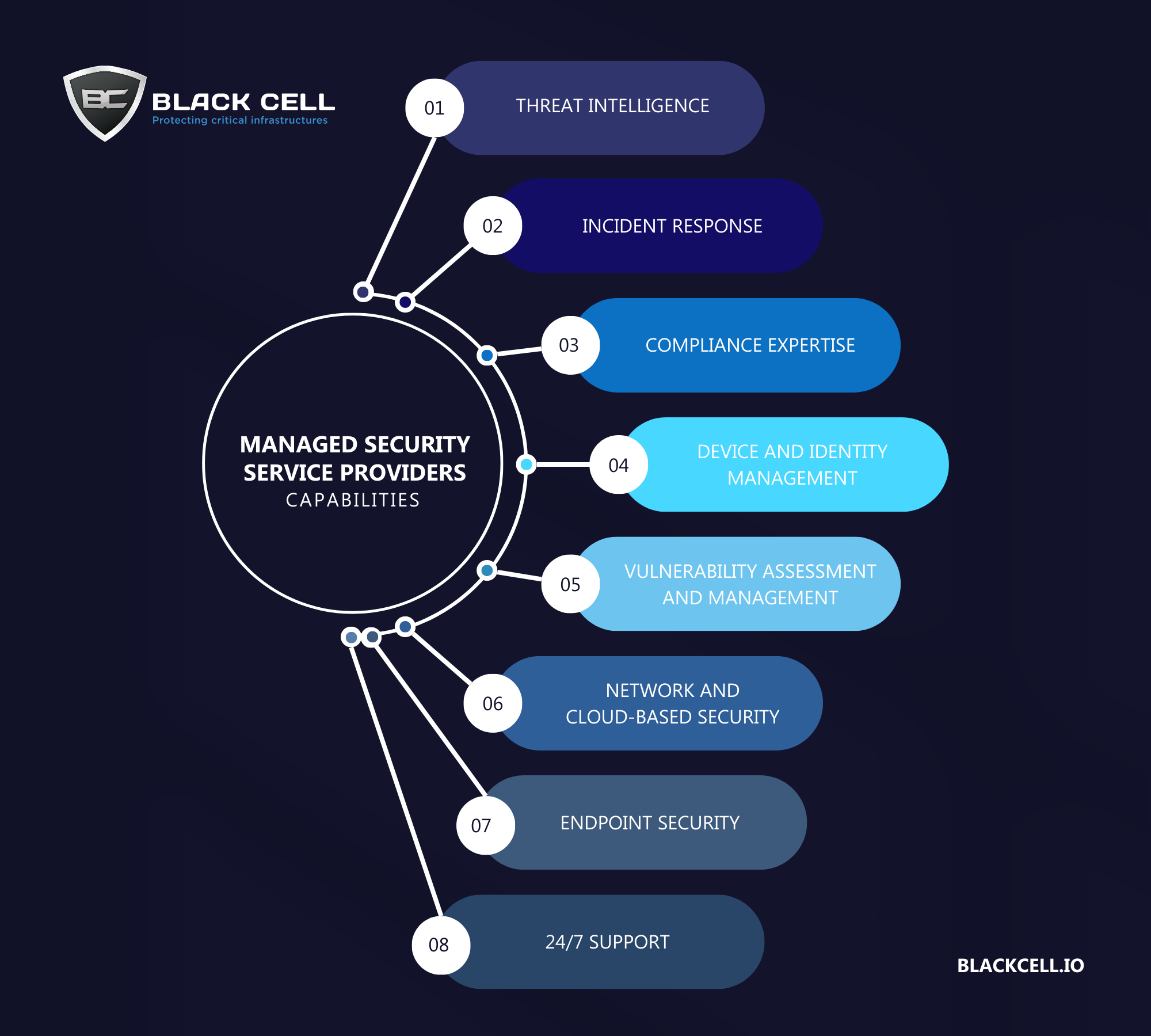
To navigate the local IT landscape effectively, decision-makers must understand the scope of services modern MSPs provide. Moving far beyond break-fix hardware repair, contemporary service providers function as outsourced chief information officers (CIOs) and security operations centers (SOCs).
| CORE MSP SERVICE PILLARS | |
|---|---|
| Infrastructure Management | Cloud hosting, network monitoring, server virtualization, hardware lifecycle |
| Cybersecurity & Defense | EDR/XDR, managed firewall, SIEM, employee security awareness training |
| Compliance & Governance | HIPAA, PCI-DSS, SOC 2, SEC, audit preparation, data governance |
| Strategic IT Consulting | Budget forecasting, digital transformation, vendor management |
Proactive Infrastructure Management and Cloud Migration
Network downtime directly impacts revenue, making 24/7 infrastructure monitoring a baseline requirement. Miami MSPs deploy advanced remote monitoring and management (RMM) tools to detect anomalies, patch operating systems, and optimize bandwidth before minor glitches escalate into catastrophic outages. Additionally, as local businesses migrate legacy workloads to hyperscale cloud environments like Microsoft Azure and Amazon Web Services (AWS), managed providers design, deploy, and govern these cloud architectures to maximize performance while containing recurring monthly expenditures.
Advanced Cybersecurity and Threat Mitigation
South Florida is a frequent target for sophisticated cyberattacks, including ransomware, business email compromise (BEC), and phishing campaigns directed at financial and legal institutions. Comprehensive cybersecurity services from a managed service provider in Miami typically encompass:
- Endpoint Detection and Response (EDR) utilizing behavioral analysis.
- Managed Security Information and Event Management (SIEM) for real-time log review.
- Multi-Factor Authentication (MFA) enforcement across all corporate endpoints.
- Rigorous, recurring security awareness training and simulated phishing tests for employees.
Regulatory Compliance and Data Governance
Many Miami enterprises operate under stringent regulatory mandates. Healthcare providers must adhere to the Health Insurance Portability and Accountability Act (HIPAA), retail and hospitality businesses processing credit cards must comply with the Payment Card Industry Data Security Standard (PCI-DSS), and financial institutions face rigorous SEC and FINRA oversight. Local MSPs assist organizations by implementing immutable data backups, encryption standards, access control lists, and automated documentation required during third-party audits.
Evaluating Service Models: Co-Managed vs. Fully Outsourced IT
When selecting an external technology partner, organizations generally choose between two primary engagement structures: fully outsourced IT or a co-managed IT model. Each approach carries distinct operational, financial, and administrative implications.
| Service Model | Operational Structure | Best Suited For | Key Considerations |
|---|---|---|---|
| Fully Outsourced IT | The MSP acts as the entire IT department, handling everything from end-user helpdesk requests to strategic planning. | Small-to-medium businesses (SMBs) without internal IT staff. | Predictable monthly costs; eliminates hiring and training overhead. |
| Co-Managed IT | The MSP works alongside an existing internal IT team, providing specialized skills, 24/7 coverage, or overflow support. | Mid-market enterprises with internal staff needing specialized scaling. | Requires clear role demarcation; enhances internal employee retention by reducing burnout. |
Choosing the correct model requires an honest internal audit of current personnel, technical debt, and long-term organizational goals. Organizations with a single internal administrator often benefit from co-managed arrangements, granting their lone employee access to enterprise-grade cybersecurity tools and escalation engineers, whereas organizations with no technical staff thrive under fully outsourced frameworks.
Key Factors in Selecting a Miami IT Partner
Evaluating technology vendors requires a structured methodology to filter out substandard providers and identify true strategic partners. Business leaders should assess potential MSPs against specific evaluation criteria.
Geographic Proximity and On-Site Response Capabilities
While cloud computing and remote support tools resolve a vast majority of technical issues virtually, physical presence remains critical. Hardware failures, cabling infrastructure overhauls, and emergency server replacements require boots on the ground. A reputable managed service provider in Miami maintains a local operations center, enabling guaranteed, rapid on-site dispatch times across Miami-Dade, Broward, and Palm Beach counties.
Industry-Specific Experience and Case Studies
An MSP that primarily services construction firms may lack the nuanced understanding required by a boutique wealth management firm in Brickell or a medical practice in Coral Gables. Request case studies and references from businesses within your exact industry vertical. Ask prospective partners how they handle industry-specific software applications, vendor-specific compliance requirements, and specialized data-retention protocols.
Service Level Agreements (SLAs) and Financial Accountability
Transparent Service Level Agreements define the exact parameters of the vendor relationship. Review guaranteed response and resolution times for critical versus non-critical support tickets. Furthermore, examine the provider's remediation policies if they fail to meet agreed-upon uptime or performance metrics. Reputable vendors stand by their guarantees with clear credit structures or remediation commitments.
Financial Considerations and Pricing Structures
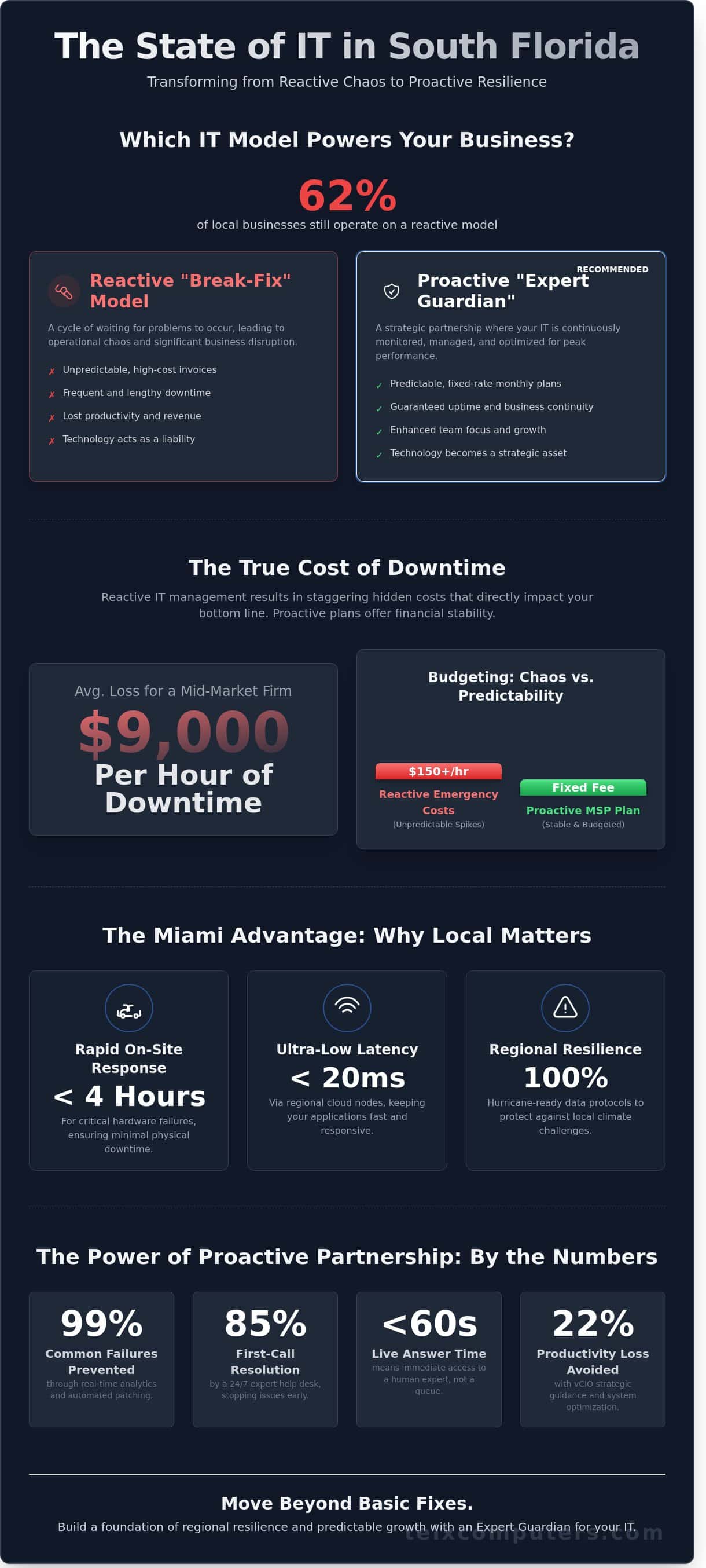
Understanding how managed service providers structure their pricing enables accurate budgeting and prevents unexpected capital expenditures. Most modern MSPs operate on a predictable monthly recurring revenue (MRR) subscription model, replacing volatile, unpredictable break-fix invoices with flat-rate predictability.
Common Pricing Methodologies
- Per-User Pricing: A flat monthly fee per employee, regardless of how many devices (laptop, smartphone, tablet) that user operates. This model simplifies scaling as headcount fluctuates.
- Per-Device Pricing: A tiered fee calculated based on the number of managed servers, workstations, firewalls, and network switches.
- Value-Based or Tiered Bundles: Comprehensive packages (e.g., Bronze, Silver, Gold) that bundle foundational helpdesk support with advanced cybersecurity, cloud management, and disaster recovery options.
Hidden costs to watch out for during contract negotiation include onboarding fees, out-of-scope project work billed at hourly rates, third-party software licensing markups, and early termination penalties. Always request a detailed, itemized statement of work (SOW) before executing any long-term service contract.
Disaster Recovery and Business Continuity in South Florida
Operating a business in South Florida introduces unique environmental risks, most notably tropical storms and hurricanes. A comprehensive business continuity and disaster recovery (BCDR) strategy is non-negotiable for Miami enterprises.
Managed service providers establish robust BCDR frameworks by implementing the 3-2-1 backup rule: maintaining three total copies of data, across two different storage types, with at least one copy stored off-site. Local MSPs leverage geographically diverse cloud data centers—often situated outside of hurricane-prone zones—to replicate critical virtual machines and database backups. Regular, automated disaster recovery testing ensures that in the event of an extended power outage or facility evacuation, systems can be spun up virtually within hours, minimizing revenue loss and maintaining operational continuity.
Frequently Asked Questions About Miami Managed IT Services
What is the average cost of managed IT services in Miami?
Pricing varies based on organizational size and service tier. For a standard per-user model covering helpdesk support, proactive monitoring, and baseline cybersecurity, businesses typically invest between $100 and $250 per user per month. Comprehensive enterprise packages featuring advanced compliance, security operations center (SOC) monitoring, and dedicated cloud architecture scale higher based on complexity.
How quickly can a managed service provider onboard my company?
A standard onboarding process for an organization with 25 to 100 endpoints typically takes between 30 to 60 days. This timeline accounts for comprehensive network discovery, credential auditing, cybersecurity deployment, agent installation, and baseline documentation of existing assets to ensure a seamless transition without disrupting daily workflows.
Do Miami MSPs provide 24/7 helpdesk support?
Most reputable MSPs offer round-the-clock monitoring and emergency support. However, organizations should verify whether live helpdesk tier-1 support is staffed locally 24/7 or if after-hours calls are routed to overseas call centers or automated voicemail queues.
Can an MSP help my business achieve HIPAA or SOC 2 compliance?
Yes. While compliance is ultimately the legal responsibility of the business entity, managed service providers supply the technical controls, audit-ready documentation, immutable backups, and continuous monitoring required to satisfy auditor standards and maintain certified compliance status.
What is the difference between a break-fix provider and a managed service provider?
A break-fix provider operates on a reactive model, fixing technology only after it breaks and billing by the hour or the job. Conversely, a managed service provider operates proactively, utilizing automated tools to prevent outages, secure networks, and manage long-term infrastructure health for a predictable monthly fee.
Next Steps for Business Leaders
Evaluating and onboarding a managed service provider in Miami requires a methodical approach. Begin by auditing your current technology infrastructure, cataloging known pain points, and defining internal compliance requirements. Next, shortlist three local providers with demonstrable experience in your industry sector. Request detailed proposals, scrutinize their SLAs, and verify their local on-site capabilities. By partnering with a capable regional IT expert, your organization can eliminate technical friction, fortify its cyber defenses, and focus entirely on core business growth.
Image Gallery