How Life Insurance Handles Cannabis Use
Life insurance companies evaluate cannabis use based on consumption frequency, ingestion method, and whether use is medicinal or recreational. While historical underwriting treated any marijuana use as high-risk tobacco behavior, most...
Life insurance companies evaluate cannabis use based on consumption frequency, ingestion method, and whether use is medicinal or recreational. While historical underwriting treated any marijuana use as high-risk tobacco behavior, most insurers now offer non-smoker rates—and occasionally Preferred tiers—to occasional or edible users, provided no severe underlying health conditions exist.
Contents
How Underwriters View Modern Cannabis Consumption
Underwriting guidelines for cannabis have shifted significantly over the past decade. Historically, standard life insurance applications grouped marijuana directly with illicit narcotics or categorized any user under high-risk tobacco classifications. In 2026, life insurance carriers treat cannabis under nuanced risk-stratification models influenced by state legalization, medical normalization, and extensive actuarial mortality data.
Actuaries focus on risk exposure, specifically the statistical impact of a substance on long-term mortality and morbidity. When an underwriter reviews an application indicating cannabis consumption, they do not issue an automatic decline. Instead, they isolate several variables:
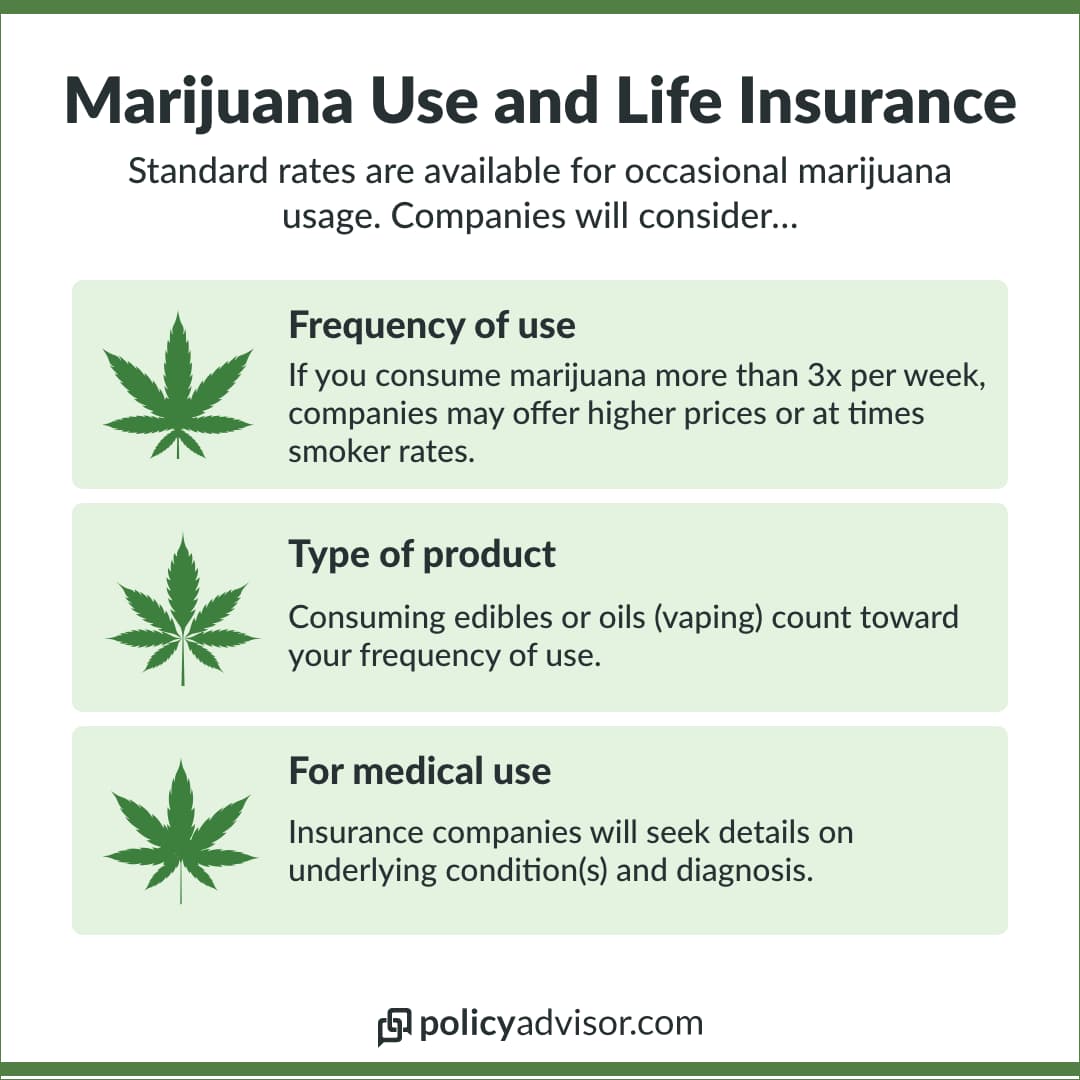
- Frequency of use: Daily consumption carries different physiological and behavioral risks than monthly or celebratory use.
- Method of delivery: Inhaling combusted plant matter introduces carcinogens and respiratory hazards, whereas ingesting oils, tinctures, or edibles bypasses pulmonary exposure.
- Medical justification: Using cannabis to manage a diagnosed medical issue shifts the underwriter's primary focus to the underlying condition rather than the plant itself.
- Lifestyle and behavioral stability: Carriers examine motor vehicle records, criminal history, and occupational hazards to ensure cannabis use does not correlate with reckless behavior.
Because federal regulations in the United States and global frameworks vary, carriers write their own individual guidelines. As a result, two different insurers evaluating the exact same applicant may deliver dramatically different premium quotes—one offering standard non-tobacco rates and the other charging high-cost tobacco rates.
Key Underwriting Factors: Frequency, Method, and Intent
To assign an accurate risk classification, underwriters evaluate three critical aspects of an applicant's cannabis habits: frequency, method of ingestion, and the intent behind use.
1. Frequency of Consumption
Insurers generally segment users into four frequency brackets:
- Infrequent or Experimental (1–2 times per year): Often qualifies for top-tier Preferred Plus or Preferred non-tobacco rates with flexible carriers.
- Occasional or Social (1–4 times per month): Typically eligible for Standard or Standard Plus non-tobacco rates.
- Regular (2–4 times per week): Usually placed in Standard Non-Tobacco or Table-rated classifications, depending on whether ingestion involves smoking.
- Heavy or Daily (Daily or multiple times daily): Frequently assigned tobacco rates or substandard ratings due to concerns regarding chronic respiratory exposure, habituation, or unmanaged underlying stress and sleep disorders.
2. Method of Ingestion
The biological pathway of consumption plays a significant role in determining policy pricing:
- Combustion (Smoking joints, blunts, pipes): Smoking dry flower triggers tobacco-equivalent ratings at conservative carriers, even if no actual tobacco or nicotine is consumed. Insurers base this on the physical damage smoke causes to lung tissue and cardiovascular health.
- Vaporization (Dry herb or concentrated oil): Some carriers treat vaping the same as combustion because of historical associations with lung irritation and additive-related pulmonary injuries. Other progressive carriers separate THC vaping from nicotine vaping, granting non-smoker pricing.
- Edibles, Tinctures, and Topicals: Ingestion via digestion or topical absorption avoids pulmonary stress entirely. Progressive carriers consistently grant non-tobacco status to edible-only consumers, recognizing the lower physiological burden on the respiratory system.
3. Medical vs. Recreational Application
Underwriters evaluate medical cannabis through the lens of the qualifying diagnosis. If an applicant uses medical cannabis to treat chronic back pain, insomnia, or glaucoma, the carrier investigates the severity of that condition. For example, severe chronic pain requiring daily use can raise concerns about musculoskeletal disability or joint degeneration. If cannabis is prescribed for conditions such as cancer, Crohn's disease, or severe post-traumatic stress disorder (PTSD), the medical history—not the cannabis—dictates eligibility.
Conversely, recreational users are assessed primarily through the lens of lifestyle, frequency, and overall physical health metrics derived from the paramedical exam.
Rate Classifications and Financial Impacts
Life insurance premiums are divided into standard rate tiers: Preferred Plus, Preferred, Standard Plus, Standard, and Substandard (Table Ratings). Tobacco users typically pay 200% to 300% more than non-tobacco users for identical coverage. Securing a non-smoker class is the single most critical factor in keeping life insurance affordable.
TYPICAL UNDERWRITING OUTCOMES FOR CANNABIS USERS
| Consumption Profile | Delivery Method | Expected Class | Premium Impact |
|---|---|---|---|
| Rare (1-2x per year) | Edible / Vapor / Smoke | Preferred Plus | Lowest rates |
| Social (1-3x per month) | Edibles or Tinctures | Preferred | Minimal increase |
| Social (1-3x per month) | Combustion / Joint | Standard Non-Smok | Moderate cost |
| Weekly (1-2x per week) | Edibles or Tinctures | Standard Non-Smok | Standard cost |
| Weekly (1-2x per week) | Combustion / Smoking | Tobacco Standard | 2x-3x increase |
| Daily Medicinal | Ingestion / Edibles | Standard or Table | Dependent on Rx |
| Daily Recreational | Combustion / Dabs | Tobacco / Decline | High / Subprime |
As illustrated, an individual who smokes cannabis twice a week could be forced into a Tobacco rate class, while that exact same individual using ingestible oils or edibles could qualify for Standard Non-Smoker pricing, saving thousands of dollars over a 20- or 30-year term policy.
How Life Insurance Companies Test for Cannabis
Most fully underwritten policies require a paramedical examination, which involves measuring height, weight, blood pressure, and collecting blood and urine samples.
What the Lab Screens Look For
Carriers run a full urinalysis panel that screens for protein, glucose, liver enzymes, prescription medications, and controlled substances. Specifically, laboratories screen for:
- THC-COOH: The primary inactive metabolite of delta-9-THC, which stores in adipose (fat) tissue and excretes slowly in urine over days or weeks.
- Cotinine: The primary metabolite of nicotine. This test distinguishes pure cannabis smokers from dual users who also smoke cigarettes, cigars, or use nicotine vapes.
Testing positive for THC does not trigger an automatic decline. If an applicant disclosed social cannabis use on their paperwork, a positive THC metabolite screen simply validates their disclosure. However, if the applicant tested positive for cotinine, the carrier will automatically classify them as a tobacco user, regardless of whether they intended to consume nicotine. Applicants who purchase pre-rolled joints or blunts wrapped in tobacco leaves (such as cigar wrappers or blunt wraps) often test positive for cotinine without realizing it, forfeiting non-tobacco rates.
Simplified Issue and Accelerated Underwriting
Accelerated underwriting programs often waive the physical medical exam for healthy individuals within specific age and coverage parameters. Instead, algorithms cross-reference prescription databases, electronic health records (EHR), motor vehicle records, and clinical lab histories. Disclosing cannabis use remains essential on digital applications. If an applicant omits cannabis use on an accelerated application, but historical medical records or laboratory results show positive toxicology reports, the system flags the file for material inconsistency.
The Risk of Non-Disclosure: Material Misrepresentation
Hiding cannabis consumption on an application is one of the costliest mistakes a policyholder can make. Every life insurance contract contains a contestability period, usually lasting two years from the policy’s effective date.
Under state insurance laws, if an insured individual dies during the contestability period, the insurance carrier has the legal right to review the original application, medical charts, toxicology findings, and autopsy records for evidence of material misrepresentation.
- Denial of Death Benefits: If an individual dies within the contestability window and the insurer discovers undisclosed, chronic cannabis use, the carrier may demonstrate that the policy would not have been issued under those terms had the truth been known. The company can void the policy, refund the paid premiums, and refuse to pay the death benefit to the beneficiaries.
- Fraud Accusations: Systemic concealment of drug or substance use across multiple applications can lead to formal fraud investigations or reporting to medical data repositories like MIB Group, Inc. (formerly the Medical Information Bureau). An MIB record of undisclosed substance use alerts all future underwriters, severely harming the applicant's ability to secure coverage anywhere in the industry.
Carriers look for honesty. Disclosing moderate or recreational cannabis use carries minor underwriting friction; failing to disclose it exposes surviving dependents to catastrophic financial risk.
Strategic Steps for Cannabis Consumers Applying for Coverage
Navigating the application process successfully requires a structured, deliberate approach to ensure the best possible rate classification:
1. Work with an Independent Broker
Captive insurance agents represent a single company and must adhere exclusively to that company's internal underwriting manual. Independent insurance brokers represent dozens of carriers simultaneously. Because cannabis guidelines differ substantially across companies—ranging from hyper-conservative to progressive—an independent broker can identify the specific carriers that do not penalize cannabis users with smoker ratings.
2. Disclose Full Consumption Details Accurately
Specify your intake route clearly on your application. If you only consume edibles or drops, make this explicit to avoid being lumped into pulmonary combustion categories. State your exact frequency—whether it is monthly, bi-weekly, or daily—rather than providing ambiguous answers such as "occasionally."
3. Separate Cannabis from Nicotine and Alcohol
If you smoke cannabis, avoid blunts, tobacco papers, and spliffs. Ensure your urine sample remains completely free of cotinine. Furthermore, underwriters assess cumulative substance use; applicants who consume moderate amounts of cannabis alongside elevated alcohol intake are viewed with significantly greater caution than those who use cannabis in isolation.
4. Gather Medical Records in Advance (For Medical Users)
If you hold a state-issued medical marijuana card, retrieve the complete medical documentation from the physician who recommended it. The underwriter will evaluate the underlying clinical pathology, treatment plans, and symptom control. Demonstrating that your condition is stable, monitored, and compliant reduces perceived mortality risk.
Frequently Asked Questions
Will using cannabis automatically make me pay tobacco rates?
No. An increasing number of life insurance companies classify recreational or medicinal cannabis consumers under standard non-smoker rates, provided they do not smoke combustion-based joints, use tobacco-leaf wraps, or test positive for cotinine. If an applicant consumes cannabis via edibles, tinctures, or oils, progressive underwriters frequently grant Non-Tobacco ratings.
How does having a medical marijuana card affect my application?
The medical card itself does not trigger an adverse decision; rather, the underlying medical condition prompting the card determines your insurability. Underwriters review physician notes to ensure conditions like chronic pain, PTSD, or neurological disorders are well managed. If the medical disorder itself falls within acceptable risk parameters, having an active recommendation card will not cause a denial.
Can an insurer cancel my policy if I start using cannabis after it is issued?
No. Once a fully underwritten life insurance policy is issued, active, and past the statutory two-year contestability period, an insurer cannot cancel coverage or raise your premium rates due to lifestyle changes, newly acquired hobbies, or lawful cannabis use. As long as the initial application was executed truthfully without material misrepresentation, the policy terms remain permanently locked.
What should I do if I tested positive for THC without disclosing it?
If your lab results return positive for THC when you did not disclose consumption, contact your broker immediately. You will likely need to submit an amended statement detailing your usage habits, frequency, and reasons for omission. While this may result in a higher initial rate class or postpone the application, addressing the discrepancy immediately protects your contract against future contestability challenges.
Securing Your Policy
Securing competitive life insurance as a cannabis consumer is entirely achievable, provided you approach underwriting with complete transparency and an understanding of how carriers assess risk. Insurers are far more concerned with undisclosed habits, concurrent nicotine use, and unmanaged medical conditions than with moderate, responsible cannabis intake.
Before applying, obtain quotes through an independent insurance professional who maintains direct access to multiple underwriting platforms. Request that your application be submitted to carriers known for progressive non-tobacco classifications, ensure all ingestion methods are explicitly documented, and verify that your health records clearly establish stability across all areas of your life.
Image Gallery