Why the CO Bond Is the Type of Bond You Need to Know
Understanding why the CO (carbon monoxide) bond is the type of bond you need to know begins with its unique chemical structure: a triple bond featuring a coordinate covalent interaction between carbon and oxygen. This bond holds the re...
Understanding why the CO (carbon monoxide) bond is the type of bond you need to know begins with its unique chemical structure: a triple bond featuring a coordinate covalent interaction between carbon and oxygen. This bond holds the record as one of the strongest neutral diatomic bonds in chemistry, making it foundational for mastering molecular orbital theory, organometallic catalysis, and biological oxygen transport.
Contents
While the abbreviation "CO bond" occasionally appears in commercial settings—such as Certificate of Occupancy surety bonds in municipal real estate or Contingent Convertible ("CoCo") instruments in corporate finance—its primary significance in science refers to the chemical linkage within carbon monoxide ($CO$) and carbon-oxygen functional groups. In physical chemistry, organic synthesis, and biochemistry, the $CO$ bond serves as an essential case study. It illustrates how electronegativity, formal charges, resonance, and orbital hybridization intersect to dictate molecular behavior.
Molecular Architecture: How the CO Triple Bond Forms
To understand why the $CO$ bond behaves differently from standard covalent linkages, one must examine its electronic distribution. Carbon possesses four valence electrons ($2s^2 2p^2$), while oxygen possesses six ($2s^2 2p^4$). Together, the diatomic $CO$ molecule contains ten valence electrons, making it isoelectronic with nitrogen gas ($N_2$) and the cyanide ion ($CN^-$).
If carbon and oxygen shared electrons strictly through conventional covalent bonding, they would form a double bond ($:\text{C}=\text{O}:$). However, a double bond leaves carbon with only six valence electrons in its outer shell, violating the octet rule and leaving the molecule unstable. To resolve this electron deficiency, oxygen shares one of its unshared lone pairs into carbon's vacant $p$-orbital. This step creates a third bond known as a coordinate covalent bond (or dative bond).
.. .. :C = O: -> :C ≡ O: ''
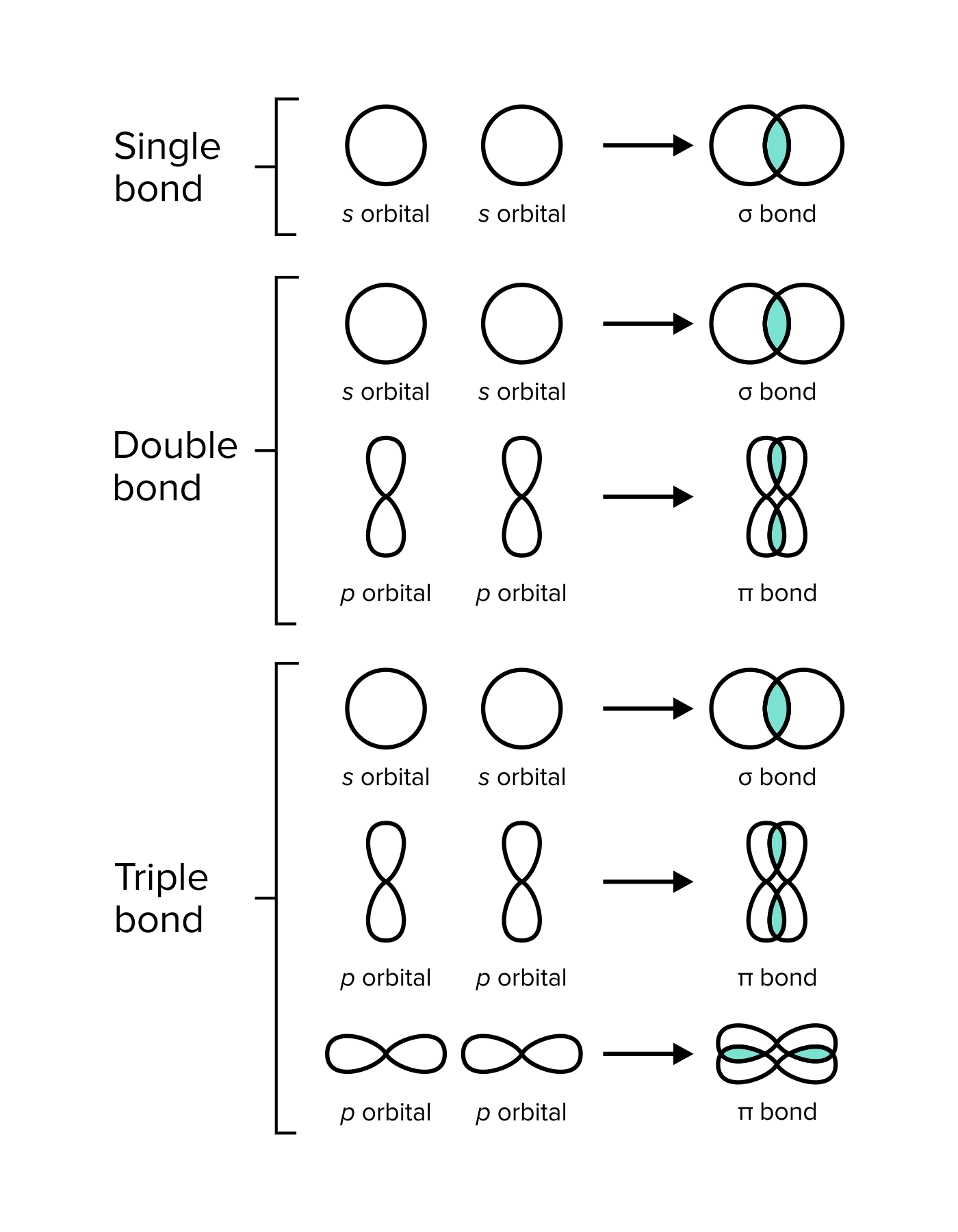
In a standard covalent bond, each bonding atom contributes one electron to the shared pair. In a coordinate covalent bond, a single atom supplies both electrons for the shared pair. Because oxygen supplies both electrons for the third bond, the overall electronic arrangement consists of one $\sigma$ (sigma) bond and two $\pi$ (pi) bonds.
The Formal Charge Paradox
The formation of this coordinate covalent bond creates an unusual formal charge distribution:
$$\text{Formal Charge} = \text{Valence Electrons} - \text{Non-bonding Electrons} - \frac{1}{2}(\text{Bonding Electrons})$$
- Carbon: $4 - 2 - \frac{1}{2}(6) = -1$
- Oxygen: $6 - 2 - \frac{1}{2}(6) = +1$
Oxygen, the second most electronegative element on the Pauling scale (3.44), carries a formal positive charge ($+1$), whereas carbon (electronegativity 2.55) carries a formal negative charge ($-1$).
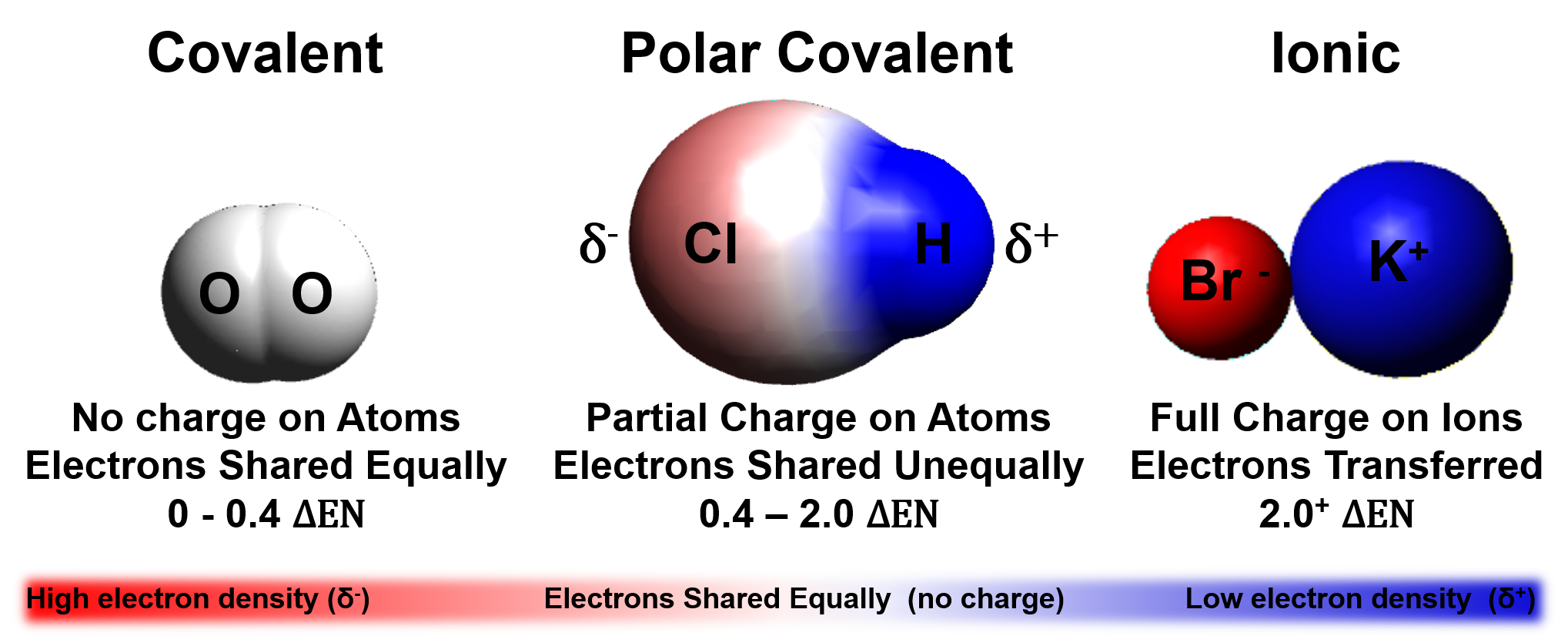
This formal charge distribution creates a competing physical effect. Electronegativity pulls shared electron density toward oxygen, while formal charge shifts net electron density toward carbon. Because these two opposing forces nearly cancel each other out, carbon monoxide exhibits an exceptionally small electric dipole moment of approximately $0.122\text{ Debye}$. Counterintuitively, the slight negative pole resides on the carbon atom rather than the more electronegative oxygen atom.
Molecular Orbital Theory and Energy Dynamics
Standard Lewis structures highlight formal charges, but Molecular Orbital (MO) Theory provides a complete picture of why the $CO$ triple bond is so durable and reactive.
In the molecular orbital energy level diagram of $CO$, the atomic orbitals of oxygen sit lower in energy than those of carbon because oxygen's higher nuclear charge ($Z=8$ vs. $Z=6$) exerts a stronger pull on its electrons. When these atomic orbitals combine:
- Highest Occupied Molecular Orbital (HOMO): The $3\sigma$ orbital acts as the HOMO. It is strongly polarized toward carbon and possesses non-bonding character. Because this HOMO electron pair resides primarily on carbon, the carbon atom acts as a nucleophile and electron donor during chemical reactions.
- Lowest Unoccupied Molecular Orbital (LUMO): The degenerate $2\pi^*$ antibonding orbitals form the LUMO. These orbitals are also concentrated on carbon, allowing carbon to accept incoming electron density from electron-rich species, such as transition metals.
Carbon Atomic Orbitals CO Molecular Orbitals Oxygen Atomic Orbitals (Higher E) (Lower E) 2π* (LUMO) --- 2p ------ --- 2p 3σ (HOMO) ------ 1π ------ --- 2s 2σ --- 2s ------ 1σ ------
Bond Dissociation Energy
Because of its filled bonding molecular orbitals and high bond order of 3.0, the carbon-oxygen triple bond in $CO$ requires 1072 kJ/mol ($256.2\text{ kcal/mol}$) to cleave. This bond dissociation energy exceeds that of homonuclear nitrogen gas ($N_2$, $945\text{ kJ/mol}$) and oxygen gas ($O_2$, $498\text{ kJ/mol}$), making the $CO$ triple bond the strongest neutral diatomic bond known in chemistry.
Comparative Analysis: CO vs. Related Molecular Bonds
Comparing the $CO$ bond to other diatomic and carbon-oxygen bonds illustrates how bond order and hybridization influence physical parameters. Quantitative data from the NIST Chemistry WebBook highlights these key differences:
| Molecule / Bond System | Bond Order | Bond Length (pm) | Bond Dissociation Energy (kJ/mol) | Dipole Moment (Debye) | Primary Bonding Characteristics |
|---|---|---|---|---|---|
| Carbon Monoxide ($CO$) | 3.0 | 112.8 | 1072 | 0.122 ($\text{C}^{-}$ pole) | Triple bond with dative component; strong $\pi$-acceptor. |
| Nitrogen Gas ($N_2$) | 3.0 | 109.8 | 945 | 0.000 | Nonpolar homonuclear triple bond; highly inert. |
| Carbon Dioxide ($C=O$) | 2.0 | 116.0 | 799 | 0.000 (linear cancel) | Polar double bond; reactive toward nucleophiles. |
| Formaldehyde ($H_2C=O$) | 2.0 | 121.0 | 745 | ~2.33 ($\text{O}^{-}$ pole) | Polar carbonyl double bond; strong electrophilic carbon. |
| Methanol ($C-O$) | 1.0 | 143.0 | 358 | ~1.70 ($\text{O}^{-}$ pole) | Single $\sigma$ polar covalent bond; tetrahedral carbon. |
| Oxygen Gas ($O_2$) | 2.0 | 120.7 | 498 | 0.000 | Paramagnetic double bond with two unpaired electrons. |
The CO Bond in Coordination Chemistry: $\pi$-Backbonding
The electronic structure of the $CO$ bond plays a central role in transition metal chemistry. When carbon monoxide binds to a transition metal ($M$), it forms a metal carbonyl complex (such as nickel tetracarbonyl, $Ni(CO)_4$, or iron pentacarbonyl, $Fe(CO)_5$). This interaction relies on a synergistic process known as synergic bonding or $\pi$-backbonding.
σ-donation: M <--- :C ≡ O: (Carbon HOMO donates to vacant Metal d-orbital) π-backbonding: M ---> :C ≡ O: (Filled Metal d-orbital donates into Carbon LUMO π*)
- $\sigma$-Donation: The lone pair in $CO$'s carbon-centered HOMO ($3\sigma$) donates electron density into an empty $d$-orbital on the transition metal.
- $\pi$-Backbonding: Concurrently, a filled metal $d$-orbital donates electron density back into the empty $2\pi^*$ antibonding LUMO of the $CO$ ligand.
Populating the $CO$ antibonding $\pi^*$ orbital weakens the internal $C \equiv O$ bond while strengthening the $M-C$ bond. As a result, the internal carbon-oxygen bond lengthens, and its Infrared (IR) vibrational frequency shifts downward from $2143\text{ cm}^{-1}$ (free $CO$ gas) to between $1800\text{ cm}^{-1}$ and $2000\text{ cm}^{-1}$ in metal complexes.
This mechanism powers large-scale industrial processes, including the Fischer-Tropsch synthesis for liquid hydrocarbon production and hydroformylation (oxo synthesis) for aldehyde manufacturing, as documented by the Royal Society of Chemistry.
Biochemistry and Toxicology: Hemoglobin Binding Mechanics
The structural properties of the $CO$ bond also explain its profound impact on human physiology. Carbon monoxide toxicity occurs because $CO$ binds directly to the iron ($Fe^{2+}$) centers in hemoglobin and myoglobin, interfering with cellular respiration.
Heme-Fe2+ + O2 <===> Heme-Fe2+ --- O-O (Bent Geometry ~120°) Heme-Fe2+ + CO <===> Heme-Fe2+ --- C≡O (Linear Geometry Preferred 180°)
In isolated, free heme molecules, $CO$ binds to $Fe^{2+}$ roughly 25,000 times more strongly than molecular oxygen ($O_2$). Oxygen binds to iron in a bent geometry ($\sim 120^\circ$), whereas $CO$ prefers a linear arrangement ($\text{Fe}-\text{C} \equiv \text{O} = 180^\circ$).
In intact hemoglobin, a amino acid residue known as the distal histidine (His E7) sterically hinders the linear attachment of $CO$. This steric constraint forces the $CO$ ligand into an angled conformation, reducing its binding affinity by a factor of 100. Even with this biological defense, $CO$ still binds to human hemoglobin with approximately 200 to 250 times greater affinity than oxygen, as detailed in the National Center for Biotechnology Information (NCBI) PubChem database.
The Haldane Effect and Cellular Hypoxia
When inhaled, $CO$ produces a two-fold toxic effect:
- Competitive Blockade: It occupies oxygen-binding sites on the tetrameric hemoglobin protein, preventing oxygen attachment.
- Allosteric Trapping: Binding of $CO$ to one or two subunits shifts the remaining subunits into the high-affinity $R$-state (relaxed state). This alteration locks bound oxygen onto the molecule and prevents its release into peripheral tissues, causing rapid cellular hypoxia.
Common Pitfalls when Studying the CO Bond
Because the $CO$ bond exhibits several unusual physical characteristics, students and researchers often fall into common analytical traps:
- Assuming Oxygen Carries the Negative Charge: Beginners often assume oxygen holds the partial negative charge due to its higher electronegativity. In reality, the dative triple bond shifts formal electron density so heavily that carbon carries the formal negative charge and serves as the primary nucleophilic donor site.
- Equating $CO$ di-atomic bonds with Organic Carbonyls ($C=O$): Organic carbonyls in ketones, aldehydes, and esters are polar double bonds ($\sim 121\text{ pm}$, bond order 2.0) with an electrophilic carbon and a nucleophilic oxygen. By contrast, free $CO$ is a non-reactive, non-polar-like triple bond ($\sim 112.8\text{ pm}$, bond order 3.0) driven by carbon nucleophilicity.
- Confusing High Bond Strength with Inertness: While $CO$ requires 1072 kJ/mol to break completely into free carbon and oxygen atoms, its carbon-centered HOMO and vacant $\pi^*$ LUMO make it chemically reactive toward transition metals and radicals. High thermodynamic stability against dissociation does not prevent kinetic reactivity.
Practical Applications and Laboratory Spectroscopy
The properties of the $CO$ bond make it a valuable analytical tool in chemistry:
- Infrared (IR) Probe Molecule: Because the $C \equiv O$ stretching frequency ($2143\text{ cm}^{-1}$) sits in an isolated, clear region of the mid-infrared spectrum, researchers use $CO$ adsorption to probe catalyst surfaces. Shifting IR frequencies reveal the local electron density and coordination geometry of metal sites on heterogeneous catalysts.
- Syngas Chemistry: Mixtures of carbon monoxide and hydrogen gas ($\text{CO} + \text{H}_2$), known as synthesis gas or syngas, serve as the precursor for industrial methanol synthesis via copper/zinc oxide catalysts.
- Chemical Sensors: Modern semiconductor gas detectors rely on the oxidation of $CO$ to $CO_2$ on tin dioxide ($\text{SnO}_2$) surfaces. The electron donation from $CO$ alters surface resistance, allowing real-time concentration tracking.
Frequently Asked Questions
Why is the carbon monoxide bond stronger than the nitrogen ($N_2$) bond?
Although both molecules have a bond order of 3.0 and are isoelectronic, $CO$ benefits from polar covalent stabilization. The difference in electronegativity between carbon and oxygen creates ionic character that reinforces the covalent triple bond, raising its dissociation energy to 1072 kJ/mol compared to $N_2$'s 945 kJ/mol.
How does coordinate covalent bonding differ from standard covalent bonding in CO?
In standard covalent bonding, each atom supplies one electron to the shared pair. In $CO$'s coordinate covalent bond, oxygen supplies both electrons from its lone pair to fill carbon's vacant $p$-orbital. Once formed, a coordinate covalent bond is indistinguishable from standard covalent bonds in strength and electron density.
Why does carbon act as the electron donor in CO rather than oxygen?
Molecular orbital theory shows that $CO$'s Highest Occupied Molecular Orbital (HOMO, the $3\sigma$ orbital) is higher in energy and localized predominantly on the carbon atom. As a result, carbon's lone pair is more accessible for donation to metal atoms and electrophiles than oxygen's deeper, lower-energy lone pairs.
What is $\pi$-backbonding, and why is it important?
$\pi$-Backbonding is a synergistic bonding process where a metal donates electron density from its filled $d$-orbitals into the empty $\pi^*$ antibonding orbitals of a ligand like $CO$. This interaction strengthens the metal-ligand bond while weakening the ligand's internal bond, lowering the energy barriers required for catalytic reactions.
How does CO binding to hemoglobin differ from oxygen binding?
$CO$ prefers to bind to iron in a linear $180^\circ$ geometry, whereas $O_2$ binds at a bent angle ($\sim 120^\circ$). Distal histidine in hemoglobin distorts $CO$'s preferred linear geometry, reducing its binding advantage over oxygen from 25,000-fold in free heme down to roughly 200- to 250-fold in blood.
Next Actions for Students and Researchers
To master the concepts behind the $CO$ bond and apply them in your studies or laboratory work, consider taking these practical steps:
- Sketch the Molecular Orbital Diagram: Practice drawing the heteronuclear MO diagram for $CO$, taking care to place oxygen's atomic orbitals lower in energy than carbon's to correctly illustrate orbital mixing and HOMO/LUMO polarization.
- Calculate Formal Charges and Dipole Directions: Work through formal charge equations for $CO$, $CO_2$, and $HCOO^-$ to understand how dative bonds alter predicted charge distributions across different functional groups.
- Analyze Spectroscopic Shifts: If analyzing organometallic complexes or surface catalysts, use IR stretching frequencies to gauge metal electron density: lower $\nu_{CO}$ frequencies indicate stronger $\pi$-backbonding and higher electron density on the metal center.
Image Gallery