When Whole Life Insurance Is Worthy: A Comprehensive Financial Evaluation Guide
Whole life insurance is worthy primarily for high-net-worth individuals needing liquidity for estate taxes, families requiring lifelong financial support for special-needs dependents, business owners funding buy-sell agreements, and ma...
Whole life insurance is worthy primarily for high-net-worth individuals needing liquidity for estate taxes, families requiring lifelong financial support for special-needs dependents, business owners funding buy-sell agreements, and maxed-out high earners seeking tax-deferred cash value growth. For standard income replacement during working years, low-cost term life insurance combined with traditional investing is generally superior.
Contents
Understanding Whole Life Insurance Mechanics
To determine when whole life insurance makes financial sense, it is essential to understand how the product operates structurally compared to temporary coverage alternatives like term insurance.
Whole life insurance is a form of permanent life insurance. Unlike term life insurance—which provides coverage for a specified window, such as 10, 20, or 30 years—whole life guarantees a death benefit payout regardless of when the policyholder dies, provided premiums are paid as agreed.
The policy contains two primary components:
The Guaranteed Death Benefit: The tax-free payout delivered to designated beneficiaries upon the insured individual's death.
The Cash Value Account: A tax-deferred savings component embedded within the policy that grows over time based on fixed interest rates set by the insurer and, in the case of participating policies, potential non-guaranteed annual dividends.
Whole Life Policy Premium
- Cost of Insurance (COI) & Administrative Expense (Guarantees Death Benefit)
- Cash Value Account (Guaranteed Interest Rate + Dividend Growth Potential)
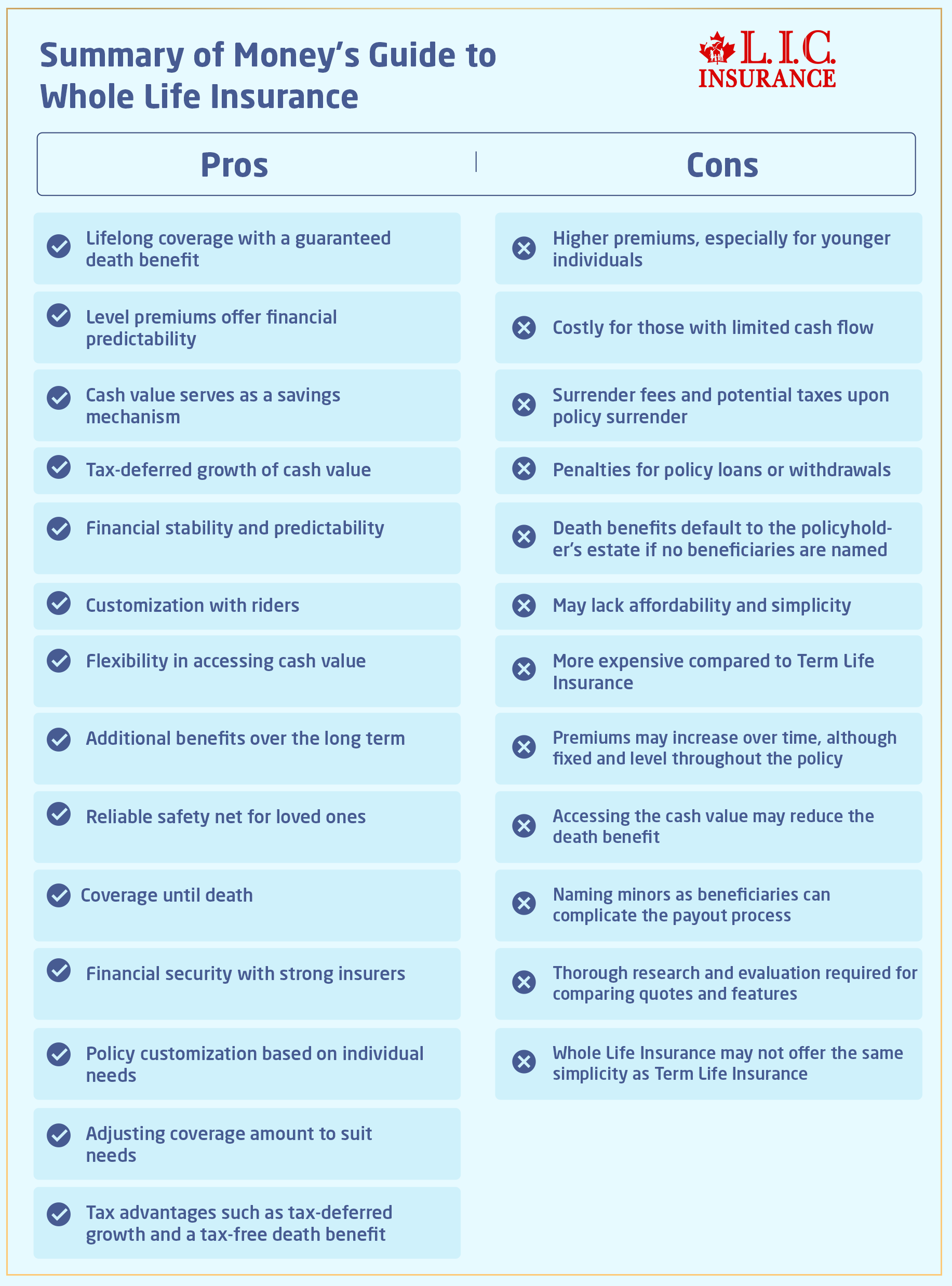
Because whole life insurance guarantees a payout eventually, insurance companies charge significantly higher annual premiums—often five to ten times more than term insurance for equivalent death benefit amounts. In the early years of a policy, a substantial portion of the premium covers administrative fees, sales commissions, and underwriting expenses. Over time, an increasing percentage of the premium flows into the cash value account.
For most average wage earners whose primary financial goal is replacing lost income during peak working and parenting years, the high cost of whole life insurance makes it inefficient. However, specific financial profiles and advanced wealth management goals create distinct scenarios where whole life insurance provides value that temporary insurance or standard brokerage accounts cannot match.
5 Specific Scenarios Where Whole Life Insurance Is Worthy
Evaluating whether whole life insurance is worth the investment requires looking beyond simple income replacement. Below are five financial scenarios where the unique characteristics of permanent cash value policies solve complex wealth, tax, and legacy challenges.
1. High Net Worth Estate Planning and Estate Tax Liquidity
When an individual's estate exceeds federal or state estate tax exemption thresholds, their heirs may face substantial estate tax liabilities due within nine months of death. If the estate consists primarily of illiquid assets—such as real estate, private private equity holdings, or privately held operating businesses—forcing a quick sale to satisfy tax authorities can cause significant financial loss.
Whole life insurance solves this liquidity crisis. Held within an Irrevocable Life Insurance Trust (ILIT), the policy's death benefit is kept outside the gross taxable estate. Upon the insured's passing, the trust receives tax-free cash proceeds that can be used directly to pay estate settlement costs and taxes without forcing the fire sale of core family assets.
2. Providing Permanent Support for Dependents with Special Needs
Parents or guardians of children with physical or cognitive disabilities often face a lifelong obligation that does not expire when the parents retire or turn 65. Term insurance leaves a critical gap if the policy expires while the dependent still requires costly long-term care and housing support.
A whole life policy provides a guaranteed, permanent financial baseline. Paired with a Special Needs Trust (SNT), the policy funds the trust upon the parent's death without disqualifying the adult child from receiving vital government assistance programs, such as Medicaid or Supplemental Security Income (SSI).
3. Maxed-Out Tax-Advantaged Investment Accounts
High-income professionals and executives who have reached annual contribution limits on tax-deferred accounts—such as 401(k)s, Individual Retirement Accounts (IRAs), and Health Savings Accounts (HSAs)—frequently seek additional structures to shield investment earnings from top-tier income tax rates.
Whole life insurance policy cash value grows on a tax-deferred basis under Internal Revenue Code (IRC) Section 7702. Policy owners can access this cash value during retirement tax-free through a combination of tax-free withdrawals up to the cost basis (total premiums paid) and low-interest policy loans against the remaining balance. For high earners in maximum income tax brackets, this secondary tax-sheltered vehicle can enhance post-retirement income flexibility.
4. Business Continuity and Buy-Sell Funding
Co-owners of closely held businesses use whole life insurance to fund legal Buy-Sell Agreements. If a partner passes away, the surviving owners must purchase the deceased partner's shares from their estate to maintain operational stability and prevent unwanted outside ownership.
Whole life insurance provides certainty that cash will be available whenever a partner dies, regardless of age. Additionally, the accumulated cash value within the policy can serve as a corporate asset balance sheet reserve or provide executive exit funding if a partner retires rather than dies in office.
5. Inheritance Equalization in Complex Wealth Transfer
Families holding indivisible assets—such as a family farm, commercial building, or multi-generational business—often face an inheritance dilemma when one child intends to operate the asset while other children do not.
Whole life insurance allows parents to pass the physical asset intact to the successor child while leaving an equivalent tax-free cash death benefit to the non-participating children. This prevents family conflict and avoids liquidating operational assets to settle inheritance splits evenly.
Comparing Insurance Types: Term vs. Whole Life vs. Universal Life
Selecting the correct insurance strategy depends on comparing cost structures, duration, and financial flexibility across primary insurance categories.
| Feature / Dimension | Term Life Insurance | Whole Life Insurance | Universal Life (UL) Insurance |
|---|---|---|---|
| Coverage Duration | Temporary (10–30 years) | Permanent (Lifetime) | Permanent (Flexible age limits) |
| Premium Structure | Fixed for term period | Guaranteed fixed for life | Flexible (Can adjust within limits) |
| Cash Value Component | None | Guaranteed growth + Dividends | Variable based on interest/indexes |
| Relative Cost | Lowest (Budget-friendly) | Highest (5x–10x term cost) | Moderate to High |
| Primary Financial Goal | Temporary income replacement | Wealth preservation & permanent legacy | Flexible permanent coverage |
| Access to Funds | N/A | Tax-free loans and basis withdrawals | Policy loans and partial surrenders |
| Underwriting Risk | Expiration before death | None (If premiums are paid) | Policy lapse risk if underfunded |
Mechanics of Cash Value Growth: Dividends and Tax Rules
Understanding how cash value builds inside a whole life insurance contract requires examining policy structures, dividend mechanisms, and tax regulations.
- Annual Whole Life Premium
- Guaranteed Cash Value (Grows at contractually fixed minimum interest)
- Dividend Distributions (From mutual insurer's surplus earnings)
- Tax-Deferred Accumulated Value
- Tax-Free Withdrawals (Up to Cost Basis)
- Policy Loans (Collateralized Access)
Participating vs. Non-Participating Policies
- Participating Whole Life: Offered primarily by mutual insurance companies (which are owned by policyholders rather than public shareholders). These policies pay non-guaranteed annual dividends based on the insurer's underwriting profits, operational efficiencies, and investment return performance. Policyholders can receive dividends in cash, apply them toward future premiums, or use them to purchase Paid-Up Additions (PUAs), which systematically increases both the total death benefit and cash value accumulation rate.
- Non-Participating Whole Life: Offered by stock-held insurance companies. These policies feature fixed premiums, fixed death benefits, and guaranteed cash value growth tables, but they do not pay dividends to policyholders.
Accessing Cash Value: Withdrawals vs. Loans
Policyholders can access accumulated cash value during their lifetime through two primary methods:
- Tax-Free Basis Withdrawals: Under federal tax law, distributions from a life insurance contract are treated on a first-in, first-out (FIFO) basis. Policyholders can withdraw funds tax-free up to their total premiums paid into the policy (the cost basis).
- Policy Loans: Borrowing against the accumulated cash value does not trigger taxable income, even if the loan amount exceeds the cost basis. The insurer uses the policy cash value as loan collateral while charging an interest rate. If the loan remains unpaid upon the policyholder's death, the outstanding balance plus interest is deducted directly from the final death benefit paid to beneficiaries.
Avoid the Modified Endowment Contract (MEC) Trap
Under the Internal Revenue Service (IRS) Code Section 7702A, if a life insurance policy is funded too quickly with excess cash during its initial years, it fails the "7-Pay Test."
When a policy fails this test, the IRS reclassifies it as a Modified Endowment Contract (MEC). While MECs retain their tax-free death benefit status, cash withdrawals and loans are converted to a Last-In, First-Out (LIFO) tax model, making earnings taxable as ordinary income and subjecting pre-age-59½ distributions to a 10% tax penalty. Proper policy design by an experienced agent ensures premiums stay under MEC limit caps while maximizing cash value accumulation.
Common Misconceptions: When Whole Life Insurance Is NOT Worthy
While whole life insurance offers valuable protections for specific financial needs, aggressive marketing tactics often promote it to consumers who would be far better served by simpler strategies.
Typical Middle-Income Family Financial Situation (Available Household Cash Flow):
- Option A: Whole Life Only
- High monthly premium
- Limited early surrender value
- Heavy early commission drag
- Result: Higher policy surrender risk if income fluctuates
- Option B: Term + Investing
- Low-cost term coverage
- Rest invested in low-cost index funds (401k, IRA)
- Result: Higher liquidity & wealth building potential
1. Using Whole Life as a Primary Investment Strategy
Financial sellers often present whole life cash value growth as an alternative to stock market investing. However, early-year surrender fees and high commission structures cause cash value growth to lag standard broad-market index funds significantly over multi-decade horizons. For individuals who have not maxed out standard retirement accounts, prioritizing whole life insurance over equity investments reduces overall net worth accumulation.
2. High Risk of Early Policy Surrender
Studies from the National Association of Insurance Commissioners (NAIC) indicate that a significant percentage of permanent life insurance policies are lapsed or surrendered within the first ten years. If a policyholder cancels a whole life policy during its first 5 to 10 years, high upfront fees mean the surrender value will often be less than total premiums paid, causing direct net financial losses.
3. Replacing Income During Young Working Years
A young family needing $1,000,000 in life insurance coverage to replace income during child-rearing years might pay $50 to $80 per month for a 30-year term policy, compared to $600 to $1,000+ per month for a whole life policy. Committing to an unnecessarily high monthly obligation strains household cash flow and risks policy lapse if unexpected job loss occurs.
Decision Checklist: Is Whole Life Right for You?
Use this checklist to evaluate whether whole life insurance fits your overall financial plan:
- Maxed Out Retirement Accounts: Have you fully funded your 401(k), IRA, HSA, and other traditional tax-advantaged vehicles?
- Permanent Need: Do you have a financial responsibility that will persist regardless of age (e.g., special needs dependent, permanent estate liquidity requirement)?
- Estate Tax Exposure: Is your estimated net worth near or above federal/state estate tax exemption thresholds?
- Long-Term Liquidity Commitment: Can you comfortably commit to paying high monthly or annual premiums for at least 15–20 years without risking lapse?
- Illiquid Asset Equalization: Do you own private business equity or real estate holdings that require cash equalization among heirs?
If you checked three or more boxes, a whole life insurance policy may provide real value within your broader financial strategy. If you checked fewer than two boxes, a standard combination of term life insurance and traditional low-cost investing is likely the better choice.
Frequently Asked Questions
Can you cash out a whole life insurance policy early?
Yes, policyholders can cash out a whole life policy by surrendering it to the insurer, receiving the net surrender cash value (accumulated cash value minus any applicable surrender charges and unpaid loans). However, surrendering a policy during the first 5 to 10 years often results in financial losses due to early administrative fees. Alternatively, policyowners can borrow against cash value or complete partial withdrawals up to their tax basis.
How do participating policy dividends work?
Participating policy dividends are paid by mutual insurance companies when actual mortality costs, operational expenses, and investment returns are more favorable than original policy projections. While dividends are not legally guaranteed, established mutual carriers have paid them consistently for over a century. Dividends can be taken as cash, used to lower annual premium obligations, or reinvested into paid-up additions to accelerate cash value growth.
What happens if I can no longer afford whole life premiums?
If paying premiums becomes unmanageable, several non-forfeiture options exist short of lapsing the policy:
- Paid-Up Additions Reductions: Apply existing accumulated cash value dividends toward current premium balances.
- Reduced Paid-Up Insurance: Convert the current cash value into a smaller, fully paid-up permanent policy that requires no future premium payments.
- Extended Term Insurance: Use current cash value to purchase a term life policy with the original death benefit amount for a limited duration.
Is whole life insurance better than investing in stock index funds?
Whole life insurance is not designed to beat equity index funds in total investment return. Equity investments (such as S&P 500 funds) offer higher historical long-term growth potential but carry market volatility risk. Whole life insurance offers lower, contractually guaranteed returns, tax-deferred growth, tax-free death benefits, and downside capital protection. It serves as a fixed-income stability tool rather than a equity growth substitute.
How does whole life insurance protect against estate taxes?
When owned inside an Irrevocable Life Insurance Trust (ILIT), the policy proceeds remain outside the gross estate for tax purposes. Upon death, the trust receives tax-free cash proceeds that can be used directly to settle federal or state estate tax obligations, avoiding the need to sell illiquid estate assets under distress.
Strategic Verdict and Next Steps
Whole life insurance is a specialized financial tool. It is worthy when deployed for permanent financial obligations, estate liquidity needs, asset protection, and tax-sheltered wealth preservation by high-net-worth individuals or complex business owners. For basic income replacement, low-cost term life insurance combined with disciplined investing remains the optimal strategy for most households.
If you determine that whole life insurance fits your financial objectives:
- Work with an Independent Fiduciary: Consult a fee-only Certified Financial Planner (CFP®) or an independent agent who represents multiple mutual insurance carriers rather than a captive single-company seller.
- Analyze Mutual Carriers: Request policy illustrations from top-rated mutual insurers with long track records of paying dividends.
- Review Policy Structure: Ensure the contract is structured with paid-up additions blenders to maximize early cash value buildup while remaining below MEC tax thresholds.
Disclaimer: This guide is provided for educational purposes only and does not constitute formal tax, legal, or financial advice. Estate tax rules and state insurance statutes vary by jurisdiction. Consult a licensed legal professional and certified financial advisor to tailor insurance strategies to your specific situation.
Image Gallery