How Bench Press Can Trigger Tennis Elbow: Biomechanics and Prevention
Bench pressing triggers tennis elbow (lateral epicondylitis) when micro-trauma accumulates in the forearm extensor tendons—specifically the extensor carpi radialis brevis—due to excessive wrist hyperextension, aggressive gripping, or f...
Bench pressing triggers tennis elbow (lateral epicondylitis) when micro-trauma accumulates in the forearm extensor tendons—specifically the extensor carpi radialis brevis—due to excessive wrist hyperextension, aggressive gripping, or flared elbow positioning under load. Although pushing exercises primarily engage the chest, shoulders, and triceps, the wrist extensors must contract statically to stabilize heavy loads, leading to overuse inflammation and tendinopathy.
Contents
Disclaimer: The information provided in this article is for educational and informational purposes only and does not constitute medical advice. If you are experiencing severe or persistent joint pain, consult a licensed physical therapist, physician, or sports medicine specialist.
Understanding Tennis Elbow in Heavy Pressing Movements
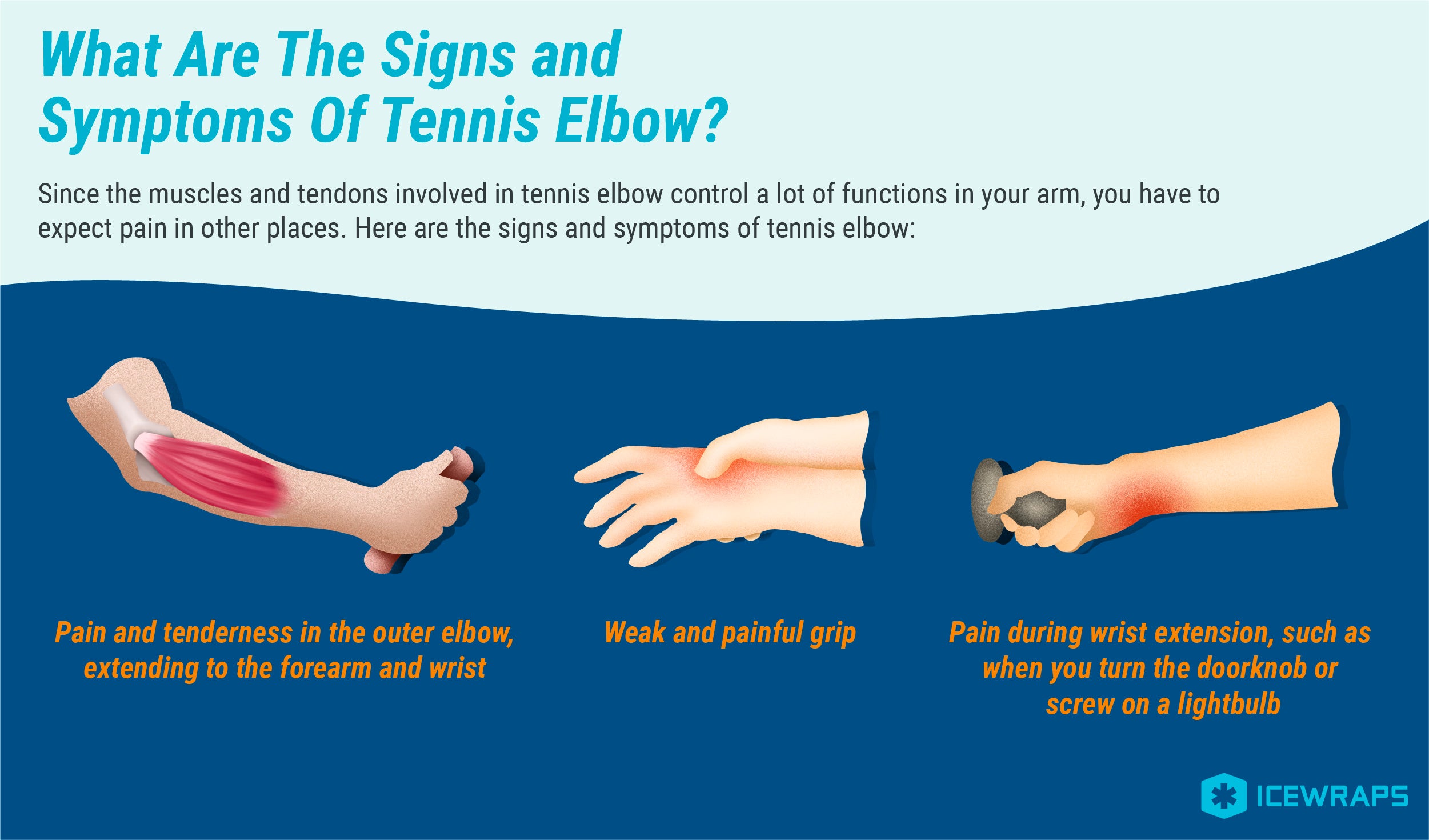
Tennis elbow, medically known as lateral epicondylitis or lateral elbow tendinopathy, is an overuse injury characterized by pain and microscopic tearing at the origin of the wrist extensor tendons on the outer side of the elbow. While commonly associated with racquet sports and manual labor, tennis elbow frequently afflicts strength athletes and powerlifters engaged in heavy bench pressing.
To understand why a chest and triceps exercise damages the outer elbow, one must analyze joint co-contraction. The primary tendon involved in tennis elbow is the extensor carpi radialis brevis (ECRB). The ECRB originates at the lateral epicondyle of the humerus and inserts at the base of the third metacarpal bone in the hand. Its primary functional role is stabilizing the wrist in a neutral or slightly extended position, preventing the wrist from collapsing into flexion when holding objects or transmitting heavy forces.
- Humerus (Upper Arm)
- Lateral Epicondyle (Origin of ECRB Tendon)
- Extensor Carpi Radialis Brevis (ECRB)
- Base of 3rd Metacarpal (Wrist Joint)
- Extensor Carpi Radialis Brevis (ECRB)
- Lateral Epicondyle (Origin of ECRB Tendon)
During a heavy bench press, the barbell generates substantial downward torque across the wrist joint. To stop the barbell from bending the wrist backward or dropping, the ECRB and surrounding extensor muscles must contract isometric (statically) with immense force. When this isometric contraction is sustained against excessive loads, performed with improper technique, or repeated without adequate recovery, the continuous tension causes degenerative collagen breakdown at the tendon attachment point, resulting in lateral epicondylitis.
For more detailed anatomical data on tendon degeneration, research published by the National Institutes of Health demonstrates that lateral epicondylitis is primarily a tendinosis—a structural degradation of collagen fibers—rather than an acute inflammatory response.
Biomechanical Causes of Bench Press-Induced Tennis Elbow
While pressing seems straight-forward, several mechanical flaws transfer force away from the primary movers (pectoralis major, anterior deltoids, triceps brachii) and overload the forearm extensors.
1. Wrist Hyperextension and Poor Bar Placement
The most frequent mechanical error leading to lateral elbow strain is allowing the barbell to roll back toward the fingers, putting the wrist into severe hyperextension.
When the bar sits high in the palm or close to the knuckles:
- The distance between the line of force (the barbell) and the fulcrum (the wrist joint) increases, creating a larger moment arm.
- The forearm extensor muscles (including the ECRB) must pull with significantly greater force to stabilize the wrist joint against this extended lever arm.
- Heavy axial loading directly stretches the ECRB tendon under high tension, causing micro-tears at its origin on the lateral epicondyle.
Proper bar placement requires resting the bar directly over the heel of the palm (the scaphoid and lunate bones), allowing the weight to transfer directly down the radius and ulna bones of the forearm without creating rotational torque at the wrist.
2. Excessive Grip Force ("Death Gripping")
Many lifters squeeze the barbell with maximal grip tension throughout the entire concentric and eccentric phases of the bench press. While squeezing hard can increase neural drive via irradiation, it simultaneously forces the wrist extensors and flexors into maximum contraction.
Sustaining a maximum grip contracture during 3 to 5 sets of bench presses subjects the ECRB tendon to severe structural tension. Over time, this constant mechanical strain exceeds the tendon's capacity for tissue repair, particularly if training frequency is high.
3. Excessive Elbow Flaring and Torque Displacement
Flaring the elbows out at a 90-degree angle relative to the torso is a common error used to isolate the upper chest. However, this position forces the humerus into internal rotation under heavy loads, altering the angle of force pull across the humeroradial joint.
When the elbows flare excessively:
- The forearm axes rotate out of alignment with the line of force.
- The lateral structures of the elbow, including the lateral collateral ligament complex and forearm extensor origin, absorb high shearing stresses.
- The kinetic chain fails to distribute load through the latissimus dorsi and upper back, shifting stabilization demands onto the smaller forearm musculature.
4. Overuse and Rapid Volume Progression
Tendons adjust to physical stress much more slowly than muscle tissue due to their lower blood supply. A sudden increase in bench press volume, intensity (weight), or frequency can outpace the ECRB tendon’s structural adaptation limits. Training to failure repeatedly with heavy eccentric phases increases stress on the muscle-tendon junction, causing tissue degradation faster than the body can repair it.
Identifying Symptoms: Differential Diagnosis
Elbow pain in strength training can originate from several structures. Distinguishing tennis elbow from other common lifting injuries ensures the correct rehabilitation protocol is implemented.
| Condition | Primary Pain Location | Aggravating Bench Press Movements | Clinical Tests |
|---|---|---|---|
| Lateral Epicondylitis (Tennis Elbow) | Outer elbow (lateral epicondyle) | Gripping the bar, wrist hyperextension, un-racking | Resisted wrist extension, Cozen's test |
| Medial Epicondylitis (Golfer's Elbow) | Inner elbow (medial epicondyle) | Bottom position of press, heavy cupping of wrists | Resisted wrist flexion |
| Triceps Tendinopathy | Posterior elbow (above olecranon process) | Lockout phase, narrow-grip pressing, dips | Resisted elbow extension |
| Radial Tunnel Syndrome | Forearm muscle belly (2-3 cm distal to epicondyle) | Broad forearm tightness, radiating dull ache | Resisted middle finger extension |
Diagnostic guidelines provided by the American Academy of Orthopaedic Surgeons highlight that lateral epicondylitis symptoms typically manifest as localized point tenderness directly over the bony bump on the outside of the elbow, accompanied by weakened grip strength.
Immediate Technical Modifications for Bench Pressing
If lateral elbow pain is mild to moderate, technical adjustments can reduce stress on the ECRB tendon without requiring a complete cessation of training.
Stack the Wrists Vertically
The single most effective correction is maintaining a stacked wrist position throughout the entire lift. The knuckles should point toward the ceiling, keeping the joint completely neutral.
Position the barbell in the lower palm, directly over the base of the thumb (the Thenar eminence) and wrist joint.
Avoid letting the barbell drift upward toward the finger pads.
Use a full, wrapped grip rather than an open "suicide" grip, as a wrapped grip allows better control over wrist angle without requiring excessive gripping force.
INCORRECT (Hyperextended Wrist):
- [Barbell] (Line of force behind joint)
- Wrist bent back, high tendon strain
CORRECT (Stacked Wrist):
- [Barbell] (Direct force transmission)
- [Wrist]
- [Forearm]
Optimize Elbow Tuck Angle
Adjust your bar path so the elbows form a 45-to-60-degree angle relative to your torso, rather than a 90-degree flare.
- Lower the barbell to the lower sternum or sternal notch rather than the upper chest.
- Touch lower on the torso to naturally tuck the elbows, engaging the latissimus dorsi to stabilize the upper arm.
- Stack the forearms vertically beneath the barbell when viewed from both the side and the rear.
Switch to Equipment Variations
If flat barbell pressing remains painful, temporary equipment variations can reduce stress on the wrist extensors:
- Swiss Bar / Multi-Grip Bar: A neutral grip (palms facing each other) realigns the radius and ulna, drastically reducing the stabilization demands placed on the ECRB tendon.
- Dumbbell Bench Press: Dumbbells allow for natural wrist rotation throughout the movement. Holding the dumbbells at a 45-degree semi-neutral angle lowers lateral tendon strain.
- Floor Press: Limiting the lower range of motion prevents the extreme stretch phase at the bottom of the movement, which often triggers peak tendon stress.
Troubleshooting Guide: Bench Press Errors vs. Corrective Actions
Use the matrix below to identify technical flaws in your bench press execution and implement targeted fixes to relieve lateral elbow stress.
| Technical Flaw | Biomechanical Consequence | Tendon Impact | Corrective Fix |
|---|---|---|---|
| High Bar Placement | Barbell sits high on fingers, driving wrist backward. | Extreme stretching and isometric strain on ECRB. | Seat the bar in the lower palm (thenar eminence) directly over the radial bone. |
| Wide Grip Width | Forearms tilt outward; elbows flare to 90 degrees. | Lateral shearing stress across the humeroradial joint. | Narrow your grip width by 1–2 inches to keep forearms vertical at the bottom. |
| "Death Gripping" | Excessive squeezing of the barbell throughout the set. | Constant hypertonicity of wrist extensor muscles. | Maintain a secure but controlled grip; do not squeeze at maximum effort during the movement. |
| Bouncing off the Chest | Sudden impact force transfers through forearms at bottom position. | Acute shock loading to tendon insertion points. | Pause controlled at the chest for 1 second before pressing upward. |
| Unstable Upper Back | Scapulae un-depressed, causing shoulders to roll forward. | Shifts load balance down the arm to smaller stabilizer muscles. | Retract and depress scapulae ("tuck shoulder blades into back pockets") before un-racking. |
Targeted Rehabilitation and Active Recovery
Resolving bench press-induced tennis elbow requires a structured rehabilitation approach focused on rebuilding the ECRB tendon's load-bearing capacity. Continuing to press through severe tendon pain can convert an acute tendinopathy into chronic tendinosis.
Phase 1: Load Management and Reduction
Complete rest is rarely optimal for tendinopathy, as tendons require load to remodel healthy collagen. Instead, implement relative rest:
- Temporarily lower bench press intensity (weight) to a range that produces no more than a 2/10 pain level during or after the exercise.
- Eliminate high-eccentric protocols or heavy single repetitions until symptoms subside.
- Replace painful barbell movements with neutral-grip dumbbell presses or floor presses.
Phase 2: Eccentric and Isometric Load Rehabilitation
Progressive resistance training targets collagen synthesis and tendon strengthening. Two main movement types are highly effective:
1. Tyler Twists (Using a Flexible Rubber Bar)
Clinical research published in the North American Journal of Sports Physical Therapy demonstrates the effectiveness of the Tyler Twist using a flexible rubber exercise bar for lateral epicondylitis.
- Hold the flexible bar vertically in front of you with the injured arm on the bottom (wrist extended).
- Grasp the top of the bar with the non-injured hand (palm facing away).
- Twist the bar with the top hand while keeping the injured wrist stable.
- Bring both arms straight out in front of you, maintaining the twist.
- Slowly release the twist by extending the injured wrist into controlled eccentric flexion over 3–5 seconds.
- Perform 3 sets of 15 repetitions daily.
2. Eccentric Wrist Extensions
- Sit beside a flat surface with your forearm supported and hand hanging over the edge, palm facing down.
- Hold a light dumbbell (2–5 lbs).
- Use the uninjured hand to lift the weight up into wrist extension.
- Slowly lower the dumbbell back down using only the injured hand over a 4-to-5-second duration.
- Perform 3 sets of 10–12 repetitions.
Phase 3: Soft Tissue Mobility and Forearm Decompression
Hypertonic forearm extensor muscles pull continuously on the lateral epicondyle attachment point. Releasing muscle tension around the muscle belly relieves this baseline traction.
- Self-Myofascial Release: Place a lacross ball or mobility ball on a table. Rest the top of your forearm (1–2 inches below the elbow joint) on the ball. Apply moderate pressure and slowly flex and extend your wrist for 60–90 seconds. Avoid rolling directly over the bony epicondyle joint itself.
- Wrist Extensor Stretch: Extend your injured arm straight out with the elbow locked and palm facing down. Use the opposite hand to press the top of the hand downward toward the floor until a gentle stretch is felt along the outer forearm. Hold for 30 seconds, repeating 3 times.
Frequently Asked Questions
Can pushing exercises really cause tennis elbow if it's a pulling/racket injury?
Yes. Although tennis elbow was named after racquet sports, it is fundamentally an overuse injury of the wrist extensors. During a bench press, the wrist extensors must contract statically to prevent heavy barbell loads from collapsing your wrists backward. This intense isometric stabilization subjects the extensor tendons to similar strain as repetitive pulling or swinging.
Should I wear elbow sleeves or wrist wraps for tennis elbow during bench press?
Wrist wraps can reduce stress on the wrist extensors by preventing the wrist joint from falling into hyperextension. Neoprene elbow sleeves provide warmth and joint compression, which can decrease pain perception. However, neither device fixes underlying biomechanical flaws or heals damaged tendon tissue. Use them as support tools alongside form corrections and rehab exercises, not as a permanent solution.
How long does it take for bench press-induced tennis elbow to heal?
Mild tendinopathy can improve within 4 to 6 weeks with proper technique changes, targeted loading, and volume management. Chronic cases involving tissue degeneration may take 3 to 6 months of structured rehabilitation. Complete rest without targeted reloading often prolongs recovery because tendons require gradual force to reorganize damaged collagen.
Is an open (suicide) grip safer for tennis elbow?
No. While an open grip (where the thumb does not wrap around the bar) forces some lifters to stack their wrists directly over the forearm, it significantly increases the risk of the barbell slipping out of the hands. A standard closed grip, combined with proper bar placement in the lower palm, provides equal wrist alignment benefits with far greater safety and joint control.
Can I still train legs, back, and shoulders while recovering?
Yes. You can continue training non-affected muscle groups. Modify pulling exercises like rows or pull-downs if heavy gripping aggravates your lateral elbow. Using lifting straps during back workouts reduces forearm extensor activation, allowing you to train upper body pulling movements without stressing the lateral epicondyle.
Recommended Action Plan for Lifters
To clear up bench press-induced tennis elbow and restore maximum pressing strength, follow this step-by-step approach:
- Audit Your Grip & Alignment: Immediately move the barbell down to the heel of your palm (thenar eminence). Ensure your wrists remain vertically stacked directly beneath the bar throughout every rep.
- Adjust Your Pressing Mechanics: Tuck your elbows to an angle between 45 and 60 degrees. If flat barbell pressing causes sharp pain, switch temporarily to a multi-grip neutral bar or dumbbells.
- Manage Volume & Intensity: Reduce your pressing load to a pain-free threshold (pain level ≤ 2/10). Avoid taking sets to absolute failure while tendon tissue recovers.
- Implement Daily Eccentric Load Training: Perform 3 sets of 15 reps of the Tyler Twist or slow eccentric wrist extensions daily to promote healthy collagen remodeling.
- Use Lifting Straps on Pulling Days: Eliminate auxiliary forearm fatigue by wearing straps on rows, deadlifts, and pull-downs while your ECRB tendon heals.
- Seek Professional Evaluation: If your elbow pain persists past 4 to 6 weeks despite mechanical fixes and conservative loading, schedule an evaluation with a physical therapist or sports medicine professional to assess for underlying joint dysfunction.
Image Gallery