What Products Does Google Sell? A Complete Guide to Hardware, Software, and Cloud Services
Google sells a vast ecosystem of products across hardware, cloud computing, enterprise software, digital advertising solutions, and consumer subscription services. While consumer hardware like Pixel smartphones and Nest devices are wid...
Google sells a vast ecosystem of products across hardware, cloud computing, enterprise software, digital advertising solutions, and consumer subscription services. While consumer hardware like Pixel smartphones and Nest devices are widely recognized, Google generates substantial revenue through enterprise services such as Google Cloud Platform, Google Workspace subscriptions, digital streaming plans, and self-serve advertising platforms.
Contents
Hardware Products: Mobile Devices, Wearables, and Smart Home
Google’s physical consumer products are designed to showcase its native Android operating system, machine learning models, and smart home platform. These devices are sold directly through the official Google Store as well as global retail partners.
Smartphones, Tablets, and Wearables
Google’s flagship hardware line centers around the Pixel brand. The hardware lineup includes:
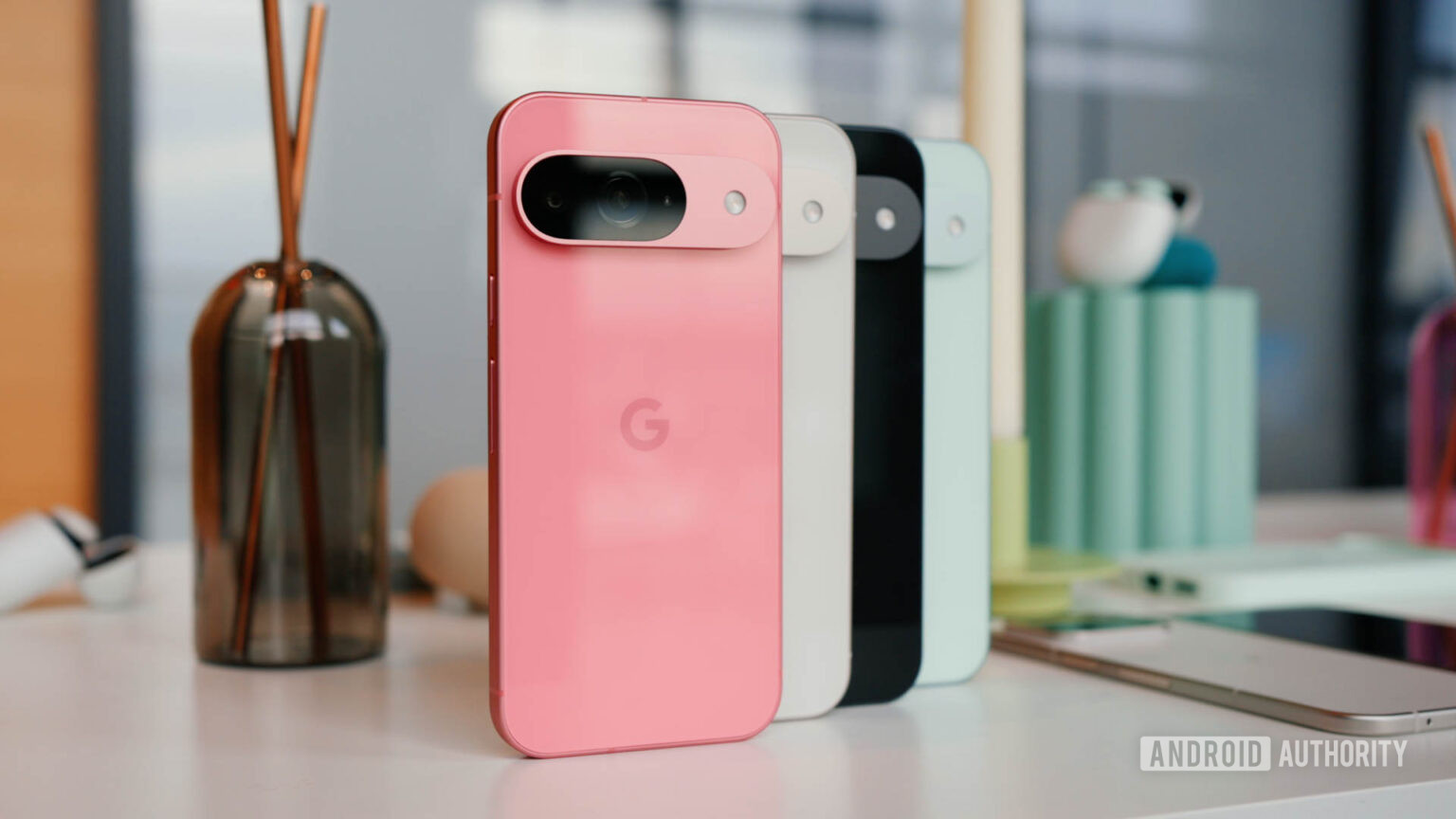
- Google Pixel Smartphones: Positioned as premium mobile devices, Pixel phones emphasize computational photography, clean Android software integration, and custom-designed Tensor silicon processors. Google offers base models, "Pro" variants featuring telephoto camera hardware, and budget-conscious "A-series" devices.
- Google Pixel Tablet: Designed for both portable consumption and docked smart home control, the Pixel Tablet functions as a standard tablet while serving as a smart display hub when connected to its speaker dock.
- Google Pixel Watch: Integrating fitness tracking capabilities from Google’s acquisition of Fitbit, the Pixel Watch runs on Wear OS and offers continuous health monitoring, heart rate analysis, GPS tracking, and seamless synchronization with Pixel smartphones.
- Google Pixel Buds: Google offers wireless audio devices ranging from entry-level Pixel Buds A-Series to premium Pixel Buds Pro, featuring active noise cancellation, spatial audio, and live language translation integration.
Smart Home and Entertainment Devices
Under the Google Nest brand, the company manufactures connected home devices designed to centralize home automation:
- Smart Thermostats: The Nest Learning Thermostat and Nest Thermostat utilize automated scheduling algorithms to optimize energy consumption based on occupant patterns.
- Home Security and Monitoring: Google sells Nest Cam outdoor and indoor security cameras, Nest Doorbell (wired and battery models), and integrated Nest Protect smoke and carbon monoxide detectors.
- Smart Displays and Speakers: Products like the Nest Mini, Nest Audio, and Nest Hub utilize Google Assistant to control connected appliances, stream music, and manage schedules.
- Streaming Hardware: The Google TV Streamer (and legacy Chromecast devices) plugs directly into displays to provide access to streaming applications powered by the Google TV interface.
Enterprise Software and Cloud Solutions
While consumer hardware forms a visible portion of the company's catalog, Google’s commercial business tools generate high-margin enterprise recurring revenue.
Google Cloud Platform (GCP)
Google Cloud Documentation outlines the hundreds of infrastructure and platform services offered to businesses, developers, and public sector organizations. GCP competes directly with Amazon Web Services (AWS) and Microsoft Azure across several core operational buckets:
- Compute Resources: Virtual machines through Compute Engine, containerized deployment via Google Kubernetes Engine (GKE), and serverless execution through Cloud Run.
- Storage and Databases: Scalable object storage via Cloud Storage, relational database hosting through Cloud SQL and Cloud Spanner, and NoSQL solutions like Bigtable.
- Data Analytics and Data Warehousing: Serverless analytics through BigQuery, allowing enterprises to run complex SQL queries across petabytes of data in real time.
- Artificial Intelligence and Machine Learning: Model training, deployment, and generative AI customization using Vertex AI and custom Tensor Processing Unit (TPU) infrastructure.
Google Workspace
Formerly known as G Suite, Google Workspace provides cloud-native productivity and collaboration tools for businesses, educational institutions, and non-profit organizations. Unlike free consumer Gmail accounts, Google Workspace is sold on a monthly or annual per-user subscription basis.
Key tier tiers include Business Starter, Business Standard, Business Plus, and custom Enterprise configurations. Workspace subscriptions unlock:
- Custom domain email addresses hosted on Gmail infrastructure.
- Expanded cloud storage pooling via Google Drive.
- Enhanced administrative, security, and compliance controls (such as Google Vault for eDiscovery).
- Advanced meeting controls in Google Meet, including recording, transcription, and larger participant caps.
- Integrated enterprise AI capabilities (Gemini for Workspace) embedded across Docs, Sheets, Slides, and Gmail.
Advertising and Business Monetization Platforms
Google operates the world’s largest digital advertising ecosystem. The company sells ad inventory across its owned platforms (Search, YouTube, Maps, Play Store) and acts as an intermediary broker for third-party websites and mobile applications.
| Advertiser Solutions | Publisher Solutions |
|---|---|
| - Google Ads (Search, Display) | - Google AdSense (Websites) |
| - Performance Max Campaigns | - Google AdMob (Mobile Apps) |
| - Display & Video 360 (DSP) | - Google Ad Manager (Publishers) |
| - Search Ads 360 (Enterprise) |
Google Ads and Marketing Platform
Businesses purchase target ad placements using Google Ads. Ad sales are structured primarily around pay-per-click (PPC) and cost-per-thousand-impressions (CPM) auction dynamics. Key offerings include:
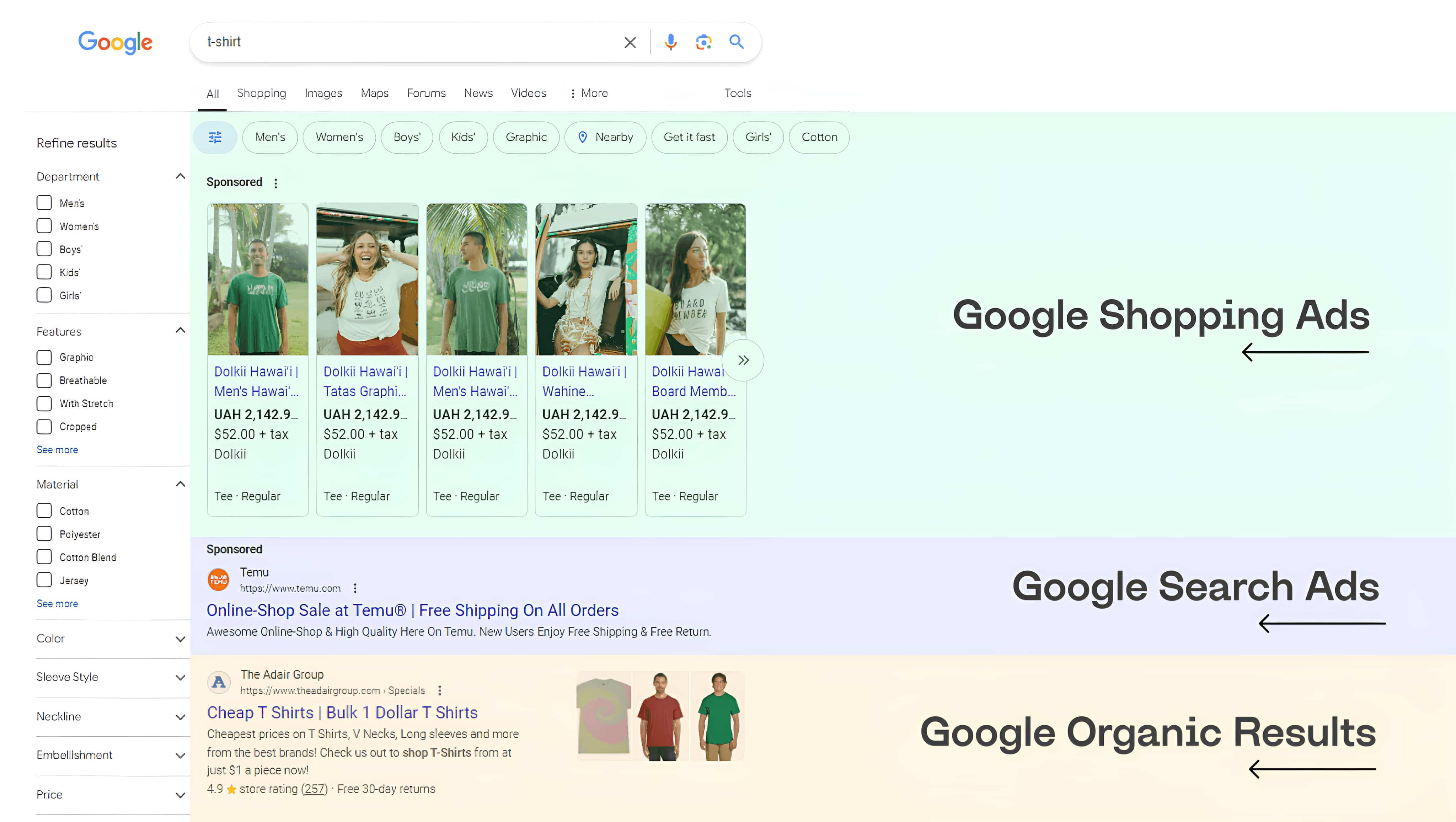
- Search Advertising: Sponsored links displayed above and below organic web search results based on user query intent.
- Performance Max & Display Campaigns: Automated asset distribution across YouTube, Gmail, Display Network, Discover, and Maps.
- Google Shopping Ads: Product listing ads displayed directly in search results for e-commerce retailers submitting structured product feeds.
- Google Marketing Platform: Enterprise-grade tools combining Display & Video 360 (a demand-side platform for programmatic buying) and Search Ads 360 for large enterprise marketing teams.
Publisher Monetization Products
Google also sells ad-monetization platforms to content creators, app developers, and digital publishers:
- Google AdSense: Allows web publishers to monetize website traffic by selling ad space to Google Ads auction buyers.
- Google AdMob: A mobile-centric ad network platform enabling app developers to insert banner, native, and rewarded video ads into iOS and Android applications.
- Google Ad Manager: An integrated ad delivery and management platform built for large-scale enterprise publishers with direct sales teams and complex inventory configurations.
Consumer Subscriptions and Digital Content
To diversify away from ad-supported media, Google sells a variety of monthly and annual consumer digital service subscriptions.
YouTube Subscription Services
Google monetizes YouTube through both ad sales and direct recurring end-user subscriptions:
- YouTube Premium: A subscription service that removes advertisements across video content, enables background audio playback on mobile devices, allows offline video downloads, and includes full access to YouTube Music Premium.
- YouTube TV: A live television streaming subscription service offered in select markets, acting as a direct replacement for traditional cable TV with major broadcast channels, regional sports networks, and cloud DVR functionality.
- YouTube Music Premium: A standalone audio streaming subscription competing with platforms like Spotify and Apple Music.
Data Storage and Ecosystem Subscriptions
- Google One: A unified cloud storage subscription that expands allocation across Google Drive, Gmail, and Google Photos. Higher storage tiers (such as 2TB and above) include premium video calling features in Google Meet, enhanced editing capabilities in Google Photos, family sharing options, and bundled AI capabilities.
- Fitbit Premium: A fitness and health tracking subscription offering advanced sleep metrics, daily readiness scores, stress management analytics, and guided workout content for Fitbit and Pixel Watch owners.
- Google Play Store Purchases: Google monetizes digital distribution by taking a percentage fee on paid app purchases, digital subscriptions, and in-app microtransactions executed through the Google Play Store billing platform.
Developer Tools and API Services
Software engineers and enterprise developers purchase access to specialized application programming interfaces (APIs) and developer services from Google.
Google Maps Platform
Through the Google Maps Platform, commercial businesses purchase usage-based API access to embed mapping, location, and routing data into their own platforms. Common services include:
- Maps SDKs: Rendering interactive maps within native mobile applications and web interfaces.
- Places API: Providing location search, auto-complete address filling, detailed business details, and user review data.
- Routes API: Calculating real-time directions, traffic conditions, and distance matrices for logistics and ride-sharing applications.
Technical & Operating System Licensing
While core Android and ChromeOS are open-source frameworks, Google sells commercial enterprise and education management licenses. For example, Chrome Enterprise Upgrades provide IT administrators with centralized management controls, security policies, and remote wiping capabilities for enterprise Chromebook deployments.
Overview of Google’s Product Ecosystem
The table below breaks down Google’s primary commercial product categories, target users, standard pricing structures, and representative products.
| Product Category | Core Target Audience | Primary Business / Pricing Model | Representative Offerings |
|---|---|---|---|
| Consumer Hardware | Individual consumers, smart home buyers | One-time hardware sale purchase | Pixel 8/9, Pixel Watch, Nest Thermostat, Google TV Streamer |
| Enterprise Cloud (GCP) | IT departments, software developers, enterprises | Usage-based / Pay-as-you-go consumption | Compute Engine, BigQuery, Vertex AI, Cloud Storage |
| Productivity (Workspace) | Small businesses, enterprise corporations, schools | Monthly or annual per-user tier subscription | Business Starter/Standard, Enterprise Workspace, Gemini AI |
| Digital Advertising | Marketers, e-commerce stores, ad agencies | Auction-based PPC, CPM, and target CPA models | Google Ads, Performance Max, Display & Video 360 |
| Publisher Monetization | Website owners, mobile app developers | Revenue-sharing split on ad auction payouts | Google AdSense, AdMob, Google AdManager |
| Consumer Subscriptions | Media consumers, smartphone power users | Recurring monthly or annual user subscription | YouTube Premium, YouTube TV, Google One, Fitbit Premium |
| Developer APIs | Software engineers, logistics platforms | Tiered usage fees per thousand API requests | Google Maps Platform (Places, Routes, Geocoding APIs) |
How to Choose the Right Google Product for Your Needs
Selecting the correct product from Google's portfolio depends on your operational requirements, tech ecosystem, and business model.
For Individual Consumers
If you are looking for consumer tech, determine whether you are seeking open ecosystem flexibility or tight smart home integration:
- Mobile Ecosystem: If you prefer clean software without bloatware and prioritized camera performance, Google Pixel devices provide direct software updates directly from Google.
- Smart Home Standardization: If you already use Google Assistant on your phone, Nest Smart Home devices integrate natively without requiring third-party bridging hubs.
- Storage Management: If you are running out of storage on your standard 15GB free Google Account, subscribing to Google One expands storage shared automatically across Photos, Drive, and Gmail.
For Small Businesses and Enterprises
Businesses evaluating Google’s enterprise stack should evaluate two main areas:
- Productivity Tools: If your team requires real-time collaboration without maintaining local software installations, Google Workspace provides domain-based email, cloud storage, and video conferencing in a single administrative dashboard.
- Cloud Infrastructure: If you build custom applications, process large volumes of data analytics, or train machine learning models, Google Cloud Platform (GCP) offers specialized strength in data warehousing (BigQuery) and AI deployment tools (Vertex AI).
Frequently Asked Questions
Does Google sell physical retail products directly?
Yes. Google sells physical hardware directly to consumers through the official online Google Store, as well as via select physical pop-up locations, brand stores in key metro areas, and third-party global retail partners.
What is the difference between free Google apps and Google Workspace?
Free Google apps (like personal Gmail or Google Drive) are intended for individual use, offer limited cloud storage (15GB shared), and use @gmail.com addresses. Google Workspace is a paid business platform offering custom corporate domain emails, enhanced administrative security controls, dedicated customer support, shared team drives, and strict compliance guarantees.
How does Google make money if many of its services are free?
Google monetizes its free services—such as Google Search, Maps, and personal YouTube—primarily through targeted advertising. Marketers pay Google to show relevant ads to users browsing these free platforms based on intent signals, search terms, and platform activity.
Can developers use Google Maps data in commercial applications for free?
Google Maps Platform provides a monthly recurring credit for developer accounts that covers basic testing and lightweight usage. However, high-volume API requests, commercial tracking apps, and enterprise deployments require a linked billing account to pay per request past the free tier allowance.
Does Google sell computer operating systems?
Google does not charge traditional retail fees for standalone operating system downloads like Windows. Instead, Android and ChromeOS are provided open-source or licensed to original equipment manufacturers (OEMs). Google monetizes these operating systems through enterprise management software licenses (such as Chrome Enterprise Upgrade), app marketplace transactions (Google Play Store fees), and default search platform integrations.
Practical Recommendations for Users and Businesses
- Audit Enterprise Subscriptions: Before purchasing standalone video conferencing or enterprise storage tools, review whether a Google Workspace deployment already covers your requirements within a single per-user fee.
- Utilize Free Tier Billing: When testing developer APIs or building applications on Google Cloud Platform, take advantage of initial free credit allocations and setting up strict budget alerts within the Google Cloud Console to avoid unexpected consumption charges.
- Evaluate Ecosystem Compatibility: When acquiring smart home equipment, ensure your existing devices support Matter or Thread protocols, which allow Nest devices to communicate effectively across diverse smart home standards.
Image Gallery