Choosing Beneficiaries for Basic Life Insurance: A Complete Guide
Choosing beneficiaries for basic life insurance involves designating primary and contingent individuals or legal entities to receive your policy’s death benefit upon your passing. To ensure efficient distribution, policyholders must cl...
Choosing beneficiaries for basic life insurance involves designating primary and contingent individuals or legal entities to receive your policy’s death benefit upon your passing. To ensure efficient distribution, policyholders must clearly specify full legal names, tax identification numbers, relationships, and exact percentage allocations while accounting for state community property laws, minor guardianship regulations, and policy governing rules.
Contents
Understanding Basic Life Insurance Beneficiary Designations
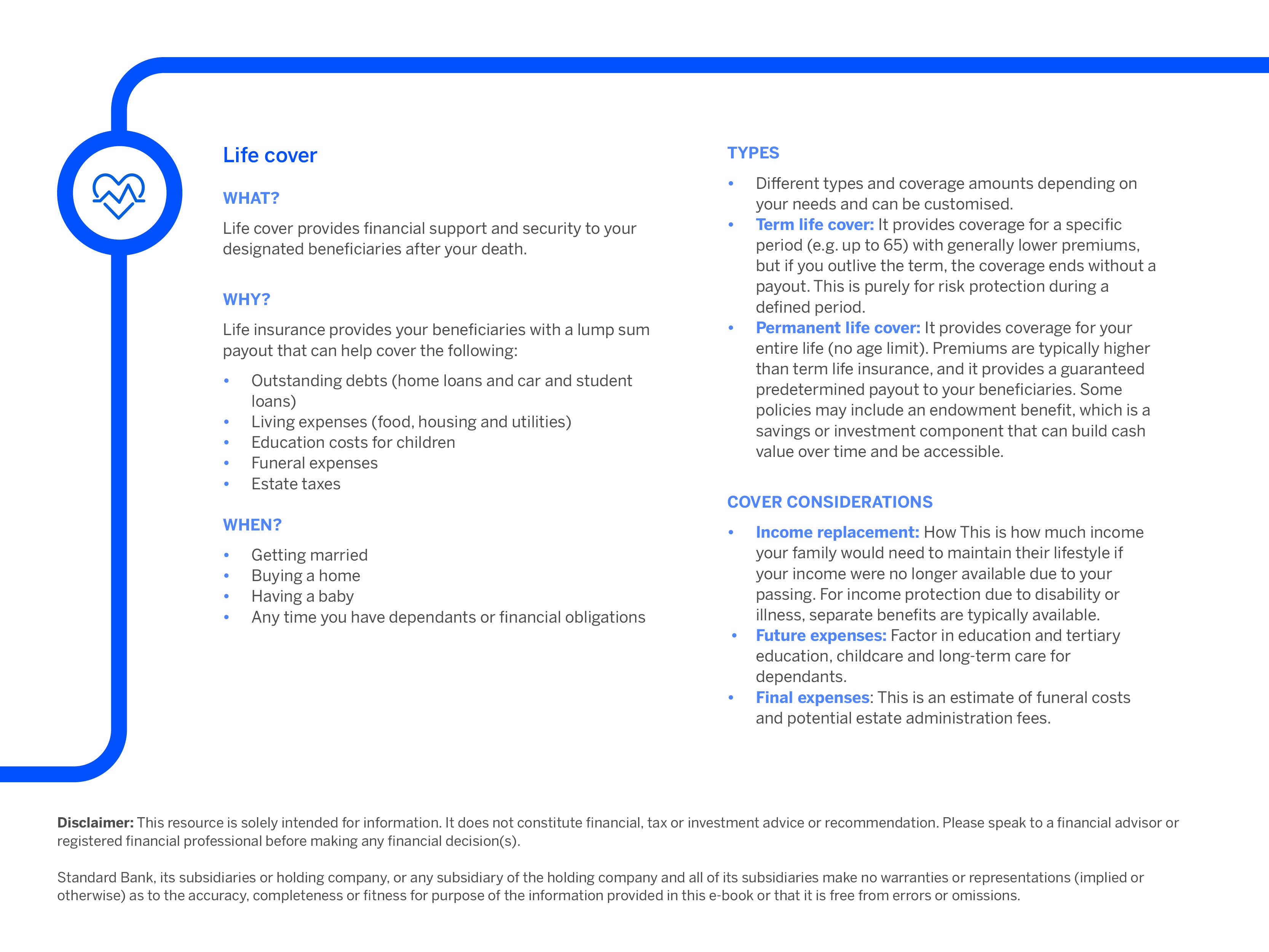
Basic life insurance is a foundational policy—frequently provided by employers as a group benefit or purchased individually—that pays out a predetermined cash sum upon the death of the insured. When configuring this coverage, naming beneficiaries ensures that death benefits are distributed according to your wishes without undergoing lengthy probate court proceedings.
To make informed decisions, policyholders must understand the administrative classifications that govern how life insurance proceeds are distributed.
Primary vs. Contingent Beneficiaries
Life insurance policies divide designations into two main categories:
- Primary Beneficiaries: These individuals or entities are first in line to receive the policy proceeds upon your death. You can name a single primary beneficiary or split the benefit among multiple primary beneficiaries by assigning specific percentage allocations that total 100%.
- Contingent (Secondary) Beneficiaries: These act as a legal backup. Contingent beneficiaries receive the policy payout only if all named primary beneficiaries have passed away, cannot be located, or legally disclaim (refuse) the proceeds.
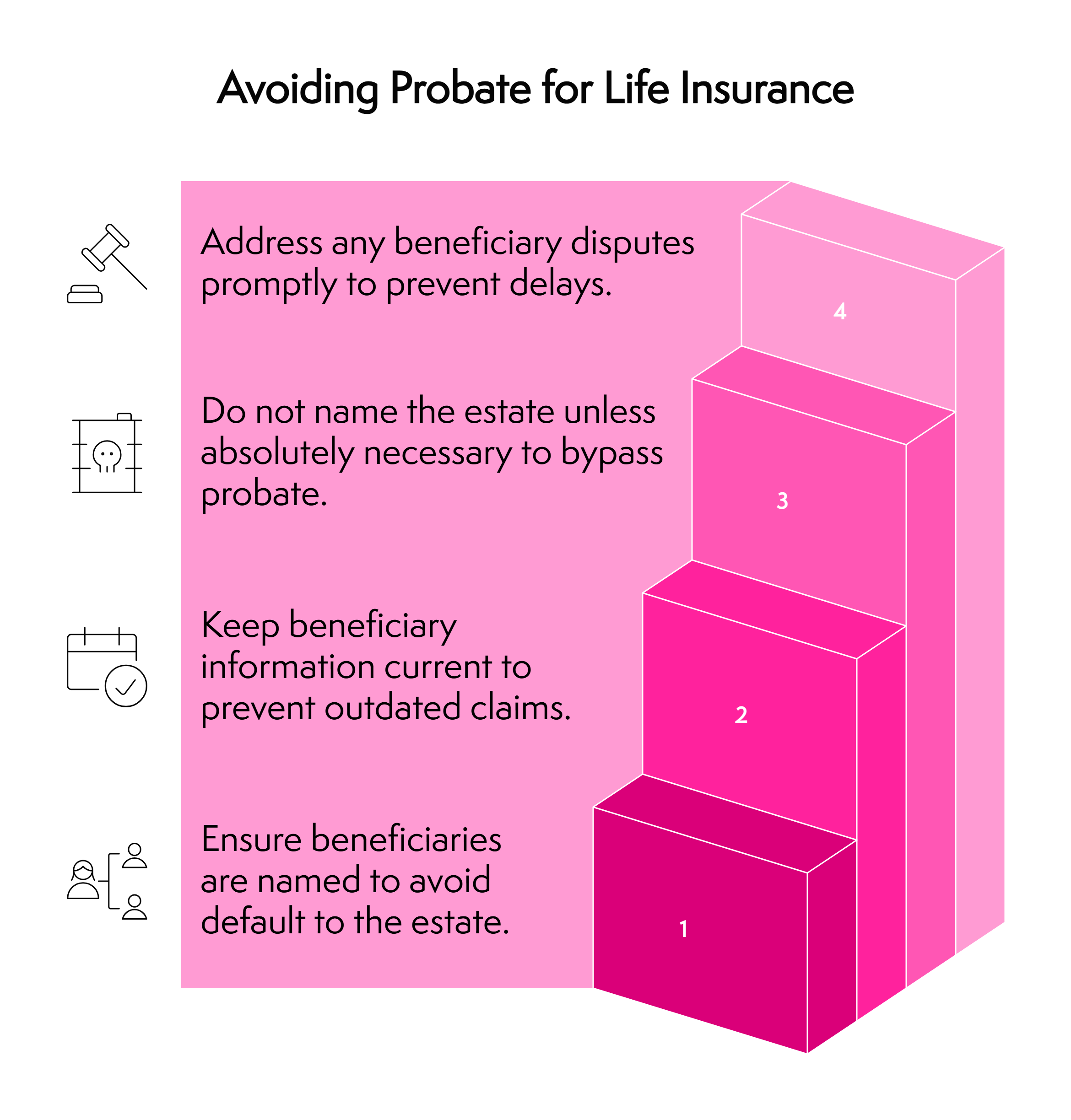
Failing to name a contingent beneficiary creates significant estate risks. If your primary beneficiary predeceases you and no contingent beneficiary is on file, the insurance company defaults to paying the death benefit directly to your estate, subjecting the payout to probate costs, creditor claims, and distribution delays.
Allocation Methods: Per Stirpes vs. Per Capita
When designating multiple beneficiaries (such as adult children), policies typically offer two legal frameworks for how money flows if one beneficiary dies before you:
- Per Capita (By Head): The deceased beneficiary's share is divided equally among the surviving named beneficiaries. For example, if you name three adult children as equal primary beneficiaries and one predeceases you, the payout is divided 50/50 between the remaining two.
- Per Stirpes (By Branch): The deceased beneficiary’s share automatically passes to their direct descendants (your grandchildren). Using the same example, the deceased child's 33.3% share would pass to their own children rather than going to your surviving adult children.
Sample Distribution Options (3 Children Named as Primary):
- Policyholder
- Child A (Deceased prior to policyholder)
- Grandchild A1 & Grandchild A2
- Child B (Alive)
- Child C (Alive)
- Child A (Deceased prior to policyholder)
Distribution Outcomes:
- Per Capita: Child B receives 50%, Child C receives 50% (Grandchildren receive 0%).
- Per Stirpes: Child B receives 33.3%, Child C receives 33.3%, Grandchildren share 33.3% (16.65% each).
Types of Entities You Can Name as Beneficiaries
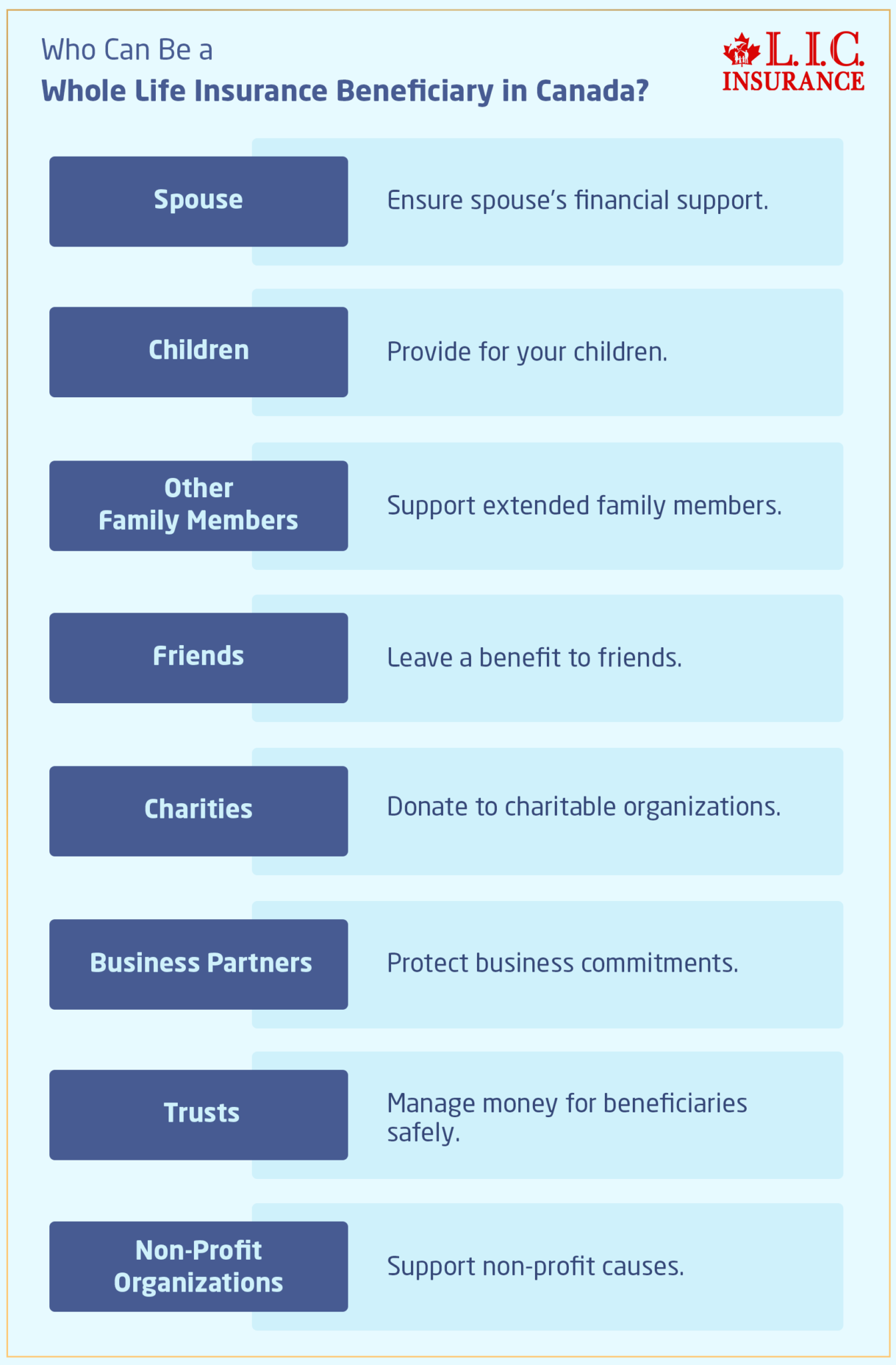
While spouses and immediate family members are the most common designations, policyholders can choose among several legal entities depending on their personal, financial, and estate planning objectives.
- Basic Life Insurance Policyholder
- Individuals (Family/Dependents)
- Legal Trusts (Revocable/Irrevocable)
- Insured Estate (Default/Not Ideal)
- Charities/Nonprofits (501(c)(3))
1. Individuals (Spouses, Partners, and Adult Family Members)
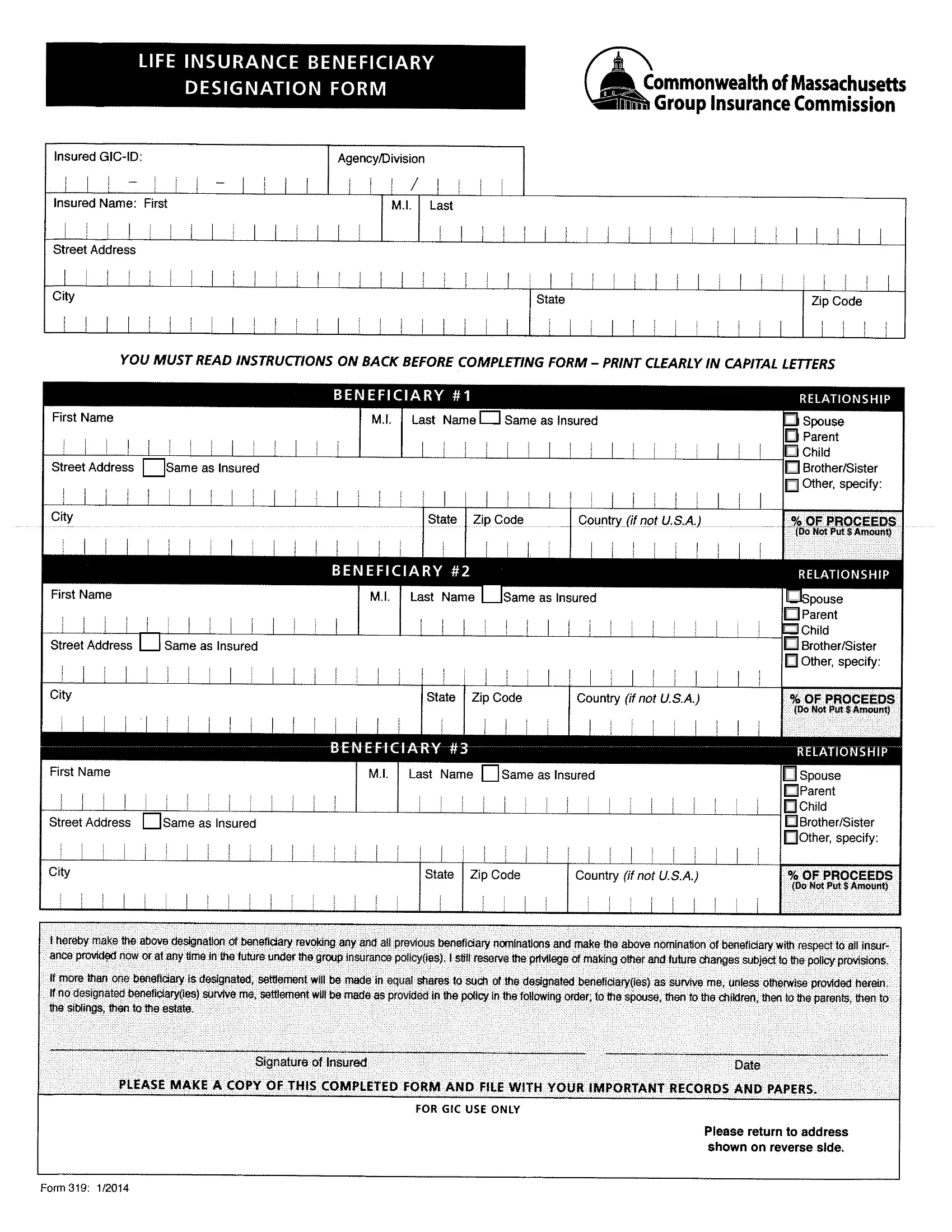
Naming an individual directly is the most straightforward option. When naming an individual, you must provide their full legal name, Social Security Number (SSN) or Taxpayer Identification Number (TIN), date of birth, and current residential address. This precise identification prevents delays caused by common names or family disputes.
2. Legal Trusts
Designating a revocable or irrevocable trust as your beneficiary is an effective strategy if you want control over how and when funds are distributed. Instead of handing a lump sum directly to an heir, the insurance payout goes into the trust, managed by your designated trustee according to the trust agreement (for example, releasing funds gradually for higher education or at specific age milestones).
3. Your Estate
Policyholders can name "The Estate of the Insured" as the beneficiary. However, estate planning professionals generally advise against this step. Directing insurance funds into an estate subjects the payout to the public probate process, makes the capital accessible to outstanding creditor debts, and delays financial support for dependents.
4. Charitable Organizations
You can designate a registered nonprofit or charitable institution as a primary or contingent beneficiary. When selecting a charitable entity, you must provide its official registered name, address, and Employer Identification Number (EIN) to ensure the funds reach the intended organization.
Legal and Financial Rules Impacting Beneficiary Selection
Choosing a beneficiary for basic life insurance involves navigating specific statutory, regulatory, and tax guidelines. Ignoring these legal protections can invalidate designations or lead to unintended legal disputes.
Community Property Laws
In community property states—including Arizona, California, Idaho, Louisiana, Nevada, New Mexico, Texas, Washington, and Wisconsin—assets acquired during marriage are generally considered joint property.
If your employer-sponsored basic life insurance premiums are paid with community funds (or provided as a benefit of marital employment), your spouse may possess a legal right to 50% of the policy proceeds. In these jurisdictions, if you name someone other than your spouse as the primary beneficiary for more than half the policy, the insurer may require your spouse to sign a written spousal waiver.
Federal ERISA Preemption for Employer Basic Life
Employer-provided basic group life insurance is often governed by the federal Employee Retirement Income Security Act of 1974 (ERISA). Under federal law, ERISA rules override state family laws or divorce decrees regarding life insurance designations.
If an employee divorces but fails to update their ERISA-governed basic life insurance form, federal courts generally require the insurer to pay the beneficiary named on the official form, regardless of state statutes that automatically revoke ex-spouse designations upon divorce.
The Problem with Naming Minor Children Directly
Insurance carriers cannot pay life insurance proceeds directly to minors under the age of 18 (or 21, depending on state jurisdiction). If a minor is named as a primary beneficiary without legal safeguards in place, the court system must intervene to appoint a financial guardian before any funds are released. This court oversight incurs legal fees and limits access to money needed for immediate living expenses.
To pass benefits to minor dependents safely, policyholders typically use two main approaches:
- Uniform Transfers to Minors Act (UTMA) / Uniform Gifts to Minors Act (UGMA): You name an adult custodian to manage the funds on behalf of the minor until they reach the age of majority (usually 18 to 25, depending on state law). Form syntax usually reads: "[Adult Custodian Name] as custodian for [Minor Name] under the [State] UTMA."
- Creation of a Minor's Trust: You create a trust structured for the benefit of the minor children and name the trust itself as the policy beneficiary.
Step-by-Step Guide to Setting Up Your Beneficiaries
Executing a clear, legally compliant beneficiary designation requires a deliberate process.
- Step 1: Audit Policy Terms & Governing Rules (ERISA, State Law)
- Step 2: Gather Complete Identifiers (Full Legal Name, SSN, DOB, Address)
- Step 3: Define Allocations & Select Structure (Per Stirpes vs. Per Capita)
- Step 4: Execute & Submit Form via HR Portal or Insurer Form
- Step 5: Store Confirmation Records & Review Annually or After Life Events
Step 1: Audit Your Current Coverage
Review your basic life insurance policy details through your HR portal or insurance document packet. Note the total coverage amount (e.g., $50,000 flat benefit or 1x annual salary) and check whether the policy permits primary and contingent split percentages.
Step 2: Gather Required Identification Data
Collect complete and accurate information for every individual or entity you plan to list:
- Full legal first, middle, and last name (avoid nicknames).
- Social Security Number or Tax Identification Number.
- Date of birth.
- Current street address and phone number.
- Exact relationship to the insured.
Step 3: Select Percentage Allocations
Decide how the benefit will be distributed among primary and contingent tiers. Ensure that percentage allocations within each tier sum to exactly 100%. Avoid using vague dollar amounts (e.g., "$10,000 to Person A"), as salary adjustments or partial benefit payouts can render fixed-dollar instructions ambiguous.
Step 4: Complete and Submit the Formal Form
Submit your designation using your employer’s official benefit administration portal or the insurance carrier’s physical Beneficiary Designation Form. If paper forms are required, sign and date them clearly. If you live in a community property state and are naming a non-spouse, ensure the spousal consent section is completed and notarized if required.
Step 5: Retain Confirmation Records
Keep a copy of the submitted confirmation form alongside your financial and estate planning papers. Notify your named primary and contingent beneficiaries (or trust executors) about the existence of the basic life policy and where documents are stored.
Beneficiary Designation Options Compared
The table below outlines common beneficiary choices, their structural features, and key considerations:
| Beneficiary Type | Direct Payout Speed | Probate Avoidance | Protection for Minors | Key Considerations & Risks |
|---|---|---|---|---|
| Spouse / Adult Individual | Fast (Typically 2–4 weeks) | Yes | N/A | Subject to community property laws; requires updating after major life changes like divorce. |
| Revocable / Irrevocable Trust | Fast (Paid directly to Trust) | Yes | High | Requires legal setup costs to establish the trust agreement before naming it on the policy. |
| UTMA / UGMA Custodian | Moderate | Yes | High | Custodian controls funds until the child reaches state age of majority; balance releases automatically at age limit. |
| Estate of the Insured | Slow (Months to over a year) | No | Low | Subjects funds to probate court fees, public record exposure, and creditor claims. |
| Charitable Organization | Fast | Yes | N/A | Requires exact 501(c)(3) legal name and EIN; yields potential tax advantages for the overall estate. |
Common Mistakes to Avoid
- Failing to Name a Contingent Beneficiary: If your primary beneficiary passes away before you and no contingent is listed, the policy defaults to your estate, triggering probate delays.
- Naming Minor Children Directly: Insurance companies will withhold funds until a court appoints a legal guardian or the child reaches legal adulthood, causing financial gridlock.
- Using Unclear Descriptions: Phrases like "my children" or "my current spouse" create ambiguity. Always list full legal names, dates of birth, and Social Security numbers.
- Neglecting Policy Updates After Major Life Events: Divorce, remarriage, births, or deaths require immediate reviews of beneficiary forms. Under ERISA rules for group life, outdated designations generally remain legally binding regardless of changes in personal circumstances.
- Forgetting Revocable vs. Irrevocable Status: Most basic life insurance designations are revocable, meaning you can change them at any time. If you mark a beneficiary as irrevocable, you cannot change or remove them without that individual's written consent.
Frequently Asked Questions
What is the difference between a primary and contingent beneficiary?
A primary beneficiary is first in line to receive your life insurance death benefit upon your passing. A contingent beneficiary serves as a secondary backup and receives the payout only if all named primary beneficiaries have died, cannot be located, or legally disclaim the money.
Can I name my minor child as a direct beneficiary on my basic life insurance?
While legally permitted on forms, naming a minor directly prevents the insurer from releasing funds upon your death. The payout will be held until a probate court appoints a legal guardian or the child reaches the state age of majority. To avoid this, name an adult custodian under the Uniform Transfers to Minors Act (UTMA) or list a legal trust created for the child's benefit.
How do community property laws affect my life insurance beneficiary choices?
In community property states, earnings and assets acquired during marriage are considered joint property. If basic life insurance premiums are paid with marital earnings or provided through marital employment, your spouse may have a legal claim to 50% of the benefit. Naming a non-spouse as primary beneficiary for more than 50% typically requires signed, written consent from your spouse.
Does a will override a life insurance beneficiary designation?
No. Life insurance beneficiary designations are non-probate contractual arrangements that take legal precedence over instructions written in a will. If your will leaves all assets to your sibling, but your life insurance form lists your ex-spouse, the insurance company is legally obligated to pay the ex-spouse named on the policy form.
How often should I review and update my basic life insurance beneficiaries?
You should review your beneficiary designations at least once a year and immediately following major life events. Key triggering events include marriage, divorce, the birth or adoption of a child, the death of a named beneficiary, or significant changes in state tax and estate laws.
Practical Next Steps
To keep your basic life insurance policy aligned with your estate planning goals:
- Log into your employee benefits system or contact your HR benefits administrator to request a copy of your current beneficiary designation form on file.
- Verify that every primary and contingent entry contains complete details, including full legal names, correct Social Security numbers, dates of birth, and total allocations adding up to 100%.
- Consult an estate attorney or tax specialist if you live in a community property state, want to set up trust protections for minor children, or have complex family dynamics.
- Set an annual calendar reminder to review your designations alongside your broader financial strategy.
Image Gallery