The History and Current Role of the Kings of Tonga
The King of Tonga serves as the sovereign head of state of the only remaining indigenous monarchy in the South Pacific. While the monarchy transitioned from an absolute to a constitutional system following the landmark 2010 reforms, th...
The King of Tonga serves as the sovereign head of state of the only remaining indigenous monarchy in the South Pacific. While the monarchy transitioned from an absolute to a constitutional system following the landmark 2010 reforms, the King remains a central figure in Tongan governance, land administration, and cultural identity, exercising significant executive prerogatives.
Contents
The Ancient Roots of Tongan Sovereignty
The history of the Tongan monarchy is among the longest-running lineages in human history, stretching back over a millennium. Long before European contact, Tonga was the center of a vast maritime empire, known as the Tuʻi Tonga Empire. Established around 950 AD by ‘Aho’eitu, the first Tuʻi Tonga, the dynasty’s influence reached as far as Fiji, Samoa, and parts of the Solomon Islands.
In this ancient period, the King was considered a semi-divine figure, a descendant of the god Tangaloa. This "sacred" status meant the King held absolute authority over life, death, and land. However, as the empire expanded, the burden of administration led to the creation of secondary and tertiary royal lines. By the 15th century, the Tuʻi Haʻatakalaua line was established to handle day-to-day governance, allowing the Tuʻi Tonga to focus on religious and ceremonial duties. Later, the Tuʻi Kanokupolu line emerged in the 17th century, eventually becoming the dominant political force that would unify the modern kingdom.
This tripartite system of authority—sacred, administrative, and political—created a complex social hierarchy that still influences Tongan society in 2026. The modern House of Tupou descends directly from the Tuʻi Kanokupolu line, representing a synthesis of ancient tradition and modern statecraft.
The Foundation of the Modern Kingdom (1845–1893)
The Tonga we recognize today began with Tāufaʻāhau, who ascended to the title of Tuʻi Kanokupolu in 1845 and took the name King George Tupou I. His reign was transformative, marked by three critical shifts: unification, Christianization, and the codification of law.
George Tupou I recognized that for Tonga to remain independent during the era of Western colonization, it needed a centralized government and a formal legal structure. With the assistance of Methodist missionaries, he unified the islands and promulgated the Constitution of 1875. This document was revolutionary; it declared Tonga a constitutional monarchy, granted civil liberties to the people, and established a parliament. Crucially, it also formalized the system of noble titles, linking the monarchy to a permanent landed aristocracy.
Unlike its neighbors, Tonga was never fully colonized. Through the shrewd diplomacy of George Tupou I, the kingdom became a British Protected State in 1900 rather than a colony, allowing the Tongan monarchy to retain its internal sovereignty and cultural continuity throughout the 20th century.
The 20th Century: Stability and International Presence
The middle of the 20th century was dominated by the reign of Queen Salote Tupou III (1918–1965). As the first female monarch of the Tupou dynasty, she became a beloved global figure, famously capturing the hearts of the international public during the 1953 coronation of Queen Elizabeth II in London. Queen Salote’s reign was characterized by a focus on education, healthcare, and the preservation of Tongan "anga fakatonga" (the Tongan way of life).
She was succeeded by her son, King Tāufaʻāhau Tupou IV, who reigned from 1965 to 2006. His era was defined by modernization and the pursuit of economic diversification. He oversaw Tonga’s full independence from British protected status in 1970 and led the nation into the United Nations. However, his later years also saw the rise of a pro-democracy movement, as a more educated populace began to question the absolute power held by the monarch and the nobility.
The 2010 Constitutional Reform: A Shift in Power
The most significant change in the "current role" of the King occurred during the reign of King George Tupou V (2006–2012). Recognizing that the political landscape was shifting, the King voluntarily initiated a process of democratization.
Prior to 2010, the King appointed the Prime Minister and the entire Cabinet, and the Legislative Assembly was dominated by hereditary nobles. Under the 2010 reforms:
- The majority of the Legislative Assembly seats (17 out of 26) became popularly elected by the people.
- The King’s role in appointing the Prime Minister became ceremonial; the Prime Minister is now elected by the members of Parliament.
- The King transferred most of his daily executive powers to the Cabinet.
Despite these changes, the Tongan monarchy is not a "figurehead" role in the European sense. The King retains the power of Royal Assent (the power to veto legislation), the power to dissolve Parliament, and he remains the Commander-in-Chief of His Majesty’s Armed Forces.
The Role of the King in 2026
As of 2026, King Tupou VI, who ascended the throne in 2012, continues to navigate the delicate balance between ancient tradition and modern democratic governance. His role is defined by several key pillars:
1. Constitutional Guardian and Final Arbiter
The King serves as a check on the legislative branch. While he rarely exercises his veto, the threat of withholding Royal Assent ensures that the government maintains a degree of consensus with the traditional leadership and the noble estates. In 2026, this role is seen as a stabilizing force in Tongan politics, preventing radical shifts that might disrupt social harmony.
2. Land and the Nobility
In Tonga, all land technically belongs to the Crown. The King allocates land to hereditary nobles (nopele), who in turn provide allotments to the commoners. This system makes the King the ultimate steward of the nation’s primary resource. Even in 2026, the King’s authority over noble titles and land remains nearly absolute, a function that operates outside the standard democratic parliamentary process.
3. Diplomatic and Cultural Symbol
The King is the face of Tonga on the international stage. In the Pacific region, where traditional leadership is highly respected, the King of Tonga holds a unique status among heads of state. Domestically, he is the "hau" (the supreme leader), and his presence at national ceremonies—such as the annual Heilala Festival or the opening of Parliament—is essential for the validation of Tongan cultural identity.
4. The Privy Council
The King presides over the Privy Council, a body separate from the Cabinet. The Privy Council advises the King on the exercise of his constitutional powers and acts as a court of appeal for matters related to noble titles and land disputes. This ensures the King has an independent source of counsel outside the political fray of the Legislative Assembly.
Summary of the Tupou Dynasty
The following table outlines the monarchs of the current House of Tupou and their primary contributions to the evolution of the Tongan state.
| Monarch | Reign Period | Key Historical Significance |
|---|---|---|
| George Tupou I | 1845–1893 | Unified Tonga; created the 1875 Constitution; abolished serfdom. |
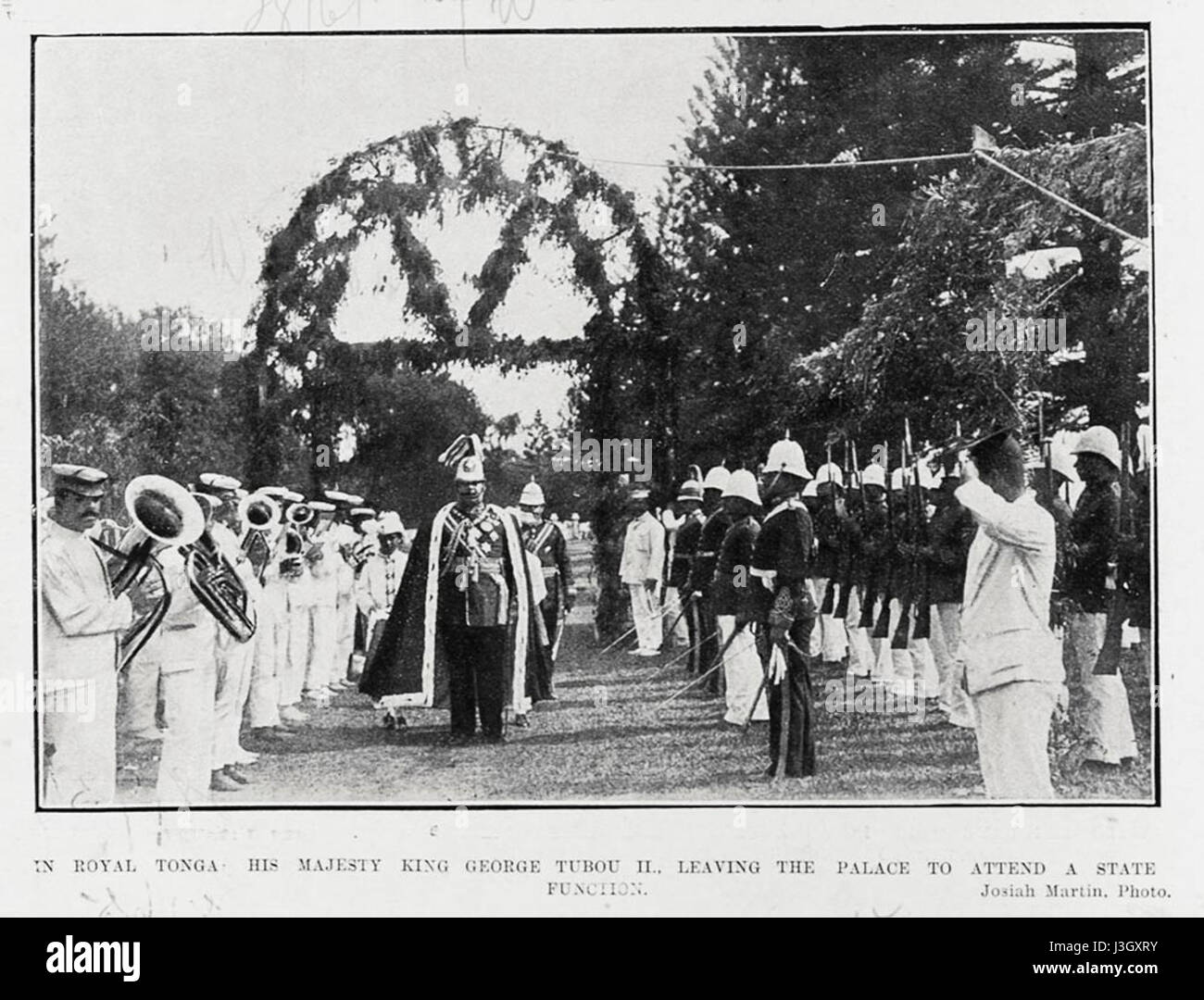
| George Tupou II | 1893–1918 | Navigated the protectorate treaty with Britain; preserved internal autonomy. |
| Salote Tupou III | 1918–1965 | Iconic cultural leader; promoted education and Tongan heritage globally. |
| Tāufaʻāhau Tupou IV | 1965–2006 | Achieved full independence (1970); modernized infrastructure and telecommunications. |
| George Tupou V | 2006–2012 | Architect of democracy; voluntarily surrendered absolute executive power. |
| Tupou VI | 2012–Present | Maintains constitutional stability and navigates post-reform political landscape. |
Frequently Asked Questions
Does the King of Tonga have absolute power today?
No. Since the 2010 constitutional reforms, Tonga has functioned as a constitutional monarchy. While the King retains significant influence, particularly regarding the military, land, and the nobility, the day-to-day administration of the country is handled by a Prime Minister and Cabinet who are accountable to an elected Parliament.
How is the King of Tonga different from the British Monarch?
The King of Tonga holds more active power than the British monarch. For instance, the King of Tonga can dissolve Parliament under his own prerogative and has a direct role in land administration. Additionally, the Tongan King presides over a Privy Council that has actual legal and judicial functions regarding traditional matters, whereas the UK's Privy Council is largely formal.
Can the King of Tonga veto laws?
Yes. Under the Constitution, the King must grant Royal Assent for a bill to become law. While this power is used sparingly to avoid constitutional crises, it remains a potent tool of the monarchy to ensure that legislation does not infringe upon the traditional rights of the Crown or the nobility.
Who inherits the Tongan throne?
Succession is governed by the principle of male-preference primogeniture among the legitimate descendants of King George Tupou I. If there are no male heirs in a direct line, the throne can pass to a female heir. The line of succession is strictly defined in the Constitution to prevent disputes.
What is the King's role in the Tongan military?
The King is the Commander-in-Chief of His Majesty’s Armed Forces (HMAF). This is not merely a ceremonial title; the military swears an oath of allegiance directly to the King, and he maintains a close relationship with the defense leadership, emphasizing the monarchy's role in national security.
Practical Guidance for Navigating Tongan Protocol
For those interacting with the Tongan government or visiting the kingdom in 2026, it is essential to respect the "fakaʻapaʻapa" (respect) shown to the monarchy. When the King is present, specific protocols regarding dress (wearing the ta’ovala or waist mat) and speech are strictly observed.
If you are researching Tongan law or land titles, always consult the official Parliament of Tonga website or the Ministry of Lands and Natural Resources. These entities provide the most accurate data regarding the King’s current legal decrees and the status of noble estates. Understanding the duality of Tonga—where democratic legislation meets royal prerogative—is the key to successfully operating within the kingdom's unique social and legal framework.
Image Gallery