The Biggest New Year’s Eve Celebrations in the World: Global Scale and Key Features
The largest New Year’s Eve celebration in the world by physical attendance is consistently held in Rio de Janeiro, Brazil, where approximately 2.5 to 3 million people gather on Copacabana Beach. While Rio holds the record for crowd siz...
The largest New Year’s Eve celebration in the world by physical attendance is consistently held in Rio de Janeiro, Brazil, where approximately 2.5 to 3 million people gather on Copacabana Beach. While Rio holds the record for crowd size, New York City’s Times Square dominates global broadcast viewership, and Sydney, Australia, is renowned for the world’s most technologically advanced pyrotechnic display.
Contents
Defining the "Biggest" Celebration: Attendance vs. Global Influence
When analyzing the global scale of New Year’s Eve (NYE) events, "biggest" can be measured through three distinct metrics: physical attendance, broadcast reach, and pyrotechnic complexity. As of 2026, the landscape of these celebrations has shifted toward high-tech integration, including augmented reality (AR) broadcasts and sustainable "green" pyrotechnics, but the core destinations remain consistent due to their historical prestige and geographical advantages.
The global scale of these events is not merely a matter of festive gathering; it is a massive logistical undertaking involving municipal governments, international sponsors, and emergency services. For a city to host a "world-class" celebration, it must manage infrastructure capable of supporting millions of transient visitors while simultaneously producing a televised spectacle that competes for the attention of billions of viewers worldwide.
Rio de Janeiro, Brazil: The World’s Largest Beach Party
Rio de Janeiro’s "Réveillon" at Copacabana Beach remains the undisputed leader in terms of sheer human density. The celebration spans a four-kilometer stretch of sand, drawing millions of locals and tourists alike.
Cultural Traditions and Key Features
The scale of Rio’s celebration is deeply intertwined with local Afro-Brazilian traditions. One of the most significant features is the sea of white clothing; participants wear white to symbolize peace and renewal for the coming year. As midnight approaches, many revelers partake in the tradition of jumping over seven waves in the Atlantic Ocean, making a wish with each leap.
The musical programming in Rio is equally massive. Multiple stages are erected along the beach, featuring top-tier international artists and legendary samba schools. In 2026, the city has further expanded its "integrated security perimeter," utilizing facial recognition and drone surveillance to manage the record-breaking crowds that flock to the Leme and Copacabana shores.
Logistical Scale and Pyrotechnics
The fireworks in Rio are launched from approximately 10 to 12 barges anchored in the ocean. This setup allows for a panoramic display that is visible from almost any point along the crescent-shaped beach. The 2026 display is expected to last 12 to 15 minutes, utilizing roughly 25 tons of explosives. Because the event is free and takes place in a public space, it presents unique challenges in crowd flow and waste management, often requiring a "clean-up army" of thousands of workers to restore the beach by sunrise on January 1st.
New York City, USA: The Iconic Times Square Ball Drop
While it may not match Rio in physical numbers—limited by the narrow geography of Manhattan’s streets—New York City’s celebration is the most influential in terms of global media saturation. Since 1907, the "Ball Drop" has served as the definitive symbol of the New Year for the Western hemisphere.
The Technology of the Ball
As of 2026, the Times Square Ball is a marvel of lighting engineering. It is a geodesic sphere, 12 feet in diameter, covered in 2,688 Waterford Crystal triangles. The internal lighting consists of over 32,000 LEDs (Light Emitting Diodes) capable of displaying more than 16 million vibrant colors and billions of patterns. This creates a "kaleidoscope" effect that is synchronized with the final 60-second countdown.
Broadcast and Digital Reach
The primary "scale" of NYC’s celebration is digital. Estimates suggest that upwards of 1 billion people tune in to the various broadcasts emanating from One Times Square. In 2026, the event has integrated immersive 360-degree VR streams, allowing viewers at home to experience the "pens"—the barricaded sections where attendees wait for up to 12 hours—without the physical discomfort of the winter weather or the lack of facilities.
Sydney, Australia: The Global Timekeeper
Sydney holds a prestigious position as the first major global city to ring in the New Year among the world’s financial hubs. The celebration centered around the Sydney Harbour Bridge and the Sydney Opera House is often cited as the gold standard for pyrotechnic artistry.
The "Pyromusical" Masterpiece
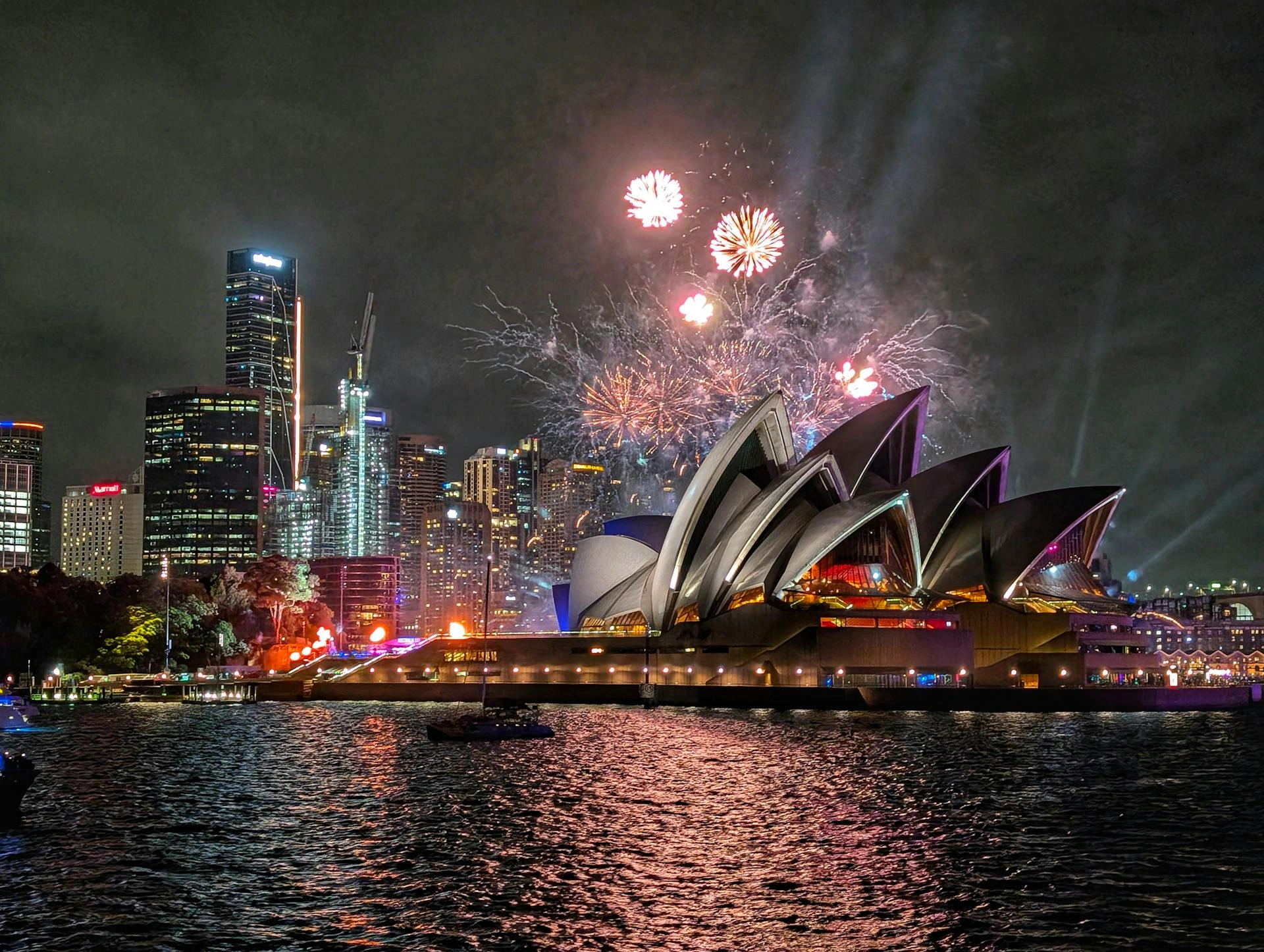
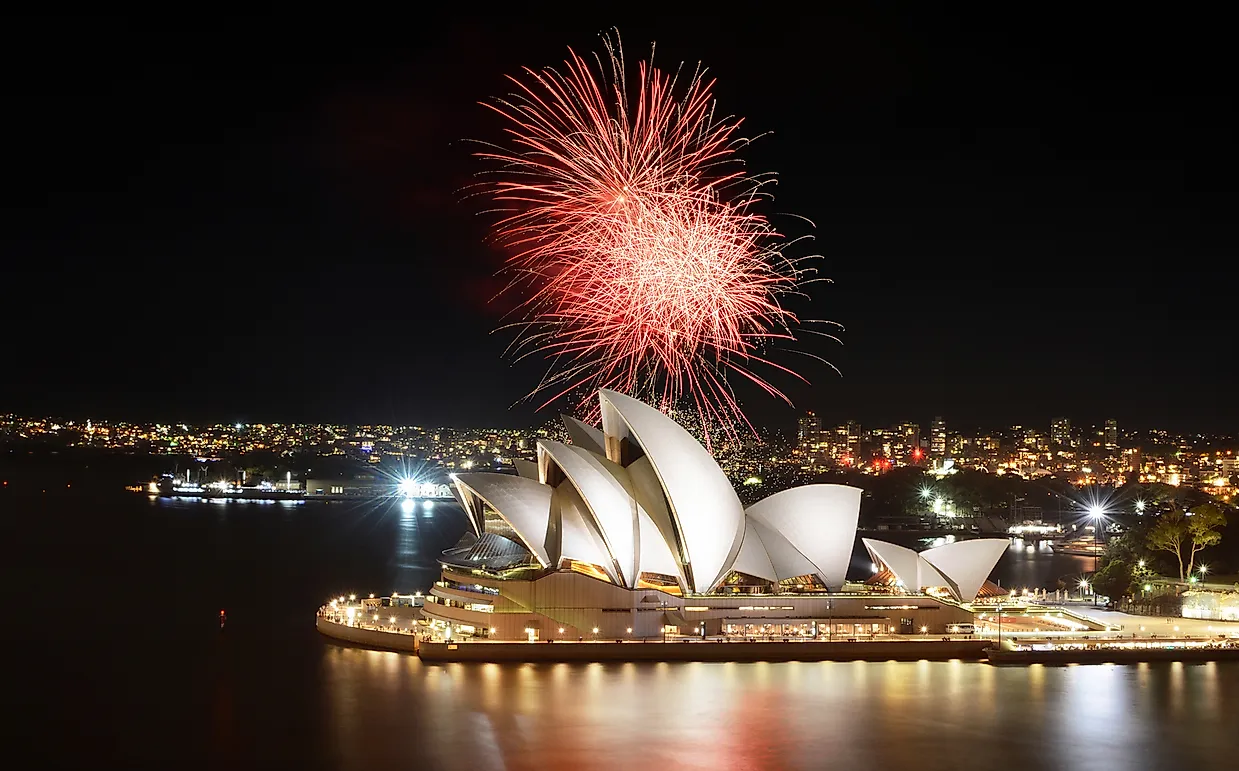
Sydney’s celebration is famous for its "Pyromusical," where the fireworks are synchronized to a millisecond with a custom-produced soundtrack. The display utilizes the Harbour Bridge as a massive "launching pad," featuring a "bridge effect" where pyrotechnics are fired from the structure to create symbols, words, or complex geometric shapes.
In 2026, Sydney has led the transition toward "low-smoke" and "carbon-neutral" fireworks. The city uses specialized computer software to coordinate firing sequences across multiple locations—including the harbor barges, the bridge, and several city rooftops—to create a unified 12-minute spectacle.
The Two-Tiered Event Structure
To accommodate the massive influx of people, Sydney operates a unique two-tiered system:
- The 9 PM Family Fireworks: A shorter, 8-minute display designed for families with young children who cannot stay up until midnight.
- The Midnight Fireworks: The main 12-minute event that serves as the global broadcast centerpiece.
Dubai, UAE: The Pinnacle of Modern Excess
Dubai’s celebration at the Burj Khalifa represents the "biggest" in terms of vertical scale and luxury. As the world’s tallest building, the Burj Khalifa serves as a literal focal point for a display that combines fireworks, LED mapping, and laser light shows.
Key Features of the Downtown Dubai Celebration
The 2026 Dubai celebration is characterized by its "multi-sensory" approach. The entire facade of the Burj Khalifa is transformed into the world's largest LED screen, displaying high-definition graphics that interact with the fireworks being launched from the building's various tiers.
- The Dubai Fountain: The world’s largest choreographed fountain system works in tandem with the pyrotechnics, shooting water up to 500 feet in the air.
- Logistics: The Emaar NYE celebration utilizes a sophisticated transit plan, closing major arteries like Sheikh Zayed Road and deploying a fleet of thousands of buses and taxis to transport the nearly 1 million visitors who congregate in the Downtown district.
Comparison of Global New Year’s Eve Celebrations
The following table compares the key metrics of the world's premier NYE events based on 2026 projections and historical capacity.
| City | Primary Location | Estimated Attendance | Key Feature | Primary Challenge |
|---|---|---|---|---|
| Rio de Janeiro | Copacabana Beach | 2.5 - 3 Million | White-clad beach party & Ocean traditions | Crowd safety and waste management |
| New York City | Times Square | 1 Million (In-person) | The Waterford Crystal Ball Drop | Extreme weather and security screening |
| Sydney | Sydney Harbour | 1.1 Million | Bridge-mounted "Pyromusical" | High demand for ticketed viewing areas |
| Dubai | Burj Khalifa | 1 Million | LED facade mapping & Vertical fireworks | Traffic congestion in the Downtown core |
| London | South Bank (Thames) | 100,000 (Ticketed) | Big Ben chimes & London Eye display | Strict ticketing and restricted access |
| Paris | Champs-Élysées | 1.5 Million | Arc de Triomphe projection mapping | Massive security perimeter requirements |
Technical Advancements in 2026 Celebrations
As we move through 2026, the "biggest" celebrations are no longer just about gunpowder and lights. Several technical shifts have redefined the scale of these events:
- Drone Swarms: In cities like London and Seoul, drone swarms are now used to complement fireworks. These drones can create 3D animations in the sky, such as ticking clocks or animals, which are impossible to achieve with traditional pyrotechnics.
- 5G-Enabled Crowdsourcing: Major events now use 5G networks to allow attendees to participate in the show. In some cities, attendees can sync their smartphone lights to the main stage, turning a crowd of a million people into a massive, shimmering pixelscreen.
- Sustainability Mandates: With global climate targets in focus for 2026, major cities have pivoted to "clean" fireworks that eliminate heavy metals and reduce perchlorate runoff, ensuring that the "biggest" celebrations are also more environmentally responsible.
Practical Considerations for Attending a Global NYE Event
Participating in a world-scale celebration requires significantly more planning than a standard holiday outing.
- Arrival Times: For non-ticketed events like Times Square, attendees often arrive by 10 AM on December 31st to secure a viewing spot. In Rio, beach spots are claimed by early afternoon.
- Security Protocols: Expect airport-style security. Prohibited items often include backpacks, umbrellas, alcohol, and large cameras.
- Facilities: In New York, once you enter a viewing "pen," if you leave (even for the bathroom), you cannot return to your spot. This is a critical factor for many first-time visitors to consider.
- Costs: While many of these events are "free" to watch from public spaces, prime viewing spots (hotels, restaurants with views, or ticketed bleachers) can cost anywhere from $500 to over $5,000 per person in 2026.
FAQ
Which city has the highest televised viewership for New Year's Eve?
New York City's Times Square consistently holds the highest televised viewership. Due to its location in the Eastern Time Zone and the historical prestige of the "Ball Drop," it serves as the primary broadcast feed for networks across the Americas and is a major news highlight for the rest of the world, reaching an estimated 1 billion people annually.
Is the Rio de Janeiro celebration free to attend?
Yes, the celebration on Copacabana Beach is a free public event. However, the city sells tickets for organized "party zones" and many hotels along the beach host private, high-cost events. For the general public, the beach is open, but arriving early is essential to secure a place on the sand.
Why is Sydney’s firework display considered the best in the world?
Sydney’s display is often cited as the best due to its unique "Pyromusical" synchronization and the use of the Sydney Harbour Bridge as a structural launchpad. The city invests heavily in pyrotechnic innovation, often debuting new firework shapes and colors that have never been seen before.
How do cities manage security for 3 million people?
Cities like Rio and Paris use a "tiered security" approach. This involves concentric circles of checkpoints, facial recognition technology, and a massive police presence. In 2026, many cities also utilize AI-driven crowd density sensors to identify potential "crush" points before they become dangerous, allowing authorities to redirect foot traffic in real-time.
What is the most environmentally friendly major NYE celebration?
As of 2026, London and Sydney are frequently cited as the most eco-conscious. London has integrated significant drone segments to reduce chemical smoke, and Sydney utilizes a 100% carbon-offset program for its fireworks, including the use of biodegradable materials and "green" energy for all event lighting.
Recommendation for Travelers
If you are planning to attend one of these global celebrations, prioritize logistics over location. The "biggest" celebration is only enjoyable if you have a plan for transportation and facilities. For those seeking the largest crowd energy, Rio de Janeiro is unparalleled. For those who want to see the pinnacle of broadcast tradition, New York City is the choice, provided you are prepared for the physical endurance required. For the best visual spectacle with the least amount of physical discomfort, Dubai’s Burj Khalifa offers the most structured (albeit expensive) viewing experience.
Image Gallery