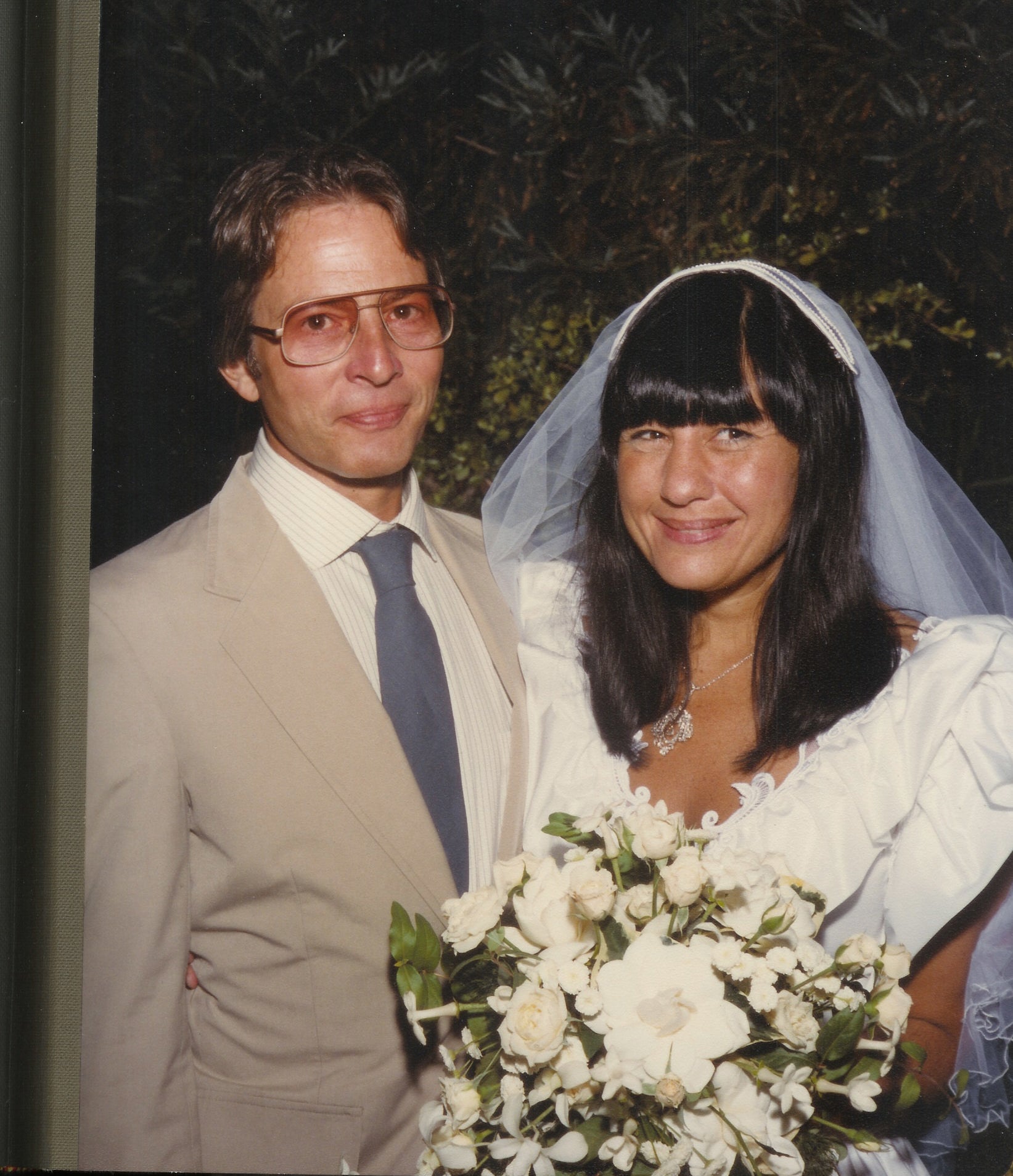
The Murder of Susan Berman by Robert Durst: A Complete Case History
Robert Durst, the heir to a New York real estate fortune, was convicted in 2021 for the first-degree murder of his close friend, Susan Berman. Durst executed Berman in December 2000 to prevent her from speaking to Los Angeles investiga...
Robert Durst, the heir to a New York real estate fortune, was convicted in 2021 for the first-degree murder of his close friend, Susan Berman. Durst executed Berman in December 2000 to prevent her from speaking to Los Angeles investigators regarding the 1982 disappearance of his first wife, Kathleen "Kathie" McCormack Durst.
Contents
The legal saga involving Susan Berman and Robert Durst is one of the most complex and high-profile criminal cases in American history. Spanning four decades and multiple states, the narrative involves immense wealth, mysterious disappearances, a bizarre dismemberment case in Texas, and a cinematic confession that eventually led to a life sentence. As of 2026, the case remains a landmark study in how forensic linguistics, documentary filmmaking, and persistent cold-case investigations can eventually overcome the advantages of power and privilege.
The Longstanding Friendship Between Susan Berman and Robert Durst
The relationship between Susan Berman and Robert Durst began at the University of California, Los Angeles (UCLA) in the late 1960s. Both came from backgrounds of significant wealth and tragedy. Durst was the eldest son of Seymour Durst, the patriarch of the Durst Organization, which controlled a massive portion of the Manhattan skyline. Berman was the daughter of David "Davie" Berman, a well-known figure in the Jewish Mob and a business associate of Bugsy Siegel in Las Vegas.
Their shared status as "lost children" of prominent families created a deep, platonic bond. Susan Berman was a talented writer and journalist who chronicled her life as a "mob princess" in her memoirs. Robert Durst, often described as socially awkward and eccentric, found in Berman a loyal confidante who did not judge his idiosyncrasies. For decades, Berman acted as Durst’s unofficial spokesperson and protector, particularly when the media or law enforcement took an interest in his private life.
This loyalty, however, became a liability. By the late 1990s, Berman was facing significant financial difficulties. Despite her pedigree, she was struggling to maintain her lifestyle in Los Angeles. Durst reportedly sent her two checks for $25,000 each shortly before her death. Prosecutors later argued that this money was not merely a gift between friends, but a way to keep her quiet as authorities began to close in on the 1982 disappearance of Kathie Durst.
The Catalyst: The 1982 Disappearance of Kathie Durst
To understand why Susan Berman was killed, one must look back to January 31, 1982. On that night, Kathie Durst vanished after leaving a party in Connecticut. Robert Durst claimed he dropped her off at a train station so she could return to their Manhattan apartment. She was never seen again.
In the immediate aftermath of the disappearance, Susan Berman played a crucial role in supporting Robert Durst’s version of events. There is significant evidence to suggest that Berman placed a phone call to the Albert Einstein College of Medicine, where Kathie was a student, pretending to be Kathie to establish that she had returned to New York safely. This "decoy" call successfully derailed the early investigation, allowing the case to go cold for nearly twenty years.
By the fall of 2000, New York State Police and Westchester County District Attorney Jeanine Pirro had reopened the investigation into Kathie Durst’s disappearance. They began re-interviewing witnesses and focuses heavily on Susan Berman. Investigators believed that Berman held the key to the mystery. When Durst learned that the police were planning to interview Berman, he traveled to California.
The Execution of Susan Berman on Christmas Eve 2000
On December 24, 2000, Susan Berman was found dead in her small home in Benedict Canyon, Los Angeles. She had been killed by a single 9mm gunshot to the back of the head. There were no signs of a struggle or a forced entry, suggesting she had invited the killer into her home. Her body was discovered only after the Beverly Hills Police Department received an anonymous "cadaver note" in the mail.
The note contained Berman's address and the single word "CADAVER." Critically, the envelope was addressed to the "Beverley Hills Police," misspelling the city name as "Beverley" (with an extra 'e'). This misspelling would later become one of the most significant pieces of evidence in the history of the American legal system.
At the time, Robert Durst was not in New York; he had fled to Galveston, Texas, where he was living in a $300-a-month apartment disguised as a mute woman named "Dorothy Ciner." He was attempting to hide from the renewed Kathie Durst investigation. Despite his proximity and the obvious motive, he was not charged with Berman’s murder for another 15 years.
Forensic Linguistics and the "Cadaver Note"
The breakthrough in the Berman case did not come from a police laboratory, but from the production of an HBO documentary series titled The Jinx: The Life and Deaths of Robert Durst. During the production, Susan Berman’s stepson, Sareb Kaufman, discovered an old envelope sent by Durst to Berman in 1999.
The 1999 envelope contained the same block-letter handwriting and, most importantly, the same "Beverley" misspelling as the 11-year-old cadaver note. When confronted with this evidence during an interview with filmmaker Andrew Jarecki, Durst famously went to the bathroom while still wearing a live microphone. He was recorded whispering to himself: "There it is. You’re caught... What the hell did I do? Killed them all, of course."
| Key Evidence in the Susan Berman Case | Description | Significance |
|---|---|---|
| The Cadaver Note | Anonymous note sent to BHPD in Dec 2000. | Alerted police to the body; contained unique misspelling. |
| The 1999 Letter | Letter from Durst to Berman found in 2010. | Matched the handwriting and misspelling of the cadaver note. |
| Handwriting Analysis | Expert testimony during the 2021 trial. | Proved a "virtually certain" match between Durst and the note. |
| The "Jinx" Confession | Hot mic recording from HBO documentary. | Served as a de facto confession played for the jury. |
| The "Gift" Checks | Two $25,000 checks from Durst to Berman. | Established a financial link and potential "hush money" motive. |
The 2021 Trial: California v. Robert Durst
The trial of Robert Durst for the murder of Susan Berman was delayed significantly by the COVID-19 pandemic, finally resuming in 2021. The prosecution, led by Deputy District Attorney John Lewin, presented a "witness killing" theory. They argued that Berman was a witness to the cover-up of Kathie Durst’s murder and was killed to prevent her from testifying.
Durst, who was in frail health and using a wheelchair, took the stand in his own defense—a move often considered risky for defendants. His testimony lasted for 15 days. Under cross-examination, Durst made several damaging admissions. Most notably, he admitted that even if he had written the cadaver note, he would lie about it to avoid prosecution. He also stated that it was "very difficult" to believe he didn't write the note, given the similarities in handwriting.
On September 17, 2021, the jury found Robert Durst guilty of first-degree murder. They also found the special circumstance allegations to be true: that he killed a witness and that he lay in wait. On October 14, 2021, he was sentenced to life in prison without the possibility of parole.
The Galveston Interlude and Its Impact
One of the reasons the Susan Berman case remained unsolved for so long was Durst's 2003 acquittal in Galveston, Texas. While hiding in Galveston in 2001, Durst killed his neighbor, Morris Black. He admitted to dismembering Black's body and dumping the remains in Galveston Bay. However, his defense team, led by Dick DeGuerin, successfully argued that the killing was an act of self-defense during a struggle for a handgun.
The Galveston acquittal gave Durst a sense of invincibility. It was this confidence that likely led him to participate in The Jinx, believing he could once again charm his way out of suspicion. Prosecutors in the Berman trial used the Galveston incident to show Durst's "consciousness of guilt" and his willingness to go to extreme lengths to avoid capture.
Final Developments and the Death of Robert Durst
Shortly after his conviction in California, Westchester County authorities finally charged Robert Durst with the murder of his wife, Kathie, in November 2021. This was the moment the families of both victims had waited for for nearly forty years.
However, Durst never stood trial for Kathie’s death. On January 10, 2022, Robert Durst died at the age of 78 while in custody at a state prison medical facility in Stockton, California. His cause of death was cited as cardiac arrest following a long period of declining health, including bladder cancer and complications from COVID-19.
Under California law at the time, because Durst died while his conviction for Berman’s murder was still under appeal, his conviction was technically vacated (a legal doctrine known as "abatement ab initio"). Despite this procedural technicality, the evidence presented in the 2021 trial remains the definitive public record of his guilt.
FAQs: Understanding the Berman-Durst Case
Did Robert Durst confess to Susan Berman's murder?
While Durst never gave a formal confession to the police, the "hot mic" recording in The Jinx where he said "Killed them all, of course" was interpreted by the public and the jury as a confession. Additionally, during his 2021 trial, his defense admitted that Durst had written the "cadaver note," which he had denied for two decades. Writing the note placed him at the scene of the crime at the time of the murder.
Why did it take 15 years to arrest Durst for Berman's death?
The primary reason for the delay was a lack of physical evidence linking Durst to the crime scene. There were no witnesses, no DNA, and no weapon found. It was only after the production of The Jinx—which uncovered the 1999 letter with the matching "Beverley" misspelling—that prosecutors had enough evidence to secure an arrest warrant.
What happened to Susan Berman's estate and archives?
After her death, much of Berman’s personal correspondence and files were preserved by her stepson, Sareb Kaufman. It was Kaufman’s decision to cooperate with the makers of The Jinx and provide them with the 1999 letter that ultimately led to Durst’s conviction. Berman’s literary works, including Easy Street, continue to be studied for their insight into the history of Las Vegas.
Was anyone else ever a suspect in the Berman murder?
Initially, investigators looked into possible mob connections due to Berman's father's history with the Las Vegas underworld. However, those leads were quickly exhausted as there was no evidence that Berman was involved in organized crime during her adult life. The focus shifted to Durst once it became clear that the New York investigation into his wife's disappearance was being reopened.
Did Robert Durst ever admit to killing Kathie Durst?
No. Durst maintained until his death that he did not know what happened to Kathie. However, during the Berman trial, the prosecution was allowed to present evidence regarding Kathie's disappearance to establish Durst's motive for killing Berman (silencing a witness). The Westchester County grand jury indictment in late 2021 indicated that law enforcement finally believed they had enough evidence to convict him for Kathie's death as well.
Practical Recommendation for Researchers
For those seeking the most detailed account of the evidence used to convict Robert Durst, the official trial transcripts from The People of the State of California v. Robert Durst (Case No. SA089967) offer the most comprehensive view. Additionally, the documentary series The Jinx and the subsequent 2024 follow-up, The Jinx - Part Two, provide essential context on how the "cadaver note" and forensic linguistics were utilized by the Los Angeles District Attorney's office.
Image Gallery