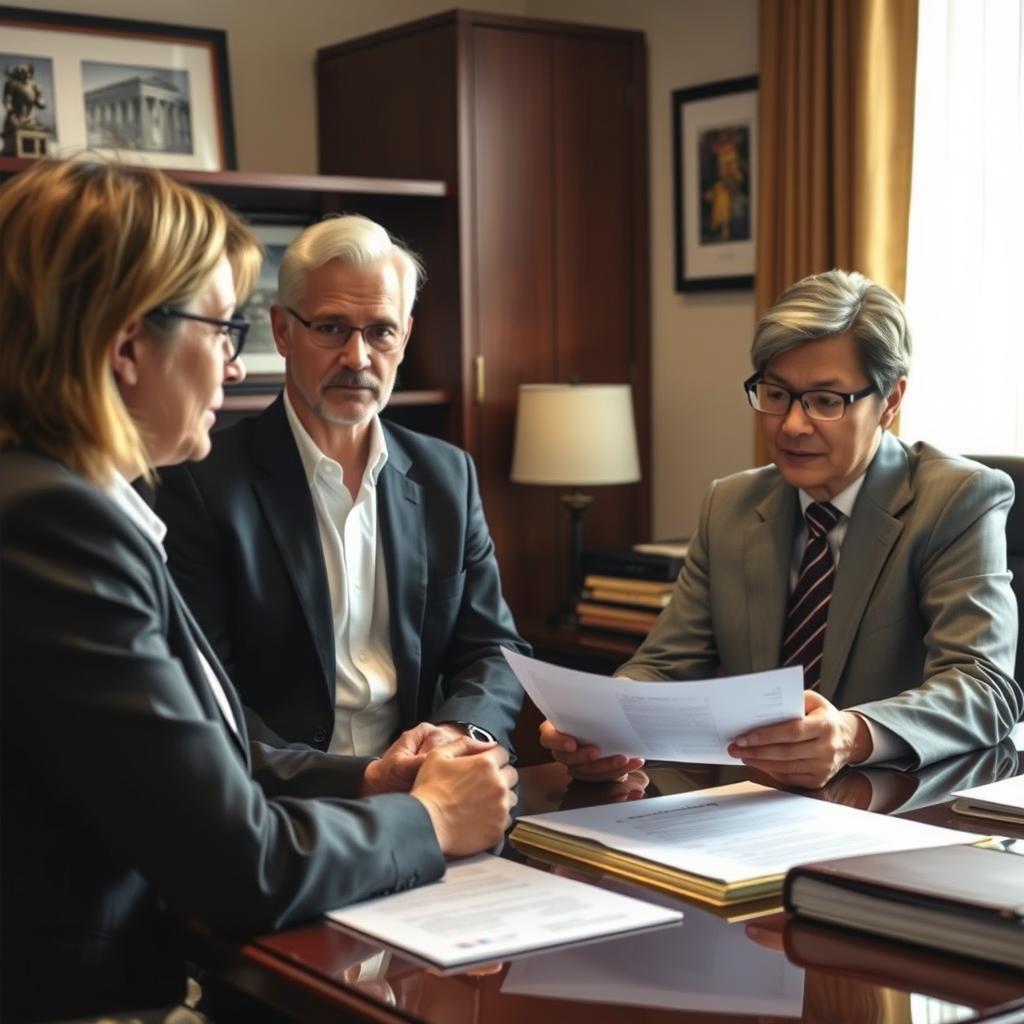
Union County Criminal Defense Lawyer Key Considerations
When facing criminal charges in Union County, selecting the right defense counsel is the most critical decision in your legal journey. Key considerations include the attorney's specific experience in Vicinage 12 (Union County), their t...
When facing criminal charges in Union County, selecting the right defense counsel is the most critical decision in your legal journey. Key considerations include the attorney's specific experience in Vicinage 12 (Union County), their track record with the Union County Prosecutor’s Office, expertise in your specific charge, and their transparency regarding fee structures and defense strategy.
Contents
Navigating the criminal justice system in 2026 requires more than just a general understanding of the law; it demands a nuanced grasp of local court procedures, digital discovery protocols, and the current stance of the judiciary on various sentencing guidelines. Whether you are dealing with a disorderly persons offense in a municipal court or a first-degree indictable offense in the Superior Court in Elizabeth, the caliber of your legal representation will directly influence the trajectory of your case and your future.
Understanding the Union County Legal Landscape
Union County, New Jersey—designated as Vicinage 12 in the state’s court system—operates with a high volume of cases across its various municipalities and the central Superior Court located in Elizabeth. Understanding how this specific jurisdiction functions is a prerequisite for any effective defense strategy.
The Role of the Superior Court and Municipal Courts
Criminal charges in Union County are bifurcated based on their severity. Indictable offenses (what other states call felonies) are handled at the Union County Superior Court. These cases involve a grand jury process and carry the potential for significant prison time. Conversely, non-indictable offenses, such as "disorderly persons" (DP) or "petty disorderly persons" (PDP) offenses, are heard in the municipal courts of specific towns like Plainfield, Linden, Westfield, or Summit.
A lawyer must be adept at maneuvering through both levels. A defense strategy that works in a local municipal court for a simple assault charge may not be applicable when facing a second-degree drug distribution charge at the county level. The procedural rules, the speed of the docket, and the availability of diversionary programs vary significantly between these venues.
The Union County Prosecutor’s Office (UCPO)
The UCPO is the entity responsible for prosecuting indictable crimes within the county. In 2026, the office continues to emphasize rigorous prosecution for violent crimes while maintaining specific units for domestic violence, narcotics, and white-collar crime. A key consideration for your lawyer is their professional relationship with the assistant prosecutors within these units. A lawyer who is respected by the UCPO is often in a better position to negotiate favorable plea agreements or secure entry into diversionary programs like Pre-Trial Intervention (PTI).
Key Consideration: Local Courtroom Familiarity (Vicinage 12)
While any licensed attorney in New Jersey can technically represent you in Union County, local familiarity is an invaluable asset. "Local" does not just mean having an office in Elizabeth or Cranford; it means having a consistent presence in the courtrooms of the Union County Courthouse.
Knowledge of Judicial Temperament
Every judge has a unique way of managing their courtroom and interpreting the law. Some judges may be more inclined to grant motions to suppress evidence based on Fourth Amendment violations, while others may be more conservative in their rulings. A seasoned Union County criminal defense lawyer knows these nuances. They understand which legal arguments resonate with specific judges and can tailor their motions and oral arguments accordingly.
Navigating Local Procedures
Administrative nuances can impact the speed and efficiency of your case. For instance, knowing the specific requirements for filing discovery motions or the timelines for "Early Disposition" programs in Union County can prevent procedural delays. In the 2026 legal environment, where digital case management is standard, an attorney who is well-versed in the local E-Courts system and the specific digital evidence sharing protocols of the UCPO can ensure that no critical evidence is overlooked.
Specialization and Professional Credentials
The complexity of modern criminal law makes it difficult for a "general practitioner" to provide the same level of defense as a specialist. When evaluating a lawyer, consider their focus and their recognized standing in the legal community.
New Jersey Supreme Court Certification
One of the highest markers of quality in New Jersey is being a Certified Criminal Trial Attorney. This designation is granted by the New Jersey Supreme Court only to attorneys who have demonstrated sufficient levels of experience, education, knowledge, and skill in criminal trial practice. As of 2026, only a small percentage of attorneys hold this certification. It requires passing a rigorous examination and receiving favorable evaluations from judges and peers.
Expertise in Specific Charge Types
The law is not a monolith. The defense required for a high-level white-collar fraud case is vastly different from the defense for a DWI or a firearms charge under the Graves Act.
- Narcotics Offenses: Lawyers must understand the complexities of search and seizure, confidential informants, and the specific thresholds for mandatory minimum sentences.
- Violent Crimes: These cases often rely heavily on forensic evidence, DNA, and witness testimony, requiring a lawyer who can work with expert witnesses.
- DWI/DUI: Despite being handled in municipal court, these cases are highly technical, involving breathalyzer (Alcotest) calibration records and field sobriety test protocols.
Evaluating Fee Structures and Transparency
Legal defense is a significant financial investment. In 2026, transparency in billing is not just a courtesy; it is a professional standard. Understanding how you will be charged is essential for a stress-free attorney-client relationship.
Retainers and Hourly Rates vs. Flat Fees
Most criminal defense lawyers in Union County use one of two billing models:
- Flat Fees: Common for municipal court cases or specific stages of an indictable case. You pay a set amount for representation through a specific milestone (e.g., through the grand jury or through trial).
- Hourly Rates: More common in complex white-collar or long-term litigation. You pay for the actual time spent on your case, usually against a pre-paid retainer.
Hidden Costs and "Extra" Expenses
A comprehensive defense often requires more than just an attorney's time. You should ask whether the fee includes:
- Private Investigators: Essential for locating witnesses or uncovering evidence the police missed.
- Expert Witnesses: Forensic accountants, toxicologists, or medical experts.
- Administrative Costs: Filing fees, transcript costs, and travel expenses.
| Service Level | Typical Case Type | Focus Area | Cost Consideration |
|---|---|---|---|
| Municipal Defense | DWI, Shoplifting, Simple Assault | Local ordinance, diversion | Often Flat Fee |
| General Criminal Defense | Drug possession, Theft, Burglary | Plea negotiation, PTI | Retainer + Milestone |
| Complex/High-Stakes | Aggravated Assault, Robbery, Fraud | Jury trial, Expert testimony | High Retainer / Hourly |
| Specialized Defense | Graves Act (Firearms), Sex Crimes | Mandatory minimums, Registry | Specialized Premium |
The Role of Technology and Digital Discovery in 2026
By 2026, the "paper trail" in criminal cases has almost entirely been replaced by digital data. A key consideration for any Union County criminal defense lawyer is their ability to handle sophisticated digital discovery.
Body-Worn Cameras and Surveillance
Almost every interaction with Union County law enforcement is now captured on body-worn cameras (BWC). Your lawyer must be willing to meticulously review hours of footage to identify inconsistencies in police reports or violations of your rights. Furthermore, the prevalence of private surveillance (Ring cameras, commercial security) and "ShotSpotter" technology in cities like Elizabeth means that a defense lawyer must be tech-savvy enough to request and analyze this data.
Digital Forensics
In cases involving financial crimes, harassment, or drug distribution, evidence is often found on smartphones, cloud servers, and social media. An effective defense attorney should have access to digital forensic experts who can challenge the integrity of data or recover exculpatory evidence that the prosecution may have ignored.
Assessing Communication and Accessibility
The relationship between a defendant and their lawyer is built on trust. If you cannot reach your lawyer, that trust quickly erodes.
- Responsiveness: How quickly does the firm respond to emails or phone calls? In 2026, many firms use secure client portals where you can view your documents and case calendar 24/7.
- The Support Team: Are you working with the senior partner you met during the consultation, or is your case being handed off to a junior associate? You should know exactly who will be standing next to you in front of the judge.
- Strategic Clarity: Your lawyer should be able to explain complex legal concepts in plain English. If they cannot clearly outline the strengths and weaknesses of your case, they may not be prepared to defend you effectively.
Questions to Ask During Your Consultation
Before signing a retainer agreement, use the initial consultation to vet the attorney thoroughly.
- How many cases similar to mine have you handled in Union County Superior Court in the last two years?
- What is your experience with the specific prosecutor assigned to this unit?
- What are the potential diversionary programs (like PTI or Drug Court) available for my specific charges?
- What is your trial success rate? (While no lawyer can guarantee a win, you want someone who isn't afraid to go to verdict if a fair plea isn't offered.)
- What is the "worst-case scenario" for my charges, and how do we avoid it?
FAQs
What is the difference between a Public Defender and a private lawyer in Union County?
A Public Defender is a court-appointed attorney for those who meet specific financial indigency requirements. While many are excellent lawyers, they often handle extremely high caseloads. A private lawyer generally has more time to dedicate to individual case investigation, provides more frequent communication, and allows you to select an attorney with a specific niche expertise.
Can a lawyer help me get into the Pre-Trial Intervention (PTI) program?
Yes. PTI is a diversionary program for first-time offenders in NJ. If completed successfully, the original charges are dismissed. However, admission is not automatic. A skilled lawyer must advocate for your entry by highlighting your background, the nature of the offense, and why you are a good candidate for rehabilitation rather than prosecution.
How long does a criminal case typically take in Union County?
The timeline varies significantly. Municipal court cases may be resolved in a few months. Indictable offenses can take six months to over a year, depending on the complexity of discovery, the number of pre-trial motions, and whether the case proceeds to a jury trial.
Is Union County still using bail?
New Jersey effectively eliminated traditional cash bail in favor of a risk-based system. Under the Criminal Justice Reform Act, a "Public Safety Assessment" determines whether a defendant is released or detained pending trial. A defense lawyer's first job is often at the detention hearing, arguing for the defendant's release.
What should I do if I am contacted by the Union County Prosecutor’s Office?
Do not provide a statement or agree to an interview without an attorney present. Anything you say can be used against you. Contact a criminal defense lawyer immediately to act as your intermediary and protect your rights during the investigative phase.
Practical Recommendation
If you or a loved one are facing criminal charges in Union County, the immediate next step is to secure counsel before your first court appearance (the Central Judicial Processing or CJP hearing). Look for an attorney who maintains a physical office or a heavy presence in Elizabeth, holds a Board Certification in Criminal Trial Law, and offers a detailed, written fee agreement. Prioritize those who demonstrate a deep understanding of the 2026 digital discovery environment and who can provide a clear, step-by-step strategy for your defense.
Image Gallery