How to Create a Budget and Net Worth Plan for Sustainable Living
To create a budget and net worth plan for sustainable living, you must align your financial assets and monthly spending with both ecological values and long-term fiscal resilience. This involves auditing your current holdings for ESG (...
To create a budget and net worth plan for sustainable living, you must align your financial assets and monthly spending with both ecological values and long-term fiscal resilience. This involves auditing your current holdings for ESG (Environmental, Social, and Governance) compliance, restructuring debt to favor green initiatives, and implementing a low-consumption budget that prioritizes durability and resource efficiency over habitual spending.
Contents
Defining the Sustainable Net Worth Framework
In 2026, the concept of net worth has evolved beyond a simple tally of bank accounts and real estate. A "sustainable" net worth incorporates the health of your financial life alongside the environmental impact of your capital. It is the measure of your total assets minus your total liabilities, specifically curated to ensure that your wealth does not rely on extractive industries and that your lifestyle can be maintained indefinitely within the limits of your income and the planet’s resources.
Traditional net worth tracking often ignores the "hidden" liabilities of unsustainable assets—such as the future depreciation of fossil-fuel-dependent vehicles or the rising insurance premiums on homes located in climate-vulnerable zones. By contrast, a sustainable net worth focuses on regenerative assets. These include energy-efficient property upgrades, decentralized power systems (like home solar and battery storage), and investment portfolios that fund the transition to a circular economy.
Understanding this framework requires a shift in mindset. You are no longer just looking for the highest possible return on investment (ROI); you are looking for the highest Integrated Return, which accounts for financial growth, tax efficiency through green incentives, and the reduction of future operational costs (such as utility bills).
The Asset Side: Identifying Green Equity
When calculating your net worth for sustainable living, assets should be categorized not just by their liquidity, but by their "greenness" and long-term utility.
Cash and Liquid Reserves
In 2026, where you keep your cash matters. High-street banks often use consumer deposits to fund industrial projects. A sustainable net worth plan prioritizes placing liquid cash in B-Corp certified banks or credit unions that have transparent divestment policies. These institutions ensure that your emergency fund and checking accounts are not inadvertently supporting the fossil fuel industry while you sleep.
ESG and Impact Portfolios
Your brokerage accounts and retirement funds (like 401ks or IRAs) typically represent the largest portion of your net worth. To align these with sustainable living, you must transition from broad-market index funds to Article 9 funds (under European standards) or high-conviction ESG funds that meet stringent SEC transparency requirements. These funds focus on companies with low carbon intensities and ethical labor practices, which many analysts now view as a "risk-mitigation" strategy against future climate regulations.
Physical and Resilient Assets
Sustainable living often involves owning physical assets that reduce your dependence on external systems. In your net worth statement, include the appraised value of:
- Renewable Energy Systems: Solar arrays, wind micro-turbines, and geothermal heat pumps. In 2026, these are increasingly recognized by appraisers as "energy equity."
- Productive Land: If you practice regenerative gardening or homesteading, the value of soil health and water catchment systems can be considered an "insurance asset" against food supply chain volatility.
- High-Durability Goods: While traditional accounting depreciates vehicles and tools to zero, high-quality, repairable items (like electric cargo bikes or industrial-grade tools) hold functional value that offsets future replacement costs in your budget.
The Liability Side: Managing Sustainable Debt
A sustainable net worth isn't just about what you own; it's about what you owe and the terms of that debt.
Green Mortgages and Loans
Many lenders in 2026 offer Green Mortgages which provide lower interest rates for homes that meet specific energy-efficiency certifications (such as LEED or Passive House). If you are carrying debt on a property, refinancing into a green loan can significantly improve your net worth by reducing the total interest paid over the life of the loan.
The Problem with "Carbon-Heavy" Debt
Liabilities that fund unsustainable lifestyles—such as high-interest loans for gas-guzzling luxury vehicles or credit card debt from fast-fashion consumption—are dual threats. They drain your monthly cash flow through interest while funding industries that contribute to ecological degradation. A core goal of your plan should be the aggressive elimination of debt associated with high-carbon activities.
Step-by-Step Guide to Calculating Your Sustainable Net Worth
To get an accurate picture of your standing in 2026, follow these systematic steps to calculate and document your net worth.
- Inventory All Accounts: List every checking, savings, brokerage, and retirement account. Note which are held in "green" institutions.
- Appraise Physical Assets: Use current market data to value your home, but add a premium for sustainable upgrades that are documented with energy performance certificates.
- Audit Your Investments: Use online transparency tools to check the "carbon intensity" of your stock holdings. If more than 5% of your portfolio is in fossil fuels or deforestation-linked industries, mark these for transition.
- List All Debts: Include mortgages, student loans, auto loans, and credit cards. Identify the interest rates and whether any are "green-certified" loans.
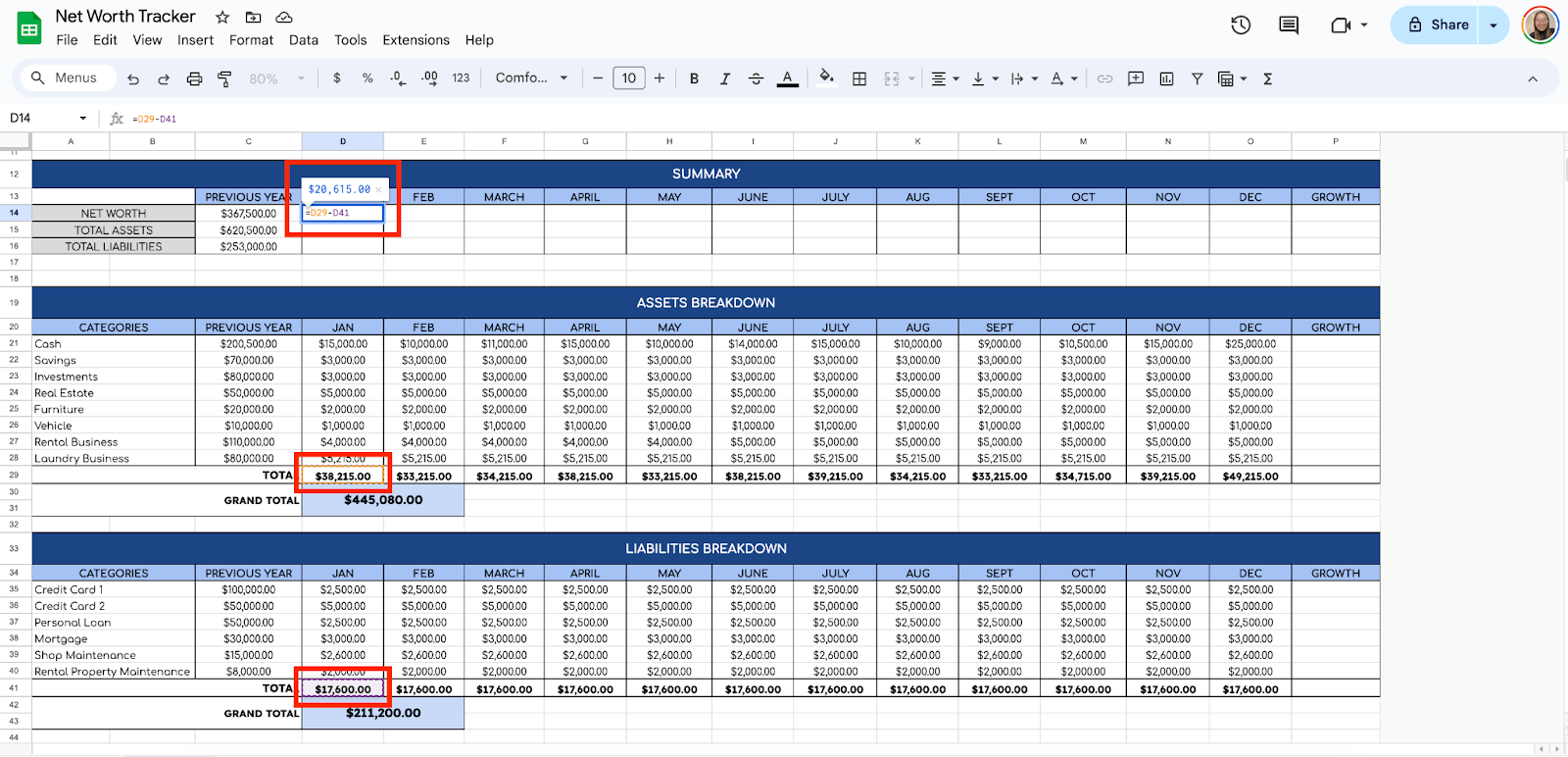
- The Calculation: Subtract the sum of your liabilities from the sum of your assets.
Formula: (Green Cash + ESG Investments + Resilient Physical Assets) - (Green Debt + Traditional Debt) = Sustainable Net Worth
The Sustainable Budgeting Blueprint
Once you understand your net worth, you must create a budget that supports and grows it. Sustainable budgeting is about resource optimization, moving away from the "earn to spend" cycle and toward "spending for resilience."
The 50/30/20 Rule Reimagined
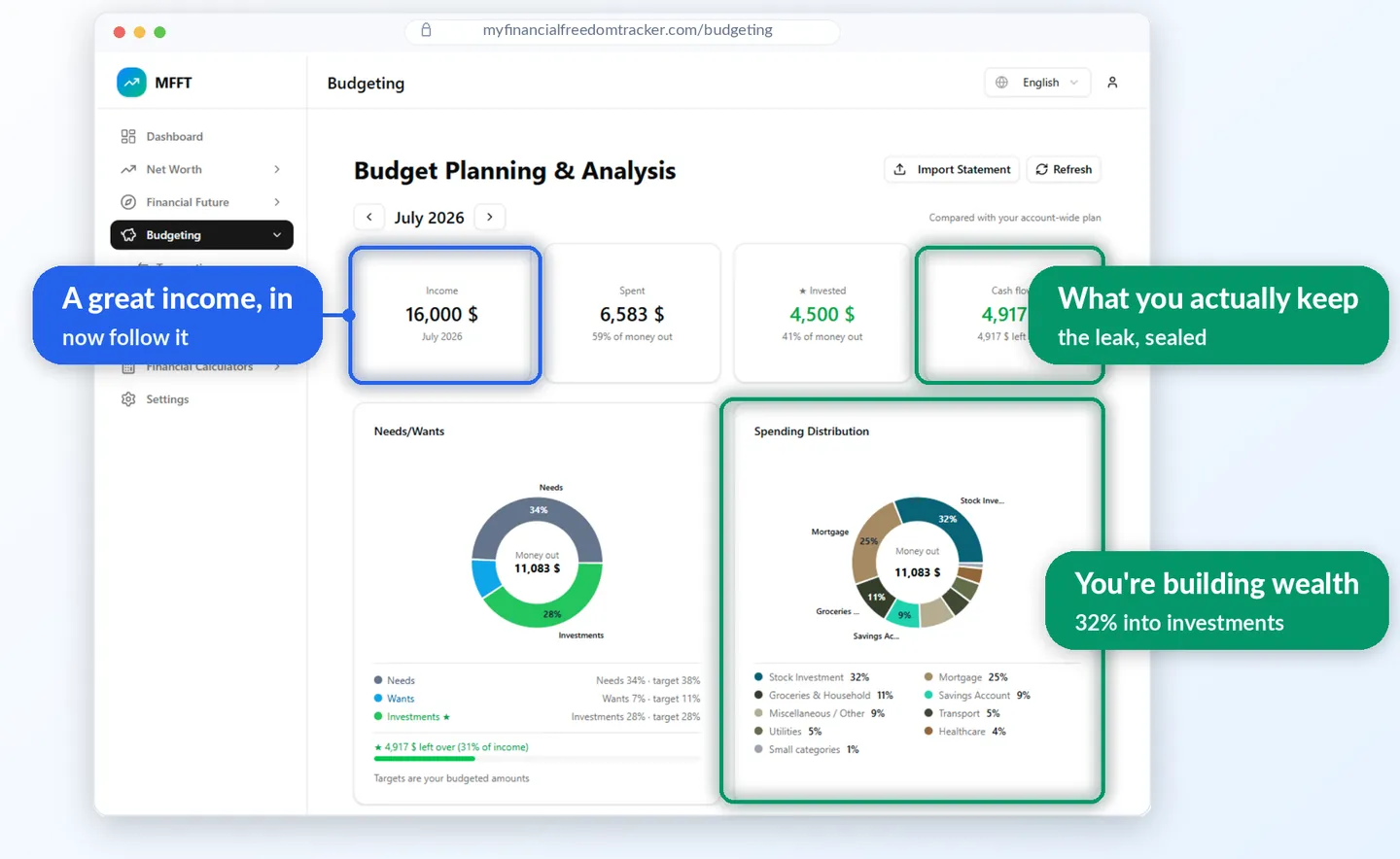
The classic budgeting rule (50% needs, 30% wants, 20% savings) requires a sustainable update for 2026:
- 50% Essential Resilience (Needs): This includes high-quality organic food, renewable energy utilities, and maintenance for your resilient assets. It also includes "Green Insurance" premiums.
- 20% Conscious Consumption (Wants): Instead of fleeting entertainment, this category focuses on experiences, local community support, and the "Repair and Upgrade" fund for your physical goods.
- 30% Regenerative Wealth (Savings/Investment): This higher savings rate is achieved by reducing waste. These funds are funneled directly into ESG portfolios or paying down debt to increase your net worth.
Implementing Low-Consumption Strategies
A sustainable budget thrives on the "Buy Once, Cry Once" philosophy. By investing in higher-quality, durable goods, you reduce the long-term frequency of purchases. For example, spending $200 on a pair of repairable boots that last a decade is more financially and ecologically sound than spending $40 every year on synthetic alternatives.
| Metric | Traditional Budgeting | Sustainable Budgeting (2026) |
|---|---|---|
| Primary Goal | Maximize immediate purchasing power. | Maximize long-term resource resilience. |
| Asset Focus | Depreciation-heavy goods (cars, tech). | Value-retaining green assets (solar, land). |
| Expense View | Utilities are a fixed, unavoidable cost. | Utilities are a variable cost reduced by efficiency. |
| Investment | Highest financial ROI regardless of sector. | High Integrated Return (ESG + Financial). |
| Debt Usage | Leverage for lifestyle inflation. | Leverage for energy-efficient upgrades. |
Strategic Asset Allocation for Long-Term Sustainability
To grow your net worth sustainably in 2026, your asset allocation should reflect the realities of a changing economy.
Transitioning to ESG Portfolios
Many investors fear that "investing with a conscience" means lower returns. However, data from the U.S. Securities and Exchange Commission (SEC) suggests that companies with strong ESG metrics often show better resilience during market volatility. When allocating your 30% savings, prioritize:
- Climate Technology: Companies working on grid-scale storage, green hydrogen, and carbon capture.
- Circular Economy Stocks: Businesses that design out waste and keep products in use longer.
- Sustainable Agriculture: REITs (Real Estate Investment Trusts) that focus on organic or regenerative farmland.
Divestment as a Growth Tool
Divesting is the act of removing your capital from harmful industries. In 2026, this is not just an ethical choice but a financial one. As global carbon taxes increase, the profitability of "brown" industries is expected to decline. Shifting that capital into "green" sectors early positions your net worth for the "Great Energy Transition."
Common Pitfalls and Troubleshooting
Creating a budget net worth for sustainable living is not without challenges. Here are the most common hurdles:
- The "Green Premium": Sustainable products often cost more upfront. Solution: Track the "Total Cost of Ownership" (TCO) in your budget. A $1,000 energy-efficient fridge may save $1,500 in electricity over its lifespan compared to a cheaper model.
- Hidden Fossil Fuel Holdings: Many "Green" index funds still contain small percentages of legacy energy companies. Solution: Read the prospectus carefully. Look for "Fossil Fuel Free" labels verified by third-party auditors like As You Sow.
- Lifestyle Creep: As your net worth grows, the temptation to return to high-consumption habits increases. Solution: Set a "Consumption Cap" in your budget. Once your needs and basic wants are met, any additional income is diverted 100% to regenerative investments.
Frequently Asked Questions
Is it more expensive to live sustainably in 2026?
Initially, the "entry cost" for sustainable living—such as installing solar or buying high-quality goods—can be higher. However, the operational costs of a sustainable life are significantly lower. Over a 5-to-10-year horizon, a sustainable budget usually results in higher net savings due to eliminated utility bills and reduced replacement costs for consumer goods.
Can I have a sustainable net worth if I don't own a home?
Yes. Renters can maintain a sustainable net worth by focusing on their investment portfolios and liquid assets. You can choose a "Green Bank," invest in community solar programs, and ensure your brokerage accounts are strictly ESG-compliant. Your "resilient assets" might be portable, such as high-quality tools, e-bikes, or a portfolio of shares in regenerative cooperatives.
How do I calculate the ROI of a solar installation for my net worth?
In 2026, a solar installation should be treated as a capital improvement. To calculate the ROI, add the total cost of the system (minus any tax credits from the Internal Revenue Service (IRS)) and divide it by your annual utility savings. Most systems now see a "break-even" point within 5-7 years, after which the system adds "pure equity" to your net worth every month through avoided costs.
Does "sustainable living" mean I can't invest in tech stocks?
Not at all. Many technology companies are leaders in renewable energy procurement and circular hardware design. The key is to look for companies with a "Net Zero" commitment that includes their entire supply chain (Scope 3 emissions).
Next Actions for a Sustainable Financial Future
To begin your journey toward a budget net worth for sustainable living, start with a Financial Carbon Audit. Spend the next 30 days tracking every dollar spent and every asset owned through a sustainability lens. Identify the "low-hanging fruit"—such as switching to a green bank or cancelling a subscription to a high-waste service—and reallocate those funds into a dedicated "Sustainability Fund."
By the end of 2026, your goal should be to have at least 50% of your total net worth tied to assets that actively contribute to a more stable and ecological future. This approach doesn't just protect the planet; it protects your financial legacy in an increasingly resource-constrained world.
Image Gallery