American Express Membership Rewards Points Value: A Comprehensive 2026 Guide
In 2026, the value of American Express Membership Rewards points typically ranges from 0.5 cents to over 2.0 cents per point. While redeeming for statement credits or retail purchases offers a low "floor" value of 0.6 to 0.7 cents, the...
In 2026, the value of American Express Membership Rewards points typically ranges from 0.5 cents to over 2.0 cents per point. While redeeming for statement credits or retail purchases offers a low "floor" value of 0.6 to 0.7 cents, the most lucrative strategy involves transferring points to high-value airline and hotel partners, where valuations frequently exceed 2.0 cents.
Contents
The American Express Membership Rewards (MR) program remains one of the most flexible and powerful "transferable currencies" in the financial world. Unlike fixed-value cash-back programs, the value of an MR point is highly subjective and depends entirely on how it is redeemed. For cardholders of the Platinum Card®, the American Express® Gold Card, or various business iterations, understanding the nuances of these valuations is the difference between a mediocre return and a free first-class international flight.
The Spectrum of Point Valuations in 2026
To understand Membership Rewards points value, one must first master the concept of "Cents Per Point" (cpp). This is the mathematical formula used to determine the efficiency of a redemption. By dividing the cash price of a service by the number of points required, you can see exactly what your points are worth in a specific scenario.
In the current 2026 market, there are four distinct tiers of valuation that cardholders should recognize:
- High Value (1.5 to 4.0+ cents): Achieved through strategic transfers to international airline partners for premium cabin (Business or First Class) bookings.
- Good Value (1.0 to 1.5 cents): Usually found by booking economy flights through the Amex Travel portal (specifically for Business Platinum cardholders) or standard airline transfers.
- Standard/Fair Value (0.7 to 1.0 cents): Common when redeeming for gift cards or booking hotels through the Amex Travel portal.
- Poor Value (0.5 to 0.7 cents): The result of using points for statement credits ("Cover Your Charges"), Amazon checkouts, or general retail shopping.
By identifying which tier your redemption falls into, you can decide whether to spend your points or save them for a more efficient opportunity.
Direct Redemption Options: The "Value Floor"
Most users interact with their points through the American Express dashboard. These "direct" redemptions are the easiest to use but often offer the lowest financial return. American Express essentially acts as a middleman here, and you pay for that convenience with your points.
Statement Credits and "Cover Your Charges"
Redeeming points for a statement credit is the most common mistake made by casual cardholders. Historically and through 2026, this redemption typically yields 0.6 cents per point. This means 10,000 points are only worth $60. Considering that many Amex cards have high annual fees, using points this way results in a significantly lower "net return" on your spending than a basic 2% cash-back card would provide.
Pay with Points at Checkout
American Express has deep integrations with retailers like Amazon, Best Buy, and PayPal. While it is convenient to click "Use Points" at an Amazon checkout, the value is usually fixed at 0.7 cents per point. While slightly better than a statement credit, it still represents a poor use of a premium currency. You are essentially trading a flexible travel asset for a low-yield retail discount.
The Amex Travel Portal
When you book flights through AmexTravel.com, you generally receive a value of 1.0 cent per point. This is a reliable benchmark for travelers who do not want to deal with the complexities of transfer partners. However, booking hotels or car rentals through the same portal often drops the value to 0.7 cents per point, unless you are utilizing the Fine Hotels + Resorts (FHR) or The Hotel Collection benefits.
For holders of the Business Platinum Card®, the portal becomes much more attractive due to the 35% Airline Bonus. When you use Pay with Points for all or part of a flight with your selected qualifying airline, you get 35% of those points back. This effectively boosts the value of your points to approximately 1.54 cents each, which is one of the strongest "fixed-rate" redemptions available in 2026.
Maximizing Value via Transfer Partners
The true power of American Express Membership Rewards lies in its network of over 20 airline and hotel transfer partners. By moving points from your Amex account to a partner's loyalty program, you are no longer bound by Amex’s internal 1.0-cent valuation. Instead, you are governed by the partner's award chart or dynamic pricing model.
Strategic Airline Transfers
Airlines like Air Canada (Aeroplan), British Airways (Executive Club), Virgin Atlantic, and Delta Air Lines are frequent targets for transfers. In 2026, transferring points at a 1:1 ratio to these partners is the primary way to achieve outsized value.
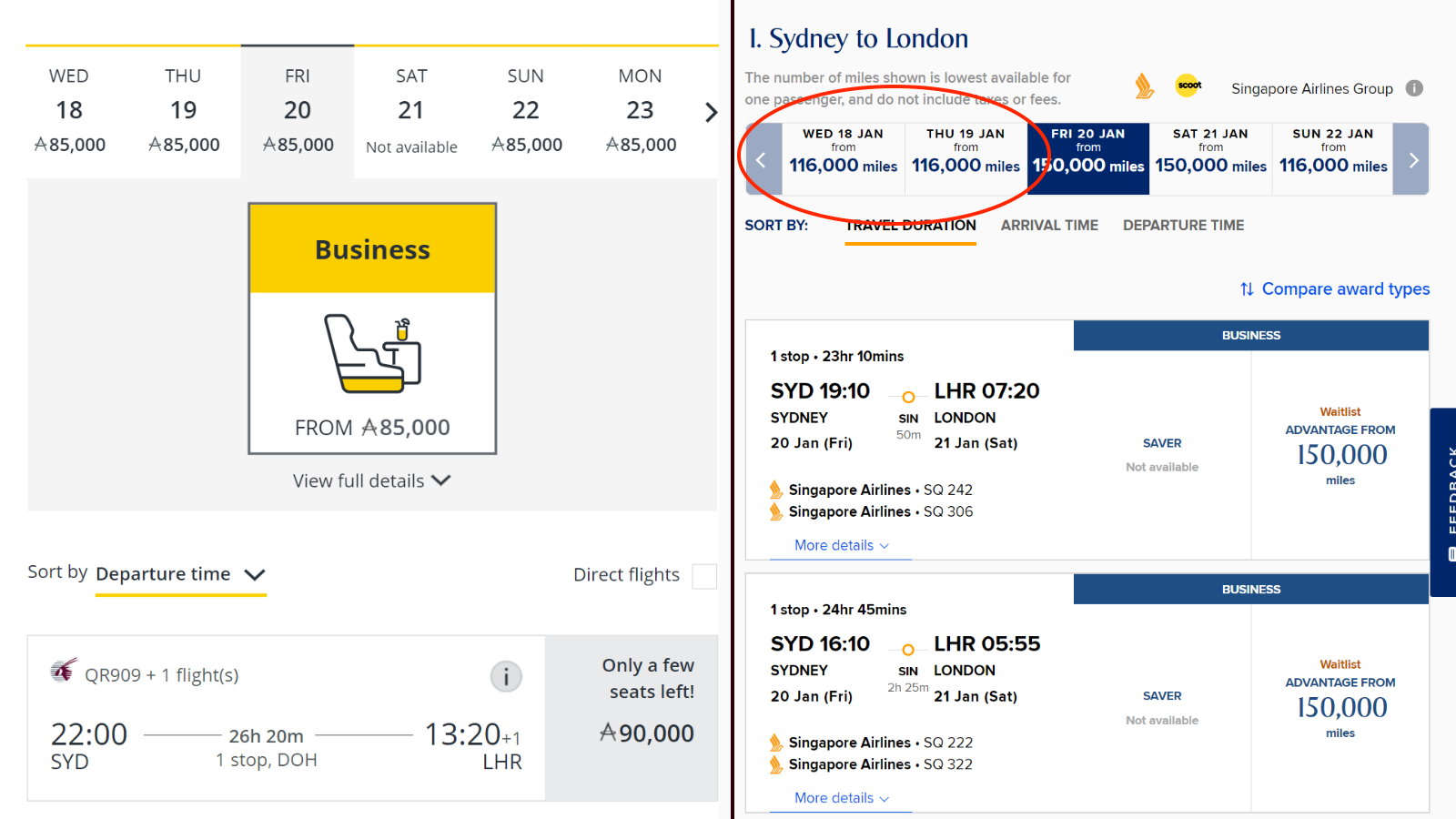
For example, a business class ticket from New York to Paris might cost $4,000 in cash but only 60,000 points plus modest taxes when transferred to a partner like Air France-KLM Flying Blue. In this scenario, your points are worth over 6.0 cents each. Even for domestic economy flights, finding "sweet spots" in award charts often yields 1.2 to 1.8 cents per point, comfortably beating the travel portal’s 1.0-cent baseline.
Hotel Partner Limitations
Amex transfers to hotel programs like Marriott Bonvoy, Hilton Honors, and Choice Privileges. While Amex occasionally offers transfer bonuses (e.g., 1:2.6 for Hilton), the value is generally lower than airline transfers. Hilton points are widely valued at about 0.5 cents each; even with a 1:2 transfer ratio, you are only netting 1.0 cent per Amex point. Consequently, hotel transfers should generally be reserved for "topping off" an account for a specific stay rather than as a primary redemption strategy.
2026 Redemption Value Comparison Table
The following table outlines the estimated value of American Express Membership Rewards points across various redemption categories based on current market data and program rules.
| Redemption Method | Estimated Value (Per Point) | Recommended Action |
|---|---|---|
| International Business/First Class Transfer | 2.0 – 6.0+ cents | Highest Priority |
| Domestic Economy Flight Transfer | 1.1 – 1.8 cents | High Priority |
| Business Platinum Portal (with 35% Rebate) | 1.54 cents | Excellent (Fixed) |
| Amex Travel Portal (Flights) | 1.0 cent | Average |
| Gift Cards (Select Brands) | 1.0 cent | Fair |
| Amex Travel Portal (Hotels/Cars) | 0.7 cents | Poor |
| Amazon / PayPal Checkout | 0.7 cents | Avoid |
| Statement Credit / Cover Charges | 0.6 cents | Avoid |
Factors Influencing Points Value in 2026
Several external factors can shift the "real-world" value of your points. Smart cardholders monitor these variables to ensure they aren't redeeming at a market low.
- Transfer Bonuses: Periodically, American Express offers promotional bonuses ranging from 15% to 40% when transferring to specific partners. A 30% bonus to Virgin Atlantic, for instance, instantly increases the value of every MR point by 30% for that specific redemption.
- The "Schwab Floor": For those who hold the American Express Platinum Card® for Charles Schwab, there is a unique option to invest points into a brokerage account. As of 2026, this rate remains at 1.1 cents per point. This is widely considered the absolute "cash-out floor." If a redemption offers less than 1.1 cents, a Schwab cardholder is better off cashing out and paying with cash.
- Dynamic Pricing Inflation: Many airlines have moved toward dynamic pricing, where the points price fluctuates with the cash price. This makes it harder to find the massive 6-cent-per-point deals, but it also makes the 1.2 to 1.5 cent range more common for standard travel.
- Fuel Surcharges: Some partners, particularly European carriers like Lufthansa or British Airways, charge high cash "carrier-imposed surcharges" on award tickets. If you have to pay $800 in fees alongside 50,000 points, your effective point value drops significantly. Always calculate the "net value" by subtracting these fees from the cash price before determining your cpp.
Common Pitfalls and How to Avoid Them
To maintain a high average value for your Membership Rewards balance, avoid the following tactical errors:
- Hoarding Points: Points do not earn interest and are subject to "devaluation" if an airline changes its award chart. A point saved in 2024 may be worth 10% less in 2026. The goal should be "Earn and Burn"—accumulate points for a specific goal and use them.
- Transferring Without Availability: Never transfer Amex points to a partner until you have confirmed that the specific flight or hotel room you want is available for award booking. Transfers are one-way and irreversible. If the flight disappears, your points are stuck in that airline's program.
- Ignoring the Annual Fee: When calculating the value you get from your points, remember to subtract the "opportunity cost" of the annual fee. If you pay $695 for a Platinum card but only use points for 0.6-cent statement credits, the card is likely costing you more than the rewards are worth.
Frequently Asked Questions
Do Amex Membership Rewards points expire?
As long as you have at least one active card that earns Membership Rewards points, your points do not expire. If you plan to cancel your only MR-earning card, you must either transfer the points to a partner, redeem them, or open a no-annual-fee card like the Amex EveryDay® Credit Card to preserve your balance.
Can I transfer Amex points to someone else’s airline account?
You can only transfer Membership Rewards points to your own frequent flyer programs or to those of an authorized user on your account. Note that the authorized user must have been on your account for at least 90 days before a transfer can be initiated.
Is it worth using points for "Fine Hotels + Resorts"?
Using points for FHR bookings via the travel portal typically yields 1.0 cent per point. While this isn't as high as a premium flight transfer, the added benefits of FHR—such as daily breakfast, room upgrades, and a $100 amenity credit—can make the "total value" of the redemption much higher than 1.0 cent.
What is the best transfer partner for domestic U.S. flights?
In 2026, British Airways (Executive Club) and Air Canada (Aeroplan) are often better for domestic U.S. travel on American Airlines or United, respectively, than transferring directly to domestic carriers. Because of their distance-based or zone-based charts, you can often book the same domestic flight for fewer points than the U.S. airline would charge its own members.
How does Amex point value compare to Chase Ultimate Rewards?
Amex points are generally considered more valuable for international premium cabin travel due to a wider array of airline partners. However, Chase points are often seen as more "user-friendly" because they offer a consistent 1.25 to 1.5 cent value for all travel booked through their portal, and they have a direct 1:1 transfer to World of Hyatt, which is arguably the most valuable hotel transfer partner in existence.
Expert Recommendation
For the average cardholder in 2026, the best strategy is to never redeem points for less than 1.0 cent. Use the Amex Travel portal as your baseline. If you are willing to spend 30 minutes researching airline "sweet spots" or waiting for a transfer bonus, aim for a target valuation of 1.8 to 2.2 cents per point. This ensures you are extracting maximum utility from the American Express ecosystem and justifying the premium annual fees associated with these products.
Image Gallery