The Best Books on How to Invest in Stocks for Everyday Investors
For everyday investors, the best books on stock investing focus on low-cost index funds, the power of compounding, and psychological discipline. Titles like The Little Book of Common Sense Investing by John C. Bogle and The Psychology...
For everyday investors, the best books on stock investing focus on low-cost index funds, the power of compounding, and psychological discipline. Titles like The Little Book of Common Sense Investing by John C. Bogle and The Psychology of Money by Morgan Housel provide the most practical, evidence-based frameworks for long-term wealth.
Contents
Why Literature is the Best Investment for New Stock Investors
Before placing a single trade in the 2026 market, the most significant asset an everyday investor can cultivate is a robust framework for decision-making. In an era where algorithmic trading and social media "finfluencers" create constant noise, books offer something the internet often lacks: structured, peer-reviewed, and time-tested wisdom. Reading a comprehensive investment book allows an individual to move beyond "hot tips" and understand the underlying mechanics of capital markets.
Investing is as much about temperament as it is about mathematics. The best books do not just teach you how to read a balance sheet; they teach you how to remain calm when the market drops 20% and how to avoid the "fear of missing out" (FOMO) when speculative bubbles arise. By studying the philosophies of history's most successful investors, everyday people can build a "moat" around their own financial decisions, protecting their savings from common psychological traps and predatory high-fee products.
Note: This guide is for educational purposes only and does not constitute professional financial, legal, or tax advice. Stock market investing involves risk, including the possible loss of principal.
The Core Classics: Building a Foundational Knowledge Base
To succeed in the stock market, an investor needs a foundation built on the principles of value and efficiency. These two classics have defined the industry for decades and remain the most recommended starting points for anyone serious about their portfolio.
The Intelligent Investor by Benjamin Graham
Often called the "Bible of Investing," Benjamin Graham’s The Intelligent Investor is the definitive text on value investing. Originally published in 1949, its core tenets remain remarkably relevant in 2026. Graham introduces the concept of "Mr. Market," an imaginary business partner who offers to buy or sell stocks every day at different prices. The lesson is simple: you are not obligated to follow Mr. Market's whims.
Graham also popularized the "Margin of Safety," the idea of buying a stock at a significant discount to its intrinsic value to minimize downside risk. For the everyday investor, the revised editions featuring commentary by Jason Zweig are essential, as they bridge the gap between Graham’s mid-20th-century examples and modern market realities.
The Little Book of Common Sense Investing by John C. Bogle
If you only read one book on this list, make it this one. John C. Bogle, the founder of Vanguard, revolutionized the industry by championing the index fund. His central argument is that the stock market, in aggregate, provides a generous return, but most investors lose that return to high management fees, trading costs, and taxes.
Bogle demonstrates with mathematical certainty that "trying to needle the haystack" (picking individual stocks) is a loser's game for most. Instead, he advocates for "buying the whole haystack" through low-cost index funds. In the 2026 landscape of complex financial derivatives, Bogle’s message of simplicity and cost-consciousness is more vital than ever.
Strategy-Specific Books for Diverse Approaches
While indexing is the most reliable path for many, some everyday investors wish to take a more active role. These books explain the mechanics of how markets work and how to find individual opportunities without falling into gambling habits.
A Random Walk Down Wall Street by Burton Malkiel
Now in its many-th edition, Burton Malkiel’s masterpiece is the primary defense of the Efficient Market Hypothesis (EMH). Malkiel argues that stock prices reflect all available information so quickly that it is nearly impossible for an individual to consistently outperform the market averages.
This book is crucial because it provides the academic "Why" behind the "How" of index investing. Malkiel covers the history of speculative bubbles—from the Dutch Tulip Mania to the crypto-volatility of the early 2020s—helping readers recognize the signs of market irrationality. It is a technical but accessible read that balances theory with practical asset allocation advice.
One Up on Wall Street by Peter Lynch
Peter Lynch managed the Fidelity Magellan Fund from 1977 to 1990, achieving an average annual return of 29%. His philosophy is the complete opposite of Malkiel’s: he believes everyday investors have a distinct advantage over Wall Street professionals.
Lynch’s mantra, "Invest in what you know," encourages people to look at the products and services they use in their daily lives. If a new store is always crowded or a specific software is becoming indispensable at work, that might be a stock worth investigating. Lynch provides a clear framework for categorizing stocks (slow growers, stalwarts, fast growers, etc.) and explains when to buy and when to sell.
Mastering the Mindset: Behavioral Finance and Psychology
The greatest threat to an investor’s portfolio is usually the person looking back at them in the mirror. Even the best strategy will fail if an investor panics and sells during a market downturn.
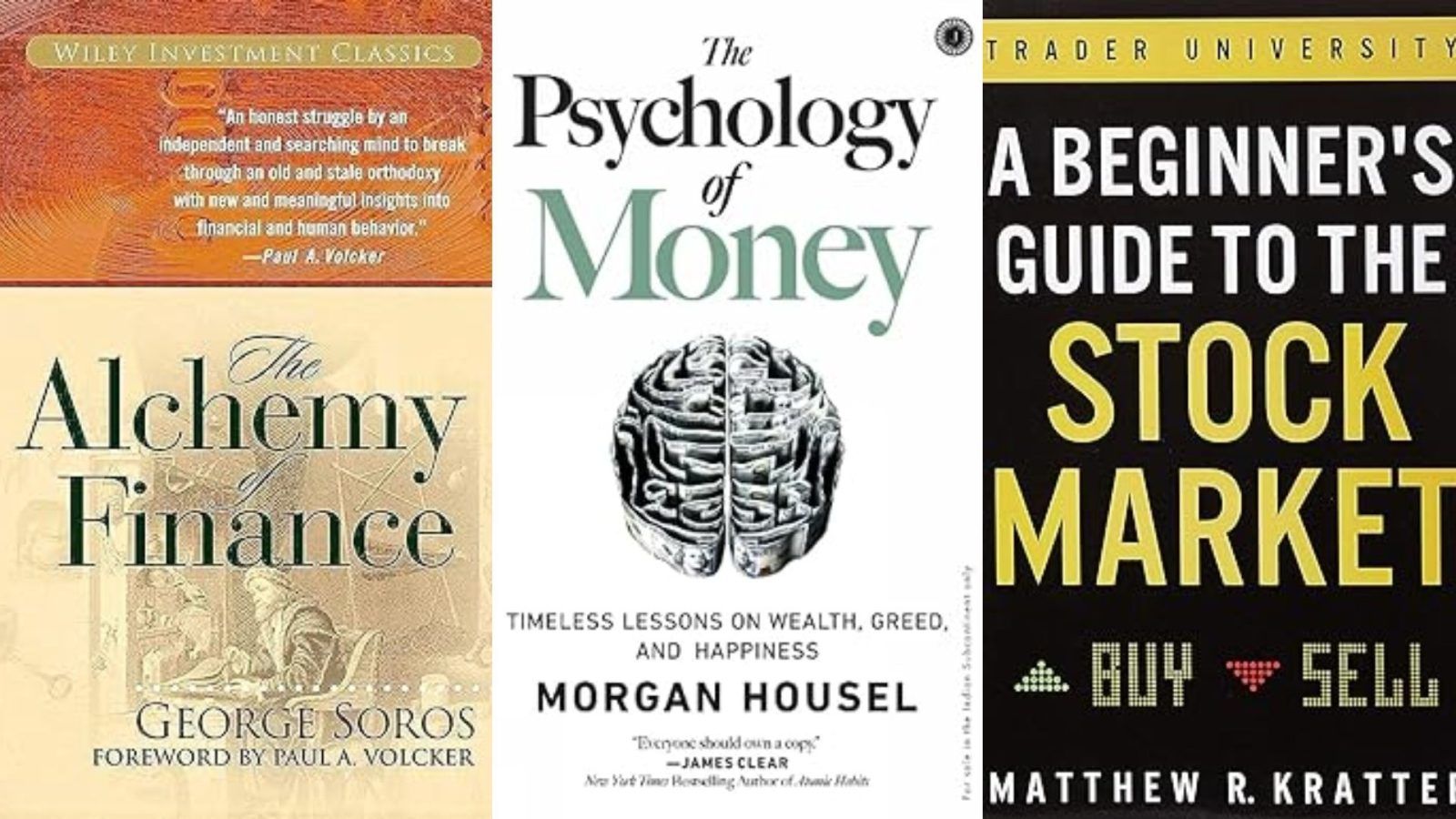
The Psychology of Money by Morgan Housel
Morgan Housel’s 2020 classic has quickly become a modern staple. He argues that doing well with money has little to do with how smart you are and a lot to do with how you behave. Through 19 short stories, Housel explores the strange ways people think about wealth, greed, and happiness.
The book emphasizes that the goal of investing is not necessarily to "maximize returns," but to reach a state of "financial endurance." For everyday investors, this means building a portfolio that allows them to sleep at night, even during periods of extreme volatility. It is a profound look at the difference between being rich (having a high income) and being wealthy (having the freedom that money provides).
Modern Guides for the Digital Age Investor
As we move through 2026, the barriers to entry for the stock market have vanished. Commission-free trading and fractional shares are standard. However, this ease of access makes the advice in these modern guides even more critical.
The Simple Path to Wealth by JL Collins
Originally written as a series of letters to his daughter, JL Collins’ book is perhaps the most accessible guide for the "set it and forget it" investor. Collins advocates for a singular focus: the Vanguard Total Stock Market Index Fund (VTSAX).
He demystifies the complex jargon of the financial industry and provides a clear roadmap for achieving Financial Independence (FI). His writing is blunt, humorous, and incredibly motivating, making it an ideal gift for young professionals or anyone feeling overwhelmed by the sheer number of investment choices available today.
Comparison of Top Stock Investing Books for 2026
The following table summarizes the key attributes of these essential texts to help you decide where to begin your reading journey.
| Book Title | Author | Primary Strategy | Difficulty Level | Best For |
|---|---|---|---|---|
| The Little Book of Common Sense Investing | John C. Bogle | Indexing / Passive | Beginner | Everyone |
| The Psychology of Money | Morgan Housel | Behavioral Finance | Beginner | Understanding mindset |
| The Simple Path to Wealth | JL Collins | VTSAX / FI Focus | Beginner | Financial Independence |
| One Up on Wall Street | Peter Lynch | Growth Stock Picking | Intermediate | Active investors |
| A Random Walk Down Wall Street | Burton Malkiel | Efficient Markets | Intermediate | Theory and allocation |
| The Intelligent Investor | Benjamin Graham | Value Investing | Advanced | Serious fundamentalists |
How to Choose the Right Book for Your Financial Goals
Selecting the right literature depends on your "Investment Policy Statement," a document every everyday investor should eventually create for themselves. Consider the following factors:
- Time Commitment: If you want to spend less than an hour a month on your investments, prioritize Bogle and Collins. If you enjoy researching companies as a hobby, Peter Lynch is your best resource.
- Risk Tolerance: If market volatility makes you anxious, Morgan Housel’s work on psychology will provide more value than a technical book on stock valuation.
- Current Knowledge Level: Start with the "Beginner" books in the table above before attempting Benjamin Graham. Jumping into Security Analysis (Graham's more technical work) without a foundation is a common mistake that leads to frustration.
Common Mistakes When Implementing Book Lessons
Reading the books is only half the battle; the other half is avoiding misinterpretations of their lessons.
- Cherry-picking Graham: Many new investors read Graham and think they can find "undervalued" stocks easily. In 2026, with high-frequency trading and AI-driven analysis, traditional value gaps close in milliseconds. Don't underestimate the difficulty of the task.
- Misunderstanding Lynch: People often take "invest in what you know" too literally. Lynch never suggested buying a stock only because you like the product; he suggested using that as a starting point for rigorous fundamental research.
- Over-complicating Collins: The "Simple Path" is meant to be simple. Some investors read the book and then try to "optimize" it by adding 10 different sub-sector funds, which often results in higher fees and lower performance.
Frequently Asked Questions
Are these old books still relevant in the 2026 stock market?
Yes. While the technology used to trade stocks has changed, human psychology and the basic principles of business valuation have not. The concept of buying a share of a company's future earnings is as valid today as it was in 1949.
Should I read books or just follow financial news?
Books are generally superior for long-term investors. Financial news is designed to trigger emotional responses and encourage frequent trading (which benefits brokers, not you). Books provide the structural logic needed to process news without panicking.
Can I learn everything I need from a single book?
While The Little Book of Common Sense Investing comes close, a well-rounded investor usually benefits from at least three perspectives: one on indexing (Bogle), one on psychology (Housel), and one on market history (Malkiel).
Do I need to understand advanced math to benefit from these books?
No. Most of these authors go out of their way to explain concepts in plain English. The math involved in everyday investing—compound interest, expense ratios, and basic percentages—is typically at a high-school level.
Where can I verify the performance of the strategies mentioned?
You can verify long-term market data and the performance of index funds versus active management through official sources like the U.S. Securities and Exchange Commission (SEC) or the FINRA Investor Education Foundation.
Next Steps for the Everyday Investor
After selecting your first book, the best course of action is to start small. Open a brokerage account with a reputable, low-cost firm and set up an automatic contribution. As you read through these texts, you will find that the most successful "everyday" investors aren't those with the most complex strategies, but those with the most discipline.
The goal of your reading should be to build a strategy that is so automated and robust that you spend more time living your life than checking your portfolio. Start with The Psychology of Money to prepare your mind, then move to The Little Book of Common Sense Investing to build your engine.
Image Gallery