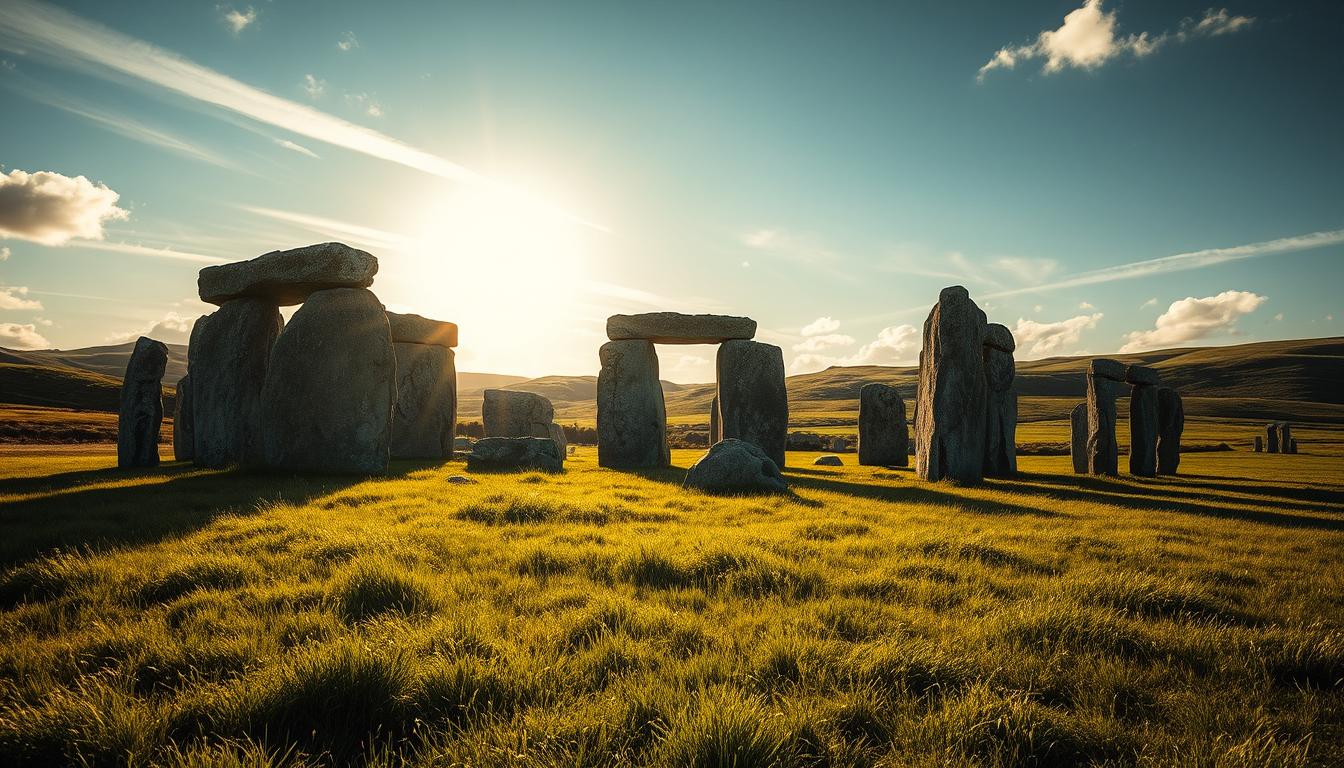
The Mystery of Stonehenge Solved for Modern Curious Minds
Stonehenge was not the result of a single "mystery" but a sophisticated, multi-phase monumental project serving as a solar calendar, an elite burial ground, and a site for ancestral veneration. Built between 3000 BCE and 1500 BCE, it r...
Stonehenge was not the result of a single "mystery" but a sophisticated, multi-phase monumental project serving as a solar calendar, an elite burial ground, and a site for ancestral veneration. Built between 3000 BCE and 1500 BCE, it represents the pinnacle of Neolithic engineering, utilizing stones sourced from as far as 750 kilometers away to align precisely with the solar cycle.
Contents
The iconic silhouette of Stonehenge against the Salisbury Plain has inspired centuries of folklore, from Arthurian wizards to extraterrestrial intervention. However, as of 2026, the convergence of high-resolution geochemical analysis, satellite LiDAR, and ancient DNA (aDNA) sequencing has effectively demystified the site. What remains is not a supernatural enigma, but a profound testament to the social cohesion and technical ingenuity of Britain’s early inhabitants. To understand how the mystery was "solved," we must look at the three pillars of modern archaeological consensus: the origin of the materials, the method of construction, and the evolving purpose of the landscape.
The Geochemical Fingerprinting: Where the Stones Came From
For decades, the primary question was how a primitive society transported massive monoliths over vast distances. Before we can answer the "how," we must accurately identify the "where." Stonehenge is composed of two primary types of stone: the massive Sarsens (silicified sandstone) and the smaller Bluestones (various volcanic and sedimentary rocks).
The Sarsen Source
The larger sarsen stones, which form the iconic outer circle and the inner trilithon horseshoe, weigh an average of 20 tons. In 2020, a breakthrough occurred when researchers utilized a missing core sample—taken during 1950s restoration work—to perform X-ray fluorescence testing. This allowed scientists to match the chemical signature of the sarsens to the West Woods in the Marlborough Downs, located approximately 25 kilometers north of Stonehenge. While this was a shorter distance than previously speculated, moving 20-ton blocks across the undulating Wiltshire terrain still required a massive, coordinated labor force.
The Bluestone Odyssey
The bluestones have long been known to originate from the Preseli Hills in West Wales, roughly 225 kilometers away. However, the most startling discovery of the 2020s concerns the Altar Stone, the large sandstone block at the heart of the monument. For a century, it was categorized as a "bluestone" from Wales. Recent geochemical "fingerprinting" published in Nature (2024) confirmed that the Altar Stone actually originated from the Orcadian Basin in Northeast Scotland, over 750 kilometers from Stonehenge. This revelation suggests a level of maritime trade and cultural connectivity across Neolithic Britain that was previously thought impossible.
Neolithic Engineering: The "How" of Construction
The logistical challenge of Stonehenge is often cited as "proof" of lost technology. However, experimental archaeology has demonstrated that the methods required were well within the reach of Neolithic farmers using timber, rope, and sheer human power.
Transporting the Monoliths
For the sarsens from West Woods, the most likely method involved heavy timber sledges pulled over "tracks" of lubricated logs. To move a 20-ton stone, a team of roughly 50 to 100 people would be required. The 750-kilometer journey of the Altar Stone from Scotland likely utilized a coastal maritime route. Neolithic people were skilled boat builders; they could have lashed large canoes together to create catamarans capable of carrying heavy cargo along the eastern coast of Britain and up the River Avon.
Raising the Trilithons
Raising the stones required a deep understanding of physics. The builders dug "L-shaped" pits with one vertical side and one sloping side. The stone was slid down the slope until it hit the bottom, then hauled upright using massive leather ropes and timber A-frames. Once the uprights were stable, the horizontal lintels were likely raised using timber "cribbing"—a process of jacking the stone up inch by inch on a growing platform of wooden beams until it reached the top.
The precision of the joinery is perhaps the most impressive technical feat. Stonehenge features mortise and tenon joints (protruding "knobs" fitting into holes) and tongue and groove joints, techniques usually reserved for woodworking. This indicates that the builders treated these massive stones with the same delicate precision as timber.
| Feature | Material | Weight (Avg) | Source Location | Estimated Distance |
|---|---|---|---|---|
| Outer Circle | Sarsen (Sandstone) | 20 Tons | West Woods, Wiltshire | 25 km |
| Inner Horseshoe | Sarsen (Sandstone) | 30 Tons | West Woods, Wiltshire | 25 km |
| Inner Bluestones | Dolerite/Rhyolite | 2–4 Tons | Preseli Hills, Wales | 225 km |
| Altar Stone | Old Red Sandstone | 6 Tons | Orcadian Basin, Scotland | 750+ km |
The Multi-Purpose Theory: Why Was It Built?
The modern consensus is that Stonehenge was not built for a single reason, nor was it used for the same purpose throughout its 1,500-year history of modification. It functioned as a multipurpose "cathedral" of the Neolithic.
The Solar and Lunar Calendar
The most undeniable feature of Stonehenge is its alignment with the sun. On the Summer Solstice, the sun rises behind the Heel Stone and shines into the heart of the monument. On the Winter Solstice, the sun sets between the two largest trilithons. This was not merely for time-keeping; it was a religious and social anchor. For an agrarian society, the Winter Solstice marked a turning point—the promise of the sun's return and the survival of the community. Evidence from nearby Durrington Walls, where the builders lived, shows massive feasts occurring during the winter, suggesting that the solstice was the primary time for gathering and ritual.
An Elite Burial Ground
Archaeological excavations led by Mike Parker Pearson and the Stonehenge Riverside Project have confirmed that Stonehenge was one of the largest burial sites in Britain during its early phases. Analysis of cremated remains found in the "Aubrey Holes" (a ring of pits) shows that these individuals were not local to the Salisbury Plain. Many had chemical signatures consistent with the Preseli Hills in Wales, suggesting that people were traveling great distances—sometimes bringing their dead with them—to be interred in this sacred ground.
A Symbol of Social Unity
Beyond its astronomical and funerary roles, the act of building Stonehenge was itself a purpose. In a world of small, disparate tribes, a project of this scale required thousands of hours of shared labor. The transport of the Altar Stone from Scotland and the Bluestones from Wales suggests that Stonehenge was a "pan-British" monument, designed to unify the various regions of the island under a shared cosmological vision.
Debunking the Popular Myths
To settle the mystery for the modern mind, we must address the persistent myths that often cloud scientific reality.
- The Druid Myth: While modern Druids hold ceremonies at Stonehenge, the historical Druids (the priestly class of the Iron Age Celts) did not exist until at least 1,000 years after the monument was finished. Stonehenge was already an ancient ruin by the time the first Druids walked the British Isles.
- The Healing Center Theory: Some researchers suggested the bluestones were thought to have medicinal properties (similar to a Neolithic Lourdes). While bluestones were clearly valued, the primary evidence points more strongly toward ancestral worship and solar alignment than physical healing.
- The Alien/Lost Civilization Theory: Proponents of these theories argue that the precision of the alignments is "too perfect" for Neolithic humans. This underestimates the cognitive capabilities of our ancestors. Observation of the stars requires only time, patience, and clear skies—resources the Neolithic people had in abundance.
The Hidden Landscape: What Lies Beneath
By 2026, non-invasive technology like ground-penetrating radar (GPR) and magnetometry has revealed that Stonehenge was not an isolated monument. It was the center of a vast "sacred landscape."
The Stonehenge Hidden Landscapes Project has mapped the surrounding miles, discovering dozens of previously unknown shrines, burial mounds, and massive timber circles. One of the most significant finds is the "Super-henge" at Durrington Walls, a massive ritual enclosure located two miles away. The two sites were connected by the River Avon and a formal "Avenue," creating a ritual circuit. Durrington Walls, built primarily of wood, likely represented the land of the living, while Stonehenge, built of permanent stone, represented the land of the dead.
Frequently Asked Questions
Did the builders of Stonehenge have a written language?
No. The Neolithic people of Britain were a pre-literate society. Their "records" were kept in the landscape itself—through the orientation of monuments, the oral transmission of myths, and the physical labor required to move the stones. This lack of writing is exactly why the site remained a mystery for so long.
How do we know the exact dates of construction?
Archaeologists use Radiocarbon Dating on organic materials found at the site, such as deer antlers used as picks to dig the original ditch and bones found in the Aubrey Holes. These dates provide a clear timeline, showing that the site evolved in stages from a simple earthwork (3000 BCE) to the stone monument we see today (2500 BCE–1500 BCE).
Is Stonehenge the largest stone circle in the world?
Actually, no. Nearby Avebury is much larger in diameter and contains more stones. However, Stonehenge is unique because it is the only stone circle in the world with lintels (the horizontal stones on top) and sophisticated stone-shaping (masonry), making it architecturally more advanced than its larger counterparts.
Can you still go inside the stone circle?
To preserve the site, general admission visitors must stay on the designated paths around the perimeter. However, "Stone Circle Access" tours are available outside of normal hours, allowing small groups to walk among the stones. These require advance booking through English Heritage.
What is the most recent discovery at Stonehenge?
As of 2024–2025, the most significant discovery is the geochemical confirmation that the Altar Stone originated from the Orcadian Basin in Scotland. This has completely shifted the narrative from a local or regional monument to a national project involving the entire British landmass.
Recommendations for Further Exploration
For those wishing to see the "solved" mystery in person, the best course of action is to visit the Stonehenge Visitor Centre in Wiltshire. The museum there houses the latest archaeological finds, including facial reconstructions of the people who lived at Durrington Walls.
If you cannot travel, the English Heritage digital archive provides high-resolution 3D models of the stones, allowing you to see the Neolithic carvings (such as axe-heads and daggers) that are invisible to the naked eye. To understand the broader context, a visit to the Wiltshire Museum in Devizes is essential, as it holds the "Gold from the Age of Stonehenge"—the exquisite jewelry and grave goods of the elites who were buried in the landscape.
Image Gallery