What Aurora Vermont is Like Today: A Guide to the Northern Lights in 2026
As of 2026, experiencing the aurora in Vermont involves a combination of high-latitude geography, declining yet significant solar activity from Solar Cycle 25, and a well-developed network of local enthusiasts. While Vermont is not "Au...
As of 2026, experiencing the aurora in Vermont involves a combination of high-latitude geography, declining yet significant solar activity from Solar Cycle 25, and a well-developed network of local enthusiasts. While Vermont is not "Aurora, the town," it has become a premier East Coast destination for witnessing the Northern Lights, offering dark-sky preserves and high-elevation vistas that rival northern neighbors.
Contents
The Current State of the Aurora Borealis in Vermont (2026)
To understand what the aurora in Vermont is like today, one must look at the sun. We are currently in 2026, moving away from the solar maximum of Solar Cycle 25, which peaked between 2024 and 2025. While the frequency of "extreme" (G5) geomagnetic storms has decreased slightly from the peak, the sun remains highly active. In 2026, we are seeing more frequent coronal hole high-speed streams, which produce more predictable, steady auroral displays compared to the explosive Coronal Mass Ejections (CMEs) of previous years.
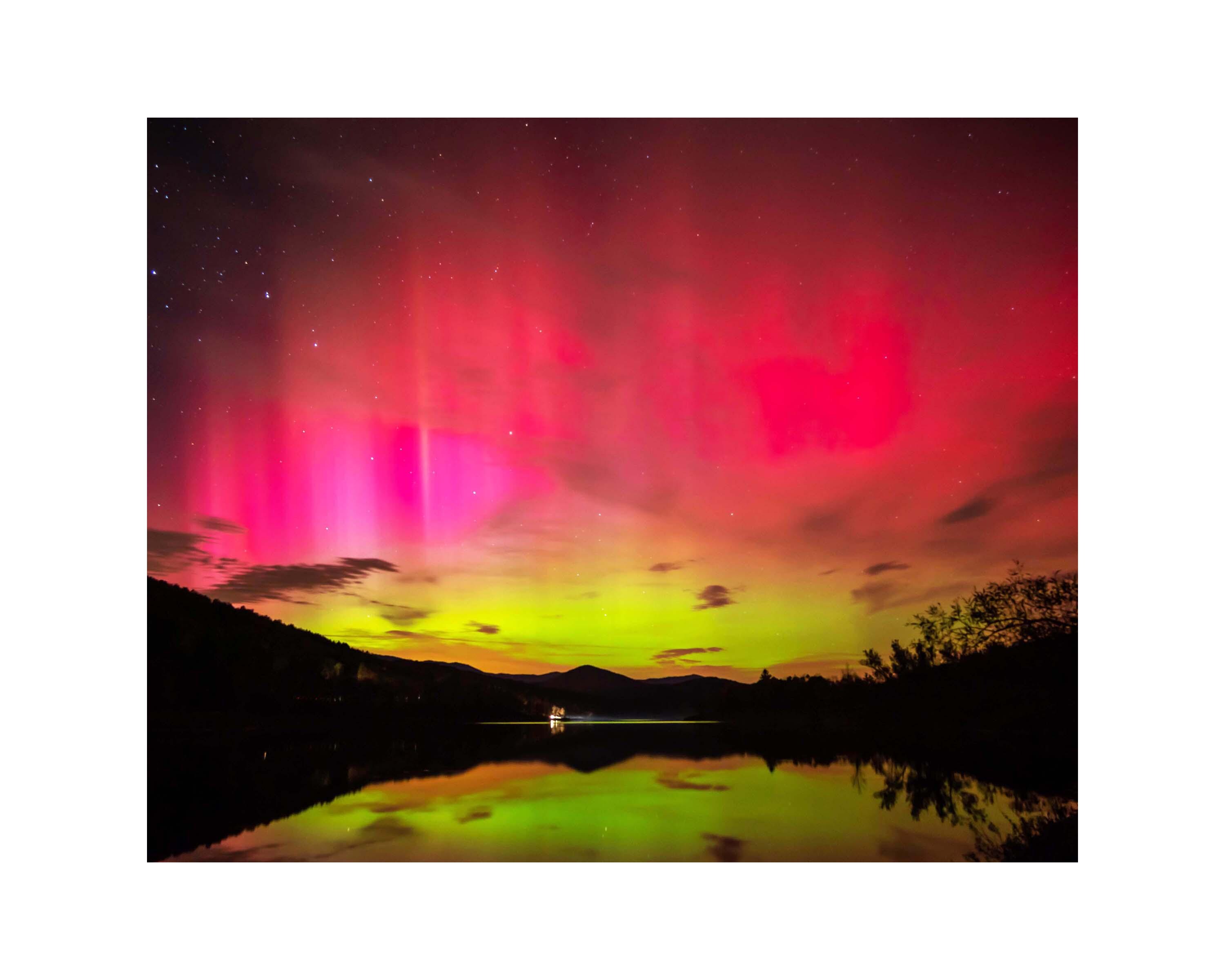
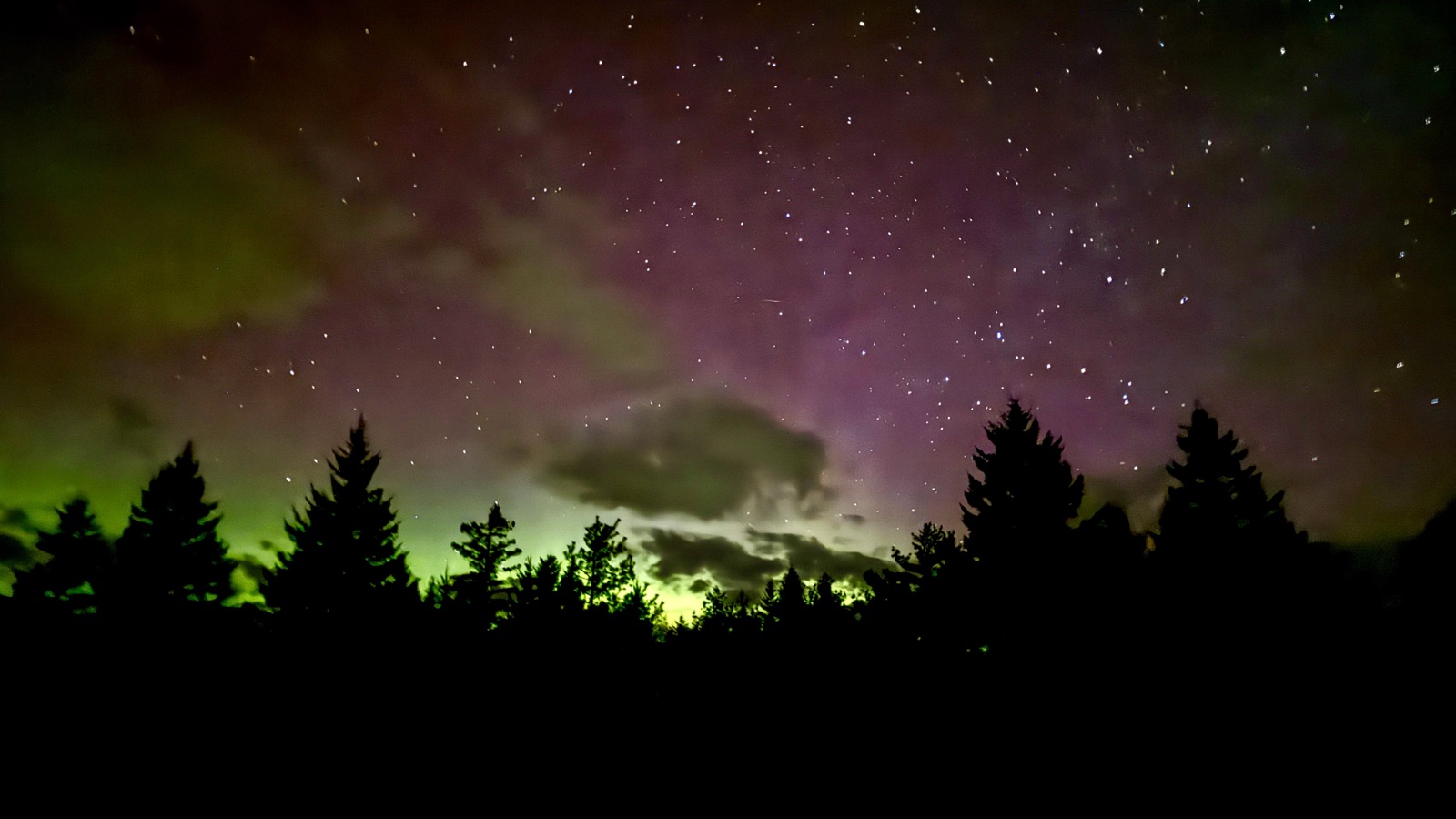
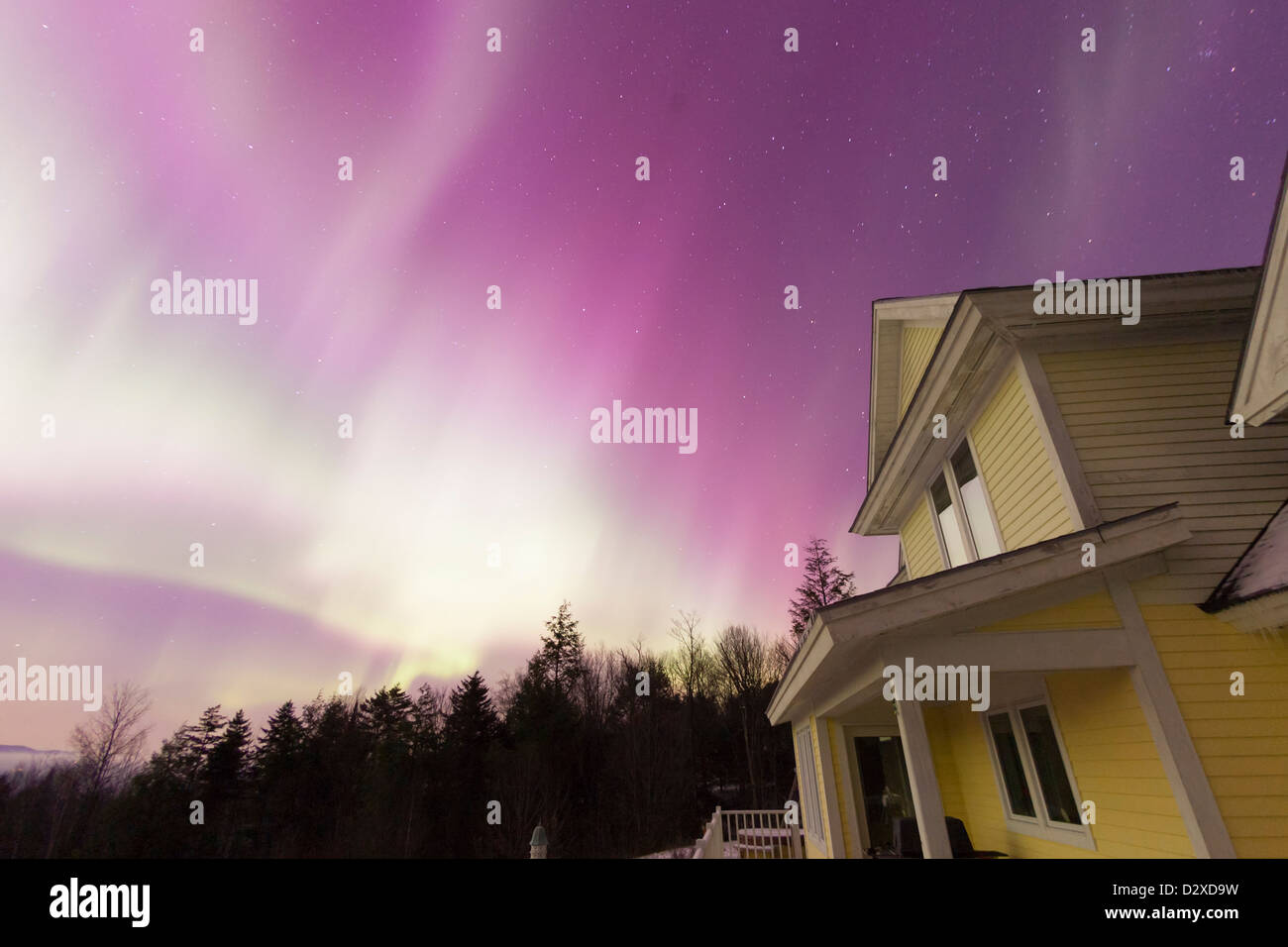
For a Vermont resident or visitor, this means that the aurora is still a regular visitor to the northern horizon. In 2026, a "typical" display in the Green Mountain State appears as a soft green glow low on the horizon, occasionally punctuated by purple or red pillars during G2 or G3 level storms. The infrastructure for "chasing" these lights has matured significantly; real-time satellite data and local Vermont-specific social media groups now provide sub-hour accuracy for visibility windows.
The experience today is less about "stumbling upon" the lights and more about a calculated pursuit. Modern enthusiasts utilize high-sensitivity sensors on smartphones—which by 2026 have nearly eliminated the need for entry-level DSLRs—to capture the phenomenon even when it is barely visible to the naked eye.
Top Locations for Viewing the Aurora in Vermont
Location selection is the most critical factor for success in Vermont. Because the state is heavily forested and mountainous, finding an unobstructed view of the northern horizon is paramount.
The Northeast Kingdom (NEK)
The Northeast Kingdom remains the "Gold Standard" for aurora hunting in Vermont. Counties like Essex and Orleans offer the lowest light pollution levels in the state, often falling into Bortle Class 2 or 3. Today, spots like Island Pond and Lake Willoughby are iconic because they provide large bodies of water that reflect the lights, effectively doubling the visual impact of a display. The lack of major commercial development in the NEK ensures that the northern horizon remains dark.
Lake Champlain and the Champlain Valley
While more populated, the Champlain Valley offers the advantage of a flat, wide-open northern horizon. Sand Bar State Park in Milton is a legendary location today because it allows observers to look north over the water toward the Canadian border. The moisture in the air over the lake can sometimes cause light haze, but the 180-degree view of the sky is unmatched.
High-Elevation Peaks
In 2026, many "chasers" prefer the summits of the Green Mountains. Access roads to locations like Mount Mansfield (via the Toll Road during specific hours) or Burke Mountain provide a vantage point above the localized ground fog that often plagues Vermont valleys. Being at a higher elevation also reduces the amount of atmosphere you are looking through, potentially sharpening the clarity of the auroral "curtains."
Understanding the Forecast: The KP Index and Beyond
In 2026, relying solely on the KP Index is considered an amateur mistake. While the KP Index (ranging from 0 to 9) provides a general idea of global geomagnetic activity, local Vermont visibility depends on the Interplanetary Magnetic Field (IMF).
- The Bz Component: For the aurora to be visible in Vermont, the Bz (the north-south direction of the IMF) must be "southward" or negative. This allows the solar wind to connect with Earth's magnetosphere.
- Solar Wind Speed: High speeds (above 500 km/s) lead to more vibrant, moving displays.
- The Hemispheric Power Index: This provides a more real-time look at how much energy is being dumped into the atmosphere at the poles, which helps predict if the "auroral oval" will stretch far enough south to reach the 44th parallel (Vermont’s latitude).
For a display to be seen clearly in southern Vermont (near Brattleboro), a KP of 7 or higher is typically required. However, for those in the Northeast Kingdom, a KP of 5 is often sufficient for a beautiful photographic display.
Technical Requirements for Aurora Photography in 2026
Capturing the aurora today is significantly easier than it was a decade ago, but the physics of light remain the same. To get a high-quality image of the Vermont sky, specific technical settings are required to overcome the faintness of the light.
- Aperture: Use the widest possible setting (lowest f-number), typically f/2.8 or f/1.8. This allows the maximum amount of light to hit the sensor in the shortest time.
- ISO: In 2026, modern sensors handle high ISOs with very little noise. A setting of 1600 to 3200 is standard for Vermont’s dark skies.
- Shutter Speed: This is the most misunderstood setting. If the aurora is moving quickly (dancing), a shorter shutter speed (2–5 seconds) is needed to capture the "ribbons." If the aurora is a static glow, a longer exposure (10–20 seconds) will pull more color out of the darkness.
- Focus: You must set your focus to "Infinity." Relying on autofocus in the dark will result in blurry images. Most photographers today use a "bright star" method: find a star in the viewfinder, zoom in digitally, and manually adjust until the star is a sharp point.
Comparison of Vermont Viewing Locations
| Location | Region | Bortle Scale | Accessibility | Best Viewing Feature |
|---|---|---|---|---|
| Island Pond | Northeast Kingdom | 2 | Easy (Roadside) | Water reflections; near-zero light pollution. |
| Sand Bar State Park | Champlain Valley | 4 | Easy (Parking) | Unobstructed northern view over Lake Champlain. |
| Mount Mansfield | Central/North | 3 | Moderate (Hike/Drive) | High elevation; view above valley fog. |
| Lake Willoughby | Northeast Kingdom | 2 | Easy (South Beach) | Dramatic cliffs frame the northern sky. |
| Hogback Mountain | Southern VT | 4 | Easy (Overlook) | Accessible for those coming from MA/CT. |
Practical Logistics for the Modern Chaser
If you are planning to see what the aurora is like in Vermont today, you must prepare for the state's unique terrain and weather patterns. Vermont is notorious for sudden cloud cover, which can ruin even the strongest geomagnetic storm.
Weather and "Cloud Chasing"
In 2026, savvy hunters use high-resolution cloud models (such as HRRR or NAM) to find "holes" in the overcast. It is common to drive two hours from a cloudy Burlington to a clear St. Johnsbury to catch a display. The "mountain effect" often means that while one side of the Green Mountains is clouded in, the "leeward" side may have clear patches.
Connectivity and Safety
Many of the best viewing spots in the Northeast Kingdom have limited cellular service, though satellite-enabled smartphones (common by 2026) have mitigated this risk. However, it is essential to download offline maps. Temperatures in the Vermont "dead of night" can drop 20 degrees below the daytime high, so thermal layers and emergency kits are mandatory, especially in winter and shoulder seasons.
Best Seasons for Observation
While the aurora happens year-round, Vermont’s climate makes certain months better than others:
- The Equinoxes (March and September): Known as the "Russell-McPherron effect," the Earth’s magnetic field is more likely to align with the solar wind during the spring and fall equinoxes, leading to more frequent displays.
- Winter (December–February): The air is coldest and driest, which leads to the crispest, clearest views of the stars and aurora. However, deep snow can limit access to remote mountain overlooks.
- Summer (June–August): This is the most difficult time because the nights are very short, and the "astronomical twilight" can linger, washing out faint auroras.
Common Pitfalls to Avoid
The most common mistake people make when looking for the aurora in Vermont today is expecting the vibrant, neon colors seen in long-exposure photographs. To the human eye, a moderate aurora often looks like a "moving gray cloud" or a "silvery mist." It is only when the storm reaches a higher intensity that the greens and purples become vivid to the unaided eye.
Another mistake is "light contamination." Even a single person using a white-light flashlight or a car's headlights can ruin the night vision of everyone in a parking area. Experienced observers use red light headlamps, which preserve the rhodopsin in the eyes, allowing for better detection of the faint auroral glow.
Frequently Asked Questions
Can I see the Northern Lights from Burlington, Vermont?
Yes, but it is difficult due to the city's light pollution. To see them from Burlington today, you generally need a strong geomagnetic storm (KP 6+). Your best bet is to drive 15 minutes north to the Colchester causeway or Malletts Bay, where you can look away from the city lights toward the darker northern sky over the lake.
What is the best app for aurora alerts in 2026?
The "Space Weather Live" app and the NOAA "Aurora Forecast" remain the industry standards. However, for Vermont specifically, many residents use the "Vermont Aurora Hunters" social media groups, which provide real-time "ground truth" reports from people currently standing in fields across the state.
Is the aurora visible every night in Vermont?
No. Even in an active year like 2026, the aurora is an episodic event. It requires a specific combination of solar activity and clear weather. On average, Vermont sees 10 to 20 "photographic" displays per year, with 3 to 5 of those being visible to the naked eye.
Do I need a professional camera to see the lights?
No, but a camera helps you "find" them. Modern smartphones in 2026 have "Night Mode" sensors that can detect a green glow on the horizon before your eyes can. If your phone shows green in a 3-second exposure, stay put—your eyes will likely adjust, or the display may intensify.
Why does Vermont see the aurora more than other East Coast states?
Vermont's advantage is its latitude and its lack of "light domes." Being further north means the auroral oval doesn't have to expand as far to become visible. Furthermore, because Vermont lacks a massive metropolis (like Boston or New York City), the sky remains dark enough to see faint displays that would be invisible elsewhere in New England.
Recommendation for Travelers and Residents
If you want to experience the aurora in Vermont today, the best course of action is to monitor the NOAA Space Weather Prediction Center for a G2 or higher storm watch. Once a watch is issued, clear your schedule for a trip to the Northeast Kingdom. Target the shores of Island Pond or Lake Willoughby between the hours of 10:00 PM and 2:00 AM. Bring a tripod, a red-light headlamp, and plenty of warm layers. Even if the lights don't dance, the Bortle 2 skies of the Kingdom offer a view of the Milky Way that is a spectacular consolation prize.
Image Gallery