Marjane Satrapi’s Life and Choices: A Legacy of Resistance and Artistic Revolution
Marjane Satrapi’s life is a testament to the power of personal narrative in the face of geopolitical upheaval. Through her pivotal choices—to leave Iran, to embrace the graphic novel medium, and to transition into world-class filmmakin...
Marjane Satrapi’s life is a testament to the power of personal narrative in the face of geopolitical upheaval. Through her pivotal choices—to leave Iran, to embrace the graphic novel medium, and to transition into world-class filmmaking—she transformed the perception of Iranian identity and established a new standard for the modern autobiographical memoir.
Contents
The Formative Years: Childhood and the Iranian Revolution
Born in 1969 in Rasht, Iran, Marjane Satrapi grew up in a middle-class, highly educated family in Tehran. Her upbringing was characterized by a blend of Western-style education and a deep-seated Iranian heritage. Her parents, both politically active and secular, provided her with an environment that encouraged critical thinking—a trait that would define her later resistance to authoritarianism.
The 1979 Islamic Revolution serves as the primary catalyst for the choices that defined Satrapi’s early life. At just ten years old, she witnessed the transition from the Pahlavi monarchy to an Islamic Republic. This period was marked by the mandatory imposition of the veil (hijab), the closure of universities, and the suppression of the political freedoms her parents had advocated for. The subsequent Iran-Iraq War (1980–1988) further destabilized the region, creating a backdrop of constant fear and patriotic fervor. Satrapi’s early "choice" was essentially one of survival and rebellion; she frequently challenged the authorities at her school, a behavior that led her parents to fear for her safety.
The First Exile: The Vienna Experience
In 1984, fearing that their daughter’s outspoken nature would lead to her arrest or worse, Satrapi’s parents made the agonizing choice to send her to Vienna, Austria. At age fourteen, Satrapi was thrust into a completely foreign culture without the immediate support of her family. This period, documented in the second half of her memoir Persepolis, highlights the profound isolation of the migrant experience.
In Vienna, Satrapi attended the Lycée Français, but her life outside school was often nomadic and fraught with identity crises. She moved between boarding houses, lived on the streets for a brief period, and struggled with the dissonance between her Iranian identity and the European lifestyle she was expected to adopt. Her choices during this time were often reactionary—experimenting with drugs, navigating failed relationships, and battling a life-threatening bout of pneumonia. These hardships eventually led her to the choice of returning to Iran, a decision that many exiles find difficult to comprehend but which Satrapi viewed as a necessary step to reconcile with her roots.
Return to Iran and the Final Departure
Returning to Tehran in the late 1980s, Satrapi found a country drastically changed by war and religious fundamentalism. Despite the repressive environment, she pursued her education, studying Visual Communication at the Islamic Azad University. It was during this period that she married, a choice she later described as a mistake born out of a desire for traditional stability in an unstable world.
The realization that she could not live a full, creative, and free life under the existing regime led to her final, most consequential choice: leaving Iran for France in 1994. Unlike her first departure, this move was permanent. Settling in Paris, Satrapi entered the world of the "Atelier des Vosges," a community of influential comic book artists including Christophe Blain and Joann Sfar. This environment provided the technical and philosophical groundwork for her transition from a traditional painter to a storyteller.
Choosing the Medium: Why the Graphic Novel?
One of the most significant professional choices Satrapi made was the decision to tell her life story through comics. At the time, the graphic novel was gaining traction as a serious literary form, popularized by works like Art Spiegelman’s Maus. Satrapi recognized that the visual nature of the medium could transcend linguistic and cultural barriers in a way that prose could not.
By choosing a minimalist, black-and-white aesthetic for Persepolis, Satrapi achieved several things:
- Universalization: The simplified drawings allowed readers from any background to project themselves onto the characters.
- Focus on Emotion: The lack of color emphasized the starkness of the political environment and the raw emotional states of the protagonists.
- Historical Documentation: The medium allowed her to blend personal anecdotes with sweeping historical events, making the complex history of Iran accessible to a global audience.
Published between 2000 and 2003, Persepolis became a global phenomenon, translated into dozens of languages and integrated into academic curricula worldwide. It effectively humanized a population that had been demonized in Western media for decades.
The Transition to Cinema and Multimedia Art
As of 2026, Satrapi is recognized as much for her filmmaking as for her graphic novels. Her choice to direct the animated adaptation of Persepolis (2007) was a bold move into a different industry. The film, co-directed with Vincent Paronnaud, won the Jury Prize at the Cannes Film Festival and received an Academy Award nomination. This success proved that her narrative style was not limited to the page.
Satrapi’s subsequent choices in film have shown a refusal to be pigeonholed as "just" an Iranian filmmaker. While Chicken with Plums (2011) stayed within the realm of Iranian folklore and family history, her later works like The Voices (2014) and Radioactive (2019)—a biopic of Marie Curie—demonstrated her range as a director of English-language, live-action cinema. Her choice to direct Radioactive was particularly significant, as it allowed her to explore themes of scientific obsession and the dual-edged nature of discovery, moving beyond the purely autobiographical.
| Milestone | Year | Choice/Action | Impact |
|---|---|---|---|
| Move to Vienna | 1984 | Seeking safety from the Iranian regime. | Exposed Satrapi to European culture and the alienation of exile. |
| Return to Tehran | 1988 | Reconnecting with family and roots. | Highlighted the impossibility of creative freedom under the Republic. |
| Move to Paris | 1994 | Final exile and pursuit of art. | Led to her introduction to the French comic book scene. |
| Persepolis Publication | 2000 | Using the graphic memoir format. | Revolutionized the genre and challenged Western perceptions of Iran. |
| Directorial Debut | 2007 | Transitioning Persepolis to film. | Brought her story to a massive global audience and won at Cannes. |
| Woman, Life, Freedom | 2023 | Editing the collaborative anthology. | Reasserted her role as a leader in the Iranian diaspora’s resistance. |
The Choice of Political Activism in 2026
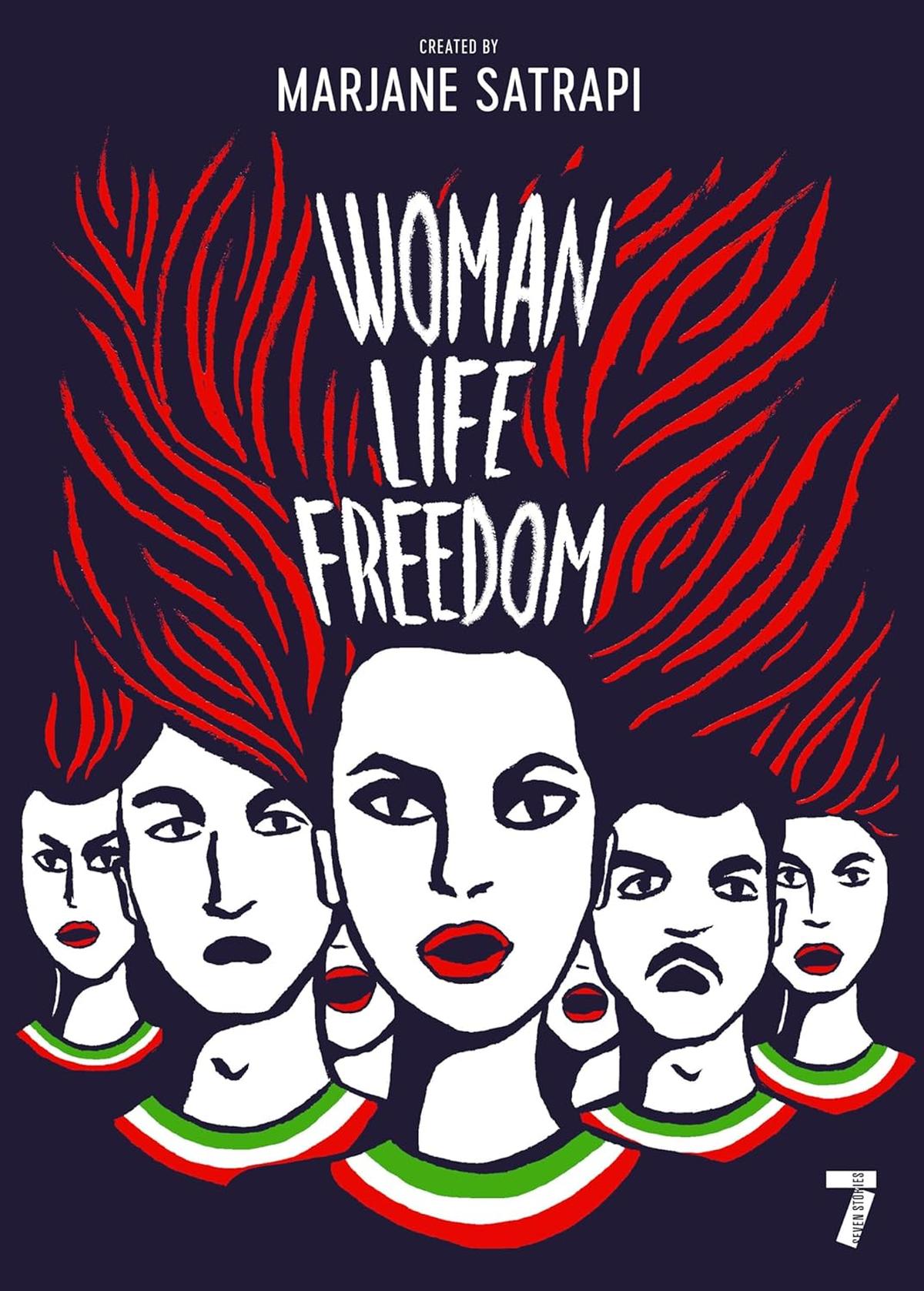
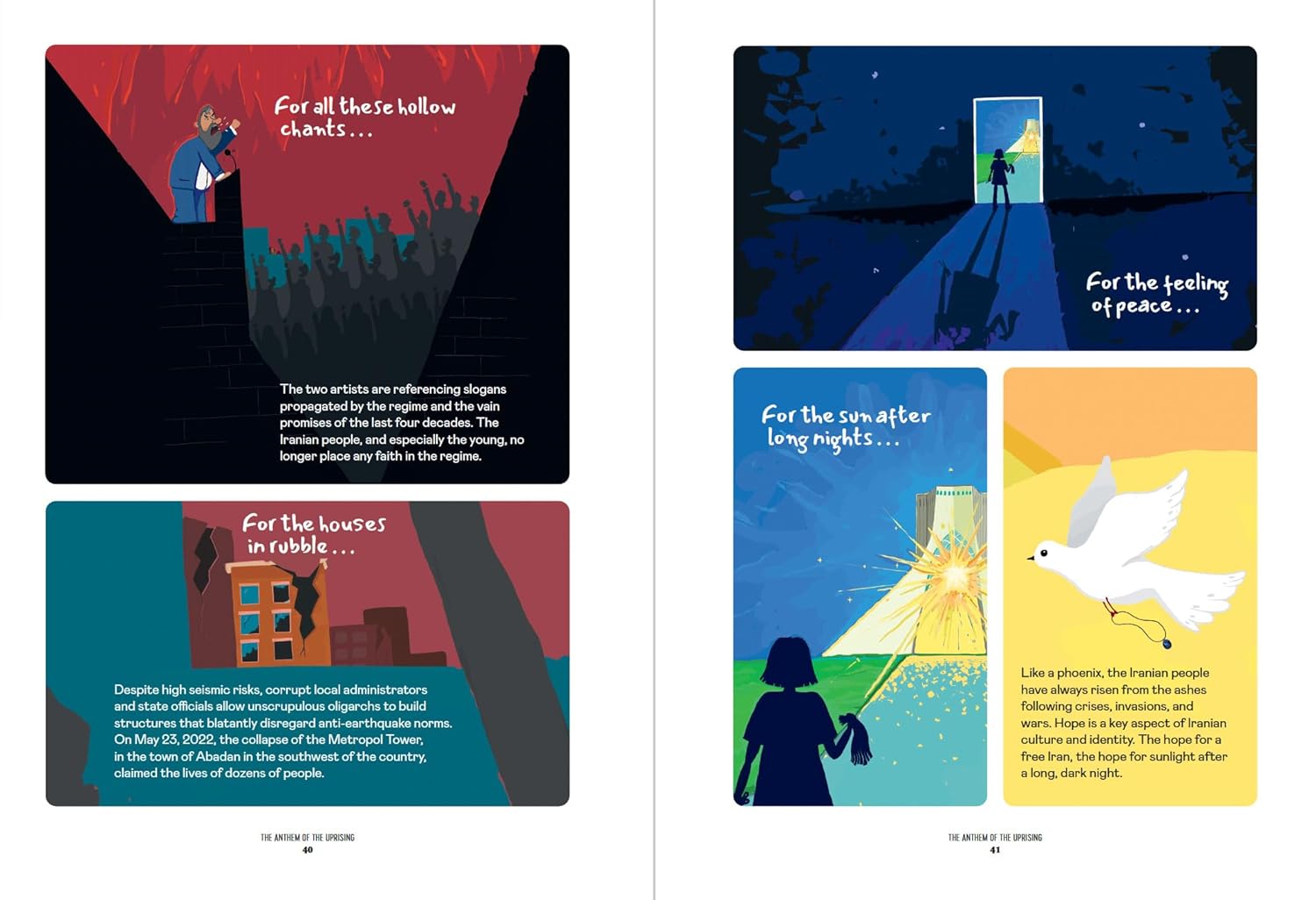
In recent years, particularly following the "Woman, Life, Freedom" protests that began in 2022, Satrapi has reclaimed her role as a vocal critic of the Iranian government. Her choice to curate and contribute to the 2023 anthology Woman, Life, Freedom (released in English as Woman, Life, Freedom: Voices and Images from the 2022 Revolution) signaled a return to her roots.
By 2026, her advocacy has evolved into a sophisticated use of her platform to support grassroots movements within Iran. She has consistently chosen to use her fame not for personal gain, but to ensure that the voices of those still inside the country are heard. This choice comes with personal costs, including the continued inability to return to her homeland and the pressure of being a symbolic figurehead for a complex and often fractured diaspora.
Analysis of Artistic Style and Philosophies
Satrapi’s choices are not merely biographical; they are aesthetic. Her work is characterized by a "sophisticated simplicity." Influenced by German Expressionism and Iranian miniature painting, she utilizes high-contrast visuals to tell stories that are morally complex.
She has famously stated that she does not like "gray" in her art—not because she lacks an understanding of nuance, but because the starkness of black and white reflects the clarity of her moral convictions. This choice of style mirrors her life choices: when faced with oppression, she chooses the clarity of resistance. When faced with artistic stagnation, she chooses the challenge of a new medium.
Frequently Asked Questions
Why did Marjane Satrapi choose to write Persepolis in French?
Satrapi wrote Persepolis in French primarily because she was living in Paris at the time and was part of a French artistic collective. Additionally, writing in a "Western" language allowed her to address a global audience and explain the intricacies of Iranian history to those who had primarily seen the country through the lens of news media and political propaganda.
What was the most difficult choice Marjane Satrapi faced?
While moving to Vienna was traumatic, many biographers and Satrapi herself suggest that the choice to leave Iran permanently in 1994 was the most difficult. This decision meant accepting that she might never see her parents or her homeland again, a sacrifice made in exchange for the freedom to express her artistic and political truths.
Is Marjane Satrapi still active in the film industry in 2026?
Yes, as of 2026, Satrapi continues to be a force in international cinema. Following her work on Paris Memories and her involvement in various human rights documentaries, she has expanded her repertoire to include production and mentorship for younger filmmakers from the Middle East, focusing on stories that challenge traditional narratives.
How did Satrapi’s parents influence her choices?
Her parents were the foundational architects of her independence. By providing her with books, encouraging her to speak her mind, and eventually making the sacrificial choice to send her away for her own safety, they instilled in her the value of personal freedom over societal conformity. Their presence as recurring characters in her work underscores their role as her moral compass.
What is Marjane Satrapi's stance on the veil (hijab)?
Satrapi’s work clearly illustrates her opposition to the mandatory wearing of the veil. She views it as a symbol of state control over women's bodies. However, her stance is nuanced; she emphasizes that the problem is the lack of choice. Whether a woman is forced to wear a veil or forced to take it off, both are forms of oppression that she has criticized throughout her career.
Practical Recommendation: Exploring Satrapi’s Work
For those looking to understand the full scope of Satrapi’s life and choices, the following sequence is recommended:
- Read Persepolis (The Complete Edition): This provides the essential foundation of her life from 1979 to 1994.
- Watch the Persepolis Film: Observe how she translates visual stillness into cinematic motion.
- Read Embroideries: This lesser-known work offers a deep dive into the private lives of Iranian women, showcasing her choice to focus on gender and conversation.
- Explore the Woman, Life, Freedom Anthology (2023): This provides context for her contemporary political choices and her role in the 2020s Iranian resistance movement.
Satrapi’s journey from a rebellious child in Tehran to a global cultural icon is a narrative of resilience. Her life demonstrates that while we cannot always choose our circumstances, we can choose how we document them, how we resist them, and how we transform them into art that serves a greater purpose.
Image Gallery