How Nevada Handles Firefighter Training Workers’ Compensation: Laws, Coverage, and Claims in 2026
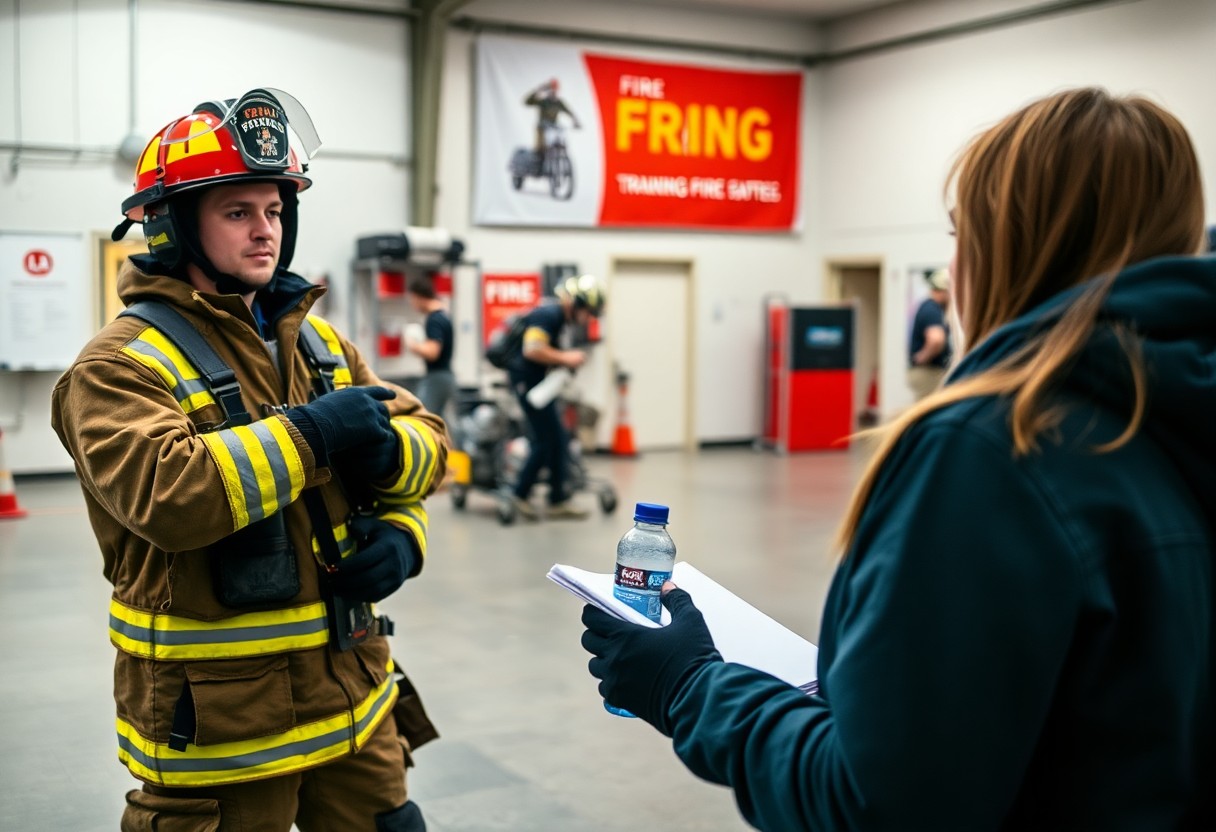
Nevada handles firefighter training workers’ compensation by classifying sanctioned training activities as “within the course and scope of employment.” Under Nevada Revised Statutes (NRS) Chapters 616A through 617, both career and volu...
Nevada handles firefighter training workers’ compensation by classifying sanctioned training activities as “within the course and scope of employment.” Under Nevada Revised Statutes (NRS) Chapters 616A through 617, both career and volunteer firefighters are eligible for medical benefits and disability compensation for injuries sustained during department-authorized drills, academies, and simulated emergencies.
Contents
The state’s approach to protecting first responders recognizes that the inherent risks of the fire service are present long before a crew arrives at a live fire. Training exercises—whether they involve heavy lifting, high-intensity interval training (HIIT), or exposure to hazardous materials in controlled environments—are legally treated with the same weight as active-duty emergency response. As of 2026, Nevada’s legal framework remains one of the most robust in the Western United States for first responder protection, though navigating the nuances between volunteer and career status remains critical for claimants.
The Legal Framework: NRS 616A and the Definition of an Employee
In Nevada, the foundation of workers’ compensation is the definition of "employee." For most industries, this is straightforward, but the fire service includes a mix of full-time career professionals, part-time staff, and volunteers. Nevada law specifically addresses these distinctions to ensure that a lack of a traditional paycheck does not result in a lack of medical coverage.
Career Firefighters vs. Volunteer Firefighters
Under NRS 616A.135, career firefighters are considered employees of the municipality or fire district that employs them. For these individuals, any injury sustained during a mandatory training session is covered under the employer’s industrial insurance policy.
Volunteers are handled under NRS 616A.145. Nevada law creates a "legal fiction" where volunteer firefighters are deemed employees of the county, city, or district they serve for the purposes of workers' compensation. This is vital because it allows a volunteer—who may have a completely different primary career—to access the state’s industrial insurance system if they are injured during a Monday night drill or a weekend certification course.
The "Course and Scope" of Training
For a training injury to be compensable, it must "arise out of and in the course of employment." In the context of 2026 Nevada standards, this includes:
- Sanctioned Department Drills: Regularly scheduled sessions focused on hose deployments, ladder sets, or extrication.
- Physical Fitness Requirements: If a department mandates a specific fitness regimen or test, injuries occurring during these sessions are typically covered.
- State-Mandated Certifications: Training required by the Nevada State Fire Marshal or the Nevada Board of Fire Services.
- Off-Site Academies: Recruits attending a regional fire academy are covered by their sponsoring agency, even if the training occurs outside their home jurisdiction.
Coverage for Training-Related Injuries and Diseases
While many people associate workers’ compensation with sudden accidents—like a fall from a ladder—Nevada law also accounts for the long-term physiological toll of firefighting, much of which begins during the high-intensity repetitions of training.
Traumatic Physical Injuries
Most training claims in Nevada involve musculoskeletal injuries. These include torn ligaments during "forced entry" drills, spinal injuries during lifting exercises, or fractures. Because these are "accidents" with a specific time and place of occurrence, they are governed by NRS 616C, which covers industrial injuries.
Heat Exhaustion and Cardiac Events
Nevada’s climate, particularly in regions like Las Vegas and Reno, creates extreme risks during training. Heat-related illnesses sustained during "hot drills" (training with live fire or in heavy turnouts during summer) are fully compensable. Furthermore, Nevada has strong "heart and lung" presumptions. If a firefighter suffers a cardiac event during or immediately following a strenuous training exercise, state law often presumes the injury is work-related, provided the firefighter has met the minimum service requirements (usually 5 years for certain presumptions).
Toxic Exposure in Training
Modern training often involves "smoke houses" or "burn trailers." While these are controlled, exposure to carcinogens still occurs. If a firefighter develops a covered cancer (as defined in NRS 617.453) and can demonstrate years of participation in training involving products of combustion, they may be eligible for benefits even if the "injury" (the diagnosis) occurs years after the training sessions.
Benefit Calculations for Career vs. Volunteer Personnel
One of the most complex aspects of Nevada’s system is how it calculates monetary benefits for those injured during training, especially for volunteers.
| Feature | Career Firefighters | Volunteer Firefighters |
|---|---|---|
| Wage Basis | Based on actual gross monthly salary. | Based on a statutory "deemed" wage (NRS 616A.145). |
| Medical Coverage | 100% of authorized related medical costs. | 100% of authorized related medical costs. |
| Temporary Total Disability (TTD) | 66.6% of average monthly wage. | Calculated using the statutory minimum/cap. |
| Permanent Partial Disability (PPD) | Based on impairment rating and age. | Based on impairment rating and "deemed" wage. |
| Death Benefits | Payable to surviving spouse/dependents. | Payable to surviving spouse/dependents. |
The "Deemed Wage" for Volunteers
Because volunteers do not receive a standard salary, Nevada law establishes a "deemed wage" for the purpose of calculating disability payments. As of 2026, this amount is adjusted periodically but serves as a floor to ensure that a volunteer who is unable to work their "real" job due to a training injury receives a baseline of financial support. It is important to note that if a volunteer has a high-paying private-sector job, the workers' compensation TTD benefits from the fire service may not fully replace their private-sector income, highlighting the importance of supplemental disability insurance for volunteer members.
The Claims Process for Training Injuries in Nevada
If a firefighter is injured during training, they must follow a specific sequence of actions to preserve their right to benefits. Failure to adhere to these timelines can result in a claim denial.
- Immediate Reporting (Form C-1): The injured firefighter must fill out the Notice of Injury or Occupational Disease (Form C-1). Even if the injury seems minor—such as a "pop" in the knee during a drill—it must be documented within 7 days.
- Medical Treatment (Form C-4): The firefighter must seek treatment from a provider within the employer’s managed care organization (MCO) or preferred provider organization (PPO). The physician will complete the Employee's Claim for Compensation/Report of Initial Treatment (Form C-4). This form is the official "trigger" for the insurance claim.
- Insurer Determination: The insurer has 30 days from the receipt of the C-4 to accept or deny the claim. In training cases, denials often occur if the insurer argues the activity was "horseplay" or not officially sanctioned by the department.
- Appeal Rights: If denied, the firefighter has 70 days to request a hearing before a Hearing Officer at the Department of Administration.
Common Challenges and "Horseplay" Exclusions
A significant point of contention in Nevada workers' compensation cases involving training is the distinction between "authorized training" and "unauthorized activity."
In the fire service culture, physical competition is common. If firefighters are injured during an unofficial "weight-lifting competition" in the station gym that was not part of a mandated fitness program, the insurer may attempt to deny the claim under the "horseplay" doctrine. Nevada courts have generally ruled that if the activity was a "reasonable expectancy" of the job or if the employer acquiesced to the activity, it should be covered. However, it is always safer for departments to clearly document what constitutes "on-duty training."
Furthermore, injuries occurring during "travel to training" can be ambiguous. Generally, Nevada follows the "going and coming rule," which excludes commutes. However, if a firefighter is required to drive their personal vehicle from the station to a remote training site during their shift, the "mission exception" usually applies, and they are covered during that transit.
Presumptive Coverage and Service Requirements
Nevada is known for its Presumptive Laws (NRS 617). These laws state that certain conditions (heart disease, lung disease, cancer, hepatitis) are presumed to be caused by the job. For training to "count" toward the time needed to trigger these presumptions:
- Heart and Lung Presumption: Requires 5 years of service.
- Cancer Presumption: Requires 5 years of service and exposure to known carcinogens (including training exposures).
For a firefighter injured in 2026, the state requires consistent tobacco-free status for many of these presumptions to hold. If a recruit is injured during an academy but has only served 6 months, they do not yet qualify for the "presumption." They would have to prove the injury or disease was directly caused by a specific training event, rather than relying on the legal presumption that comes with tenure.
Recommendations for Nevada Firefighters
To ensure protection under Nevada’s workers' compensation system during training, firefighters and departments should take the following proactive steps:
- Document All Drills: Fire chiefs and training officers must maintain rigorous logs of who participated in which training events and the specific nature of the exercises.
- Clarify Fitness Policies: Departments should have written policies stating that physical fitness training is a requirement of the job to ensure any injuries in the gym are covered.
- Report Everything: Because "minor" training injuries often evolve into chronic issues, the C-1 form should be filed for every incident, regardless of perceived severity.
- Understand Your MCO: Firefighters should know which medical providers are in their department's network before an injury occurs, as Nevada law generally requires using the employer's provider list for workers' compensation.
Frequently Asked Questions
Does Nevada cover PTSD developed from training exercises?
Yes, but with limitations. Nevada law allows for "stress" claims (PTSD) if the stress is caused by an event that is "extraordinary" and "unexpected" compared to the normal stresses of the job. While most training is "expected," a training accident that results in a fatality or a horrific injury to a colleague could qualify for mental health benefits under workers' compensation.
What happens if a volunteer is injured training with a different department?
If a volunteer is participating in a multi-jurisdictional "mutual aid" training exercise that has been authorized by their home department, they are typically covered by their home department’s workers’ compensation insurance. The key is the "authorization"—unauthorized training with another agency may lead to a coverage gap.
Are "recruits" covered during the fire academy?
Yes. In Nevada, fire recruits are considered employees from day one of the academy. Whether they are "sponsored" (already hired by a city) or in some cases part of a specific district program, they are covered for any injuries sustained during the course of their academy instruction.
Can a firefighter sue their department for a training injury instead?
Generally, no. Workers' compensation is an "exclusive remedy" in Nevada. This means that in exchange for guaranteed medical and disability benefits regardless of who was at fault, the firefighter gives up the right to sue their employer for negligence. The only exception is if the employer acted with "deliberate intent" to harm the firefighter, which is an extremely high legal bar.
Does workers' comp cover travel to an out-of-state training conference?
If the department pays for the conference and directs the firefighter to attend, it is considered a "special mission." In these cases, the firefighter is covered from the moment they leave their home until they return, including travel time and the duration of the conference.
Image Gallery