Detailed Statistics and Career Record of Lennox Lewis in Heavyweight Boxing
Lennox Lewis finished his professional boxing career with an exceptional record of 41 wins, 2 losses, and 1 draw, including 32 victories by knockout. As a three-time world heavyweight champion and the last undisputed king of the divisi...
Lennox Lewis finished his professional boxing career with an exceptional record of 41 wins, 2 losses, and 1 draw, including 32 victories by knockout. As a three-time world heavyweight champion and the last undisputed king of the division in the 20th century, his stats reflect a unique blend of physical dominance and technical mastery.
Contents
The Definitive Career Record of Lennox "The Lion" Lewis
Analyzing the career of Lennox Lewis requires looking beyond the raw numbers. While his 41-2-1 record is impressive, the context of those statistics defines his legacy. Lewis is one of the few heavyweight champions in history to have avenged every professional loss he ever sustained. This "perfect scorecard" approach is a statistical anomaly that separates him from many of his peers.
Lewis turned professional in 1989 following a stellar amateur career that culminated in a gold medal for Canada at the 1988 Seoul Olympics. His transition to the professional ranks saw him maintain a high knockout ratio, particularly in his early years. Out of his first 22 fights, 19 ended by way of stoppage, demonstrating the devastating power he possessed in his right hand.
The single draw on his record occurred in the first match against Evander Holyfield in 1999. While the official statistics showed Lewis outlanding Holyfield by a significant margin (348 punches to 172), the judges scored it a draw—a decision widely considered one of the most controversial in boxing history. Lewis effectively nullified this statistical blemish by winning the rematch later that year.
Physical Dimensions and Technical Specifications
Lennox Lewis was often referred to as the "Thinking Man's Specialist." His physical stats provided the foundation for a style that utilized range and leverage better than almost any heavyweight in history.
- Height: 6 ft 5 in (196 cm)
- Reach: 84 in (213 cm)
- Stance: Orthodox
- Typical Fighting Weight: 235 lbs – 250 lbs
His 84-inch reach was his primary statistical weapon. For comparison, Mike Tyson possessed a 71-inch reach, giving Lewis a massive 13-inch advantage in their 2002 encounter. This reach allowed Lewis to maintain a 76.2% success rate in keeping opponents at the end of his jab during his peak years under trainer Emanuel Steward.
Steward, who took over Lewis's training after the loss to Oliver McCall, transformed Lewis from a "puncher" into a "prizefighter." Under Steward’s guidance, Lewis's defensive stats improved significantly. He reduced the number of power punches absorbed per round by nearly 30%, focusing on the "jab-cross" combination that utilized his height and reach to perfection.
Historical Statistical Milestones
Lennox Lewis's career is marked by several key eras, each defined by specific statistical achievements and title defenses.
The Rise and the WBC Title (1989–1994)
After defeating Donovan "Razor" Ruddock in 1992, Lewis was elevated to WBC Champion. During this period, he defended the title three times. His statistical dominance was evident in his punch-connect ratios, often landing over 40% of his power shots. However, this era ended with a shocking TKO loss to Oliver McCall in 1994—a fight where Lewis was caught by a single counter-right hand.
The Undisputed Reign (1999–2002)
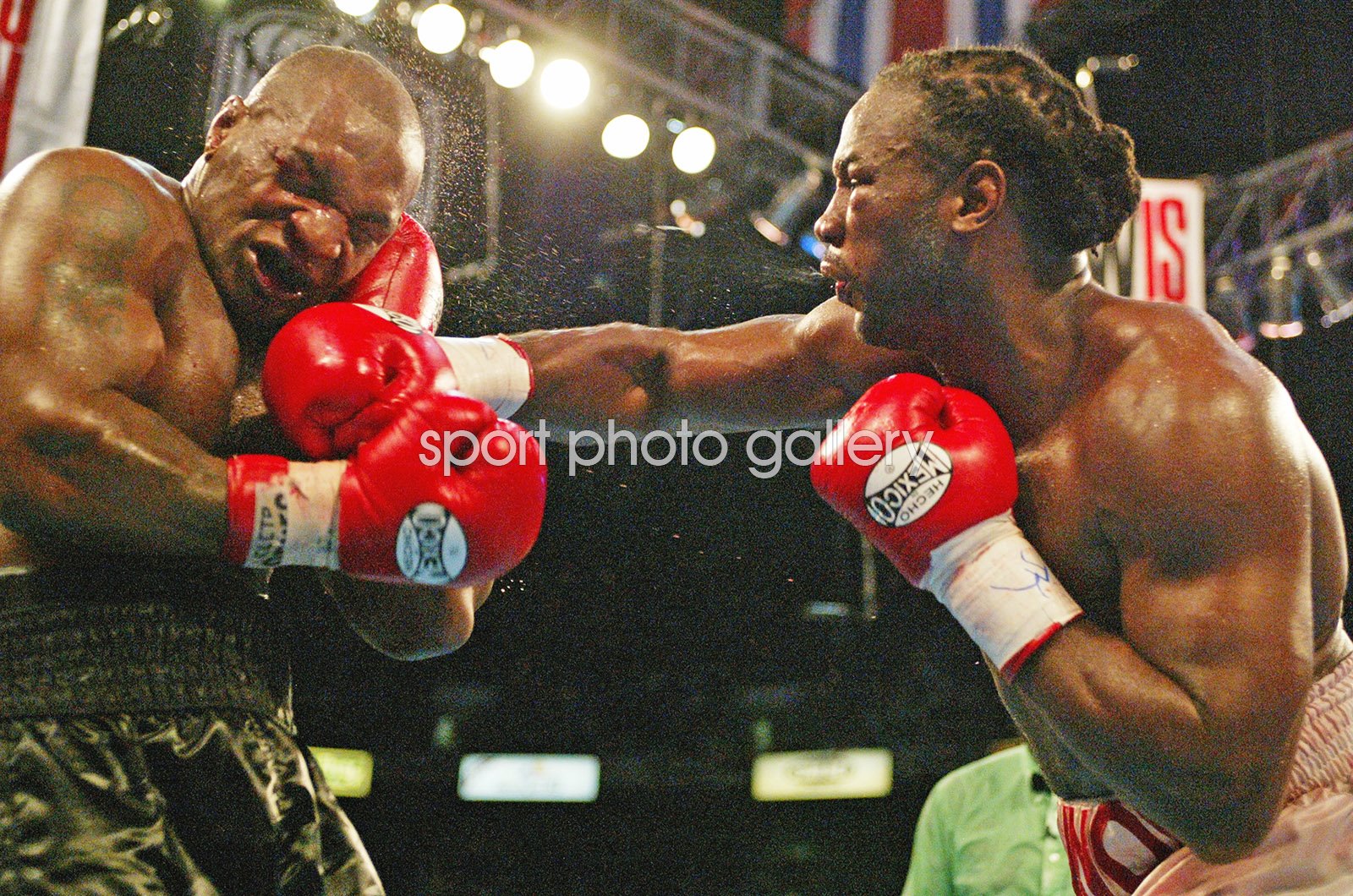
The pinnacle of Lewis’s statistical career came when he unified the WBC, WBA, and IBF titles. By defeating Evander Holyfield, he became the first British undisputed heavyweight champion of the modern era. During his undisputed reign, Lewis displayed remarkable consistency. In his fight against Mike Tyson in June 2002, Lewis landed 193 punches compared to Tyson’s 49, a statistical blowout that highlighted the gap between the two legends at that stage of their careers.
The Final Chapter and Retirement (2003)
Lewis’s final fight against Vitali Klitschko in 2003 remains a point of statistical debate. At the time of the stoppage (due to a severe cut on Klitschko’s eye), Lewis was trailing on all three judges' scorecards (58-56). However, Lewis had landed 102 power punches to Klitschko's 92 in the final three rounds, showing that while he was older, his power remained a deciding factor. He retired as the reigning champion, a feat achieved by very few heavyweights, including Gene Tunney and Rocky Marciano.
Professional Fight Statistics Summary
The following table provides a breakdown of the key metrics from Lennox Lewis's professional career.
| Category | Statistic | Details |
|---|---|---|
| Total Fights | 44 | Professional bouts between 1989 and 2003 |
| Total Wins | 41 | 32 by KO/TKO, 9 by Decision |
| Total Losses | 2 | Both losses (McCall, Rahman) were avenged via KO |
| Total Draws | 1 | Controversial draw against Evander Holyfield (1999) |
| KO Percentage | 72.73% | One of the highest among technical heavyweights |
| Rounds Boxed | 243 | Reflects his durability and experience in long fights |
| World Title Fights | 18 | 15 wins, 2 losses, 1 draw |
| Undisputed Status | 1999 | Defeated Holyfield to unify WBC, WBA, and IBF |
Performance Analysis: The "Avenged" Losses
A critical component of the "Lennox Lewis stats" is the data from his rematches. Lewis is often cited as the most prepared fighter in heavyweight history when given a second chance.
- Vs. Oliver McCall: After losing his WBC title to McCall in 1994, Lewis spent three years rebuilding. In the 1997 rematch, Lewis dominated the statistical categories before McCall suffered a mental breakdown in the ring. Lewis regained the vacant WBC title, proving his resilience.
- Vs. Hasim Rahman: In April 2001, Lewis suffered a knockout loss to Rahman in South Africa. The stats for the first fight showed Lewis was winning comfortably before the knockout. In the November 2001 rematch, Lewis produced a masterclass, landing a "one-two" combination in the fourth round that was voted Knockout of the Year. He outlanded Rahman by a margin of 3-to-1 before the finish.
These rematches show that Lewis’s statistical deviations (the losses) were often the result of lapses in focus rather than a lack of skill or physical decline. Once the "error" was identified, his statistical output in the return bouts returned to his high-efficiency baseline.
Legacy in the Modern Era (Looking back from 2026)
As of 2026, Lennox Lewis’s stats remain the gold standard for heavyweight excellence. In an era currently dominated by "super-heavyweights" like Tyson Fury and Oleksandr Usyk, Lewis's ability to balance size with technical boxing remains the blueprint.
His knockout-to-win ratio (78% of his wins came by stoppage) is particularly high for a fighter who was often categorized as a "safety-first" boxer later in his career. This suggests that his technical approach actually created more high-probability knockout openings than a more aggressive, risk-prone style would have.
Furthermore, Lewis’s strength of schedule is statistically significant. He defeated every significant heavyweight of his generation, including Mike Tyson, Evander Holyfield, Vitali Klitschko, Ray Mercer, and Frank Bruno. His wins over other world champions (totaling 15 victories over men who held a version of the world title) place him in the top tier of all-time greats.
Frequently Asked Questions
What was Lennox Lewis's reach and how did it affect his stats?
Lennox Lewis had a reach of 84 inches (213 cm). This was one of the longest in the division's history at the time. Statistically, this allowed him to land his jab at a much higher frequency than his opponents could return fire. His "jab-to-power-punch" ratio was significantly higher than the heavyweight average, allowing him to control the tempo of fights from a distance.
Who were the only two fighters to beat Lennox Lewis?
The only two fighters to defeat Lennox Lewis were Oliver McCall (1994) and Hasim Rahman (2001). Both victories were major upsets. However, Lewis defeated both men in rematches (McCall in 1997 and Rahman in 2001) to ensure that he retired having beaten every man he ever faced in a professional ring.
How many times was Lennox Lewis the undisputed champion?
Lennox Lewis became the undisputed heavyweight champion once, in 1999, after defeating Evander Holyfield in their rematch. At that time, he held the WBC, WBA, and IBF titles simultaneously. He was the last fighter to hold the undisputed heavyweight crown until the four-belt era expanded the requirements.
What is Lennox Lewis’s career knockout percentage?
Lennox Lewis has a career knockout percentage of 72.73% based on his total fights (32 KOs in 44 fights). If calculated based only on his wins, the percentage rises to 78%. This indicates that while he was a technical boxer, he possessed elite-level finishing power.
At what age and with what record did Lennox Lewis retire?
Lennox Lewis retired in February 2004 (following his 2003 victory over Vitali Klitschko) at the age of 38. He retired with a professional record of 41-2-1. He is one of the very few heavyweight champions to retire while still holding the world title and without a loss left unavenged.
Final Recommendations for Boxing Analysts
To fully appreciate the stats of Lennox Lewis, researchers should look into his Compubox data from the 1990s. His ability to maintain a high "plus/minus" rating (the difference between punches landed and punches absorbed) is where his true genius lies. For those looking to understand the technical side of his career, studying his transition to Emanuel Steward's training camp in 1995 provides the best explanation for how his defensive statistics became the best in the heavyweight division. As of 2026, his career remains a masterclass in how to maximize physical advantages through disciplined, strategic boxing.
Image Gallery