The Evolution and Controversy of the World’s First Spoof Rock Band
The title of the first spoof rock band is a subject of significant debate among music historians, typically contested between The Monkees, The Rutles, and Spinal Tap. While The Monkees (1966) were a manufactured television act, The Rut...
The title of the first spoof rock band is a subject of significant debate among music historians, typically contested between The Monkees, The Rutles, and Spinal Tap. While The Monkees (1966) were a manufactured television act, The Rutles (1975) are widely recognized as the first intentional satirical deconstruction of a specific group, whereas Spinal Tap (1979) pioneered the "mockumentary" genre.
Contents
Defining the Spoof Rock Band: Satire vs. Sincerity
To understand the rise of the spoof rock band, one must first distinguish between a "novelty act" and a "spoof band." Novelty acts, such as Sheb Wooley or Tiny Tim, relied on gimmickry or singular funny songs. A spoof band, however, is a conceptual entity that mirrors the structure, aesthetics, and career trajectory of a real musical movement or specific artist, often maintaining the "bit" across entire albums, films, and live tours.
As of 2026, musicologists continue to argue over the exact criteria for this classification. Does a band count as a spoof if the members eventually become a "real" band? Does it require a specific target for its parody, or can it satirize an entire genre? This ambiguity is where the debate regarding the "first" truly begins. The evolution of this medium required a shift from simple imitation to sophisticated satire—a transition that mirrored the growing complexity of rock music itself during the late 1960s and 1970s.
The Monkees: The Manufactured Precursor (1966)
The Monkees are often cited as the earliest example of a fictional band that transcended the screen. Created by producers Bob Rafelson and Bert Schneider for a television series inspired by The Beatles' film A Hard Day's Night, Micky Dolenz, Davy Jones, Michael Nesmith, and Peter Tork were originally actors hired to play musicians.
The Debate of Authenticity
The primary argument against The Monkees being the "first spoof band" is their intent. They were not designed to satirize rock and roll; they were designed to profit from it. However, the "spoof" element arose from the meta-narrative of the show, which frequently broke the fourth wall and poked fun at the music industry.
By 1967, the band rebelled against their "manufactured" status, eventually gaining control over their instruments and songwriting. This transition from a fictional television trope to a legitimate, chart-topping touring act complicates their legacy. While they functioned as a parody of Beatlemania in their early episodes, their genuine musical success moved them out of the realm of pure satire and into the history books as a legitimate pop-rock powerhouse.
The Rutles: The First True Parody (1975–1978)
If The Monkees were a corporate imitation, The Rutles were a surgical satire. Created by Neil Innes and Eric Idle, The Rutles (the "Pre-Fab Four") first appeared on the British comedy series Rutland Weekend Television in 1975 before starring in the 1978 mock-documentary All You Need Is Cash.
Neil Innes and Musical Verisimilitude
The rise of The Rutles was predicated on the musical genius of Neil Innes. Unlike many parody writers who rely on "funny" lyrics set to generic tunes, Innes wrote songs that were "pastiches." Tracks like "Ouch!" (a parody of "Help!") and "Cheese and Onions" (a parody of Lennon’s psychedelic period) were so musically accurate that they captured the essence of The Beatles without infringing on copyrights.
The Rutles were the first to treat the history of a band as a subject for academic-style mockery. They didn't just mock the music; they mocked the myths—the press conferences, the spiritual retreats to India, and the messy corporate dissolution. George Harrison was a noted fan and even had a cameo in the film, which added a layer of "official" blessing to the parody. This level of specific, high-concept satire makes The Rutles the strongest candidate for the title of the first "true" spoof rock band.
Spinal Tap: Genre Satire and the Mockumentary (1979–1984)
While The Rutles targeted a single band, Spinal Tap targeted the entire culture of heavy metal and hard rock. Though the film This Is Spinal Tap was released in 1984, the band first appeared in a 1979 sketch on the ABC pilot The TV Show.
The Rise of the "Loudest Band in England"
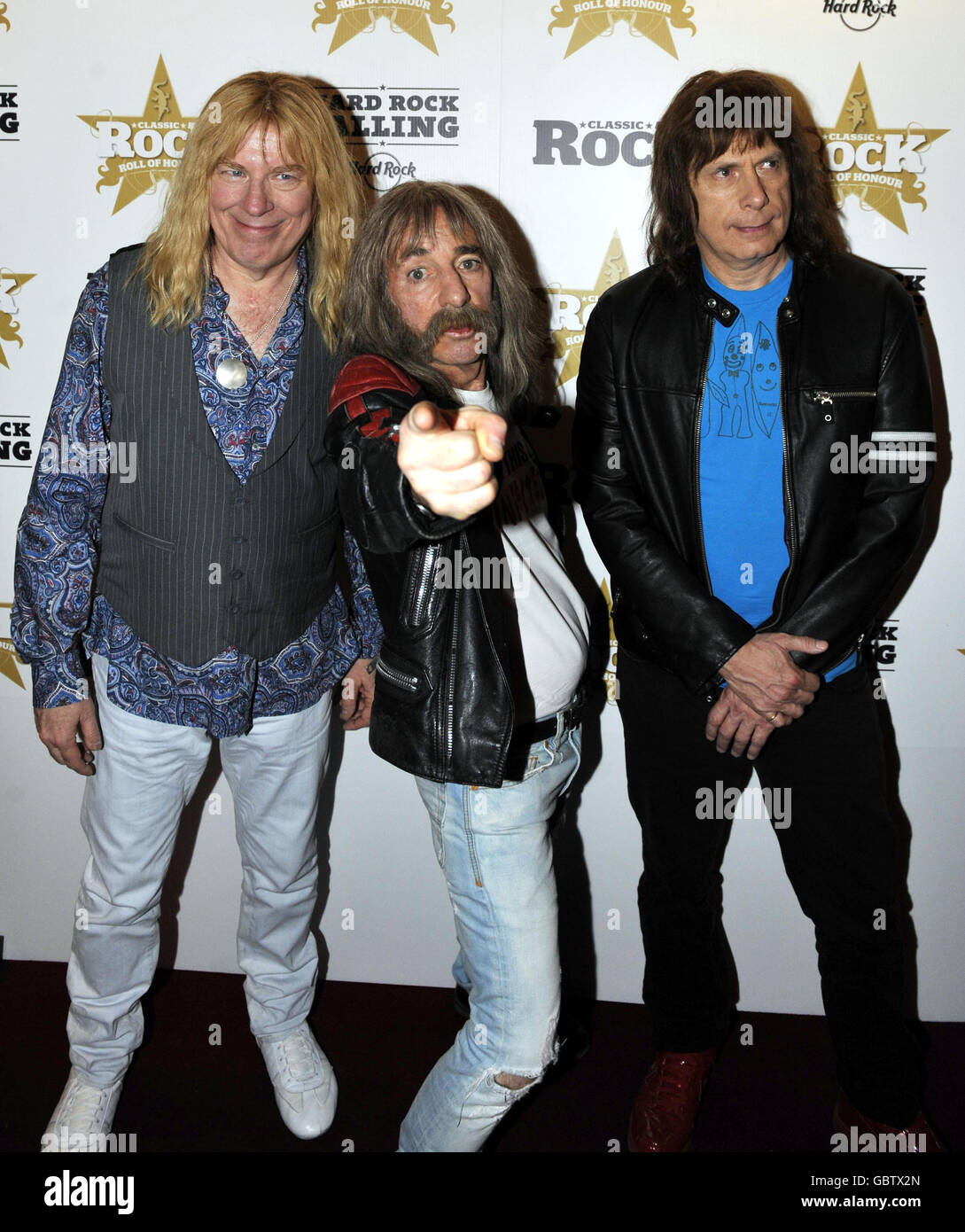
Spinal Tap, consisting of Michael McKean, Christopher Guest, and Harry Shearer, took the concept of the spoof band to its logical extreme. They utilized improvisational comedy to document the decline of a fictional British metal band. Their influence was so profound that real-life musicians, from Aerosmith to U2, have admitted to seeing their own absurdities reflected in the film’s "Smell the Glove" tour mishaps.
The debate surrounding Spinal Tap often centers on whether they are a "spoof" or a "tribute." Because the actors actually played their instruments and wrote the songs, and because they have toured periodically for decades (including high-profile appearances through the 2020s), they have occupied a unique space where the parody is indistinguishable from the reality of an aging rock band.
Comparative Analysis of Early Spoof Entities
The following table compares the three primary contenders for the "first spoof band" title based on their origins, intent, and musical output.
| Feature | The Monkees | The Rutles | Spinal Tap |
|---|---|---|---|
| Debut Year | 1966 | 1975 | 1979 |
| Primary Medium | Television Sitcom | Sketch Comedy / Film | Mockumentary Film |
| Original Intent | Commercial Profit / TV Entertainment | Specific Satire of The Beatles | Genre Satire of Heavy Metal |
| Musical Style | Pop-Rock / Psychedelia | Accurate Beatles Pastiche | Hard Rock / Heavy Metal |
| Creator(s) | Rafelson & Schneider | Neil Innes & Eric Idle | Guest, McKean, Shearer, Reiner |
| Long-Term Legacy | Became a "Real" Band | Cultural Satire Icon | Defined the Mockumentary Genre |
The Core Debate: What Defines the "First"?
The controversy over which band holds the "first" title usually boils down to how one defines the word "spoof."
- The Chronological Argument: If the definition is "a fictional band created for media that then released music," The Monkees win. However, many argue that their lack of initial satirical intent disqualifies them.
- The Satirical Intent Argument: If the definition is "a band created specifically to satirize the music industry," The Rutles win. They were the first to use the "spoof" format to deconstruct the mythology of rock stardom.
- The Cultural Impact Argument: If the definition is "the band that established the spoof as a viable sub-genre of rock," Spinal Tap is the clear winner. Their influence on how we perceive rock documentaries is unparalleled.
The Role of the Bonzo Dog Doo-Dah Band
A deeper look into the archives often brings up the Bonzo Dog Doo-Dah Band, of which Neil Innes was a founding member. In the mid-1960s, the Bonzos were already performing surrealist parodies of 1920s jazz and 1960s psych-rock. While they were a "real" art-school band, their entire raison d'être was the deconstruction of musical tropes. Some historians argue that without the Bonzos, the concept of the spoof rock band would never have gained the intellectual footing necessary to produce The Rutles.
Impact on Music History and Media
The rise of these bands changed the way the public consumed music and how artists managed their personas. Before the spoof band, rock stars were often viewed as untouchable icons. The Rutles and Spinal Tap humanized the industry by highlighting its ridiculousness—the oversized egos, the nonsensical lyrics, and the "none more black" marketing gimmicks.
By 2026, the spoof band has evolved into a digital-first phenomenon. Contemporary acts like Steel Panther (parodying 80s hair metal) or various viral YouTube projects owe their existence to the groundwork laid in the 1960s and 70s. These early pioneers proved that a band could be "fake" and yet produce music that was technically proficient, emotionally resonant, and culturally significant.
Furthermore, the legal and intellectual property debates sparked by these bands—specifically regarding the line between "parody" and "plagiarism"—have shaped modern copyright law. The Rutles, for instance, faced legal challenges from ATV Music (which then owned the Beatles' catalog), leading to a settlement that acknowledged Innes's songs as original works while granting the Beatles' publishers a share of the royalties.
Frequently Asked Questions
Did The Beatles ever sue The Rutles?
No. In fact, George Harrison was a primary supporter and appeared in the film All You Need Is Cash. While there were legal discussions regarding music publishing rights between the owners of the Beatles' catalog (ATV) and Neil Innes, the relationship between the actual musicians was friendly and collaborative.
Are The Monkees considered a real band now?
Yes. Despite their manufactured beginnings, the members eventually wrote their own songs and played their own instruments. They are widely respected as a legitimate part of the 1960s pop-rock canon, with several of their albums considered classics of the era.
Is Spinal Tap a real band or just actors?
They are both. Michael McKean, Christopher Guest, and Harry Shearer are accomplished musicians who write and perform all their own material. They have toured the world as Spinal Tap, performing "in character" at major festivals and venues, effectively becoming the very thing they satirized.
Who wrote the songs for The Rutles?
Neil Innes wrote all the songs. He was a veteran of the Bonzo Dog Doo-Dah Band and a frequent collaborator with the Monty Python troupe. His ability to mimic the melodic and harmonic structures of Lennon and McCartney is considered one of the greatest feats in musical parody.
What was the first mockumentary?
While This Is Spinal Tap popularized the term "mockumentary," The Rutles: All You Need Is Cash (1978) predates it as a feature-length parody film shot in a documentary style. Earlier examples exist in television, such as the BBC's "spaghetti tree" April Fools' hoax, but in the context of rock music, The Rutles were the pioneers.
Recommended Next Steps for Music Historians
For those interested in the technicalities of musical satire, the next step is to analyze the discography of Neil Innes. His work provides a masterclass in how to bridge the gap between comedy and legitimate composition. Additionally, exploring the Library of Congress National Film Registry, which includes This Is Spinal Tap, offers insight into how these spoof entities are preserved as significant cultural artifacts.
If you are a musician looking to explore the genre, study the Rock & Roll Hall of Fame’s resources on the British Invasion and the 1980s metal scene to understand the archetypes that these bands so effectively dismantled. Understanding the "target" is essential to appreciating the genius of the "spoof."
Image Gallery