Comprehensive Incident Response Plan for Cyber Security in 2026
An incident response plan (IRP) is a formal, documented strategy that guides an organization’s reaction to cyber security breaches, data theft, or system failures. It establishes specific procedures for detecting, containing, and neutr...
An incident response plan (IRP) is a formal, documented strategy that guides an organization’s reaction to cyber security breaches, data theft, or system failures. It establishes specific procedures for detecting, containing, and neutralizing threats while minimizing operational downtime and ensuring legal compliance through structured communication and forensic recovery efforts.
Contents
In 2026, the landscape of cyber threats has evolved into a sophisticated ecosystem of AI-driven automation and supply-chain vulnerabilities. For modern enterprises, having a "general idea" of how to handle a breach is no longer sufficient. Regulators, insurers, and stakeholders now demand a battle-tested Incident Response Plan that serves as a living document, integrated with real-time defensive technologies.
The Foundation of a Modern Incident Response Plan
A robust incident response plan is built upon established frameworks, primarily the NIST SP 800-61 Rev. 2 (Computer Security Incident Handling Guide) or the SANS Institute’s 6-Step Process. While these frameworks provide the skeleton, a 2026-ready plan must flesh out these bones with specific organizational context, including cloud-native environments, hybrid workforces, and third-party API dependencies.
The primary goal of an IRP is to move from a reactive "panic mode" to a proactive "orchestration mode." When a breach occurs, the plan dictates who is in charge, which systems take priority for restoration, and how evidence is preserved for potential litigation or insurance claims. Without this roadmap, organizations often suffer from "analysis paralysis," where conflicting priorities between IT, legal, and executive leadership delay critical containment actions.
Regulatory and Compliance Drivers
As of 2026, compliance requirements have reached a new peak of stringency. Organizations operating globally must align their IRPs with the SEC’s 4-day reporting rule for material incidents, the European Union’s Digital Operational Resilience Act (DORA), and the updated NIS2 Directive. These regulations do not just require a plan; they require proof that the plan has been tested through tabletop exercises and that the organization has the capability to report specific impact metrics within hours of discovery.
The Six Essential Phases of Incident Response
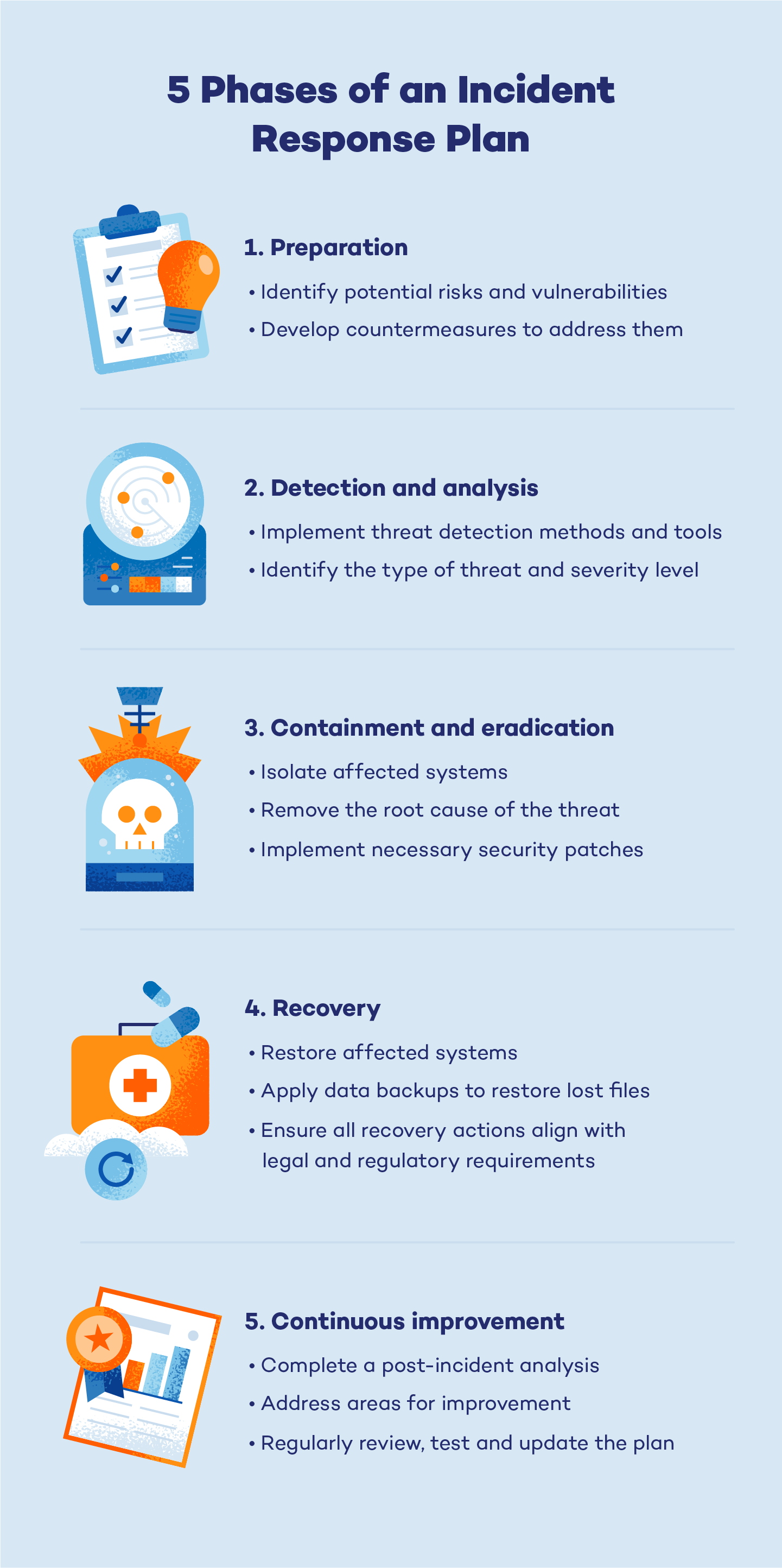
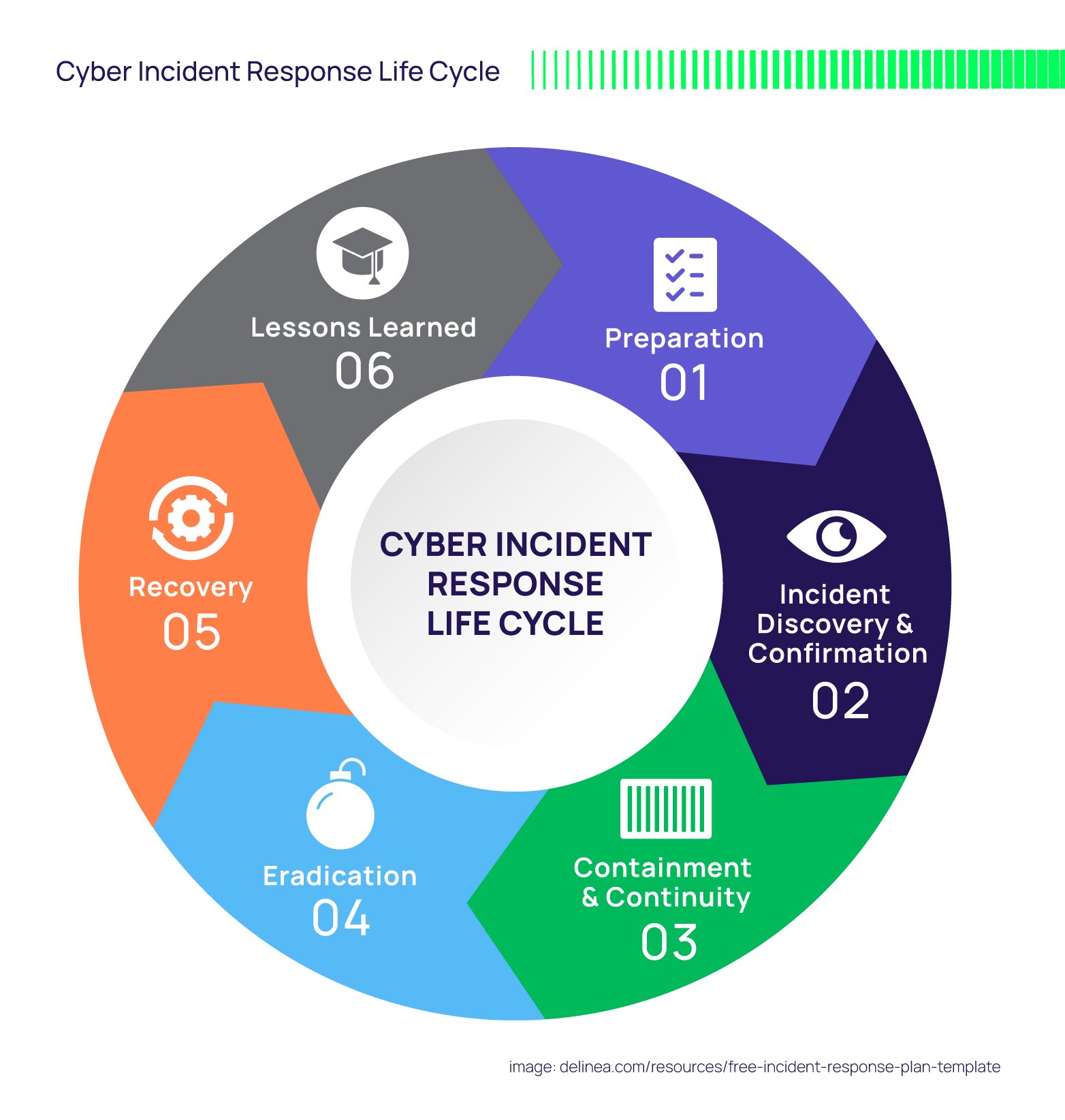
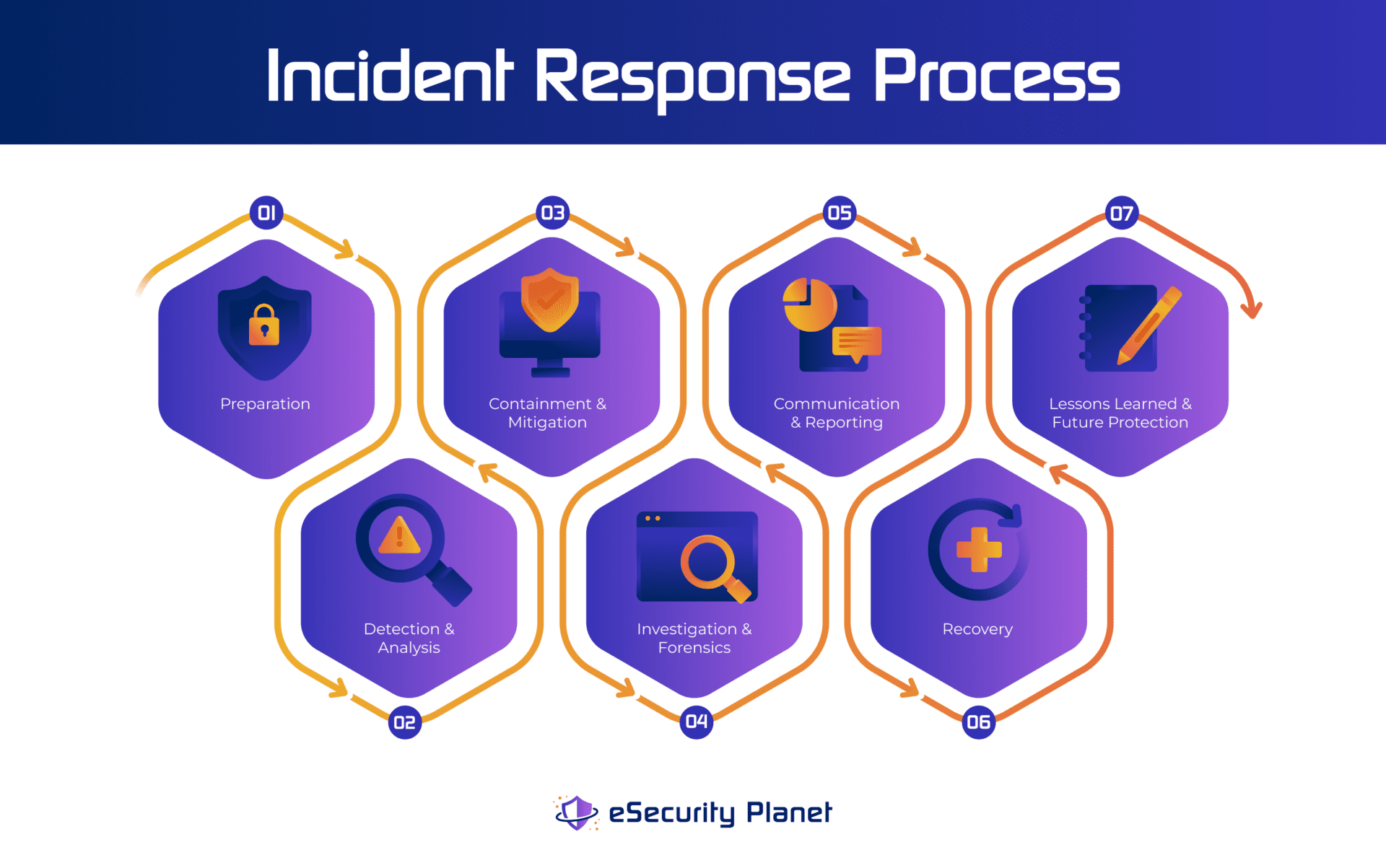
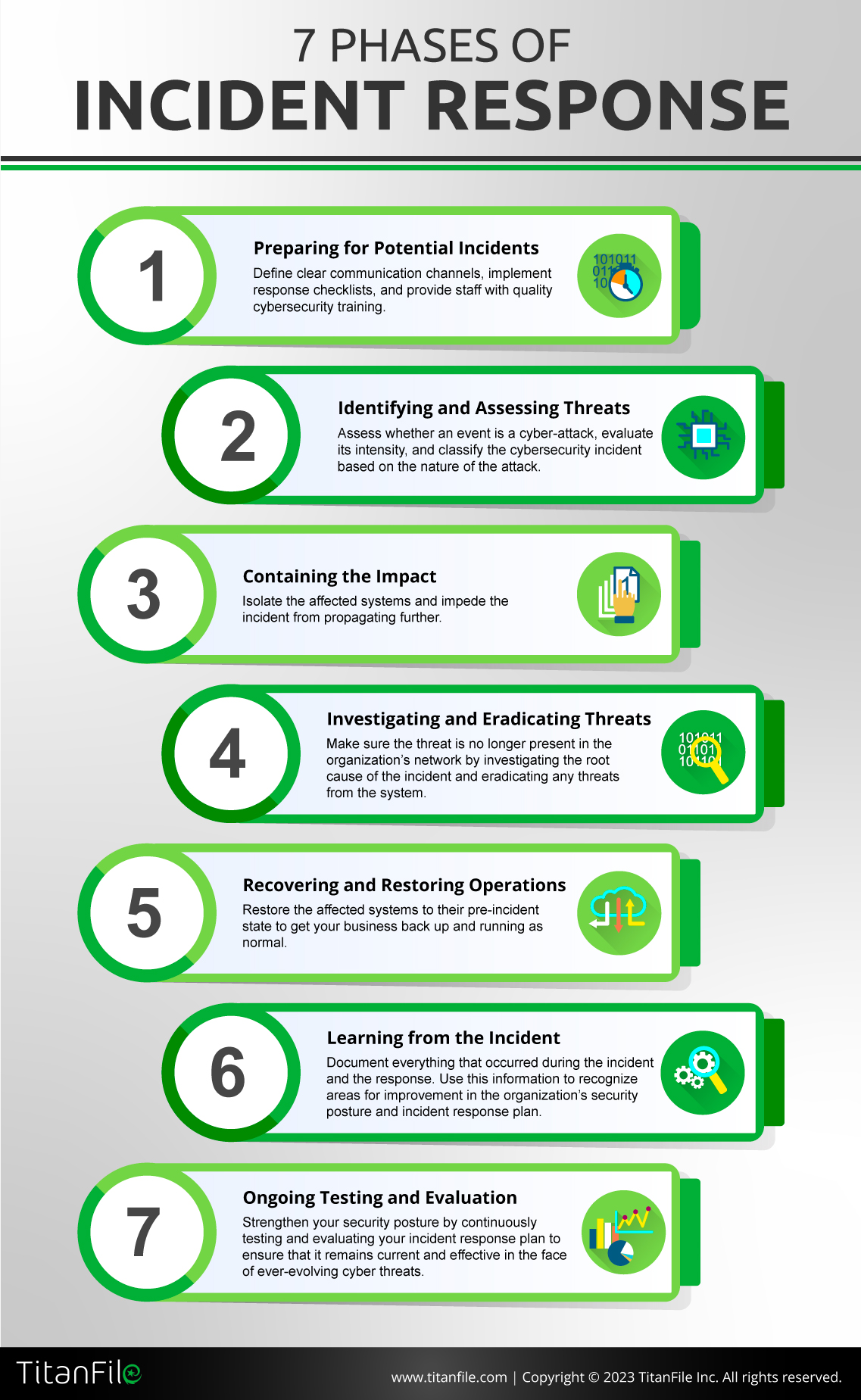
Following the SANS/NIST hybrid model, a comprehensive IRP must detail actions across six distinct phases. Each phase requires specific triggers, assigned personnel, and documented outputs.
1. Preparation: The Most Critical Phase
Preparation is the only phase that occurs before an incident. In 2026, this involves more than just writing a PDF. It includes:
- Asset Inventory: Maintaining an automated, real-time map of all hardware, software, and data assets, including shadow IT and cloud containers.
- Risk Assessment: Identifying "crown jewel" assets—the data or systems whose loss would terminate business operations.
- Tooling Integration: Ensuring that Security Orchestration, Automation, and Response (SOAR) tools are pre-configured with playbooks for common threats like ransomware or credential stuffing.
- Training: Conducting regular simulations that involve not just IT, but also HR, Legal, and PR departments.
2. Identification and Detection
This phase focuses on distinguishing "events" (routine occurrences) from "incidents" (actual threats). In a high-noise environment, security teams rely on Extended Detection and Response (XDR) and AI-enhanced Security Information and Event Management (SIEM) systems to filter alerts.
- Indicators of Compromise (IOCs): The plan should list sources for threat intelligence to help identify signatures of known attackers.
- Scope Definition: Once a threat is confirmed, the team must determine the "blast radius"—which systems are affected and what data has potentially been accessed.
3. Containment: Short-Term and Long-Term
Containment prevents the threat from spreading. This is often a two-stage process:
- Short-Term: Immediate actions like isolating a compromised server from the network or disabling a compromised user account.
- Long-Term: Implementing temporary fixes to allow systems to continue running in a "degraded mode" while a permanent solution is developed. This might involve shifting workloads to a "clean" secondary cloud environment.
4. Eradication
Eradication is the process of removing the root cause of the incident. If a system was infected with malware, eradication involves deleting the malicious files, closing the vulnerability that allowed entry (such as patching a zero-day exploit), and ensuring that no "backdoors" or persistence mechanisms remain. In 2026, this often requires forensic-level cleaning, as modern attackers frequently hide dormant scripts that re-trigger weeks after the initial cleanup.
5. Recovery
Recovery involves restoring systems to normal operation. The IRP must specify the Recovery Time Objective (RTO) and Recovery Point Objective (RPO) for different tiers of systems.
- Validation: Testing systems to ensure they are clean and functional before they go back into production.
- Monitoring: Implementing enhanced logging for at least 30 to 90 days post-incident to ensure the threat actor does not return.
6. Post-Incident Activity (Lessons Learned)
Often ignored, this phase is the most valuable for long-term resilience. Within two weeks of closing an incident, the Cyber Incident Response Team (CSIRT) should meet to document what happened, why the plan worked (or failed), and how to prevent a recurrence. This documentation is also vital for insurance renewals and regulatory audits.
Structuring the Cyber Incident Response Team (CSIRT)
A plan is only as effective as the people executing it. The CSIRT should be a cross-functional group with clearly defined roles. In 2026, the reliance on external Managed Detection and Response (MDR) providers means the team structure must also define where internal responsibility ends and vendor responsibility begins.
| Role | Responsibility | Key Requirements |
|---|---|---|
| Incident Commander | Oversees the entire response process; makes high-level decisions. | Authority to shut down business systems. |
| Lead Investigator | Technical head who manages the forensic analysis and eradication. | Deep expertise in XDR, SIEM, and network forensics. |
| Legal Counsel | Manages regulatory notifications, liability, and evidence chain of custody. | Expertise in privacy laws (GDPR, CCPA, etc.). |
| Communications Lead | Handles all internal announcements and external PR/media inquiries. | Clear, non-technical translation of technical facts. |
| IT Ops/Cloud Architect | Responsible for system restoration, backups, and infrastructure changes. | Knowledge of hybrid cloud and backup immutable storage. |
| HR Representative | Manages internal employee relations if the incident involves insider threats. | Understanding of labor laws and internal ethics policies. |
Communication Protocols and Notification Timelines
Effective communication is the difference between a controlled incident and a public relations disaster. A modern IRP must include pre-drafted templates for different stakeholders.
- Internal Communication: How will the team communicate if the corporate email system is encrypted by ransomware? Organizations must have out-of-band communication channels, such as encrypted messaging apps or standalone satellite-linked platforms.
- External Notification: The plan must outline when to notify law enforcement (such as the FBI or Europol), customers, and regulators.
- The "Need to Know" Principle: Information should be tightly controlled to prevent leaks that could tip off the attacker or cause unnecessary panic among shareholders.
Technical Requirements and Tooling in 2026
To execute an IRP efficiently, the technical stack must support rapid visibility and action. Static logs are no longer enough; security teams require "active telemetry."
- Immutable Backups: In the age of sophisticated ransomware that targets backup servers first, having air-gapped or immutable (unchangeable) backups is a prerequisite for the recovery phase.
- Digital Forensics and Incident Response (DFIR) Tools: These tools allow teams to capture the state of volatile memory (RAM) and disk images without altering the evidence.
- SOAR Playbooks: Automation is used to execute the "Identification" and "Containment" phases at machine speed. For example, if a user logs in from an impossible geographic location while simultaneously downloading large volumes of data, the SOAR platform can automatically disable the account and alert the CSIRT.
- Sandbox Environments: A safe, isolated area where investigators can run and analyze suspected malware to understand its behavior without risking the production network.
Common Pitfalls in Incident Response Planning
Despite having a written plan, many organizations fail during a real-world crisis due to several recurring issues:
- Lack of Executive Support: If the C-suite views the IRP as "just an IT problem," they may resist the necessary business interruptions required for containment.
- Outdated Documentation: An IRP that lists a former employee as the Incident Commander or references a decommissioned data center is useless. Plans must be reviewed at least quarterly.
- Inadequate Backups: Relying on backups that haven't been tested for integrity can lead to a total loss of data during the recovery phase.
- Ignoring the "Human Element": Attackers often use social engineering during an incident (e.g., calling the help desk pretending to be a panicked executive) to regain access. The IRP must account for these secondary attack vectors.
Testing Your Plan: Tabletop Exercises
A plan that hasn't been tested is merely a theory. Tabletop exercises (TTXs) involve gathering key stakeholders to walk through a hypothetical scenario, such as a large-scale data breach or a cloud service outage.
In 2026, these exercises should be highly specific. Instead of a generic "virus" scenario, teams should simulate a vulnerability in a core AI model or a compromise of a third-party software provider. The goal is to identify gaps in the plan—such as realizing that the legal team doesn't have the current contact info for the insurance broker—before a real emergency occurs.
Frequently Asked Questions
What is the difference between an IRP and a Disaster Recovery Plan?
An Incident Response Plan (IRP) focuses specifically on identifying and neutralizing a cyber security threat, whereas a Disaster Recovery Plan (DRP) is broader, focusing on restoring IT infrastructure after any catastrophic event, including fires, floods, or hardware failures. While they overlap during the recovery phase, the IRP includes forensic and investigative steps that a DRP typically does not.
How often should an Incident Response Plan be updated?
At a minimum, the IRP should be reviewed and updated annually. However, significant changes to the IT environment (such as migrating to a new cloud provider), new regulatory requirements, or insights gained from a tabletop exercise should trigger an immediate update. In 2026, most high-maturity organizations perform "rolling updates" to their technical playbooks as new threat intelligence emerges.
Does a small business really need a formal IRP?
Yes. Small and medium-sized enterprises (SMEs) are often targeted because they lack the sophisticated defenses of larger corporations. A simplified IRP allows a small business to act quickly, which is critical since many small firms do not survive the financial and reputational impact of a prolonged data breach.
When should we involve law enforcement in our incident response?
The decision to involve law enforcement (such as the FBI's IC3 or local equivalents) depends on the nature of the crime and your jurisdiction. In many cases, involving them early can provide access to specialized threat intelligence. However, this should always be done in consultation with your legal counsel, as it may affect how you handle evidence and public disclosures.
What is a "Living Document" in the context of cyber security?
A living document is one that is continuously edited and refined based on real-world experiences and changing environments. An IRP should never be a "set it and forget it" file. It must evolve as the organization's technology stack grows and as cyber criminals develop new tactics, techniques, and procedures (TTPs).
Final Recommendation
To ensure your organization is prepared for the cyber threats of 2026, move beyond a static document. Integrate your Incident Response Plan into your daily operations by automating the detection and containment phases through SOAR and XDR platforms. Conduct a formal tabletop exercise at least twice a year involving non-technical leadership, and ensure that your recovery strategy is anchored by tested, immutable backups. Resilience is not the absence of incidents, but the ability to respond to them with speed, precision, and a clear chain of command.
Image Gallery