Why Liability Insurance Matters for Private Investigators
Liability insurance is the primary financial safeguard for private investigators, protecting them against the high costs of litigation, professional errors, and physical accidents. In 2026, it serves as a critical prerequisite for stat...
Liability insurance is the primary financial safeguard for private investigators, protecting them against the high costs of litigation, professional errors, and physical accidents. In 2026, it serves as a critical prerequisite for state licensing, client acquisition, and operational survival in an increasingly litigious environment where privacy laws and digital surveillance regulations are strictly enforced.
Contents
The profession of private investigation carries inherent risks that differ significantly from standard office-based businesses. Whether conducting surveillance, background checks, or skip tracing, investigators operate in a legal gray area where a single misstep can lead to devastating financial consequences. Understanding why liability insurance is non-negotiable requires an analysis of the specific legal, financial, and professional pressures facing investigators today.
The Legal Necessity: Licensing and Compliance in 2026
For the majority of private investigators in the United States and many other jurisdictions, carrying liability insurance is not a suggestion—it is a legal requirement for maintaining a professional license. In 2026, state regulatory boards have tightened these requirements to ensure that practitioners have the financial means to compensate parties harmed by their actions.
State agencies, such as the California Bureau of Security and Investigative Services (BSIS) or the Florida Department of Agriculture and Consumer Services (FDACS), typically mandate minimum coverage amounts. These mandates usually focus on General Liability to cover bodily injury and property damage. However, an investigator who fails to maintain the required coverage levels risks immediate license suspension or permanent revocation. Beyond the state level, many corporate clients—particularly law firms, insurance companies, and high-net-worth individuals—refuse to sign contracts with any agency that cannot provide a current Certificate of Insurance (COI) that meets their specific indemnification standards.
Distinguishing General Liability from Professional Liability (E&O)
One of the most common mistakes an investigator can make is assuming that a standard General Liability policy provides total protection. To operate safely in 2026, an investigator must understand the distinction between these two pillars of coverage.
General Liability (GL)
General Liability covers "slip and fall" accidents and physical damage. For a PI, this might manifest during a surveillance operation. If an investigator accidentally damages a subject’s property while attempting to gain a vantage point, or if a third party is injured due to the investigator's physical actions, GL covers the medical bills and repair costs. It is the baseline protection for any business owner, but it rarely covers the actual work product of an investigator.
Professional Liability (Errors & Omissions)
Professional Liability, also known as Errors and Omissions (E&O) insurance, is the most vital component for the investigative niche. This policy protects against claims of negligence, inaccurate reporting, and failure to perform professional duties. If a PI conducts a background check that misses a critical criminal record, leading to a client hiring a dangerous individual, the resulting lawsuit would fall under E&O. In 2026, as data sources become more complex, the margin for error in information gathering has narrowed, making E&O coverage indispensable.
The High Stakes of Invasion of Privacy and Libel Claims
Private investigators frequently walk the fine line between legitimate information gathering and the infringement of privacy rights. Despite an investigator's best efforts to remain within the law, "invasion of privacy" remains one of the most frequently cited causes of action in lawsuits against PIs.
Modern surveillance techniques often involve high-powered lenses, drones, and digital tracking. If a subject discovers they are being watched and feels the investigator has intruded upon their "reasonable expectation of privacy," they may file a tort claim. These lawsuits are notoriously expensive to defend, regardless of whether the investigator actually broke the law.
Furthermore, libel and slander (collectively known as defamation) are significant risks. A private investigator’s report is a legal document that can influence court cases, employment decisions, and child custody battles. If a report contains false information that damages a subject’s reputation, the PI could be held liable for significant damages. Liability insurance provides the "duty to defend," meaning the insurance company pays for legal counsel to fight these claims, which can otherwise cost tens of thousands of dollars in hourly fees alone.
The Rising Importance of Cyber Liability in 2026
As of 2026, the investigative industry has shifted almost entirely to digital workflows. Private investigators handle immense amounts of Highly Sensitive Personal Information (HSPI), including Social Security numbers, financial records, and private communications. This makes them prime targets for cyberattacks and data breaches.
Cyber Liability insurance is no longer an optional add-on; it is a core requirement for any modern agency. If an investigator’s cloud storage is breached or their laptop is stolen, they face a cascade of costs:
- Notification Costs: Legally mandated fees to inform affected parties of the breach.
- Forensic Investigations: Hiring IT experts to determine the extent of the hack.
- Regulatory Fines: Penalties from government bodies for failing to protect consumer data.
- Extortion Payments: Coverage for ransomware attacks that could paralyze an agency.
Without specific cyber coverage, an investigator would be personally responsible for these costs, which frequently exceed $100,000 for even small-scale breaches.
Comparison of Essential Insurance Coverages for PIs
The following table outlines the primary types of insurance available to private investigators in 2026 and the specific risks they mitigate.
| Coverage Type | Primary Function | Example Claim Scenario |
|---|---|---|
| General Liability | Covers physical injury and property damage. | A PI trips and breaks a client's expensive sculpture during an in-home consultation. |
| Professional Liability (E&O) | Covers mistakes in work product or negligence. | An investigator misses a prior fraud conviction in a due diligence report, causing a client a $500k loss. |
| Cyber Liability | Covers data breaches and digital theft. | An investigator’s database is hacked, exposing the identities of confidential informants. |
| Privacy Liability | Specific protection against privacy torts. | A subject sues for "intrusion upon seclusion" after being photographed through a window. |
| Assault & Battery | Specialized coverage for physical altercations. | A PI is forced to defend themselves during a process service, resulting in injury to the subject. |
| Workers’ Compensation | Covers employee injuries (if the PI has staff). | An employee investigator is injured in a car accident while performing mobile surveillance. |
The Financial Reality: Defense Costs vs. Premiums
The primary reason liability insurance matters is the disparity between the cost of a premium and the cost of a legal defense. In 2026, the average cost of a specialized liability policy for a solo practitioner might range from $1,000 to $3,500 annually, depending on the scope of services (armed vs. unarmed, etc.).
In contrast, the cost of retaining a defense attorney for a professional negligence lawsuit can require an initial retainer of $5,000 to $10,000, with total costs quickly escalating to $50,000 or more if the case goes to discovery or trial. Insurance acts as a catastrophic financial buffer. It ensures that an investigator does not have to liquidate their personal assets or close their business to fight a frivolous or accidental lawsuit. Most policies also include a provision for Supplementary Payments, covering court costs, bond premiums, and even lost earnings while the investigator is attending hearings or depositions.
Frequently Asked Questions
Does my personal umbrella policy cover my private investigation business?
No. Personal umbrella policies specifically exclude business pursuits. If you are sued for an action taken during the course of an investigation, your personal homeowners or auto umbrella policy will not provide a defense or pay any settlements. You must have a dedicated commercial liability policy tailored to the investigative industry.
Why do I need "Armed" coverage if I only carry a firearm for self-defense?
If you carry a firearm while on duty, even if you never intend to use it for your work, your insurance carrier must be notified. Standard liability policies often exclude "Assault and Battery" or firearms-related incidents. Without a specific "Armed" endorsement, any incident involving your weapon—even an accidental discharge or a justified self-defense scenario—could result in a total denial of coverage by your insurer.
What is the difference between a "Claims-Made" and an "Occurrence" policy?
Most Professional Liability (E&O) policies for PIs are written on a claims-made basis. This means the policy must be active both when the alleged error occurred and when the claim is filed. If you retire or cancel your policy, you may need to purchase "Tail Coverage" to protect against claims that arise from work you did in the past. General Liability is often written as an occurrence policy, which covers incidents that happen during the policy period regardless of when the claim is reported.
Does liability insurance cover me for intentional illegal acts?
No insurance policy covers "intentional acts" or criminal behavior. If an investigator knowingly commits a crime, such as illegal wiretapping or breaking and entering, the insurance company will not pay for their defense or any resulting fines. Liability insurance is designed to protect against accidents, errors, negligence, and misinterpreted legal boundaries—not premeditated illegal activity.
How do I determine how much coverage I need in 2026?
Minimum requirements are set by your state, but these are often too low for real-world protection. Many state minimums are as low as $300,000 or $500,000. However, in 2026, most corporate clients and law firms require a minimum of $1,000,000 per occurrence and $2,000,000 aggregate. If you handle high-value corporate cases or international investigations, you may need higher limits or an additional excess liability policy.
Final Practical Recommendation
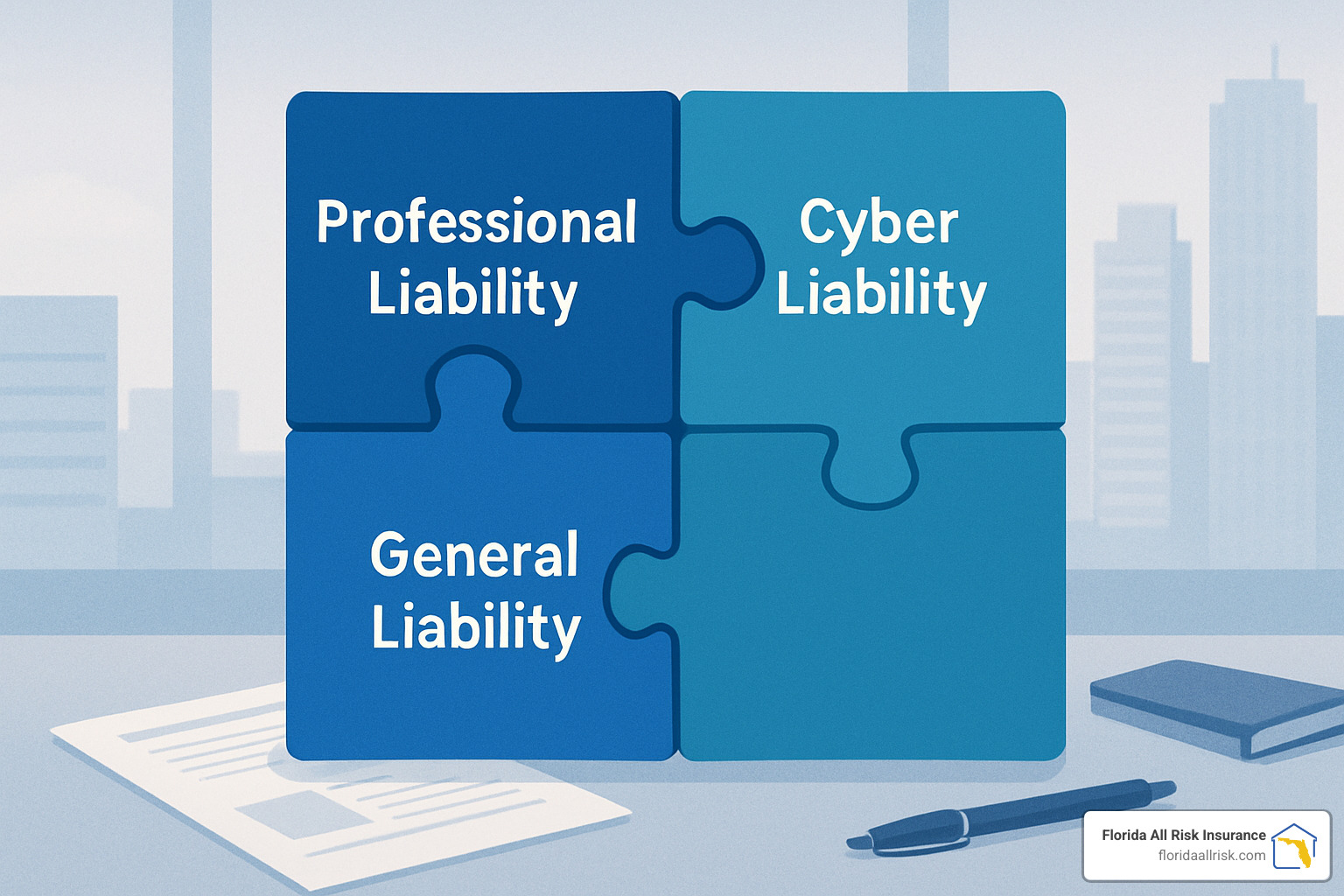
For any private investigator operating in 2026, the first step toward professional stability is securing a comprehensive insurance portfolio that combines General Liability, Professional Liability (E&O), and Cyber Liability. Do not rely on "minimum" state requirements; instead, assess your specific risk profile. If you perform high-risk tasks like executive protection or armed process service, ensure your policy includes specific endorsements for those activities. Review your policy annually to ensure your coverage limits keep pace with the rising costs of legal defense and the evolving privacy regulations in your jurisdiction.
Image Gallery