Understanding the Net Worth Gap Between Black and White Households in 2026
The net worth gap between Black and White households in the United States remains a profound indicator of systemic economic inequality. As of 2026, median White households hold approximately six to eight times the wealth of median Blac...
The net worth gap between Black and White households in the United States remains a profound indicator of systemic economic inequality. As of 2026, median White households hold approximately six to eight times the wealth of median Black households. This disparity is not merely a product of current income differences but the cumulative result of centuries of exclusionary policies, unequal access to credit, and disparate rates of intergenerational wealth transfer.
Contents
The Historical Foundations of Racial Wealth Disparity
To understand the current net worth gap, one must analyze the structural barriers that prevented Black Americans from accumulating capital for centuries. Wealth, unlike income, is cumulative. It is the "stock" of assets minus liabilities, often built over generations. While income flows in and out, wealth provides a safety net and the collateral necessary for investment.
For much of American history, Black citizens were legally or socially barred from the primary mechanisms of wealth creation. Following the abolition of slavery, the promise of "40 acres and a mule" was largely rescinded, leaving formerly enslaved people with no capital base. While the Homestead Act of 1862 allowed millions of White families to acquire land in the West, Black Americans were frequently excluded from these land grants or forcibly removed from productive land during the Jim Crow era.
The mid-20th century, often cited as a period of unprecedented middle-class expansion, actually widened the gap. The G.I. Bill, which provided low-cost mortgages and education to veterans, was administered at the local level in ways that systematically excluded Black veterans. This prevented a generation of Black families from entering the housing market during the greatest period of appreciation in American history.
The Role of Homeownership and Residential Segregation
Homeownership is the primary component of net worth for the American middle class. However, the racial wealth gap is deeply tied to the history of "redlining"—a practice where the Federal Housing Administration (FHA) refused to insure mortgages in or near Black neighborhoods.
Although redlining was outlawed by the Fair Housing Act of 1968, its legacy persists in 2026 through lower property valuations in predominantly Black census tracts. Homes in Black neighborhoods often appreciate at lower rates than those in White neighborhoods, even when controlling for home quality and neighborhood amenities. This "appraisal bias" means that even when a Black family overcomes the hurdles to purchase a home, their primary asset may not generate the same return on investment as a similar home owned by a White family.
Furthermore, residential segregation limits access to high-quality public services, particularly education, which is largely funded by local property taxes. This creates a cycle where lower home values lead to underfunded schools, which in turn affects the future earning potential and wealth-building capacity of the next generation.
Intergenerational Transfers and the "Head Start" Effect
One of the most significant drivers of the net worth gap between Black and White households is the disparity in intergenerational transfers, including inheritances and "inter vivos" gifts (gifts given during one's lifetime). White families are significantly more likely to receive an inheritance, which can be used for a down payment on a home, to start a business, or to fund education without debt.
According to data analyzed by the Federal Reserve, White households are nearly three times as likely to receive an inheritance as Black households. Even when inheritances are received, the median value for White families is often substantially higher. This "head start" creates a compounding effect; wealth used to buy a home 20 years ago has appreciated significantly by 2026, whereas families without that initial capital have spent that time paying rent, which builds no equity.
Statistical Comparison: Median vs. Mean Wealth by Race
The distinction between median and mean wealth is crucial for understanding the depth of the gap. The median represents the "typical" household, while the mean is influenced by the extreme wealth of the top 1%.
| Metric (Projected 2026 Values) | White Households | Black Households | Ratio (White to Black) |
|---|---|---|---|
| Median Net Worth | $285,000 | $42,000 | 6.8x |
| Mean Net Worth | $1,450,000 | $230,000 | 6.3x |
| Homeownership Rate | 73% | 44% | 1.6x |
| Business Equity (Mean) | $145,000 | $22,000 | 6.6x |
| Retirement Account Balance | $95,000 | $30,000 | 3.1x |
Note: These figures reflect adjusted projections based on historical Survey of Consumer Finances (SCF) trends and 2024-2025 economic indicators.
The Impact of Student Loan Debt and Educational Attainment
A common misconception is that increasing educational attainment will close the racial wealth gap. However, the data suggests that education alone is insufficient. In fact, some studies show that the wealth gap actually widens at higher levels of education.
Black students are more likely to take out student loans and carry higher balances than their White counterparts, largely because they have less family wealth to draw upon for tuition. Upon graduation, a higher portion of a Black professional’s income is diverted toward debt service rather than asset accumulation. Additionally, Black graduates often support family members with lower incomes, a phenomenon known as the "Black tax," which further limits their ability to save and invest.
Research from the Brookings Institution indicates that a White household headed by someone without a college degree still possesses higher median wealth than a Black household headed by someone with a graduate degree. This underscores the reality that the gap is a structural issue of capital, not just a matter of individual skill or merit.
Capital Access and Business Ownership
Entrepreneurship is a traditional path to wealth, but Black entrepreneurs face significant hurdles in accessing the necessary capital to scale. The "funding gap" is well-documented; Black-owned businesses are less likely to receive bank loans and, when they do, often face higher interest rates.
By 2026, while there has been a rise in venture capital initiatives targeting minority founders, the total share of capital remains small. Most small businesses are started with personal savings or home equity. Because Black families have less of both, they are often forced to rely on high-interest credit cards or personal loans, which increases the risk of failure and limits the potential for wealth creation through business equity.
Pathways Toward Economic Equity
Closing the net worth gap requires targeted policy interventions that address the roots of the disparity rather than just its symptoms. Several proposals have gained traction in policy circles as of 2026:
- Baby Bonds: This policy involves the government setting up a trust account for every child at birth, with larger contributions for children in lower-wealth families. These funds would be accessible upon reaching adulthood for wealth-building activities like purchasing a home or starting a business.
- Student Debt Cancellation: Since Black borrowers are disproportionately burdened by student debt, targeted cancellation can free up monthly cash flow for investment and savings.
- Credit Score Reform: Modifying credit scoring algorithms to include rent and utility payments could help millions of Black Americans establish the credit history needed for low-interest mortgages.
- Down Payment Assistance: Providing targeted grants to first-generation homebuyers can help offset the lack of intergenerational wealth that often prevents Black families from entering the housing market.
Frequently Asked Questions
Is the racial wealth gap closing in 2026?
While there have been modest gains in Black business ownership and employment rates over the last few years, the absolute dollar gap in median net worth has not significantly narrowed. Wealth grows exponentially; therefore, the high baseline of White wealth continues to pull away from the lower baseline of Black wealth unless structural interventions occur.
Does income parity lead to wealth parity?
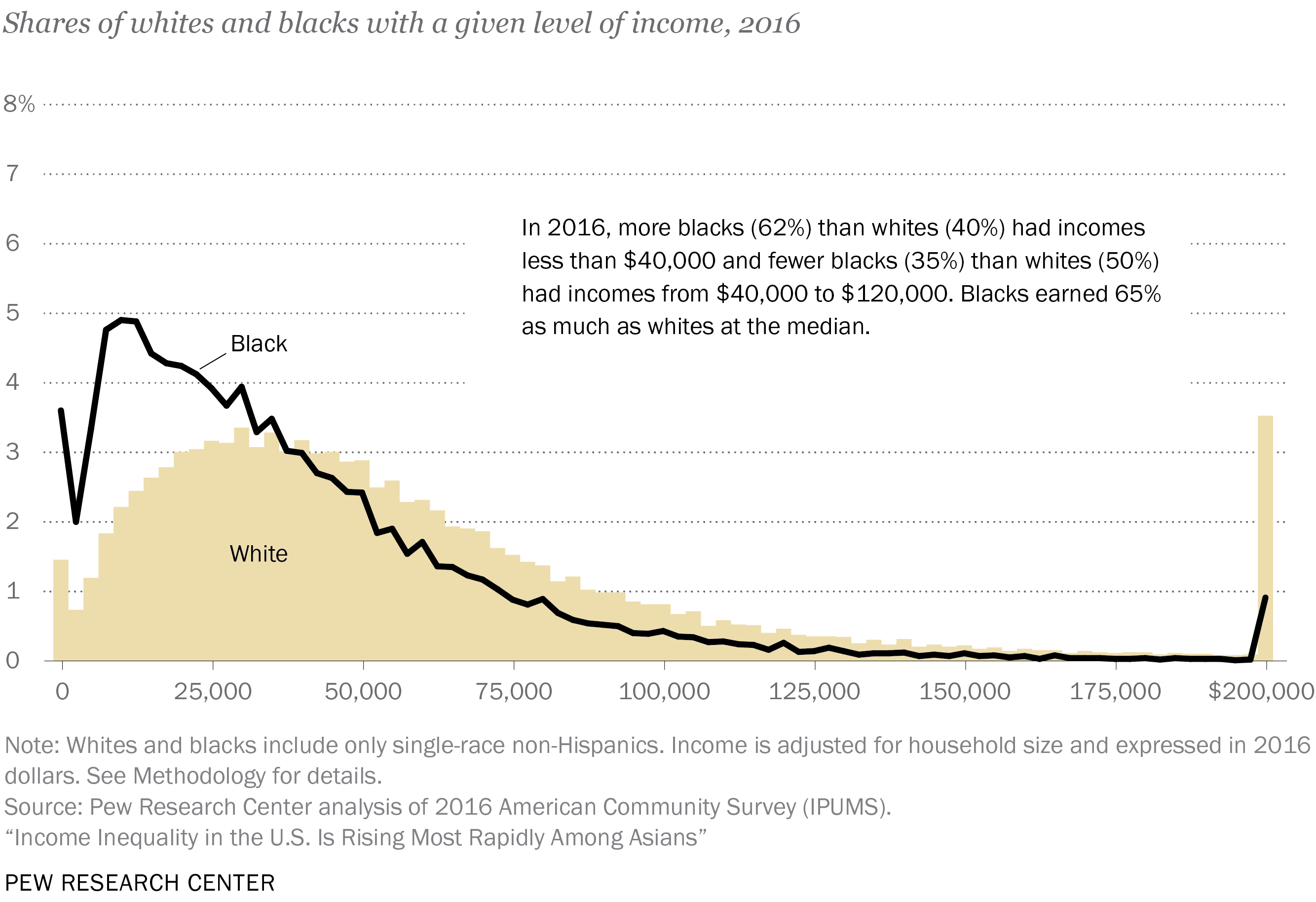
No. Even when Black and White households have identical incomes, the wealth gap persists. This is due to differences in "inherited" wealth, the cost of debt, and the different rates of return on assets like housing in segregated versus non-segregated neighborhoods.
How does the wealth gap affect the broader economy?
The racial wealth gap is estimated to cost the U.S. economy trillions of dollars in lost consumption and investment. By limiting the ability of a large segment of the population to start businesses or purchase homes, the economy experiences lower overall growth and reduced innovation.
What is the difference between the "wealth gap" and the "income gap"?
The income gap refers to the difference in annual earnings (wages, salaries, dividends). The wealth gap refers to the difference in net worth (assets like houses, stocks, and savings minus debts). The wealth gap is significantly larger and more persistent than the income gap.
Can financial literacy programs close the gap?
Financial literacy is helpful for individual money management, but it cannot overcome the systemic lack of capital. You cannot "budget" your way out of a wealth gap that is rooted in a lack of assets and disparate access to credit.
Recommended Next Steps
For individuals looking to understand or address these disparities, the first step is a rigorous assessment of the data provided by the U.S. Census Bureau and the Federal Reserve’s Survey of Consumer Finances. For policymakers and advocates, focusing on "first-generation" wealth-building programs—such as down payment assistance and baby bonds—offers the most direct route to neutralizing the historical lack of inherited capital. Supporting local community development financial institutions (CDFIs) also provides a mechanism for getting capital into the hands of entrepreneurs who are often overlooked by traditional banking institutions.
Image Gallery